Advocates Call Proposed MWRA Sewage Overflow Plan Insufficient At Final Public Hearing
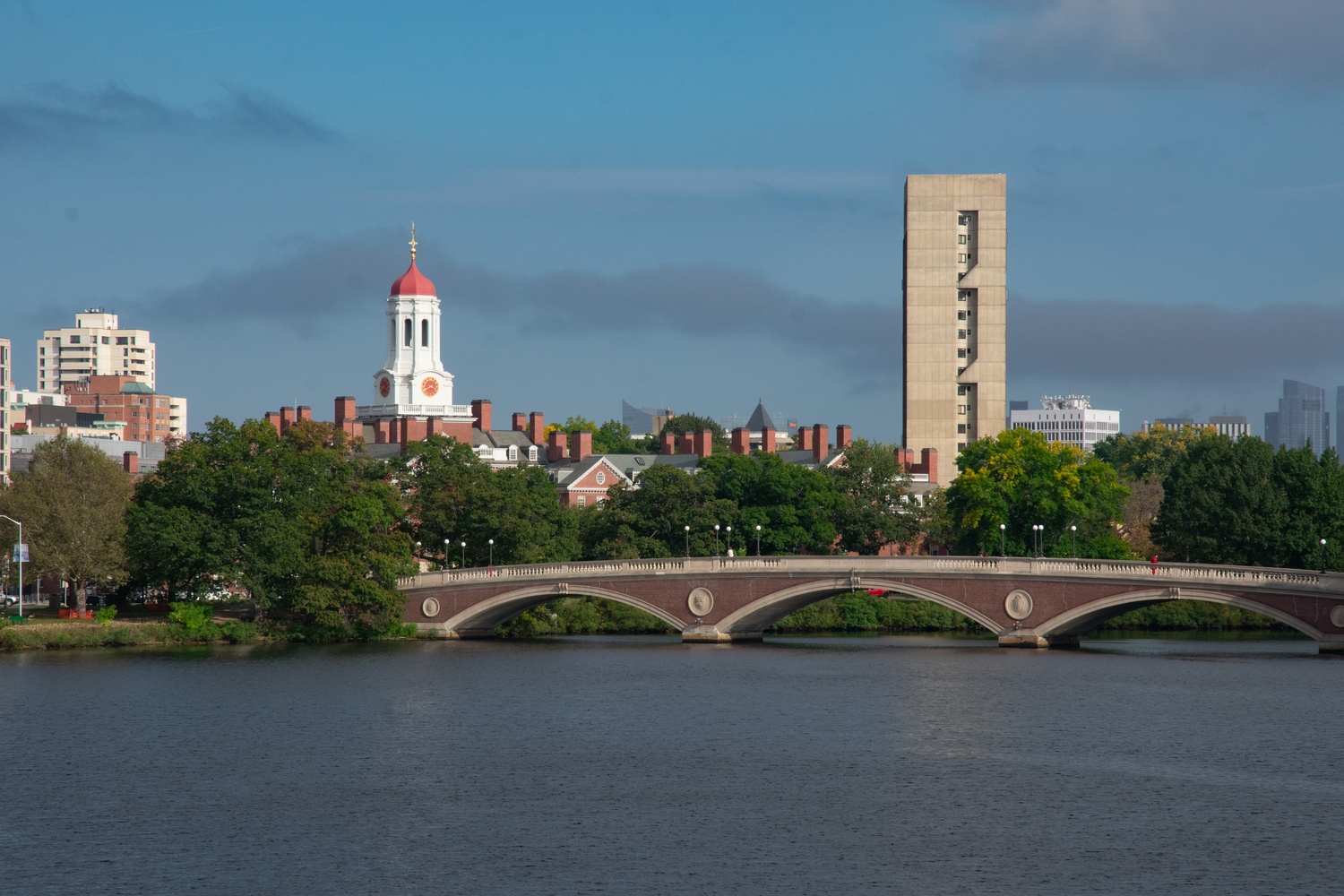
Residents and local advocates criticized a proposed $1.3 billion plan to curb sewage overflow into the Charles River and other local waterways as insufficient at a public hearing on Wednesday.
The hearing on the joint proposal from the Massachusetts Water Resources Authority, Cambridge, and Somerville marks the last in a series of hearings held by the groups to solicit public comment on the proposal.
Wednesday’s hearing drew comments from 22 speakers — including state Rep. Mike L. Connolly, environmental advocates, and residents. Commenters nearly unanimously criticized the recommended plan for stopping short of fully eliminating Combined Sewage Overflows, where shared rainwater and wastewater pipes can overflow into bodies of water during heavy rainfall.
Advocates argued that the draft plan will still allow CSOs during extremely heavy rainfall, and instead recommend a slate of alternative infrastructure improvements: adding storage tanks, separating some sewer lines from storm drains, and building new storage pipes along the Alewife Brook, Mystic River, and Charles River.
Cambridge, Somerville, and the MWRA would split the cost of the final plan — and they recommended spending roughly $1.3 billion to eliminate overflows given the typical rainfall predicted for 2050. The draft proposal also laid out a $770 million plan to allow some overflows in a typical year and a $4.7 billion plan to prevent overflows even in years with severe storms.
But advocates are pushing for the strictest option in the draft proposal, which would effectively eliminate CSO activations, rejecting the typical year rainfall framing.
“Zero in a typical year does not mean zero sewage,” Patrick M. Herron, executive director of the Mystic River Watershed Association, said. “Up to 41 million gallons of raw sewage would have been discharged with this current plan under recent years.”
Get The Crimson in your inbox.
Jennifer Wade, a member of the Cambridge CSO Advisory Committee, said that she was “part of the worst CSO outfall in the entire MWRA system” — as the waste from her home flows into the Alewife Brook during CSO activations. She urged the MWRA to take further action than their recommended plan.
“What the city is proposing for my neighborhood is a solution that is entirely storage. There is no sewer separation proposed for my neighborhood as part of this plan,” Wade said.
Some speakers directed their comments at specific provisions of the recommended plan. Connolly, whose district spans parts of East Cambridge and Somerville, blasted the proposed construction of a 10-million-gallon storage tank under Magazine Beach — Cambridge’s second-largest park. The Cambridge City Council unanimously passed an order last week opposing the tank’s construction.
Officials did not respond to comments at the hearing, which facilitator Abby K. Fullem described as “not really an information-sharing venue.”
But not every speaker pushed for a more expansive plan. Crystal M. Huff, a Somerville resident, said they prioritize their neighbors’ health but worried that failing to reach a compromise would delay action.
“I just want to raise the issue that, if we spend two decades on crafting the perfect regional solution and the perfect regional financing, we will have an extra two decades of poop in the water,” Huff said.
The MWRA will stop accepting public comment on the proposed plan Friday, and it will then undergo a review by the Massachusetts Department of Environmental Protection and the Environmental Protection Agency. A finalized plan is expected to be released in 2027, followed by a state review.
Want to keep up with breaking news? Subscribe to our email newsletter
Have a tip for The Crimson? Share it confidentially