Sienna Spiro Concert Review: A Generational Voice Shines
Spiro’s exceptionality lies beyond her vocals.
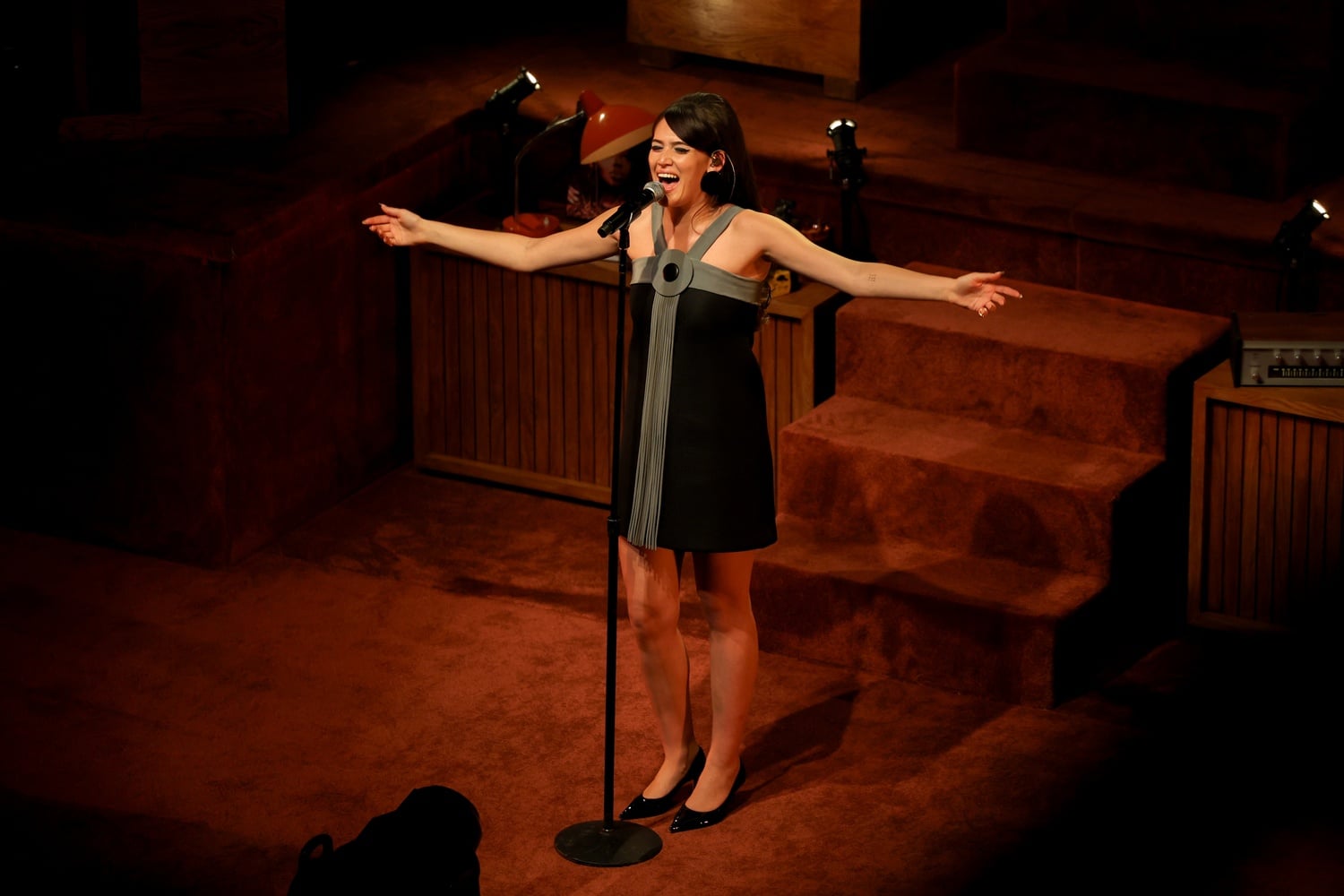
Five-time Grammy Award Winner Sam Smith was right when he called Sienna Spiro “a true artist with the voice of a generation.” With minimal production and thoughtful background music, Spiro’s incredible voice and stage presence was highlighted on Oct. 18 at Citizens House of Blues Boston. After first gaining traction on TikTok in 2021, Spiro has experienced a meteoric rise. She released her first studio Album, “Visitor,” in July 2026 and took home Best New Artist at the 2026 MTV Video Music Awards this past September.
The concert opened with Spiro — in a Boston Red Sox jersey — singing “This Is My House” under a spotlight on a dark stage. While hidden instrumentalists played away, Spiro danced gently by swaying her hips and using hand gestures. This setup successfully drew the audience’s attention to Spiro’s stunning vocals. Even when the overhead lights turned on after the first song and exposed the band on stage, Spiro’s voice was uniquely emphasized. The band often played softly, and other than some subtle light and fog machine effects, there were no major visual production elements, including no background dancers.
The minimal production was the appropriate choice, as more intricate visual elements could have distracted from the vocals and created a less intimate performance. For example, while singing “Pure,” Spiro sat alone on a staircase leading the audience to focus on her and her lyricism. Before starting the song, Spiro explained how she wrote the song during a time of depression while her mom was undergoing treatment for a brain tumor. The combination of Spiro’s stillness on stage and her personal story highlighted the song’s emotionally intense nature, making the performance all the more heartfelt.
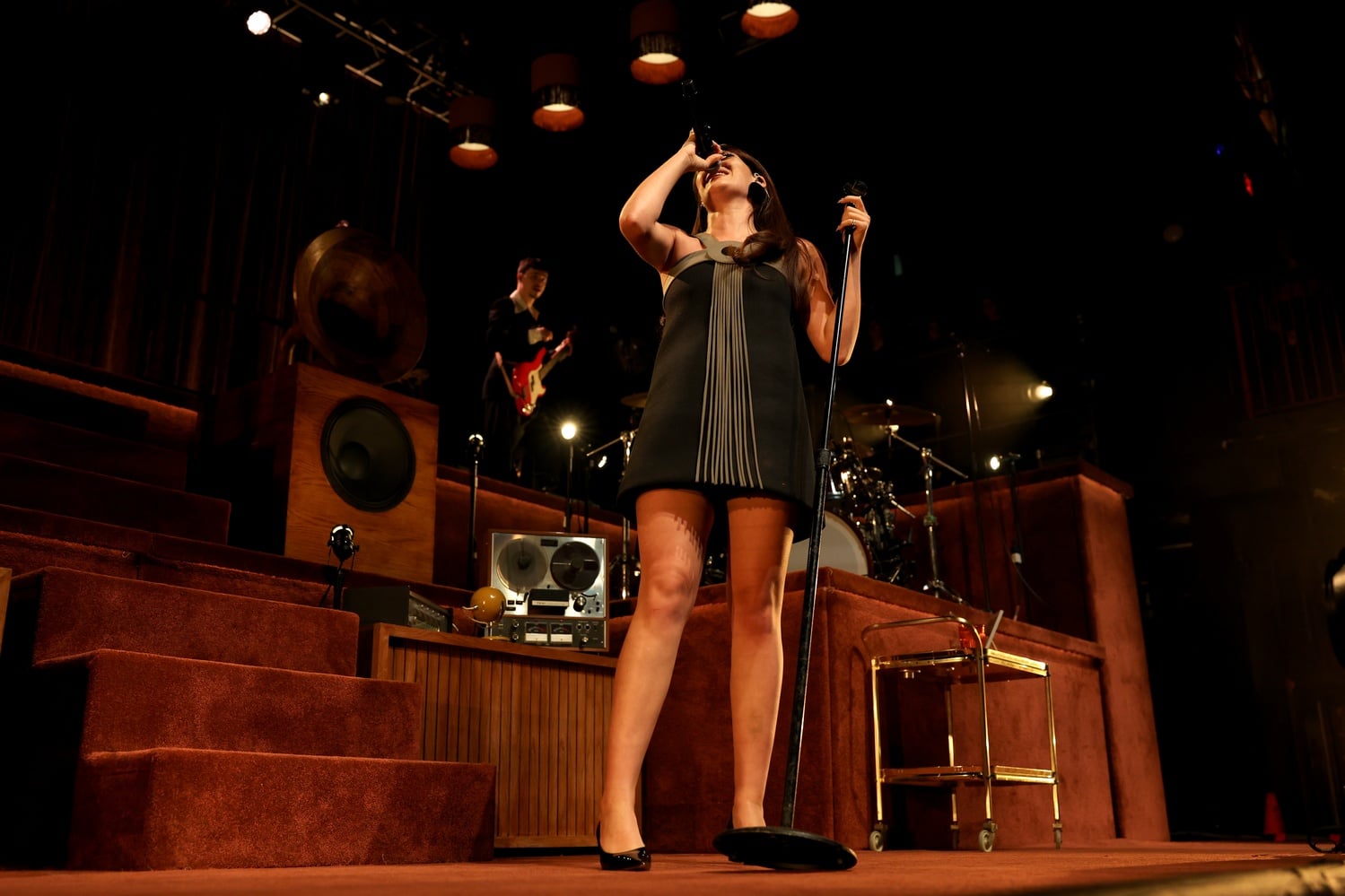
Spiro also performed a poignant rendition of “Smile” by Nat King Cole. In the original 1954 version, there is a dominant string section that shares the foreground with Cole’s voice. During her performance, Spiro adapted “Smile” to feature just her voice and a piano. This choice is reminiscent of a similar style used in her song “We’re Not in Love.” Stripping back the song’s production highlighted the rawness in Spiro’s voice, shifting Cole’s tone of hopefulness to a melancholic one.
While the minimal staging engendered a more soulful performance, the same approach could leave audiences in larger venues feeling underwhelmed. Show elements seem to be increasingly present at concerts, and special effects like synchronized lights, LED walls, and projections are nearly the expectation. During this particular performance, the minimal production and soft instrumentals easily commanded the room. However, in larger concert halls, the same may not be true.
On a different note, songs like “Material Lover” and “He’s Not My Baby, I’m His” showcased that Spiro does have the stage presence to generate the high energy typical of many concerts. During these songs, the band amplified their sound, and Spiro danced across the stage. The crowd sang every word when Spiro pointed the mic toward them and cheered each time she walked closer toward them.
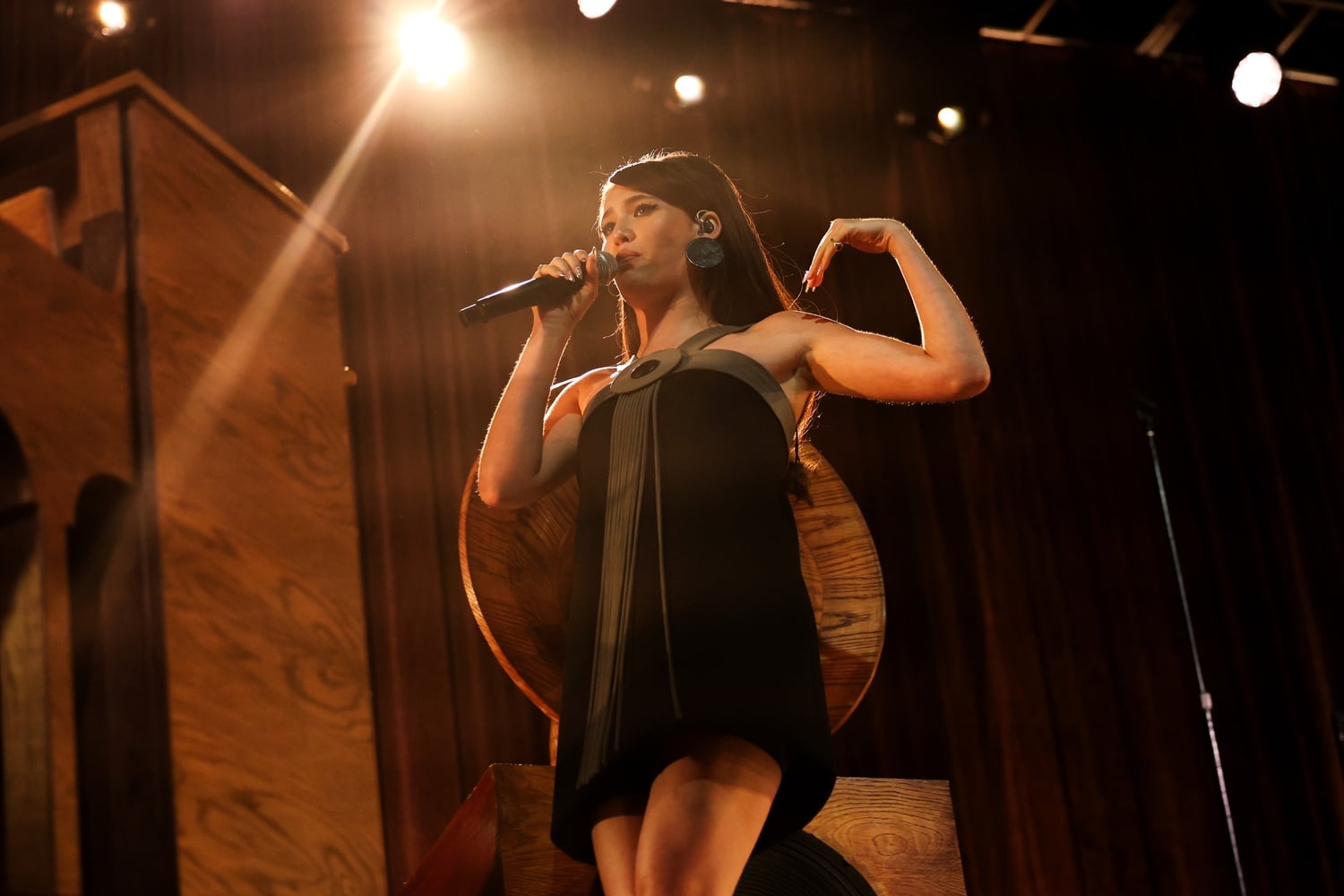
While her magnetic stage presence was effective during the songs, it relaxed while conversing with the audience. Adding to the intimacy of the show, Spiro’s interaction with the crowd warmly reflected a tight friendship: she sang happy birthday to a fan, discussed her rehearsed piano routine as if it was a new hobby she recently picked up, and asked to take a picture of the concertgoers.
However, when talking with fans in the first row, the crowd could not hear their responses. Spiro would sometimes repeat their answers but at other times would advance to a new question or response, making the segment awkward and isolating.
After an hour of thoughtful production highlighting Spiro’s voice, the concert ended by spotlighting the audience. At the end of “Great Expectation,” Spiro elegantly left the stage while the band continued playing. Conducted by the guitarist, the singing audience — donning polka dots and 1960s clothing associated with Spiro’s style — filled the room with her lyrics.
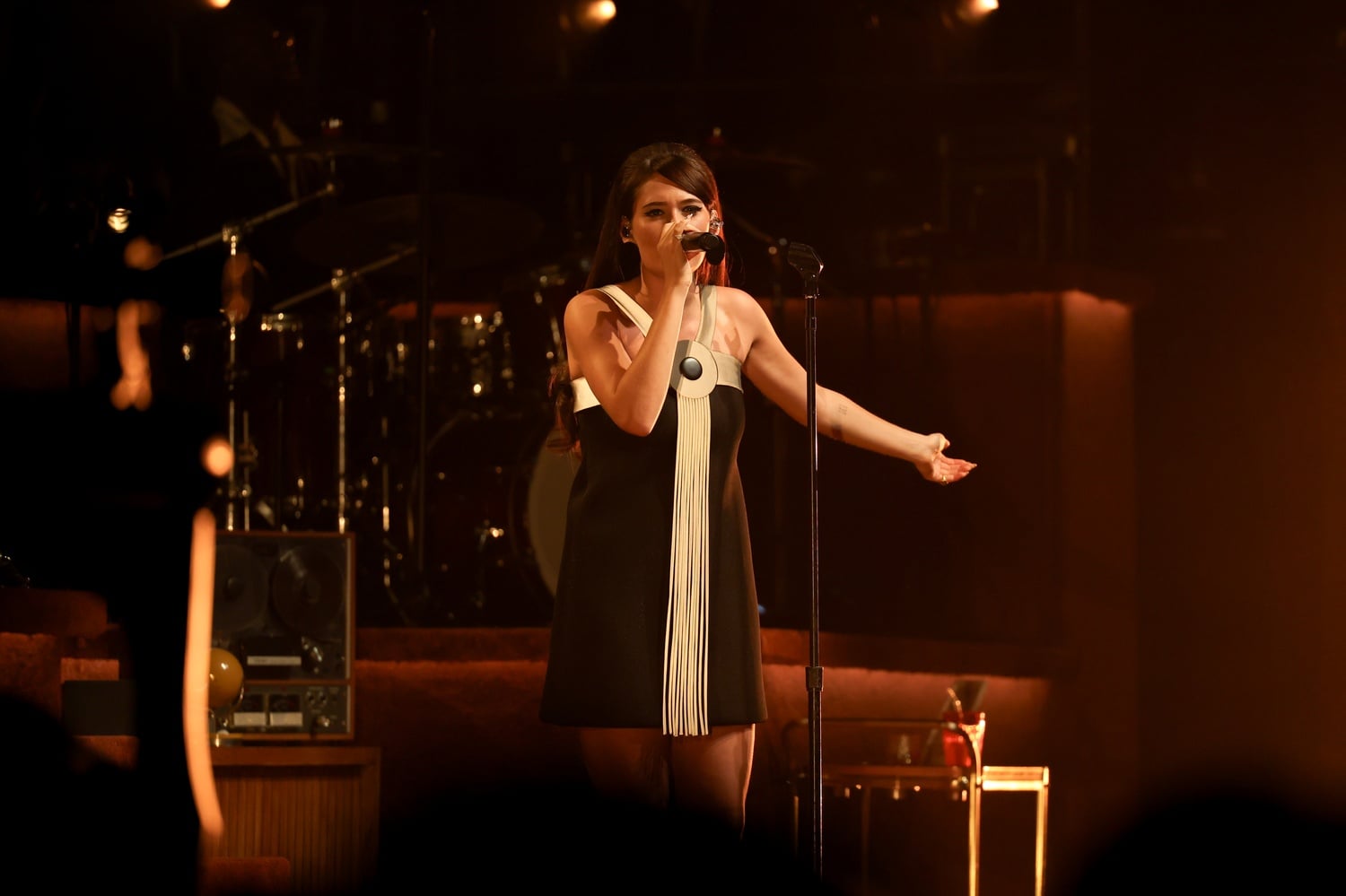
This unorthodox ending served as a reminder that Spiro’s exceptionality lies beyond her vocals. It is also in her meaningful words, her mindful staging, and unique 1960s aesthetic — a distinctive combination that bolstered her growth in popularity and made for an excellent show.
—Staff writer Shira Parnes can be reached at [email protected].
Want to keep up with breaking news? Subscribe to our email newsletter
Have a tip for The Crimson? Share it confidentially