‘Wildwood’ Review: An Epic Tale Made in Miniature
Dir. Travis Knight — 4.5 Stars
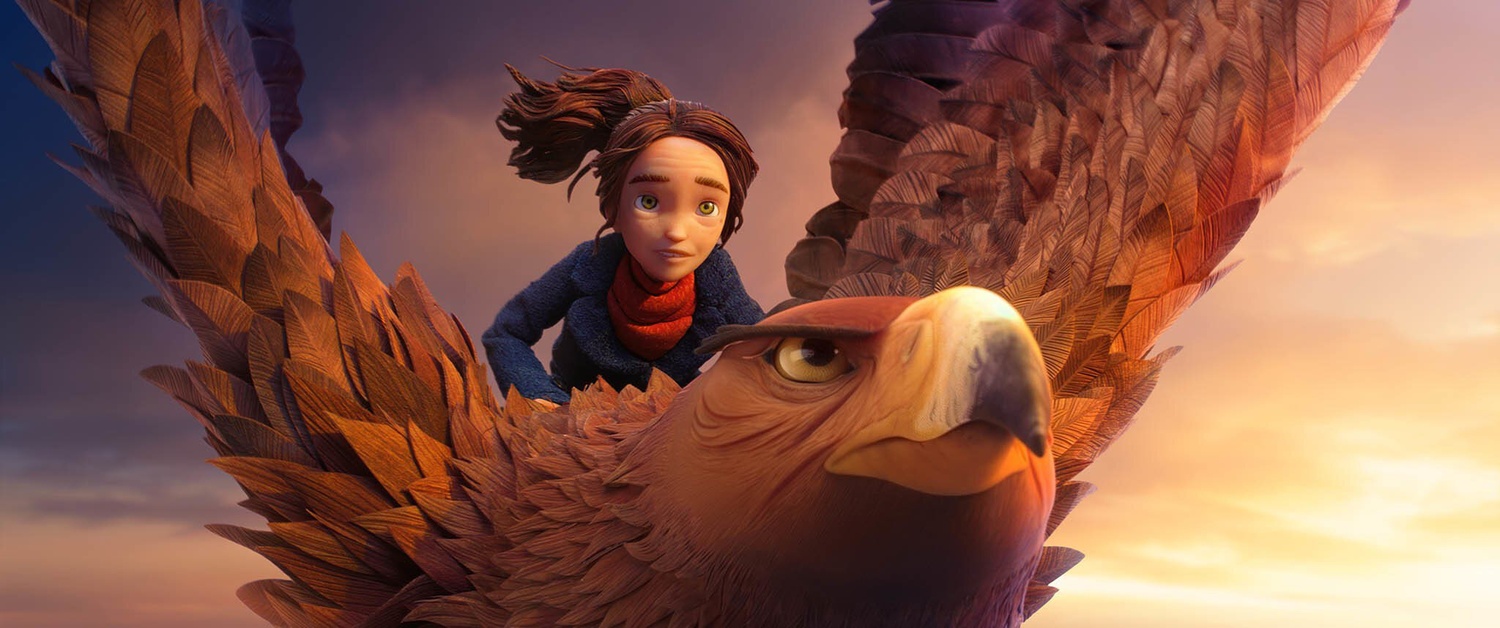
“Wildwood” is a stop-motion spectacle created by LAIKA Studios, the animation house behind “Coraline,” “ParaNorman,” and “The Boxtrolls.” Because LAIKA has not released a film since the release of “Missing Link” seven years ago, “Wildwood” was long-awaited both by diehard fans of the studio and a new generation of viewers.
The film is based on the 2011 book “Wildwood”by Colin Meloy. The story is straightforward, as probably suitable for a fairytale of this kind. Prue McKeel (Peyton E. Lee), the protagonist, takes her infant brother Mac (Arthur Knight) out on an adventure after dismissing her father’s story about the dangers of the outside world. In a brief moment of distraction, a flock of crows snatches little Mac away from Prue in the wild woods.
After an unsuccessful chase, Prue discovers the world behind the woods. In a swirl of interactions with various magical characters, she discovers that her brother was kidnapped by Alexandra (Carey Mulligan), who wants to use Mac to resurrect her son who died many years ago. With help from the talking birds, farmers, and bandits of the forest, Prue sets off on a mission to defeat Alexandra and save her brother, along with the forest world.
Though the characters of “Wildwood” are physical puppets, animators were able to bring life to them and make spectators believe that the figures are lively characters that not only move, but have experiences and feelings.
The characters are extraordinary and eccentric. Curtis Mehlberg (Jacob Tremblay) — who transforms from a cowardly boy into a brave warrior — bandits and their King Brendan (Mahershala Ali), and Septima (Awkwafina), a hilarious little rat that helps Curtis and the bandits escape from Alexandra’s prison, all add an exciting dimension to the story.
Even so, the most striking character is the villain. Alexandra is not a generic, cartoonish antagonist. Though she is frightening, viewers understand the human fragility that lies underneath. Mulligan nails the delivery of her bone-chilling lines, making Alexandra sound calculated and truly evil, without undermining the tragedy behind her story that seeps through every phrase about her dead son.
Despite being a marvelous piece of art, there are certain drawbacks. Considering the amount of work that each frame requires — with a minute of action being weeks of work — it’s surprising that certain sidequests get completely forgotten in the second half of the movie. These side plots are ultimately resolved, but awkwardly and only after the climax, making one question whether they were necessary at all.
Adding to the inconsistent pacing, the main character Prue is perhaps a little too quippy and makes sarcastic remarks that are almost never funny; rather, they are somewhat embarrassing. Her character doesn’t develop much beyond becoming a little kinder and trading her skepticism for a belief in magic. In the grand scheme of the story, however, this drawback does not retract much from the quality of “Wildwood.”
A stop-motion animated feature like “Wildwood” cannot be fully understood without a sneak peek behind the scenes. Everything had to be designed from scratch and by hand: from the cracks on the street pavement to the shingles on the homes, the trees, and the foliage. There are 136 unique locations in the film, each gingerly crafted by the hands of LAIKA artists. To show the characters’ emotions, over 142,000 replacement faces were 3D-printed and separately painted. The scale of craft is immense, and on the big screen, it transports viewers into a world with the most extraordinary level of detail.
For the most part, “Wildwood” is a somewhat simple, but compelling and richly detailed fairy tale that keeps audiences at the edge of their seats. Even though everything is physically tiny, animators translated details superbly to the big screen.
Stop-motion is a painstaking way to make a film. Every leaf, face, and tear requires meticulous attention, even if it appears onscreen for only a moment. In “Wildwood,” that care makes a world built in miniature feel vast, vivid, and deeply moving.
—Staff Writer Tymofii Baranenko can be reached at [email protected].
Want to keep up with breaking news? Subscribe to our email newsletter
Have a tip for The Crimson? Share it confidentially