The French Are Protesting — Why Aren’t We?
America is no stranger to revolution. But perhaps we have something to learn from the French.
In the past month, student-led protests have erupted in France after high-schoolers barricaded their campuses in protest of dilapidation, insufficient staffing, and competitive admissions. The protests spread to broader French society, leading union workers and university students alike to take to the streets.
The protests have boiled over into Ireland, Austria, and Albania, sharing many similar concerns. These grievances of Europe’s youth might ring a bell. In America, the cost of living is rising, ballooning tuition has led some to question the value of a college education, and hyper-selectivity remains a poignant concern for those applying to college. So why have our youth reacted so much less decisively?
I set out to find what so often keeps students like us stubbornly glued to their seats rather than on the streets. Ahead of inconvenience, I suspect repression and cultural attitudes both play a role.
To start, a good protest is inconvenient. For some, even the activation energy to attend a march or make a poster is too onerous to handle. For others, the commitment of prolonged protest movements, such as those taking place in France currently, naturally takes more time out of day-to-day life and comes with risks, including confrontation with police force.
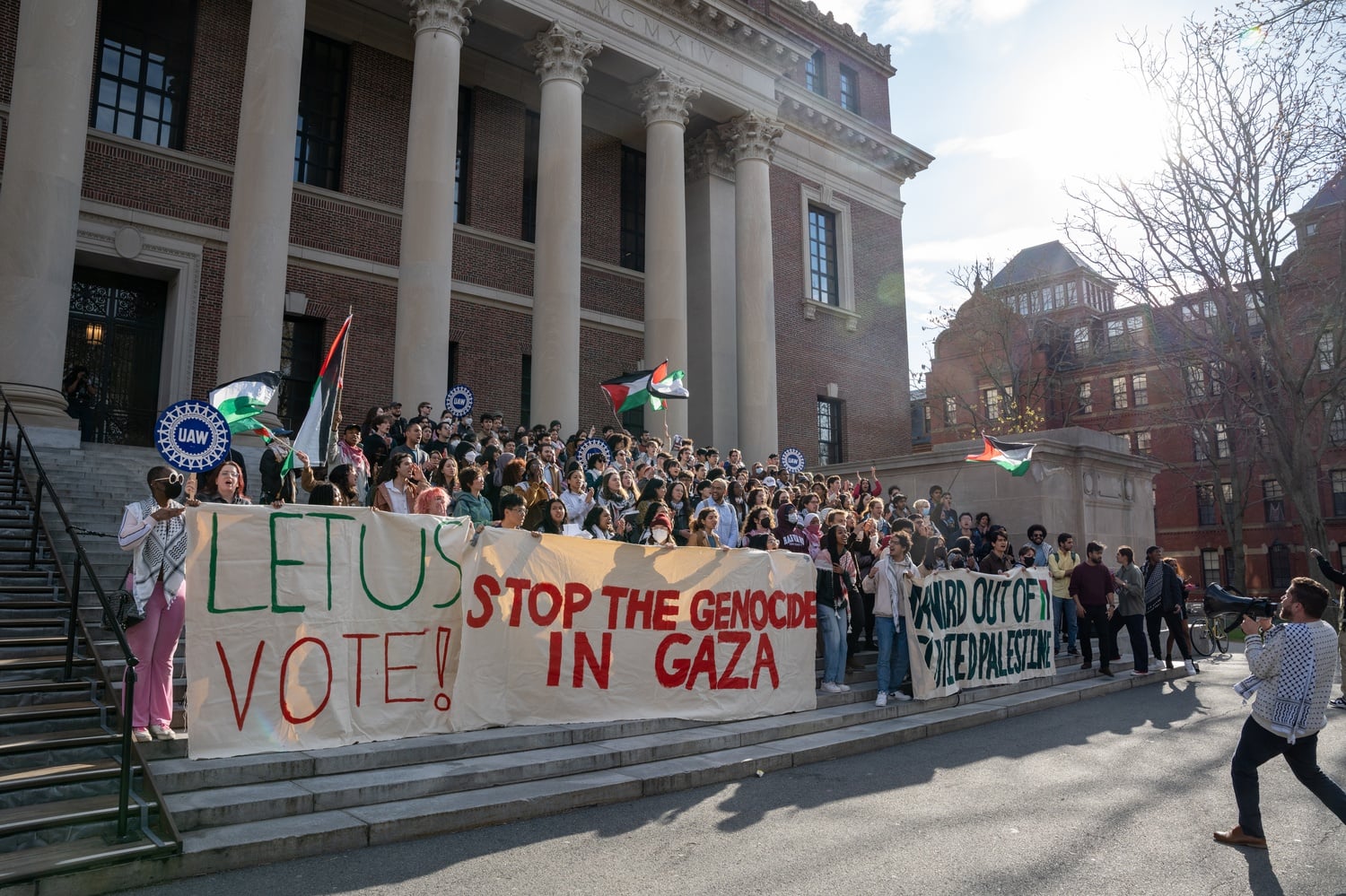
Nonetheless, commitment issues aren’t solely to blame. The most significant student protests in recent memory are the ones following the Oct. 7, 2023 Hamas attack on Israel. In the ensuing months, encampments appeared on Harvard’s campus and across over 130 U.S. schools. As protests ramped up, so did the administrative response to repress them.
Notably, student protestors were prevented temporarily from graduating, arrested, and, in some cases, almost deported. With this wallpaper of consequences lingering in students’ minds, it is no surprise that protests appear to have slowed. For example, campuses like Northwestern and Stanford University banned certain demonstrations, while Harvard tightened its protest guidelines. Following such crackdowns, universities saw a dramatic drop from 3,000 protests in the spring of 2024 to just 950 protests in late November the next semester, according to one report.
But more young people exist outside the nearly 130 campuses that featured an encampment than not. Surely, the measures taken by university administrators could not be the sole cause for the gap in protest activity between the U.S. and Europe.
Yet, we should consider the symbolic impact of seeing many elite college students penalized and prosecuted for what they say. If the students of America’s most well-endowed universities aren’t protected, it is easy to imagine how a chilling effect may have settled over youth action across the country. Elite educational institutions are often in the limelight, causing these incidents to disproportionately impact broader discourse, whether we intend them to or not.
Alas, it may also be a cultural difference: Whether the French Revolution, the student-initiated protests of 1968 that nearly toppled the government, or the “yellow vests” movement of late, France’s political life is marked by protest. As a result, students experience the cultural expectation that dissent is worth acting on.
Perhaps that’s the lesson to take home: Getting up and organizing takes more than time management skills to make space in one’s schedule. It includes the ability to hope. For action to materialize, it is imperative to hold a shred of belief that it could actually change something — whether culturally received or individually cultivated. We must learn to hold on to this sentiment. We must reclaim our agency when it is undermined.
Student protests are a root of progressive movements and a force for change. All it takes is a little faith.
In 2022, students were a major force in the Sri Lankan protests that toppled the president. In 2024, young protestors in Bangladesh chased out Prime Minister Sheikh Hasina after 15 years in power. And to top it all off, just a few days ago, Student List, a grassroots movement of university students, won Serbia’s parliamentary election by majority vote, defeating “long-ruling authoritarian leader” Aleksandar Vučić. What began as weekly student protests in response to a canopy collapse tragedy at a railway station in Novi Sad grew into a formidable political force.
Whether it’s brandishing the Straw Hat Jolly Roger or “67” signs, protest is evidence that there is hope among the youth that empowers us to get up and shout about what matters. We are students in a highly fraught time. In Europe and all around the world, students are seizing the moment and choosing to act.
Take inspiration. Dare to hope.
Emily X. Yu ’29, a Crimson Editorial editor, is a Chemistry concentrator in Currier House.
Want to keep up with breaking news? Subscribe to our email newsletter
Have a tip for The Crimson? Share it confidentially