‘Hollywood, Ending’ Review: John Green’s Newest Novel Offers an Authentic Look at Fame
4 Stars
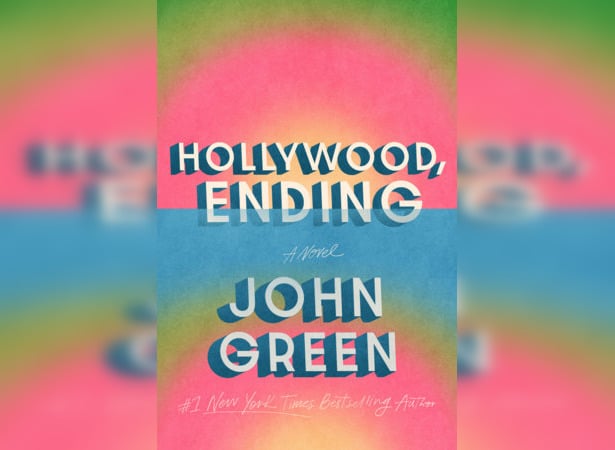
John Green may be most famous for his heart-wrenching young adult fiction, but he makes a return to the shelves with “Hollywood, Ending,” released Sept. 22, a book about two adult actors.
Best known for the 2012 “The Fault in Our Stars,” John Green is a prolific, internationally renowned author. “CrashCourse” — the 2011 Youtube Channel he co-founded with his brother Hank Green — further cemented his place in adolescents’ hearts. Since his first book, the 2005 “Looking for Alaska,” readers have been captivated by the magic of John Green’s characters and the lack of narrative safety in his worlds. As Green’s characters grow and change, love and lose, and fail and learn, readers are taken on an emotional roller coaster — a ride as bumpy as the audience’s own coming of age.
As John Green transitions to adult fiction, he continues to woo audiences in a book that — even if predictable — is a moving reckoning about a life of fame and trauma, and a tale that is somehow resonant even for those who don’t deal with fame.
“Hollywood, Ending” takes readers into the world of celebrities Kai Laramie and Juniper Castillo, two up-and-coming starlets cast in the biopic film “Andy Warhol Never Gets Old.” As they grow in fame, make mistakes, and even fall in love with each other, both Kai and Juniper navigate how to live a private life turned inside out to the public eye.
Maybe Green’s portrayal of this life in the limelight is so vivid because of his own experience living it. In his eight years drafting this novel, John Green consulted his dutiful notes from his time spent on the sets of films based on his novels. Green — who has previously described fame as “disorienting” and “uncomfortable” — has given himself to tearing apart the push and pull of being a celebrity, the thrill of fame, and the fear of losing oneself to the judgement of others.
As a result of Green’s careful observations, “Hollywood, Ending” excels in introducing characters with recognizable emotions and intriguing experiences, even if they are estranged from the audience. Juniper Castillo is an ambitious, career-driven actress trying to outwork, outnetwork, and outgrow her label of child actress. Kai Laramie, by contrast, is a sensitive natural actor, trying to overcome a traumatic past.
The novel’s first few pages immediately gives readers proximity to the characters. Juniper grasps her notebook — thick with pages of actor notes — eager to impress the famous actor Matthew Malone, who is co-starring in Juniper and Kai’s new film. Readers are invested in Juniper’s success, watch her rehearse her lines nightly and share her frustration of a director impervious to her suggestions. The audience is also endeared immediately by Kai, who tells people, “I love you” when he bids them goodbye.
“Love is big and reckless so I just say it whenever I feel like it,” Kai explains to Juniper. The characters are both profound and hilarious from the first time they speak; the audience feels close to them and excited to stay by their side.
John Green is able to make these characters so dynamic through vibrant dialogue.
When Malone, the celebrity star of Juniper and Kai’s film, first approaches the two protagonists, he reminisces about their age, describing Juniper’s experience perfectly: “being twenty-one was a debilitating illness you only sometimes survived.”
In another moment, upon an early meeting with Kai, Juniper quotes Kierkegaard as they get ready to film: “Anxiety is the dizziness of freedom.” At the end of filming, Kai mistakenly quotes the same line back to Juniper. In just this short quip between Kai and Juniper, Green captures the essence of them both — Juniper leans into her nerves, while Kai shies away from them. This difference will later take the readers deep into the strings that both bind the duo and threaten to tear them into different directions.
The novel is split into three parts — one narrated from Juniper’s perspective, another in Kai’s, and a third in Juniper’s once more. By taking the audience into the headspace of each protagonist, Green places deep care in his depictions of the way the characters reflect, cope, and attempt to surmount trauma. Juniper and Kai both are forced — like the Kierkegaard quote suggests — to endure the incredible anxiety that accompanies private trauma becoming public.
Though John Green takes the narrative through surprising — even angering — plot twists, the reader remains fervently rooting for our two stubbornly honest characters. Green’s style effectively places moments of action beside sharp, responsive dialogue, creating the sense that the reader is observing each character from close range. The novel gradually opens onto three distinct worlds: the private life Juniper and Kai share with their confidantes, the public life exposed by the hawkish social media photographers, and a third, inaccessible world that each character keeps to themselves.
However, the plot errs on the side of predictability. The two protagonists — too tender and perceptive to survive a cruel film industry — are naturally predicted to end up distancing themselves from the public eye. Two beautiful teens — whose worlds revolve around each other, who star as lovers in their film, and who open themselves to each other — can only naturally fall deeply in love.
In a line equally as kitsch as profound, Juniper observes that “We love others until they can love themselves, until we can love ourselves.”
Green never strays too far from tried-and-true tropes of romantic comedy. But this predictability can be excused, because Green is simply delivering what he is best at: a story about two honest, tender children finding their own special people.
“Hollywood, Ending” is no doubt another showcase of Green’s power to pierce readers’ hearts through his characters. Although the plot adheres a bit too close to a familiar arc, Green’s prose lathers sincerity and true love onto the treatment of Juniper and Kai’s complexities and trauma. The novel may conclude with a Hollywood-esque ending, but that reading of the title ultimately seems secondary to its more revealing one: Hollywood, comma, ending. For Juniper and Kai what matters by the novel’s close is the ending — not Hollywood.
—Staff Writer Cloris F. Shi can be reached at [email protected].
Want to keep up with breaking news? Subscribe to our email newsletter
Have a tip for The Crimson? Share it confidentially