‘The Gem’ Album Review: An Ode to Evolution, Without Much Evolution Itself
4 Stars
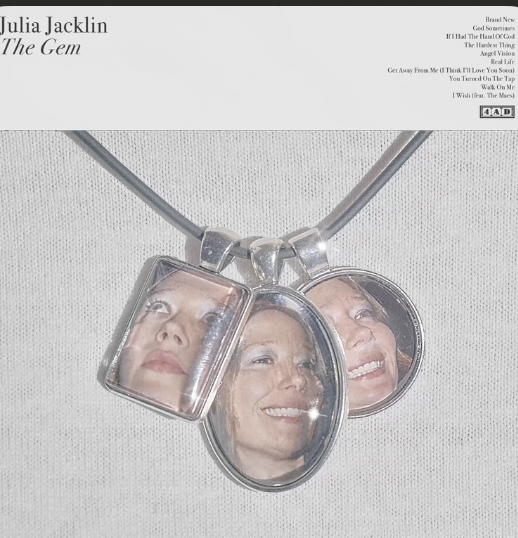
Julia Jacklin hits many right notes with her fourth studio album, “The Gem,” released on Sept. 25. The singer, known for her 2019 hit track“Pressure to Party,” turns even more inward in this new release, leaning into ideas about independence and evolution. A bit subdued at moments, yet still quite decisive in its portrait of Jacklin, the project sees the Australian singer in her most quintessential form. Still, the album’s apparent sureness leaves the listener wondering if there is a side of Jacklin we have yet to hear.
The album begins with “Brand New,” a literal blank slate that opens the album adeptly. The production is very clean, allowing the audience to freshly enter into this new world that Jacklin procures throughout “The Gem.” The refrain, “Don’t remember, don’t remember you,” fleshes out a new environment within which Jacklin sets herself up to flourish. She finishes the refrain, “All that surrounds me appears as if new.” The track effortlessly sets the tone for the rest of the album, with some stripped down instrumentals interspersed throughout and Jacklin’s butterscotch-coated vocals humming just above the strumming.
The album continues after its sharp opening with a duo strengthening Jacklin’s characteristic religious motif. “God Sometimes” and “If I Had The Hand Of God” are an interesting pair that play directly into the tug-of-war between Jacklin’s religious upbringing and current beliefs. The lyrics of the former point to a sort of shift in her independence, one where Jacklin is something to be revered herself — a change from the reverence for the world around her as seen in some of her previous work, such as “PRE PLEASURE” and “Crushing.” Now, in a marked difference, Jacklin declares that she instead might be “a god sometimes.”
That religious theming continues throughout “If I Had The Hand Of God,” released as a single prior to the album’s release. The song meditates on some of Jacklin’s common themes — most clearly, of toeing the line between vulnerability and exposure. Nevertheless, the familiar ideas take on a new life as the fervor picks up throughout each of the song’s choruses.
The album then slows a bit in content and intensity. Although the middle few songs, including “Real Life,” and “The Hardest Thing,” are enjoyable, they begin to blend together as the album progresses from its prior stand-out tracks. This moment of the album doesn’t attempt to push the envelope in terms of Jacklin’s production, and the songs take up a traditional filler role in the album. There is a hunger for something more unique from Jacklin, as she clearly demonstrates a mastery of her style, but doesn’t separate herself from her prior work.
The album doesn’t allow for wallowing for too long, though, as “Get Away From Me (I Think I’ll Love You Soon)” becomes the hit moment of the album, with a wistful chorus and an incredibly concentrated production that allows for Jacklin’s voice to supersede all else. She channels the anxious build-up of a crush beautifully with her classic indie-pop style and launches into the chorus as a near-perfect mimic of the stomach drop when jumping headfirst into a romantic pursuit. As a lead single, the song still fits in with the rest of the album as another portrayal of independence and its manifestations within relationships and the world. The track brings the energy of the album back up to something exciting and fresh, a necessary twist after the less magnetic predecessors.
“Walk On Me,” Jacklin’s longest song to date, stands out as one of the most painful and poignant songs on the record. This track plays with the idea of independence wound throughout the album in an interesting way, as a reflection on a time of a different type of independence — one of shame and isolation in an unhealthy relationship. The song’s extended instrumental ending gives it room to linger, and its characterizing of that lyrical capitulation resonates as the six minute piece drives a separation between Jacklin and the past she reflects on.
The album ends with “I Wish,” a collaboration with the Australian band The Maes, that creates an almost divine affirmation of all of Jacklin’s musings throughout the record. As the trio echoes Jacklin’s verses, the song embodies each of their reflections. A song about growing up and evolving, “I Wish” makes perfect sense as an album closer. Both an ode to hope and sticking it out, as well as an acknowledgement of the pain that comes with a newfound independence, “I Wish” considers Jacklin’s past through a lens of deep care and nostalgia.
“The Gem” is a footprint of someone sure of their artistic identity. Jacklin continues to push through her deliberations on solitude, on love and on loss, through both a nostalgic and fresh lens. As her career progresses, Jacklin’s production might demand some of the evolution that so often characterizes her lyricism, even if only as a showcase of the creative capacity of her unique sound. For the time being, however, “The Gem” only makes clearer exactly who Julia Jacklin is, even if at times it feels a bit one-note.
—Staff writer Sophie M. Houck can be reached at [email protected].
Want to keep up with breaking news? Subscribe to our email newsletter
Have a tip for The Crimson? Share it confidentially