Cambridge Task Force Considers Tenant Governance For Social Housing Model
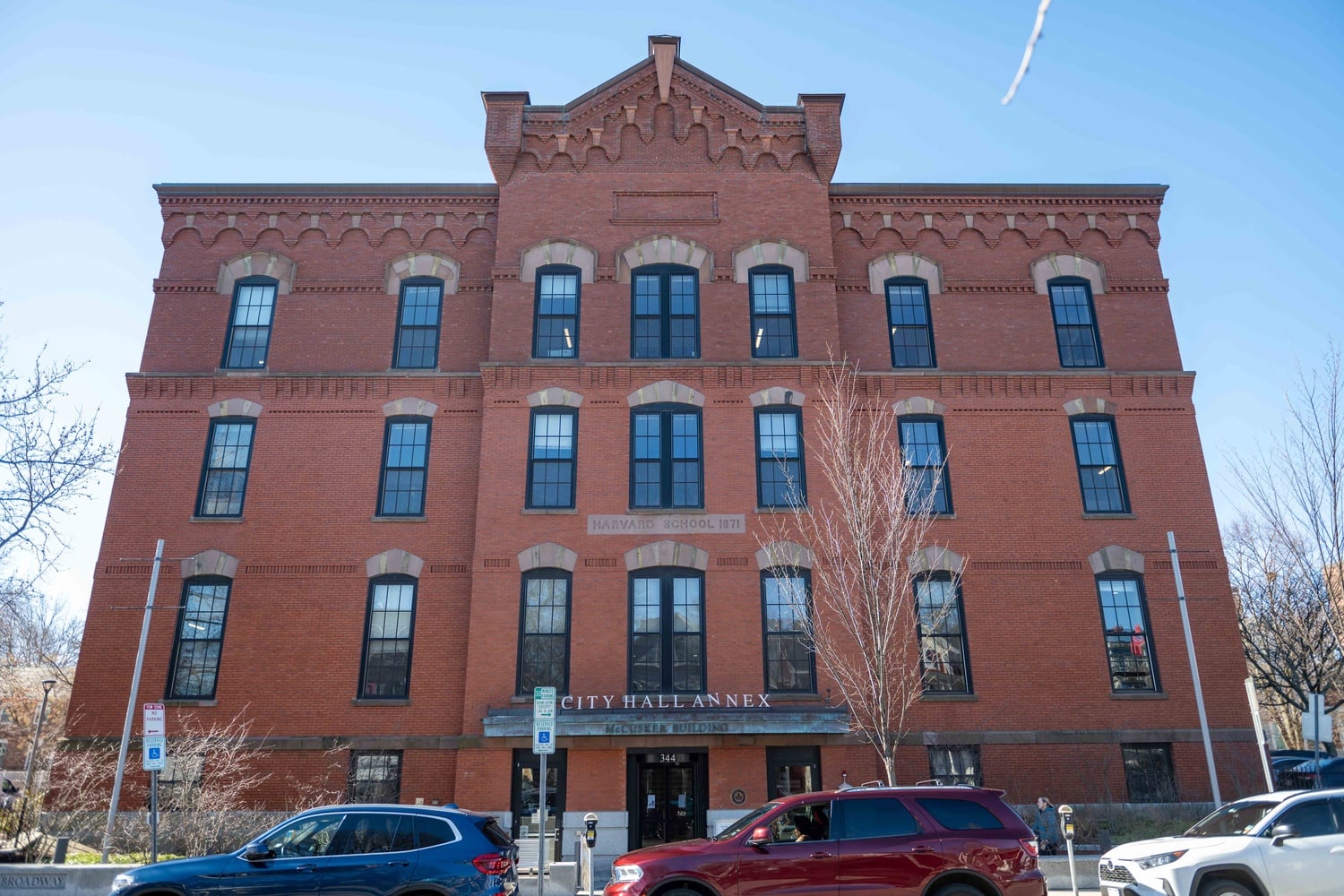
The Cambridge Social Housing Task Force explored what giving tenants greater decision-making power could look like in the city on Wednesday as part of a larger effort to address the housing crisis.
The task force — chaired by City Councilors Ayah A. Al-Zubi ’23 and Jivan G. Sobrinho-Wheeler and the city’s Deputy Chief of Planning Jennifer Caira — was formed to create “an actionable framework for advancing a social housing model in Cambridge, grounded in an assessment of operational needs, financial feasibility, governance structures, and alignment with the City’s housing goals,” according to the city’s website.
The task force consists of 18 members, including housing experts, advocates, and city leaders. The group was established in May, and met for the fourth time Wednesday to explore the possibility of integrating greater tenant governance in Cambridge — a management structure that gives tenants greater power to make decisions around housing policies, conditions, and services.
Wednesday’s meeting largely served as a forum to discuss whether tenant governance could be feasibly implemented in the city, drawing expertise from members and an outside consultant.
Representatives from the Housing Solutions Lab — a think tank based out of the NYU Furman Center that works with local authorities to evaluate equitable housing policies — presented a series of case studies on tenant governance in other cities.
Josh Kirschner, a researcher for the Housing Solutions Lab, pointed to models of tenant governance in New York City, Toronto, and Denmark. He noted that tenant governance can take many forms, from soliciting survey responses to establishing tenant-managed buildings.
Following the Lab’s presentation, task force members discussed two possible forms of tenant management — one that would allow tenants to make decisions under a management company, or another that gives tenants sole responsibility.
Committee member William H. MacArthur ’20, who serves as the data and research manager at the Massachusetts Executive Office of Housing and Livable Communities, emphasized the importance of residents working with hired staff to implement tenant governance in Cambridge.
“I don’t think we need to approach this as an all or nothing,” MacArthur said. “That’s a model that works really well and doesn’t involve residents needing to get involved with the day-to-day maintenance of sewer separation.”
Get The Crimson in your inbox.
Sobrinho-Wheeler discussed Cambridge’s economic diversity in an interview, encouraging the task force to keep in mind residents’ range of needs when designing housing solutions.
“We’re not a homogenous community. You have a wide range of education levels, economic levels. That’s one of the things that’s more unique about Cambridge,” he said.
Al-Zubi said that a major promise of a self-managed property is providing tenants with a greater sense of agency within their building.
“It’s, for me, less of a question about which model is better than the other, and more of a question around which model is actually addressing some of these larger needs and concerns that residents have raised, like accountability,” she said in an interview after the meeting.
But some members of the task force raised concerns about the financing required to create this kind of social housing model. Jean Hannon, a member and tenant advocate with the Alliance of Cambridge Tenants, asked whether lenders would support tenant governance proposals.
In response, Susan B. Schlesinger, a task force member who also sits on the Cambridge Affordable Housing Trust Fund, said that the liability of a new tenant-controlled property could make it difficult to secure funding. She argued that it “would be very hard to get, even a lot of public money, into a project where there’s been no track record of owning and managing a large residential.”
Claudia Aiken, director of strategy and new research for the Housing Solutions Lab, said that cooperative housing models, like land trusts, can face funding difficulties and may require a more specialized financing approach, while publicly subsidized models don’t face the same concerns.
Wednesday’s meeting was also the first to include public comment — though only one person registered to speak. Sobrinho-Wheeler highlighted the importance of community participation in the task force’s mission.
“We want the Social Housing Task Force to be something that’s getting input from all 120,000 Cambridge residents,” he said.
The task force’s fifth meeting is currently scheduled for Oct. 28. According to Sobrinho-Wheeler, their next objective is to explore the size and financing of a possible social housing building in the city.
Want to keep up with breaking news? Subscribe to our email newsletter
Have a tip for The Crimson? Share it confidentially