‘A Streetcar Named Desire’ Review: A Timeless Tale Done Justice
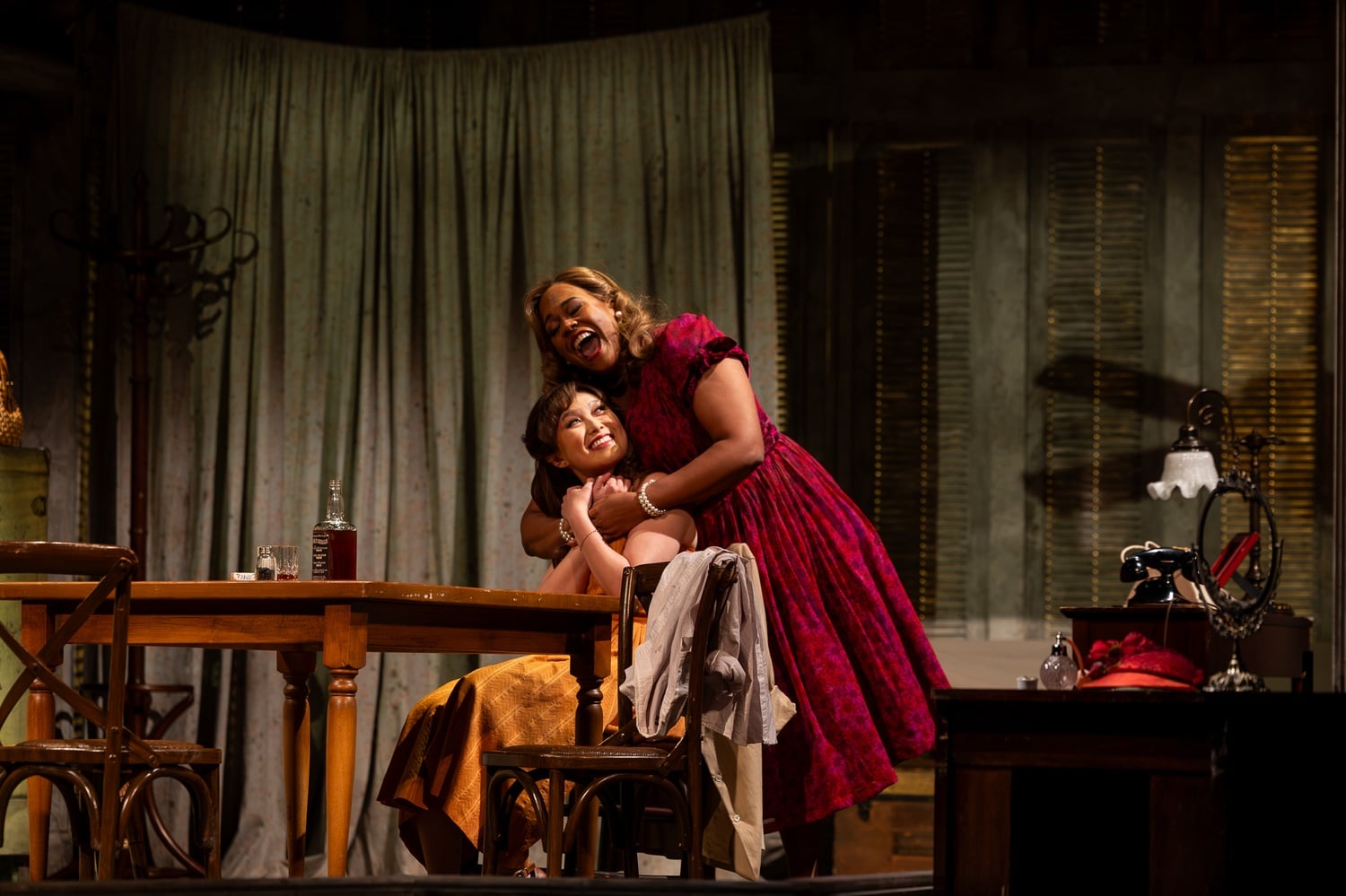
Boston Lyric Opera’s latest endeavor, an operatic rendition of Tennessee Williams’s play “A Streetcar Named Desire,” ran at the Emerson Cutler Majestic Theatre from Nov. 5 to Nov. 8. Directed by Patricia Racette and conducted by Daniela Candillari, the southern gothic tragedy largely stayed true to its source material, transporting viewers into a timeless tale of one summer in New Orleans.
The story opens with the fateful arrival of the aging southern belle, Blanche DuBois, at the home of her sister and brother-in-law, Stanley and Stella Kowalski. Expecting accommodations similar to Belle Reve, the plantation where she grew up, Blanche is horrified by the Kowalskis’s two room apartment. She almost instantly begins to butt heads with the “common” Stanley. Despite Stella’s stories of their blissful life together, Blanche sees how Stanley is physically abusive to her sister, violently striking her during a poker game. As tensions in the family begin to escalate and old secrets come to light, the story barrels towards its explosive finale.
While the plot of “A Streetcar Named Desire” was essentially unchanged, the BLO made several unique choices in its adaptation. This production opted for race-blind casting. Blanche was played by Black actress Brittany Renee; Stella by Asian American actress Angela Yam; and Stanley by white actor David Adam Moore. These changes didn’t affect the production quality; each person played their role perfectly and were completely convincing.
Renee mastered Blanche’s facade of superiority, giving way to a deeply insecure woman struggling to maintain a sense of control. Yam expertly portrayed a woman in denial about how the man she loves could be so cruel and violent. Both women’s immense talents stole the show, and the casting proved an additive change not often pursued by other renditions of the show.
While domestic and sexual violence are pervasive in “A Streetcar Named Desire,” many adaptations opt to use innunedo or use a fade-to-black technique. This production however depicted them with particularly disturbing directness. In the climactic scene in which Stanley sexually assaults Blanche, Racette staged the assault explicitly, as Blanche screamed for help. The scene was deeply unsettling, underscoring Blanche’s vulnerability and setting up the opera’s haunting final act. Its force came from its place in the story of a woman deprived of her home, then her dignity, and ultimately her autonomy.
As the entirety of the play takes place in the Kowalski apartment and the street below it, the set — designed by Andrew Boyce — effectively reflected that. It featured a horizontal cross section of the Kowalski home, raised approximately a foot off the rest of the stage. Instead of walls, the two rooms were visually divided by a slightly raised section of floor, no more than six inches off the ground.
While this arrangement made it very easy to see the actors from all parts of the audience, it detracted from some of the more violent scenes. At various times, Stanley pushed people around or pursued them through the small home. Had there been a larger representation of the walls, this would have made the scenes feel more claustrophobic and intense. Though the audience could tell that Stanley was a threat in those moments, there wasn’t as strong of a sense of urgency, as it felt like characters had more space through which they could maneuver.
Overall, the BLO’s production of “A Streetcar Named Desire” was an impressive feat. The actors succeeded in drawing the viewers in with their talent, and building a portrait of a tense family with mounting pressure that ultimately had to explode. While difficult to watch, Racette’s choice to not shy away from depicting violence only made the story stronger. The production was a triumph in storytelling, its ending lingering with viewers long after the curtain fell.
“A Streetcar Named Desire” ran at the Emerson Cutler Majestic Theatre from Nov. 5 to Nov. 8.
Want to keep up with breaking news? Subscribe to our email newsletter
Have a tip for The Crimson? Share it confidentially