53 Incoming Members of Congress Pledge To Boycott Harvard Orientation Over Grad Student Strike
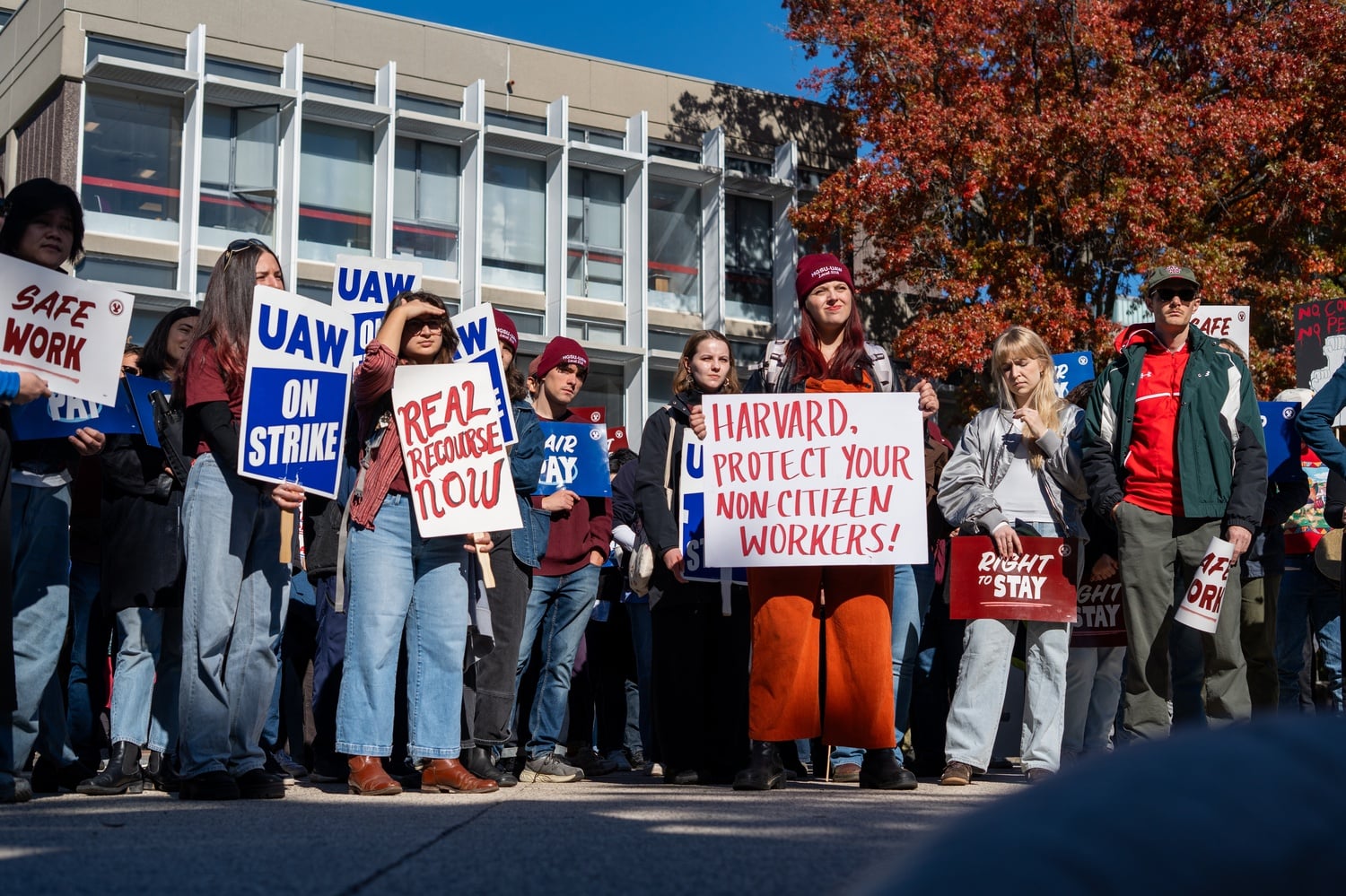
Fifty-three Democrats elected to Congress this month said Tuesday that they would skip Harvard’s orientation for incoming lawmakers as long as the University’s graduate student workers remain on strike.
In a letter to University President Alan M. Garber ’76, Provost John F. Manning ’82, and Jacob Watts, the Institute of Politics’ director of programs and events, the members-elect wrote that they would not cross the Harvard Graduate Students Union-United Auto Workers’ picket line to attend the Bipartisan Program for Newly Elected Members of Congress, scheduled for Dec. 6 to 8.
The letter urges administrators to “bargain in good faith and reach a fair contract” before the program begins.
Spokespeople for the University and the IOP did not immediately respond to requests for comment Tuesday.
The union, which represents more than 4,000 graduate and undergraduate student workers, has been on strike since Oct. 27 over three main demands: higher wages and benefits, protections for noncitizen workers, and an independent process for harassment and discrimination complaints. It has been bargaining with the University since March 2025.
The letter comes after weeks of mounting tensions at the bargaining table, including a Nov. 5 session that ended abruptly when a University negotiator walked out. Harvard proposed bringing in a mediator during that session and pressed the union again in a Nov. 10 letter, in which Paul R. Curran, Harvard’s managing director of labor and employee relations, wrote that mediation had been used to negotiate the union’s last two contracts.
The two sides met with a federal mediator for the first time Friday, days after members of Harvard Academic Workers-UAW voted to end their weeklong strike when the University doubled its proposed raise to 7 percent. HGSU-UAW is now the only union on strike at Harvard. The parties were scheduled to meet with the mediator again Tuesday, with one more session, on Dec. 3, ahead of the program.
Get The Crimson in your inbox.
In a bargaining update reflecting both sides’ positions as of Nov. 17, the union wrote that Harvard was still offering a 6.1 percent raise upon ratification and 3 percent annual raises after that — the same raises in its Oct. 22 proposal, which the University says amount to a nearly 16 percent compounded increase for doctoral teaching fellows and research assistants. The union was seeking an initial raise of 9.8 percent and annual raises of 4.5 percent thereafter.
The members-elect framed their decision as a matter of solidarity with the union.
”While we appreciate the invitation to Harvard’s Institute of Politics, we will not cross a picket line,” they wrote. “So long as these workers are on strike, any trip we take to Harvard would be to stand in solidarity with our striking union siblings.”
HGSU-UAW President Denish K. Jaswal tied the boycott to Harvard’s efforts to secure federal funding.
”If Harvard is going to be asking newly elected members of Congress for funding, Harvard shouldn’t be surprised when those same members demand that Harvard treats its workers with dignity,” Jaswal wrote in a press release.
The letter marks the latest in a series of refusals by prominent figures to cross the union’s picket line. Earlier this month, author John Green moved a campus event to Zoom at the union’s request, and Boston Mayor Michelle Wu ’07 withdrew as Harvard Law School’s Class Day speaker during the union’s 40-day strike in the spring.
The IOP has hosted the program every two years since 1972. It has been canceled only once in 1994, when the Kennedy School called off the session after most newly elected Republicans attended a Heritage Foundation-sponsored orientation in Baltimore instead.
The members-elect wrote that they would reconsider attending if Harvard and the union reach a deal before the program.
”We look forward to reconsidering our attendance once that has happened,” they wrote.
—Staff writer José Luis Ortega Castro can be reached at [email protected].
Want to keep up with breaking news? Subscribe to our email newsletter
Have a tip for The Crimson? Share it confidentially