‘Carrie’ Review: A Must-Watch Modern Adaptation
4.5 Stars
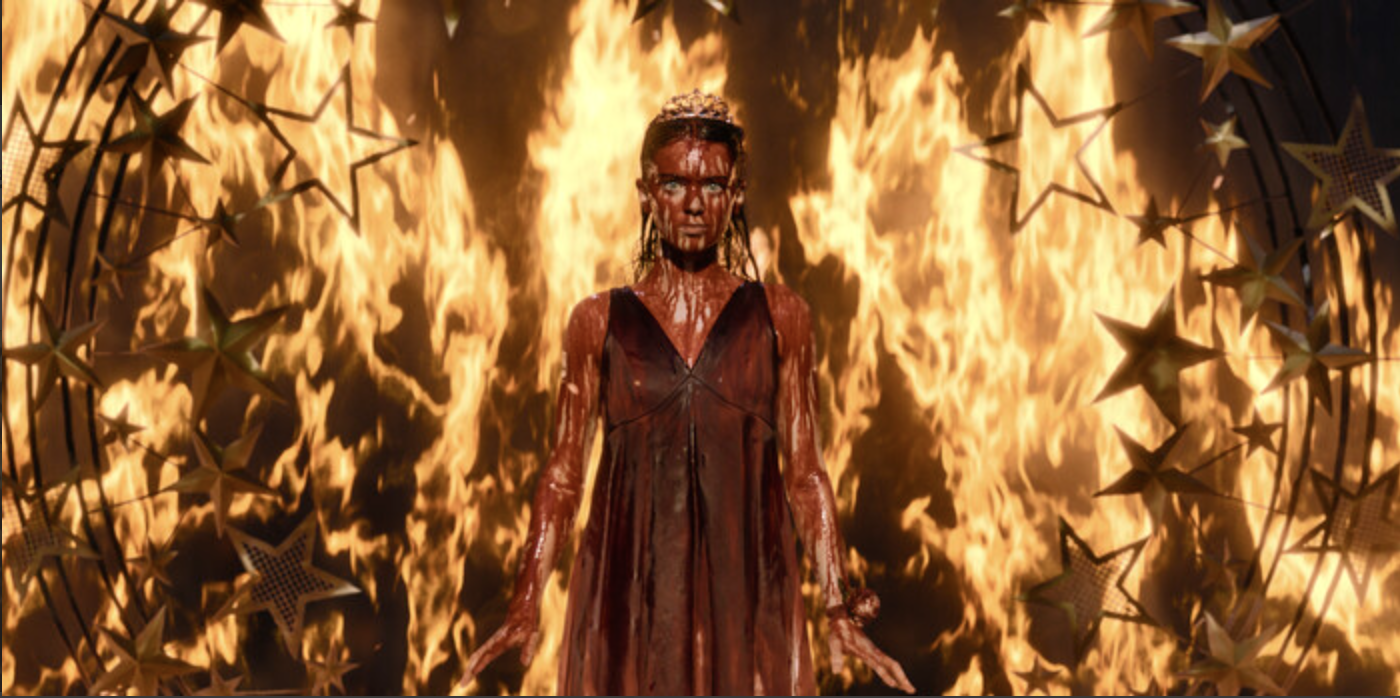
The release of the novel “Carrie” in 1974 marked author Stephen King’s formal debut, launching the decades-long career of one of the most defining horror novelists of our time. Mike Flanagan’s 2026 miniseries “Carrie” is not his first adaption of King’s work, but it is his first King-based miniseries. Unsurprisingly, then, Flanagan’s approach has the polish of a veteran filmmaker: He does the original its due justice while skillfully propelling the narrative into the 21st century context.
Flanagan’s “Carrie” follows its namesake, Carietta White (Summer H. Howell) as she enters sophomore year at Ewen High School. Unlike in its source material, Carrie has never attended public school prior: instead, she is forced into the school system after her father’s sudden death. In school, the sheltered and trepid Carrie becomes a natural target for teenage bullying that will escalate throughout the series. The eight-episode miniseries dissects the motivation behind the series’ central event: the prom night, when Carrie sets the quiet town of Chamberlain aflame.
Flanagan’s cinematography is immersive from the very start. Episode 1, “First Period,” opens in perfectly-manufactured chaos: A series of dialogues between awed callers and overwhelmed police dispatchers overlay an aerial, dynamic shot of the town of Chamberlain set aflame — the camera, and the viewer trace a path of destruction that runs from Union High School, to downtown, all the way to Carrie White’s own home.
The miniseries treats the mundane with the same attention as it pays to the catastrophic. Careful costuming achieves remarkable effect. Despite the show’s 21st century setting, Carrie’s attire draws her back into the ’80s, visually outcasting her from her classmates. On her first day, against a backdrop of students in tank tops, hoodies, and sneakers, Carrie wears a handmade, monochromatic pink outfit consisting of an ankle-length dress and button-up cardigan.
Flanagan’s adaptation of Chris Hargensen (Alison Thornton) is particularly successful. King’s Chris is a typical teenage villain: She is wealthy and spoiled, and harasses Carrie for the sake of her own enjoyment. Unlike in King’s novel, Flanagan spends significant time dissecting Chris, nuancing the infamous antagonist by writing scenes depicting the tumults of her homelife. Thornton’s line delivery and expressions sell this interiority, contributing as much as Flanagan’s dialogue itself in getting viewers to buy into his rendition of her character. Though Chris remains irredeemable, the decision to enhance her depth speaks to the modernity at the heart of the adaptation, serving the growing public appetite for complicated villains.
Flanagan’s modernizing touch seems to be the heart behind his “Carrie” adaptation. In the series’ opening, a caller remarks “Thank God” at the 911 operator picking up their call, only to immediately say “they’re dead.” These lines, taken together — “Thank God, they’re dead” — have an eerie quality, seemingly gratifying the brutal deaths of hundreds of teenagers. The ambiguity between terror and gratitude for the children’s deaths can be read as Flanagan staying faithful to his source material. As such, he forces us to ask if the students are solely victims, or if they too are villains.
The fifty-two years between King’s novel and the release of Flanagan’s “Carrie” are entrenched in distinct political contexts. As of October, there have been over fifty school shootings this year alone in the United States; in the entirety of 1974, there were five. It is impossible to separate media from the political context it inhabits. And so, it is important that Flanagan’s Carrie is not a hero. She is, however, distinctly modern. She is cyberbullied by another student who hides behind the anonymity of an Instagram account. She is terrified by a lockdown drill, not understanding what “drill” means, only hearing the simulated gunshots. Thus, her homeschooling removes her from modern day norms. While Carrie panics, terrified at the sound of gunshots, other students laugh and grumble, treating the ordeal casually, as it’s become so normalized in 21st century America.
Ultimately, Flanagan’s “Carrie” is undeniably modern. This series’ utter embrace of the ambiguous makes it the perfect rendition of “Carrie” for a modern audience no longer satisfied with the black and white. Flanagan asks viewers to reinterpret our understanding of villainy, making his adaptation a modern-day must-watch.
Want to keep up with breaking news? Subscribe to our email newsletter
Have a tip for The Crimson? Share it confidentially