The BSO Meets AI, and Explores the Vitality of Classical Music Today
An orchestral performance occupies a particular moment in culture where, for a few short hours, a centuries-old spirit is reanimated with modern breath.
From Oct. 22 to 24, the Boston Symphony Orchestra and conductor Kent Nagano performed “already and not yet: A world premiere by Tod Machover.” The headliner was a modern classical work: an onstage musical dialogue between the BSO and a live AI system. Beyond the philosophical implications of the concept, the performance struck at a key nerve of classical music culture — a delicate balancing of tradition and relevance.
The performance opened with Mendelssohn’s “Hebrides Overture.” The music hummed alive in the violas and cellos, their low rolling line sweeping the sound forward and buzzing with energy. Overall, the lower strings sections’ insistent tone and articulation set a vital momentum that propelled the entire piece.
The “Hebrides Overture” — written when Mendelssohn was only 21 years old — resounds with his youth and yearning in its long sweeping phrases. There were moments in the BSO’s rendition that, although technically accurate, did not capture that spirit. Nagano’s gestures were deliberate and expressive, but at times, they visually promised musical expression only to be flimsily matched by the sound of the orchestra. Some violinists slumped in their chairs, and used minuscule amounts of bow. The section’s listless tone left Mendelssohn’s noble melodies technically correct, but without the soaring breadth that brings them to life.
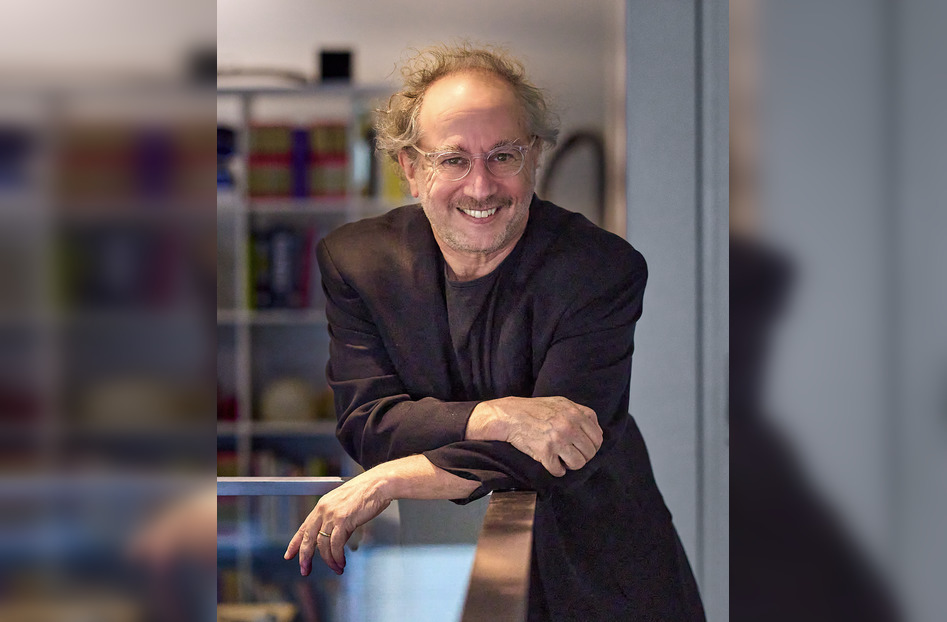
Then came the headlining heart of the program, a piece of confrontation and conversation with an onstage music machine: Tod Machover’s “already and not yet.”
At the center of Machover’s composition philosophy is his belief that classical music finds a natural extension and innovation in technology. He revealed in an interview with GBH music that the music he hears in his head is often beyond the scope of traditional instruments. Thus, alongside the MIT Media Lab, Machover has developed an audio AI that takes in the playing of the orchestra as input and produces live synthetic sounds that — as Machover puts it — “enhances” the orchestra.
The piece was divided into three movements. The first movement, “SMASH UP,” was, in Machover’s words, a “clash/crisis” without audible enhancement from the AI.
The second, “WAKE UP,” was an “awakening”: the AI slowly produced sound in response to various solo lines in the orchestra. Then the last movement, “STAND UP,” was a “depiction of democracy,” as the musicians and AI listened to one another and negotiated the final musical product.
“SMASH UP” genuinely unsettled Symphony Hall. Iron-sounding trumpets clashed with the mellow strings. The culmination of the movement was an ear-shattering climax — the brass utterly razing any semblance of prior peace. But the following movements, inseparable from their AI participation, were less captivating. Delays between the musicians’ playing and the system’s processing limited their musical conversation — they lacked any shared sound. The music of the orchestra was divided from the odd, alien, ear-grabbing entity.
In tangential and ridiculous emulations of the orchestra’s preceding playing, the AI scratched, screeched, undulated, chittered, and operatically warbled strange pitches. The strangeness of this “being” overwhelmed any promised immersion.
Following the experimental work, the orchestra returned from intermission with Alex Nante’s “Ein’ feste Burg” and Mendelssohn’s “Symphony No. 5, ‘Reformation.’” The two composers — almost 200 years apart — interacted with the same classic work: Martin Luther’s 16th-century hymn, “Ein’ feste Burg.”
Nante’s arrangement faithfully recalled Johann Sebastian Bach’s famous choral harmonization of Luther’s hymn in its entirety. But he and the BSO gave it modern stylings. The chorale’s opening was sustained, pianissimo, and exceptionally high pitched — a startling effect no singer or baroque instrument could achieve. In contrast to the practice of Bach’s time, numerous string solos were played with intense vibrato, sometimes overpowering the harmonic simplicity.
The music then flowed seamlessly from Nante to Mendelssohn, a low chorale rising slowly from the sound of the cellos to the flutes. Mendelssohn, as a young man, was enamored with the work of the great composer, one of the first of his era to revive the performance of Bach’s works. The BSO brought out some of Bach’s influences in their performance of “Reformation.”
While the violins, with rich sound and vibrato, evoked the romanticism of Mendelssohn’s long melodic lines, their sharp articulations also captured the fugal and contrapuntal elements the symphony took from Bach. Overall, the performance of Mendelssohn’s symphony was the BSO at their highest energy of the evening, with rapid glittery sixteenth notes, soaring fanfares, and deep harmonic tensions.
Machover, Nagano, and the BSO explored the difficulties of animating classical music today. Merely presenting innovation and tradition side by side is not enough; it takes embodied intention and dialogue — elements which were, in this performance, sometimes present and sometimes not.
Want to keep up with breaking news? Subscribe to our email newsletter
Have a tip for The Crimson? Share it confidentially