‘Come and See’: Luxembourg Prime Minister Says Europe Should Not Be Dependent on United States
Prime Minister of Luxembourg Luc Frieden said Friday that Europe must assume greater responsibility for its own economic strength, energy supply, and security, arguing that the continent can no longer take its relationship with the United States for granted.
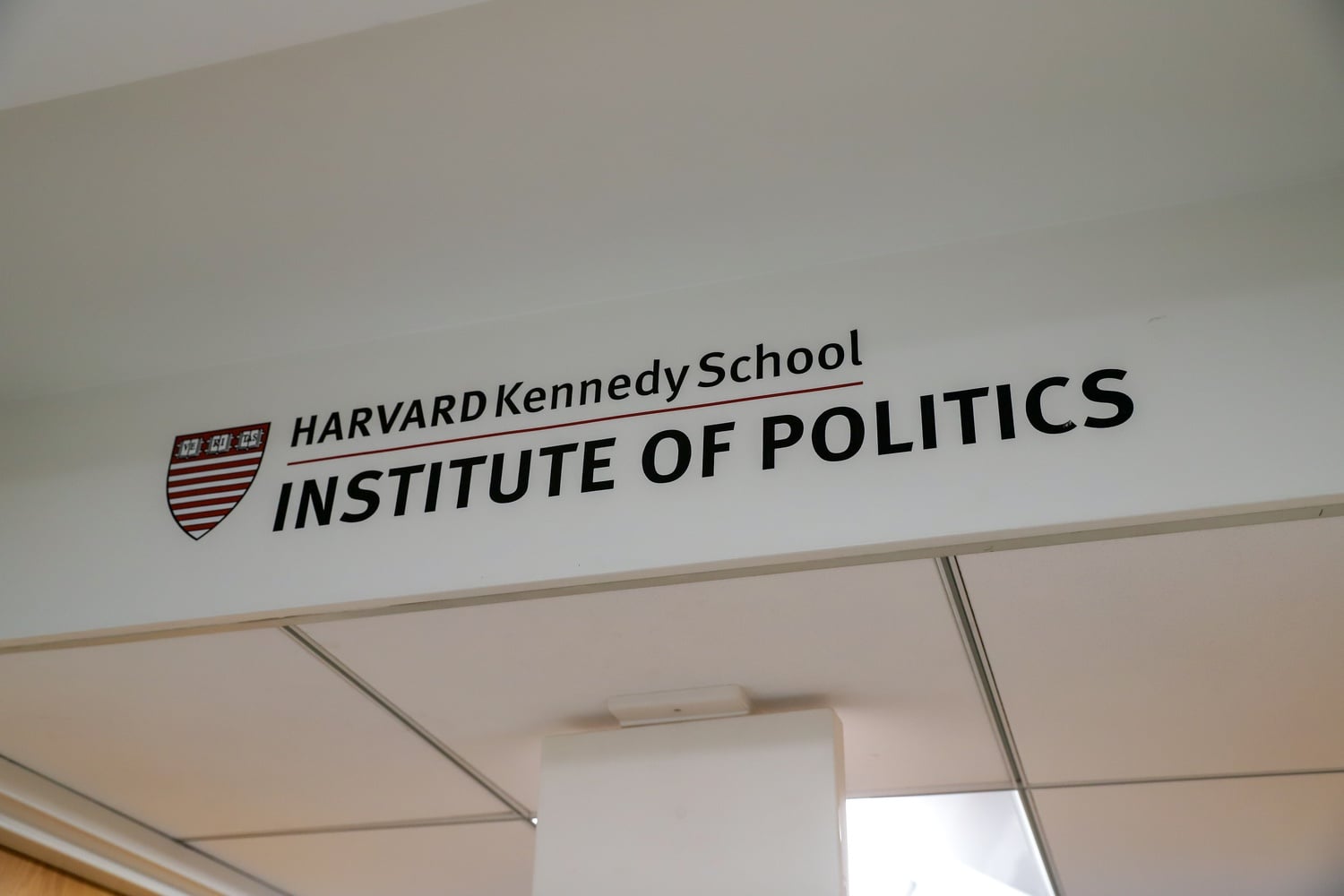
Speaking at an Institute of Politics forum moderated by Harvard government professor Daniel Ziblatt, Frieden described the current moment as a turning point for Europe, marked by geopolitical instability and renewed security threats.
“It is not about cutting ourselves off our bonds with the United States,” Frieden said. “It is about making a conscious choice and reducing our dependency and establishing a more balanced relationship.”
Frieden’s remarks come amid heightened diplomatic tension following United States President Donald Trump’s recent statements expressing interest in acquiring Greenland, an autonomous territory under the Kingdom of Denmark. The comments alarmed European leaders and prompted rapid coordination across the continent over questions of sovereignty and security in the Arctic.
In an interview with The Crimson, Frieden said the episode underscored the urgency of European unity and self-reliance, particularly in defense.
“We as Europeans need to be stronger and more independent than in the past,” he said.
During the forum, Frieden framed Europe’s response to global uncertainty as one of adaptation rather than retreat. Discussing the economy, Frieden called for a long-awaited overhaul of Europe’s capital markets to better support innovation and growth.
“A unified European capital market must finally become a reality, through a different approach to investing — using European money to finance European success,” he said.
He also emphasized the need to reduce Europe’s dependence on foreign energy sources, calling Russia’s 2022 invasion of Ukraine a turning point for European energy and defense sectors.
“Russia’s unlawful and unacceptable invasion of Ukraine was a wake up call for Europe,” Frieden said.
Get The Crimson in your inbox.
Frieden repeatedly turned to the theme of unity, arguing that Europe’s political culture has allowed it to manage disagreement.
“We know the strengths of unity because we saw the danger of silence,” he said.
He cited the response to Trump’s Greenland remarks as a recent example. Greenland holds strategic importance because of its Arctic location, natural resources, and role in transatlantic security, and Frieden said European leaders began meeting within hours of the statements.
“Two weeks ago, when the Greenland crisis erupted, hours after some of these announcements were made, we were already meeting,” Frieden said. “We felt extremely united. So something will come out of that which is better for Europe and for the world.”
Frieden, a graduate of Harvard Law School, highlighted the University’s role as a site for transatlantic dialogue.
“Harvard has always played an important role in transatlantic relations,” he said.
“I think it’s a place where free ideas can be exchanged in a respectful manner, where people listen about Europe,” he said. “That’s why I’m here, also, to speak at the European Conference.”
The forum was co-sponsored by the Harvard European Conference, a student-run program involving Harvard, MIT, and the Fletcher School. The conference’s 12th iteration, themed “Crisis as Catalyst,” focused on Europe’s position in a shifting global order and drew over 750 attendees.
European Conference co-chairs Slavina I. Ancheva and Carlo Giannone introduced Frieden.
“At a moment that’s definitely very difficult in the transatlantic relationship, we think it’s important to gather people here at this forum and to see how they see our shared future,” Ancheva said.
“We call this conference ‘Crisis as Catalyst’ because we believe that behind that crisis there is always an opportunity for growth, for serenity, and for unity,” Giannone added.
Frieden expressed confidence in Europe’s future and its ability to lead by example.
“For those skeptical about Europe’s future,” he said, “I offer a meditation: Come and see. Come and see the cities built for people, not cars. Come and see European energy networks being revamped from fossil fuels to renewable sources. Come and see European societies that invest not only in markets, but in meaning.”
“The question is not whether Europe will endure,” he added. “The question is what Europe can show the world.”
—Staff writer Sophia E. Alcacer can be reached at [email protected] and Signal at sophiaalcacer.88. Follow her on X at @sophiaalcacer.
—Staff writer Jen L. Phan can be reached at [email protected]. Follow her on X at @jenllphan.
Want to keep up with breaking news? Subscribe to our email newsletter
Have a tip for The Crimson? Share it confidentially