From Sundance: ‘Wicker’ Burns the Fairytale Playbook
Dir. Alex Huston Fischer and Eleanor Wilson — 4.5 stars
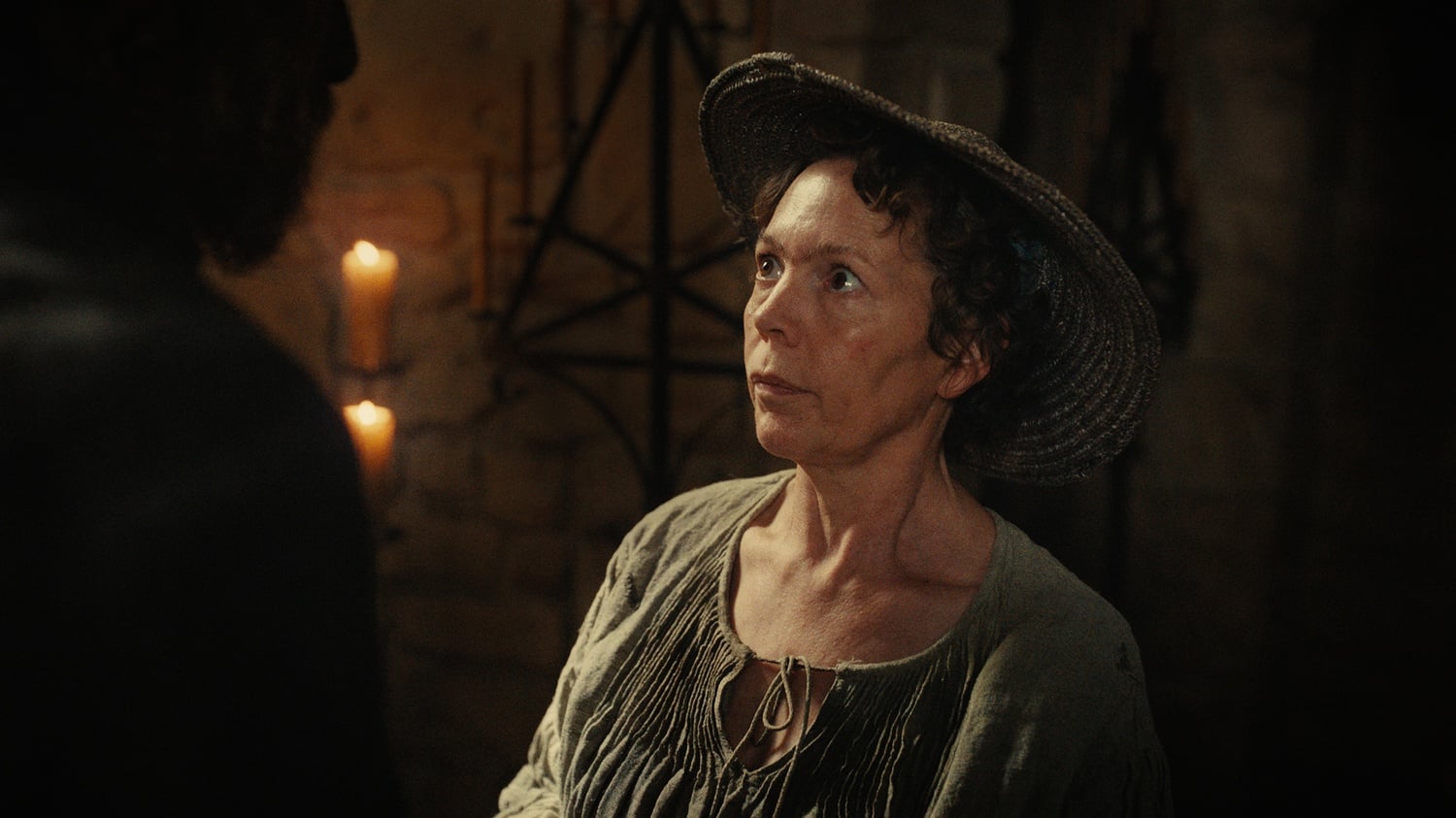
Romance, as it would appear, is no less complicated when one party is highly flammable. What begins as an absurdist fantasy tale — while never losing that defining quality — Alex Huston Fischer and Eleanor Wilson’s “Wicker” gradually spins itself into a messy yet endearing tale of love, desire, and the small, corrosive jealousies that can accumulate within all communal life.
Adapted from Ursula Wills-Jones’ short story “The Wicker Husband,” the film tells the story of a fisherwoman (Olivia Colman) who, tired of being shamed by the women in her village, seeks help from a local basket weaver (Peter Dinklage). What emerges from this is a devoted, loving husband (Alexander Skarsgård) eager to marry her, with only one catch: He’s made entirely of wicker.
Absurd but still deeply emotional, “Wicker” sustains a surprising gravity beneath its premise, branching into a series of subplots which touch on trust, companionship, and the uneasy question of what constitutes the meaning of home. None of this would land without Colman’s predictably strong leading performance which grounds the film’s satire with the perfect amount of sentimentality.
Though slightly less nuanced, the film’s gender-based subplot offers a realistic spin on the traditional paradise often seen in medieval fairytales, depicting women being given collars instead of rings at their wedding and only referred to by their husbands’ professions. The point is made plainly and, while at times risks feeling overly blunt, still helps justify the film’s general silliness.
A wild and often unexpected journey, “Wicker” is crowded with ideas that might easily have unraveled into indulgence had the directors not known precisely when to stop. The film’s strength lies in its trust that even the oddest symbolism will resonate amid all of the satire, not because they insist upon meaning, but because they leave space for it.
Furthering this well-crafted subtext, many of the supporting characters — including the tailor’s wife (Elizabeth Debicki) — deepen the film’s primary and secondary plotlines in ways that feel genuine rather than purely symbolic. Debicki’s performance registers as acutely real, with her battle to climb the social ladder and subsequent disappointment at finding nothing but emptiness at the top resonating throughout all of the jokes.
Another remarkable aspect of “Wicker” is its special effects, which bring the wicker husband to life and allow him to retain a surprising sense of humanity despite being, essentially, a basket. Just as much care is given to the village setting itself, whose often warm, candle-like lighting and rustic aesthetic establish the “storybook” quality that “Wicker” first embraces, before dismantling entirely. Its initial charm mirrors the plot’s opening whimsy before gradually giving way to a sharper, more cautionary underlying reality.
The film’s phenomenal sound design completes the audience’s transportation into this fictional world, lending the wicker husband additional realism through the subtle creaks and shifts of his body — as convincing as the premise reasonably allows. Much of this victory can also be attributed to Skarsgård, whose performance is inventive and only occasionally tips into exaggeration. The character, however, might have benefitted from a more fully developed independent presence since the audience learns relatively little about his motivation beyond his devotion to the fisherwoman.
Ultimately, “Wicker” weaves together romance, fantasy, and chaos into a tale that somehow manages to never collapse under the weight of its own invention. Anchored by several Oscar-worthy performances as well as meticulous visuals and sound design, “Wicker” shatters expectations for the fantasy genre and makes the impossible feel tangible.
—Staff Writer Sara R. Eyjolfsdottir can be reached at [email protected].
Want to keep up with breaking news? Subscribe to our email newsletter
Have a tip for The Crimson? Share it confidentially