Three Stories: The Triple-Decker and Massachusetts’ Housing Crisis
As Massachusetts faces a housing shortage, local cities are turning back to triple-deckers — an iconic New England housing structure. Still, some question whether the triple-decker is part of the solution or a facade resurrected too late.
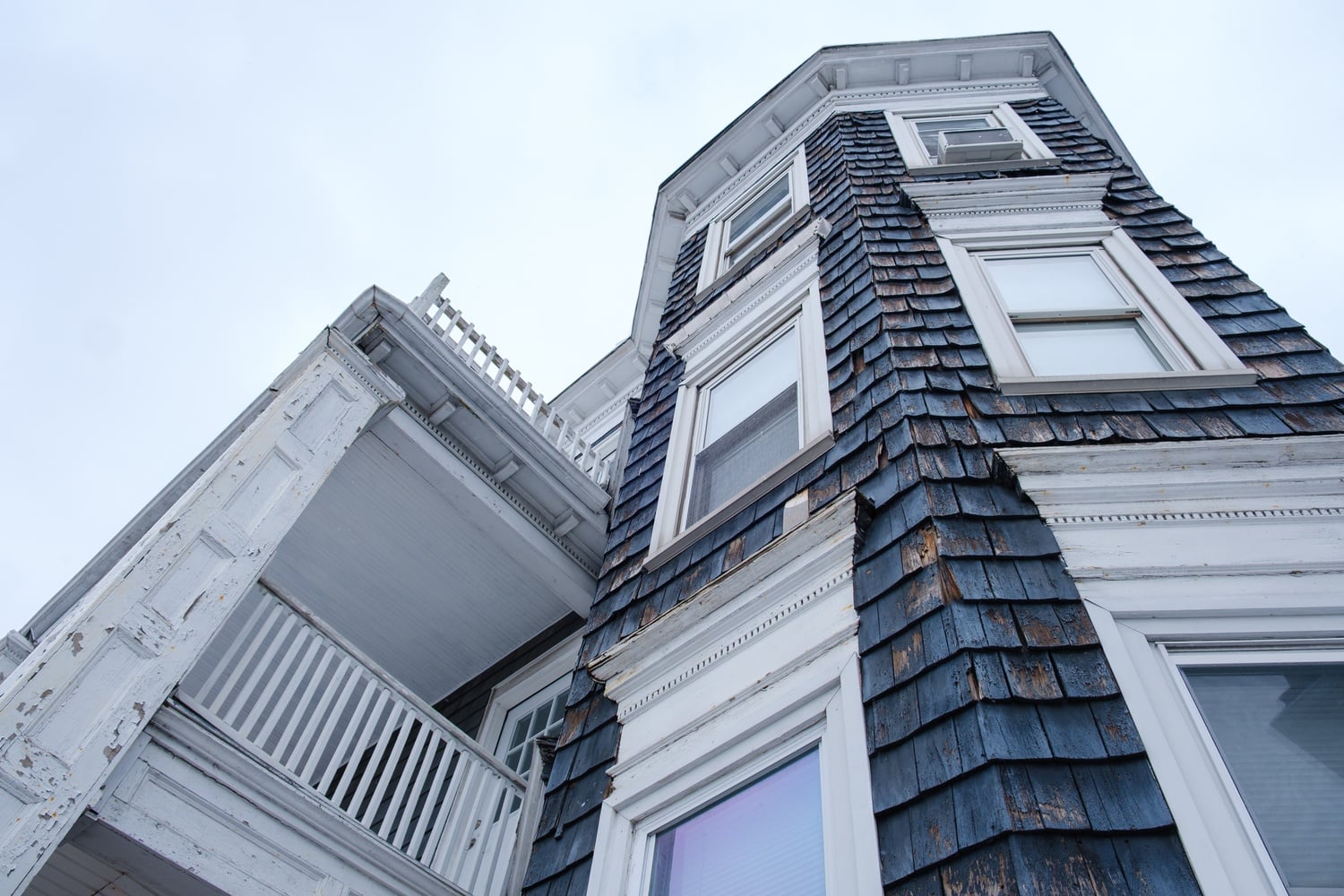
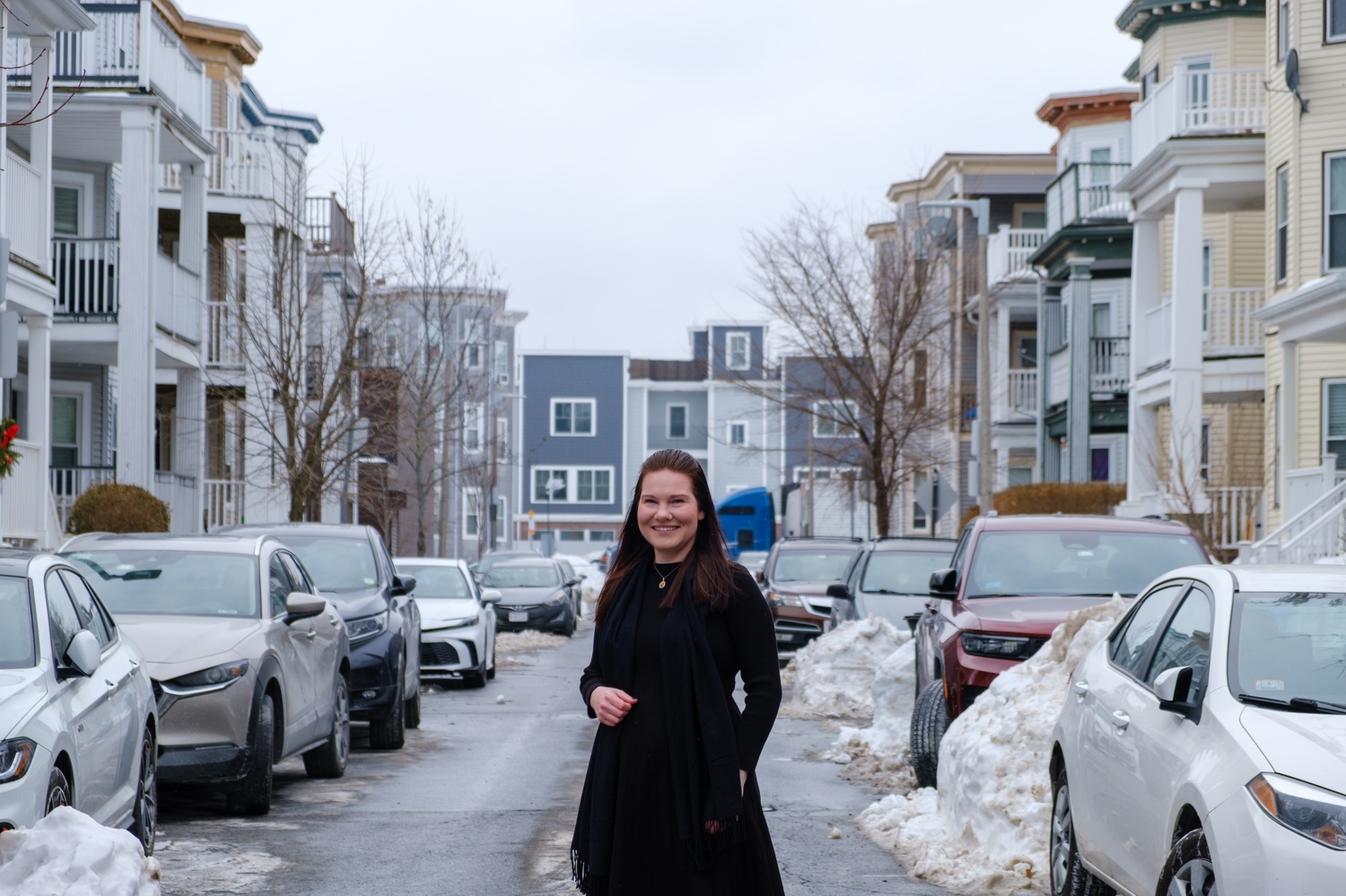
ennifer Smith has been covering housing and development in Massachusetts for more than a decade, first for the Dorchester Reporter and now at the CommonWealth Beacon. She’s come to accept a reputation as “the most three-decker-enthusiastic person that you could find inside a 12 mile radius.”
In fact, much to her “chagrin,” her reputation has become so strong that two separate friends gifted her the same enamel pin of a triple-decker, gifts that still rest on her mantle.
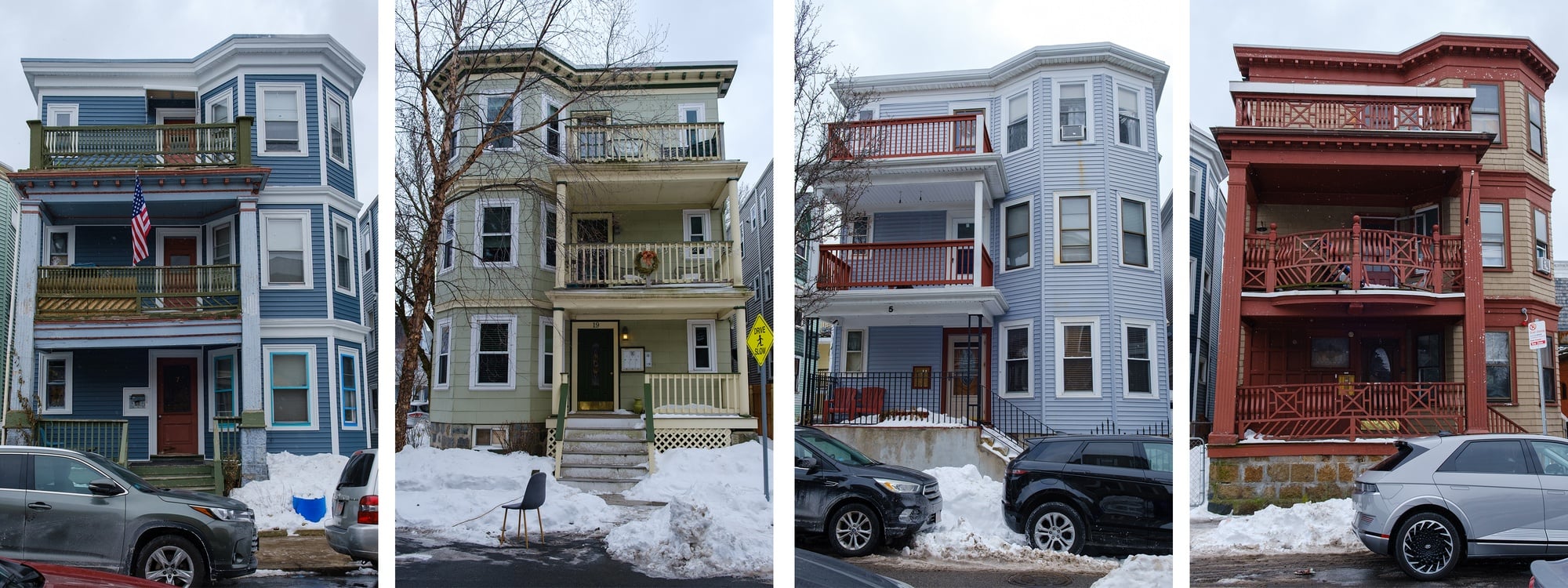
The three-decker — or, as it is now known, the triple-decker — is a uniquely New England, three story, wood-framed structure where each floor is a separate apartment. It features prominently in some of Boston’s most iconic films including “The Departed,” “Good Will Hunting,” and “Gone Baby Gone.” Around 15,000 of these houses exist in the Boston area today, mostly built between 1880 and 1930.
When Smith first moved to Boston from Utah, she was “struck” by the “immediately iconic” houses.
Her first job in journalism was as an intern on the metro desk at the Boston Globe. She worked what she described as the “murder and mayhem beat,” covering fires, homicides, and other emergencies that happened after the sun went down in Boston.
Back then, triple-deckers weren’t movie fodder or housing stock to her; they were just the background to her midnight stories on crime in the city. It wasn’t until Smith took a job at the Dorchester Reporter after college and moved into one such unit herself that she began to see the triple-decker not just as a frequent setting for her stories, but as part of the much larger story of living and affording to live in Boston.
“I’ve lived in this three-decker since I was 22,” Smith says. When she purchased the condo in 2016, she adds, the “housing market felt accessible in a way that it hasn’t in many years.”
Smith’s feeling wasn’t just a feeling. The housing crisis in Boston has spiraled since Smith bought her condo. The median single family home price in Boston increased by 40 percent from $596,272 in 2015 to $837,287 in 2025, according to Boston Indicators, a research center operated by the Boston Foundation, and the number of renter households able to afford an entry-level home in greater Boston halved from 30 percent in 2021 to 15 percent in 2025. Building rates, however, haven’t risen to meet Boston’s demand for housing. Permits are down, and public officials have been trying to encourage more development across the city and the state. Often, the easiest solution is apartment buildings, but residents are often wary of losing the aesthetics that drew them to their neighborhood.
Triple-deckers feel like a good compromise. With their vinyl siding and spacious porches, they look similar to the single-family homes around them in a way a new apartment building wouldn’t.
As she began covering residential development for the Dorchester Reporter, Smith often heard Dorchester residents in meetings with developers asking, “Why don’t you just build three, three-deckers on this lot?”
What many didn’t know, however, is that complicated Massachusetts zoning laws make such construction difficult.
Historically, triple-deckers were built to house factory workers. Over time, they became a crucial form of upward mobility for working class families, especially immigrants who came to call Massachusetts home. But, as nativist sentiment in Boston grew between 1910 and 1930, the triple-decker became maligned for its association with these groups and it was slowly banned from zoning codes.
Today, many areas of Boston, including the ones Smith covered, are zoned for no more than two and a half stories. Building higher than that requires the same expensive special permission as an apartment building, making apartments a better investment for developers.
But in the midst of a housing crisis, triple-deckers are poised for a comeback in many municipalities.
In 2024, Somerville made three unit buildings legal as of right citywide. The following year, in Cambridge, the city council went further: they made 4 stories legal as of right and gave developers the option to build up to 6 stories with a minimum lot size and a guarantee of affordable inclusionary units. Now, Boston is considering whether or not it will allow triple-deckers — or even taller buildings — to be built to meet the crisis head-on.
When Smith bought her triple-decker condo, she remembers talking about her purchase with her colleagues in the Dorchester Reporter offices. Nearly all of them had lived in one at some point in their lives. The triple-decker is a structure, but for many, it’s also a cultural touchstone.
“I think it tells you something about the way that buildings can take up cultural space in a political mind and also in a personal mind, which is that when you see it every day, when you’ve known family members who have grown up in them, when you work in an office where everybody has lived in one, they start to not feel like housing. They start to feel like connective tissue,” Smith tells me.
At least in Somerville, that “connective tissue” has helped a lot of pro-housing advocates market upzoning to their neighbors. But Smith says that pro-housing advocates in the state often see two sides to that same tissue.
“There are upsides to that in that it makes it easier to make the case for them as a policy matter,” Smith says. “And then the downsides to that are, what do you do if this classic model of housing that holds that space in your head is no longer the best solution for the housing crisis that you currently have.”
Unit 1: Somerville
n 2021, Massachusetts passed the MBTA Communities Act, which required towns and cities served by the MBTA to zone for more multifamily housing with the goal of increasing housing supply and decreasing prices.
Cities had the opportunity to choose how they would rezone to comply with the law. In Somerville, the answer was to go back to their roots.
“The MBTA Communities Act required us to build housing by transit,” Somerville City Councilor Matt McLaughlin tells me. “And it seemed like the easiest solution was to just allow a third unit by right citywide.”
One of the people tasked with implementing the MBTA Communities Act is the Massachusetts Secretary of Housing and Livable Communities, Edward M. Augustus Jr.
Augustus is the first to occupy the Secretary role since Massachusetts Governor Maura T. Healey created it in 2023. Since then, he has been in charge of managing key policies in the state including the MBTA Communities Act and the state’s landmark $5.1 billion Affordable Homes Act. Augustus has been tasked with administering the investment and overseeing a provision of the bill legalizing Accessory Dwelling Units, secondary structures that give homeowners the right to build smaller homes on their property.
He supports the ways in which localities have zoned for more density.
“Some places, it may be adding an ADU here or there. Other places, it may be taking old parking lots and building 30 unit buildings, or transforming a single family home into a triple-decker or a three unit building,” Augustus says.
While Somerville’s change was talked about by officials and in the media as a relegalization of the triple-deckers, the legislation allowed three units, not just the iconic three floor structure. According to Somerville City Councilor Ben Ewen-Campen, that means that the change may not always look like what people are familiar with.
“There are honestly a lot of different ways you can fit three units into a building. And I think lots of people in the public say a triple-decker is just a simple shorthand. But we didn't just say you have to build it to look like the old triple-deckers from the postcards,” Ewen-Campen says.
In her time covering development changes, Smith says that this is a common occurrence. The triple-decker is comfortable for residents and leaders know that. Even when a multi-family housing policy is designed to build another structure, the triple-decker’s familiar image often finds its way into the discussion.
“When politicians or when governments start talking about multi-family housing, you almost immediately see three-decker iconography on all of the information packets,” Smith says. “So when Somerville was zoning to allow three families by right, they talked about them in terms of three-deckers, that even though, of course, it meant three unit buildings.”
Ewen-Campen is happy with the change, but believes there’s more to be done. “I also think we’d be fooling ourselves if we think that this alone is going to solve the housing crisis period,” he says.
Unit 2: Cambridge
ambridge is a liberal stronghold colloquially referred to (with equal amounts of disdain and pride) as the People’s Republic of Cambridge. Even amid this ideological homogeneity, tough politics persist in the city, and over the last few years, debates over housing have raged on.
In that political climate, identifying as either an owner or a renter can be a salient distinction. Cambridge City Councilor Jivan Sobrinho-Wheeler is proud to be the latter.
I called Sobrinho-Wheeler in October, as the city’s elections heated up – headlined, almost inevitably, by housing affordability. Last February, he voted in the majority on the city council’s landmark zoning reform ordinance, which allowed between four and six stories citywide.
He says that with homes — including multifamily units — selling for well over a million dollars in Cambridge, triple-deckers wouldn’t necessarily offer the affordability Cambridge needs.
“It’s the larger buildings, the six-to-twelve units, that are the ones that are more affordable. I’m hopeful the multifamily zoning we passed will create more of that kind of housing,” Sobrinho-Wheeler says.
The zoning ordinance that made four stories as of right in Cambridge was accompanied by both pushback and support.
Largely in response to a previous zoning overhaul in 2019 called the Affordable Housing Overlay, local special interests groups have injected themselves into Cambridge’s elections.
A Better Cambridge and Cambridge Citizens Coalition operate housing advocacy groups and associated super PACs — the former a pro-development shop, while the latter an advocacy group hoping to stifle the city’s upzoning. The CCC argues that building more homes and “assuming that trickle down impacts will bring lower prices” to housing is incorrect, according to the Coalition’s website.
Much of the debate surrounding Cambridge’s upzoning has had to do with the issue of neighborhood character — that increased density would change the fabric of neighborhoods and decrease the value of homes.
Harvard economics professor Edward L. Glaeser is one of the nation’s preeminent housing economists and has researched the history of zoning restrictions in the United States especially those aimed at maintaining neighborhood character. He studies the ways in which housing regulations, like zoning, have inflated the cost of housing by increasing costs for builders and restricting supply.
“Twenty-five years ago, when I started working on zoning with Joe Gyourko, there were like, two libertarian economists who thought that I wasn’t wasting my time,” Glaeser tells me in his office.
Since then, interest in zoning and housing policy has exploded. Glaeser recalls watching former President Barack Obama talk about local land use regulation just a few years ago on the floor of the DNC, and feeling conflicted about the political reality of his once ostracized research.
“On one level, it’s amazing to have things that you thought were important be vindicated. On the other level, the reason why he’s talking about it is we’ve made absolutely no progress over the last quarter to change it. So it’s both a positive thing and also a statement of my failure. So they both go on,” he says.
He says his research shows that housing regulation including environmental restrictions, low density zoning, and lengthy approval processes have acted as a tax on builders, decreasing the number of homes built and driving up prices.
“If Americans had built at the same rate between 2000 and 2020 that they did between 1980 and 2000, America would have 15 million more homes,” Glaeser says.
Glaeser recognizes that the problem of supply and demand also goes hand in hand with a political problem. Homes are the “largest asset for many Americans.” He says this can make rising prices appealing for long time owners. He sees recent changes to triple-deckers as a compromise made to those owners and voters.
“And the triple-decker ordinance here is the attempt to sort of provide incremental amounts of more building in ways that specifically advantage incumbent homeowners,” Glaeser says.
Glaeser also questions the potential impact of triple-deckers on housing prices. He believes that much higher density is needed to alleviate the housing shortage.
“I’ve typically thought when I’ve looked at Boston’s triple-deckers that while the triple-decker was a marvelously flexible and sensible housing product for middle income or lower middle income Bostonians in 1900, it’s hard to think that it’s the right strategy for 2025,” Glaeser says.
He points to New York City in the 20th century as an earlier example of the crisis Boston faces today — and in that instance, Glaeser argues, “adding an accessory dwelling unit or replacing a single family house with a duplex” wasn’t enough. Growth only happened by“tearing up low rise housing and building 20 story buildings or building 30 story buildings.”

Unit 3: Boston
oston City Councilor Henry Santana sits across from me at a conference table in The Curley Room at Boston City Hall. He’s young — having been elected to the city council two years ago at the age of 28. He’s also one of the leading voices in Boston’s attempt to relegalize the triple-decker.
In September, Santana authored a proposal seeking a hearing “regarding legalizing construction of triple-deckers and other 2 to 4 Unit Housing in the City of Boston.”
Santana is currently an at-large councilor representing all 673,458 residents of Boston. But he still has a soft spot for his home neighborhood; Santana grew up in the Alice Taylor Apartments, a public housing project in the city’s Mission Hill neighborhood.
He hopes to move back to Mission Hill someday. As an at-large councilor, there’s no political boundary preventing him from moving back — instead, he, like many of his constituents, simply can’t afford to.
“I’m going lease to lease, figuring out where I can live, where I can live comfortably. And this is me speaking as a city councilor at-large now,” Santana says.
When I ask Santana to explain the stakes of the housing crisis, he doesn’t mince words. “We are losing residents. We are losing young people, young professionals who want to stay here. We are losing families who want to raise their families here because of the lack of affordability.”
Santana says that he’s learned from some of the work done in neighboring cities.
“I’m very proud of the work Cambridge is doing, Somerville, Chelsea, you name it. And I don’t believe I’m the only elected official who’s working and educating themselves from the work that’s being done out there,” he says.
Like Ewen-Campen, the Somerville councilor, he doesn’t think triple-deckers are a silver bullet.
“By no means is the triple-decker going to solve the housing crisis that we have here,” Santana says. “We have this toolbox. How do we keep adding to it, and how do we look at it from a perspective of who’s hurting most right now?”
As I interview elected leaders, most agree that the triple-decker’s role is more than economic — it is part of the social fabric of Massachusetts. “Connective tissue,” if you will.
Prior to becoming the inaugural Secretary of Housing and Livable Communities in Massachusetts, Augustus was City Manager of Worcester. He himself spent some of his childhood living in a triple-decker and felt that it was part of a larger story.
“It has been a kind of iconic part of the Worcester and Massachusetts housing landscape, but also part of the story of America,” Augustus says. “Like how families come, how they find their foothold, how they take care of each other, how they create community.”
Boston City Councilor Enrique J. Pepén grew up in a triple-decker and believes that the community the structure fostered was an important part of his childhood.
“My neighbors on the second and third floor, they became more like family, because obviously, you all live in one building, but we would share food with each other. We would help each other clean the snow when it would snow during the winter,” Pepén recalls. “And I just think that that provided such a unique opportunity to build community while also living in a way that was still affordable.”
Santana is a proud immigrant, coming to Boston as a child from the Dominican Republic. He says he worries about people like him, people who a hundred years ago would have been recipients of the economic and social mobility offered by the triple-decker.
As we wrap up our interview in the Curley Room, I ask him if he thinks that that dream is lost — if the housing crisis of today has relegated the triple-decker and its social benefits to a bygone era.
“I don’t think those days are behind us,” Santana tells me.
“I think triple-deckers, especially to our immigrant families, to our working class families and to multi-generational families, it’s a way to not just build wealth, but be able to stay here, to be able to live here,” he says. “And we absolutely need to bring that back.”
— Magazine writer Jack B. Reardon can be reached at [email protected]. Follow him on X @JackBReardon.
Want to keep up with breaking news? Subscribe to our email newsletter
Have a tip for The Crimson? Share it confidentially