At a Stalemate: Venezuelan Exiles at Harvard are Caught Between Two Regimes
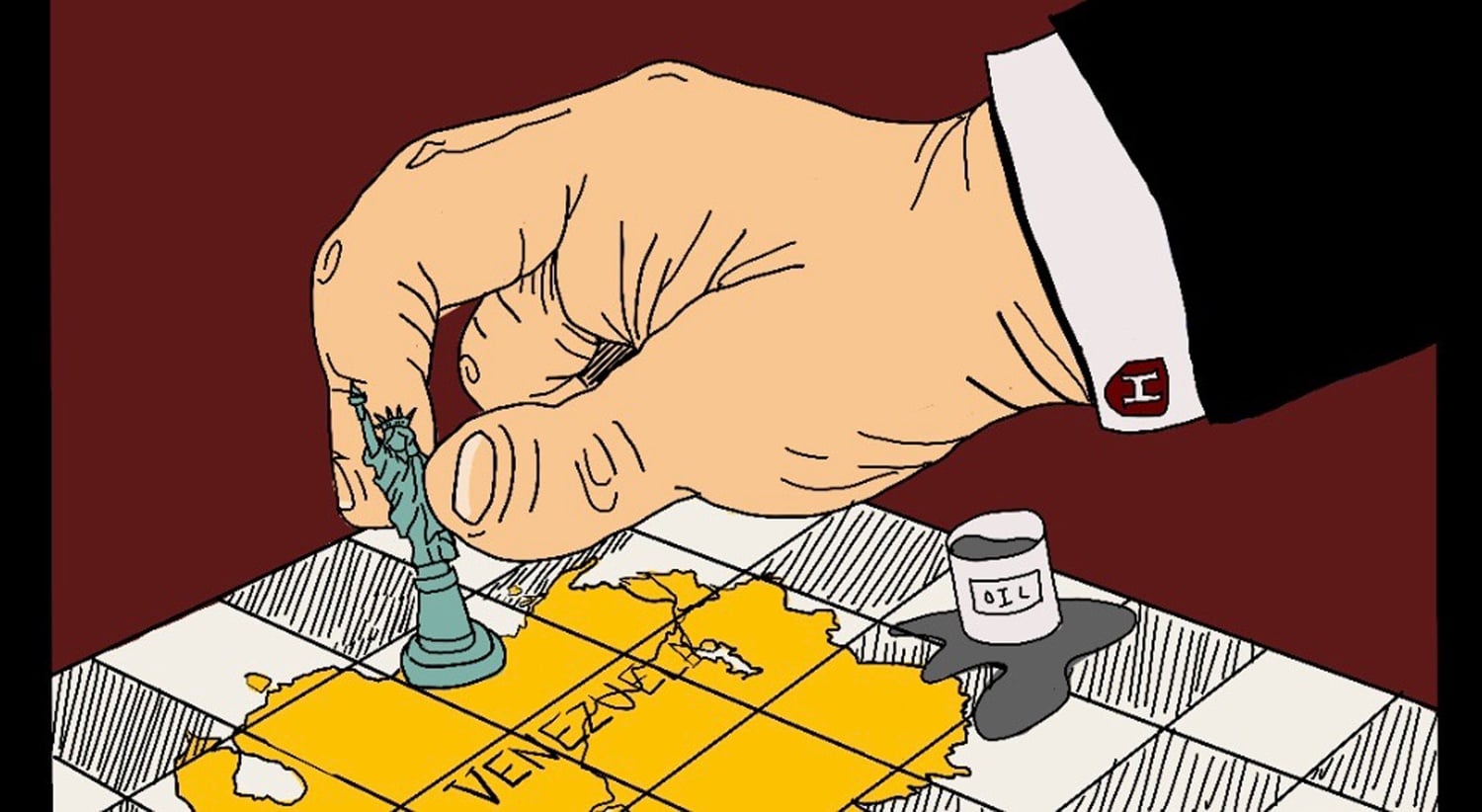
From 2,000 miles away, Venezuelan exiles at Harvard have worked with opposition leaders for decades to develop policy proposals for the future of their country. But in Venezuela’s post-Maduro moment, many of these academics are now left questioning the U.S.’s priorities, and what role, if any, they themselves will be allowed to play in the country’s tomorrow.
Updated February 27, 2026, at 4:22 p.m
aría Corina Machado had been in hiding for months when she zoomed into Cambridge.
Calling in from a concealed location, the Venezuelan opposition leader addressed a packed auditorium at Harvard’s David Rockefeller Center for Latin American Studies. Risking arrest by Nicolás Maduro’s regime, Machado declared Venezuela’s dictatorship “spiritually, politically, socially, and electorally defeated.”
The crowd rose to its feet.
Machado’s virtual appearance in April 2025 — one of two at Harvard in less than a year — symbolized both the strength and fragility of Venezuela’s democratic opposition to the Maduro regime.
Nicolás Maduro became the President of Venezuela in 2013 after inheriting the presidency from Hugo Chávez who led Chavismo — the left-wing populist movement characterized by elements of socialism and anti-imperialist sentiments.
Machado has been crucial in organizing the resistance against Maduro and is connected to Harvard through a number of Venezuelan exiles at the University, many of them former government officials, opposition leaders, and political activists who fled from Venezuela under Chavismo and rebuilt their lives in Cambridge.
At Harvard, many found mentorship and backing through Ricardo Hausmann, a Venezuelan economist, professor at the Harvard Kennedy School, and founder of the Growth Lab, which he established in 2006. The Lab has served as an intellectual hub for exiles to partner with opposition leaders and develop policy proposals for the economic future of Venezuela.
The connection between Harvard and the opposition has remained strong throughout the last two decades, even when attacked by Maduro and critiqued by other scholars who question the extent to which Harvard exiles are representative of the Venezuelan populace.
Machado returned to Harvard’s virtual stage this November, shortly after being awarded the Nobel Peace Prize. Closing the event, she struck a hopeful note. “Venezuela will be free,” she said.
“I hope to welcome all of you there very soon.”
The return of Machado and exiles at Harvard has taken on new urgency since the U.S. Jan. 3 military operation that resulted in Maduro’s capture and removal from office.
Many Venezuelans in the opposition expected Machado to play a central role in shaping what comes next. But the Trump administration has begun working with Maduro’s former vice president, Delcy Rodríguez, in her capacity as the current acting president of the country. Though Maduro is gone, Chavista-controlled state institutions remain largely in place, and Venezuela’s political opposition continues to be shut out of formal power.
From 2,000 miles away, Venezuelan exiles at Harvard remain united in their call for democracy. But as they watch this transition unfold, figures like Hausmann — who once advocated for international intervention — are now left questioning the U.S.’s priorities in Venezuela’s post-Maduro moment, and what role, if any, they will be allowed to play in the country’s tomorrow.
Hausmann at Harvard
“#Estoy con Hausmann” — I stand with Hausmann — reads the mug on Ricardo Hausmann’s desk.
The phrase — and mug — date back to 2014, when his students at HKS founded a group with the same name in show of solidarity. That year, Hausmann had become the target of political persecution by the Venezuelan government after co-authoring an article titled “Should Venezuela Default?” In it, he argued that the nation should consider defaulting on its debt and that Maduro’s government was too corrupt to responsibly manage such a crisis.
The response was swift.
Six days after the article debuted, Maduro went on national television to announce that he would prosecute Hausmann for allegedly attempting to destabilize Venezuela’s economy. “We have proof in your declarations and articles, up there in your mansions where you live with money stolen from Venezuela,” Maduro said.
At the time, Hausmann was living in Cambridge and felt largely protected by his position in the U.S. But he grew uneasy when Maduro’s government, he said, attempted to place him on Interpol’s Red List — a global list of wanted people active across 196 member countries.
When he later received an invitation to travel to Ecuador, he took precautions to ensure that the government there — then led by Rafael Correa, an ally of Maduro — would not “act against” him.
The threat of prosecution ultimately received little traction, but Harvard stood firmly in support of Hausmann. Then-HKS Dean David T. Ellwood ’75 and then-University Provost Alan M. Garber ’76 released a joint statement affirming Hausmann’s right to free expression, saying that “it is in the open exchange of opinions and ideas that people and nations can learn and prosper.”
Nearly 12 years later, Hausmann still keeps the mug on his desk.
His relationship with his students is rooted in his long tenure at the Kennedy School, where he was recruited in 2000 to launch the Master’s in Public Administration in International Development program.
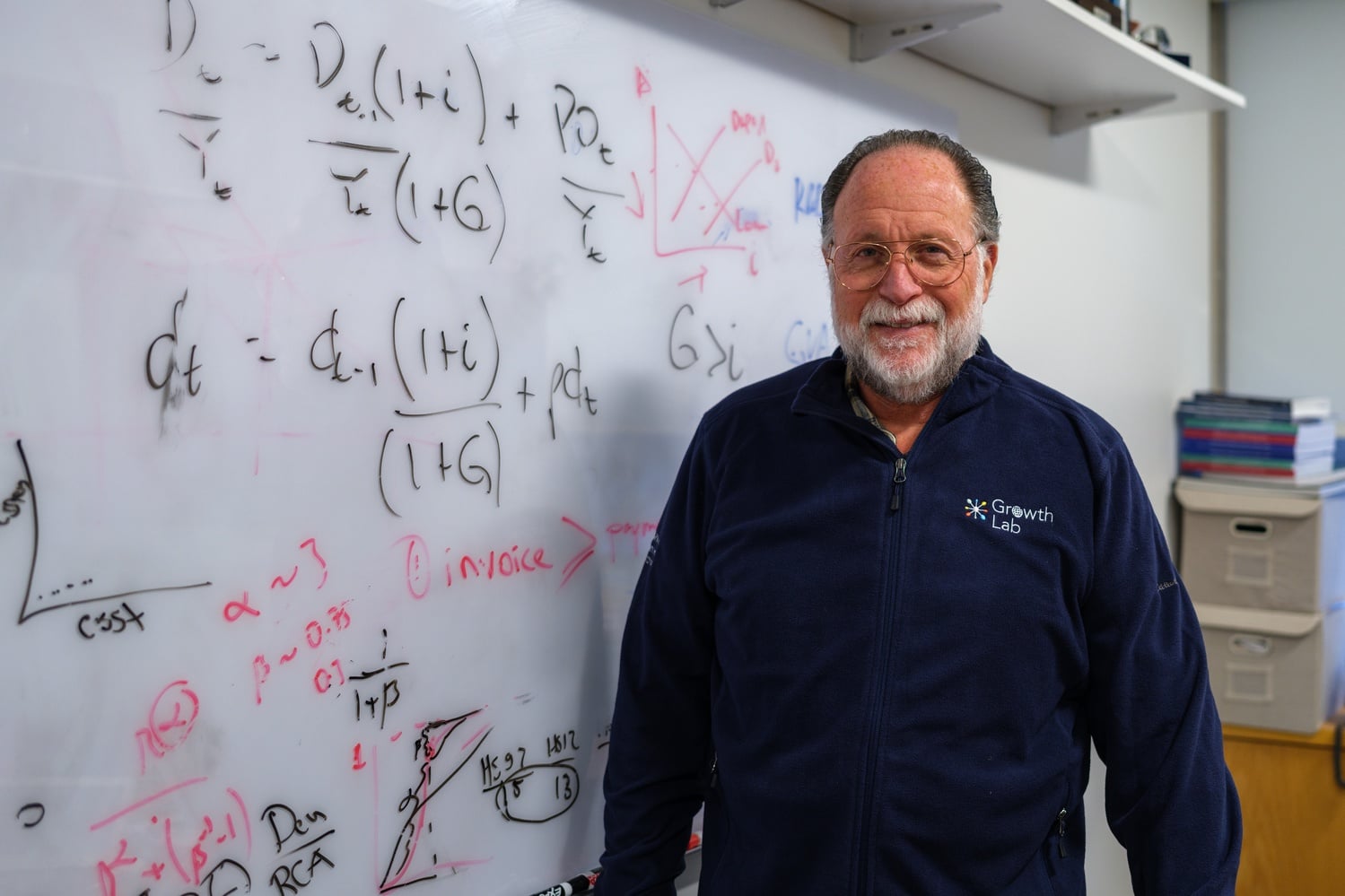
Before arriving at Harvard, Hausmann spent six years as the chief economist and director of research at the Inter-American Development Bank — a leading source of development financing for countries in Latin America. Hausmann designed a model for the Bank’s Research Department which has remained in use to this day.
Hausmann arrived at Harvard convinced that fixing macroeconomic instability, things like inflation or recessions, would unlock different nation’s economic growth. Yet, his research at Harvard led him to new conclusions. He realized that even in situations where macroeconomic considerations were “solved,” economic growth continued to disappoint.
Looking at Latin America and East Asia, he noticed that countries with similar macroeconomic stability experienced dramatically different outcomes. “Since I arrived at Harvard, I’ve been focused on trying to understand what it is that we don’t understand about growth,” says Hausmann.
That question led him to found the Growth Lab in 2006.
He describes the lab through a medical analogy: if economics is like biology, then the Growth Lab is the teaching hospital. “We have real patients, which are the governments we work with. We, in the process of treating the patient, train people — which are the fellows of the Growth Lab,” he says.
The Lab contains around 50 permanent researchers and hosts more than 60 summer interns and student research assistants. Since its founding, the Lab has carried out projects in over 30 countries.
A subset of researchers at the Growth Lab have authored 16 publications on Venezuela that detail policy recommendations and research on a range of issues from migration and economic collapse to hyperinflation and the oil industry.
Outside of these publications, Hausmann and the Growth Lab’s largest project on Venezuela ran from 2015 to 2021.
This project began as an “informal” Monday evening study group on Venezuela where Hausmann would invite faculty colleagues and Venezuelans at the University to meet at HKS to discuss their nation’s future.
When it became clear that an anti-Maduro coalition might win a congressional majority in the National Assembly of Venezuela in 2015, the group formalized its work. Hausmann’s group recognized the moment as a potential opening to influence Venezuela’s economic policies and planning.
Three years later, in May 2018, Venezuela held its presidential elections. Incumbent Maduro ran against two oppositional candidates, and though he claims to have won reelection, the Venezuelan National Assembly disavowed the results as illegitimate, citing massive irregularities.
At this moment of uncertainty, the National Assembly asked Hausmann to organize a conference to explore strategies for Venezuela’s economic recovery and democratic future.
Nearly 50 leaders from Venezuela — including representatives of all Venezuelan political parties, presidents of nearly every major university, union leaders, and academics, — attended the conference, held at the Kennedy School in September 2018.
This four-day gathering produced “Plan País,” a roadmap for revitalizing the Venezuelan economy, oil industry, and democracy.
In the aftermath of the contested election, it also generated coalition-building efforts against Maduro. Hausmann says this program “led to a political agreement among this broad coalition of parties” to rally around the opposition leader Juan Guaidó, president of the National Assembly at the time.
For a moment, the plan appeared close to implementation. When Guaidó was declared interim president in January 2019 and recognized by more than 50 countries, Plan País became the opposition’s governing roadmap. Hausmann took it to the International Monetary Fund, the World Bank, the Inter-American Development Bank, the United States Treasury, European governments, and Grupo de Lima.
At the same time, Guaidó unveiled it publicly — even as Venezuela’s National Police raided his home as part of an intimidation campaign.
But the economic recovery plan engineered at Harvard’s Growth Lab was ultimately shelved because the Guaidó interim government never came to power.
Still, its near success shows the extent of the Growth Lab’s reach.
‘IESA Boys’
icardo Hausmann was born in Caracas in 1956 to a Jewish family. His mother was from Belgium and his father from Germany. Both were holocaust survivors.
At 17, Hausmann came to the United States and enrolled at Cornell University as an undergraduate, studying engineering and applied physics. After graduating, he remained at Cornell to pursue a doctorate in economics, where he wrote his dissertation examining how oil affected the configuration of Venezuela’s economy — a question that would define his career.
A year before Hausmann began his Ph.D., the Venezuelan government under the leadership of president Carlos Andrés Pérez, created Petróleos de Venezuela S.A., a state-owned enterprise used to control the country’s oil and natural gas. Venezuela has the world’s largest proven oil reserves, but before this enterprise, they were significantly controlled by foreign companies. PDVSA nationalized these resources with a structure that persisted until late January.
PDVSA came three years after the 1973 OPEC oil embargo, during which Venezuela’s revenues quadrupled as global prices skyrocketed.
However, in the early 1980s, the Iran-Iraq War triggered a second oil crisis. This time, Venezuela did not escape the fallout. The country was consequently pushed into a period of high, prolonged inflation.
Hausmann returned to Venezuela in 1981 faced with this economic reality. He joined the Central University of Venezuela, a public university in Caracas, where he conducted research on oil and Venezuela’s economic development. He completed a short term in government as the undersecretary of planning before moving to the Instituto de Estudios Superiores de Administración, the country’s leading private business school.
During this time, Venezuela continued to be in a state of economic crisis. In 1989, Carlos Andrés Pérez was elected for his second term and implemented a package of neoliberal reforms to bolster the economy, including deregulation, austerity and subsidy cuts, and trade and price liberalization. These reforms were so controversial that Caracas was overrun for days by protesters who opposed them, an uprising known as the ’Caracazo.’
Pérez’s reforms fit into the Washington Consensus: a set of free-market economic policies advanced by the International Monetary Fund, World Bank, and U.S. Treasury to develop Latin America at the time.
Under Pérez, Hausmann served as minister of planning from 1992 to 1993 and helped design some of these reforms. Prior to his work under Pérez, Hausmann spent eight years as a Professor of Economics at IESA.
IESA — the Instituto de Estudios Superiores de Administración — is a private business school in Caracas where some of the Pérez-era neoliberal reforms were designed.
That work earned Hausmann a lasting label. Lucas M. Koerner, a Harvard doctoral student studying Chavismo, refers to him as part of the “IESA Boys” — a group of technocrats linked to Pérez-era economic policy.
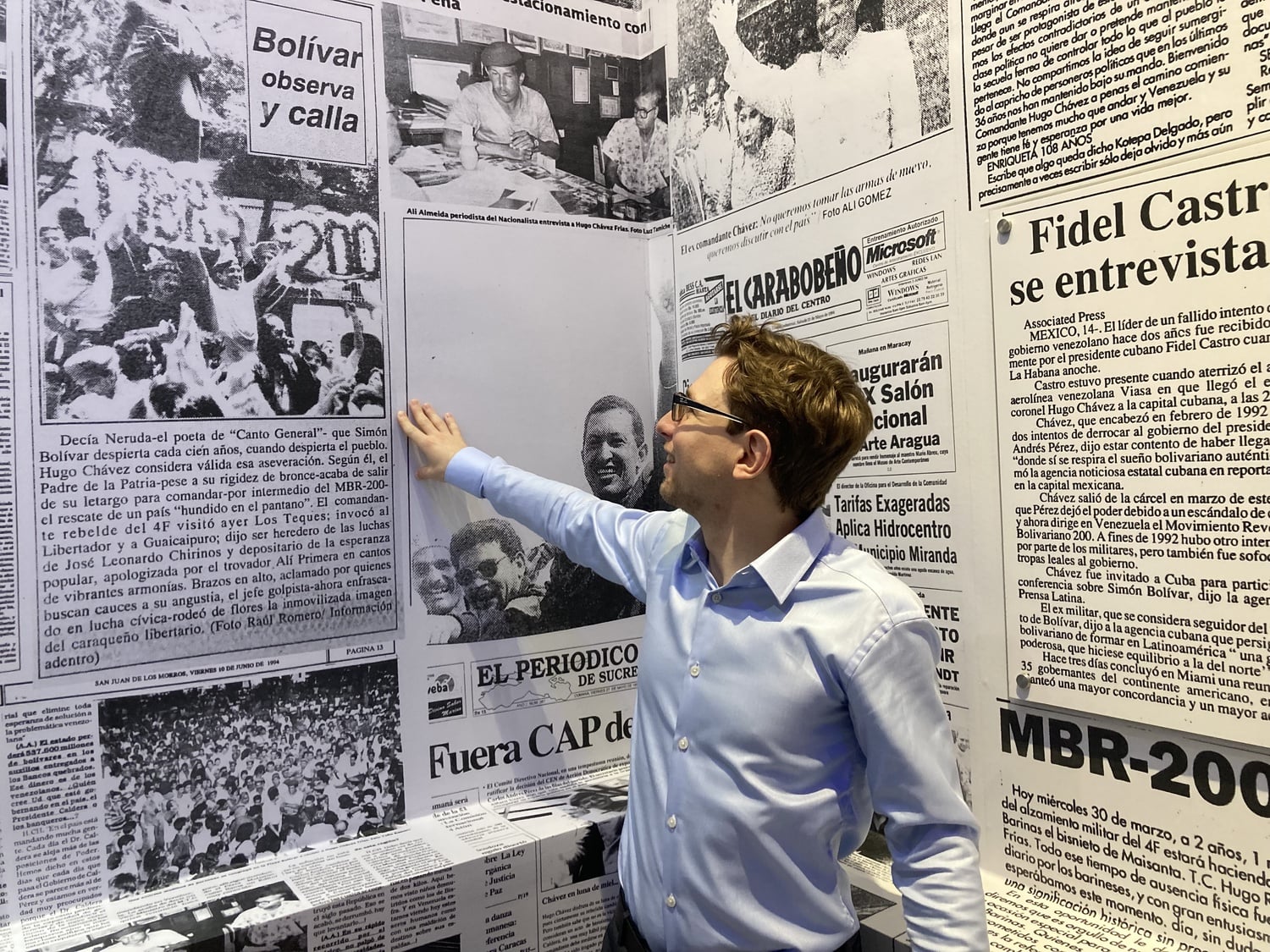
Francisco R. Rodríguez Caballero, a Venezuelan economist who completed his Ph.D. in Economics at Harvard in 1988, explained that "technocrats" who formed part of the second Pérez administration and helped promote the “neoliberal turn” were based at IESA.
Though Francisco Rodríguez was not affiliated with Pérez’s administration, he also eventually found his way to IESA after serving as chief economist of Venezuelan Congressional Budget Office.
Francisco Rodríguez says his office came under pressure after publishing reports critical of Chávez-era efforts. “They started trying to put pressure on me, to try to restrict our independence,” he recalls.
He left government and joined IESA as a public policy professor, where he taught until 2005.
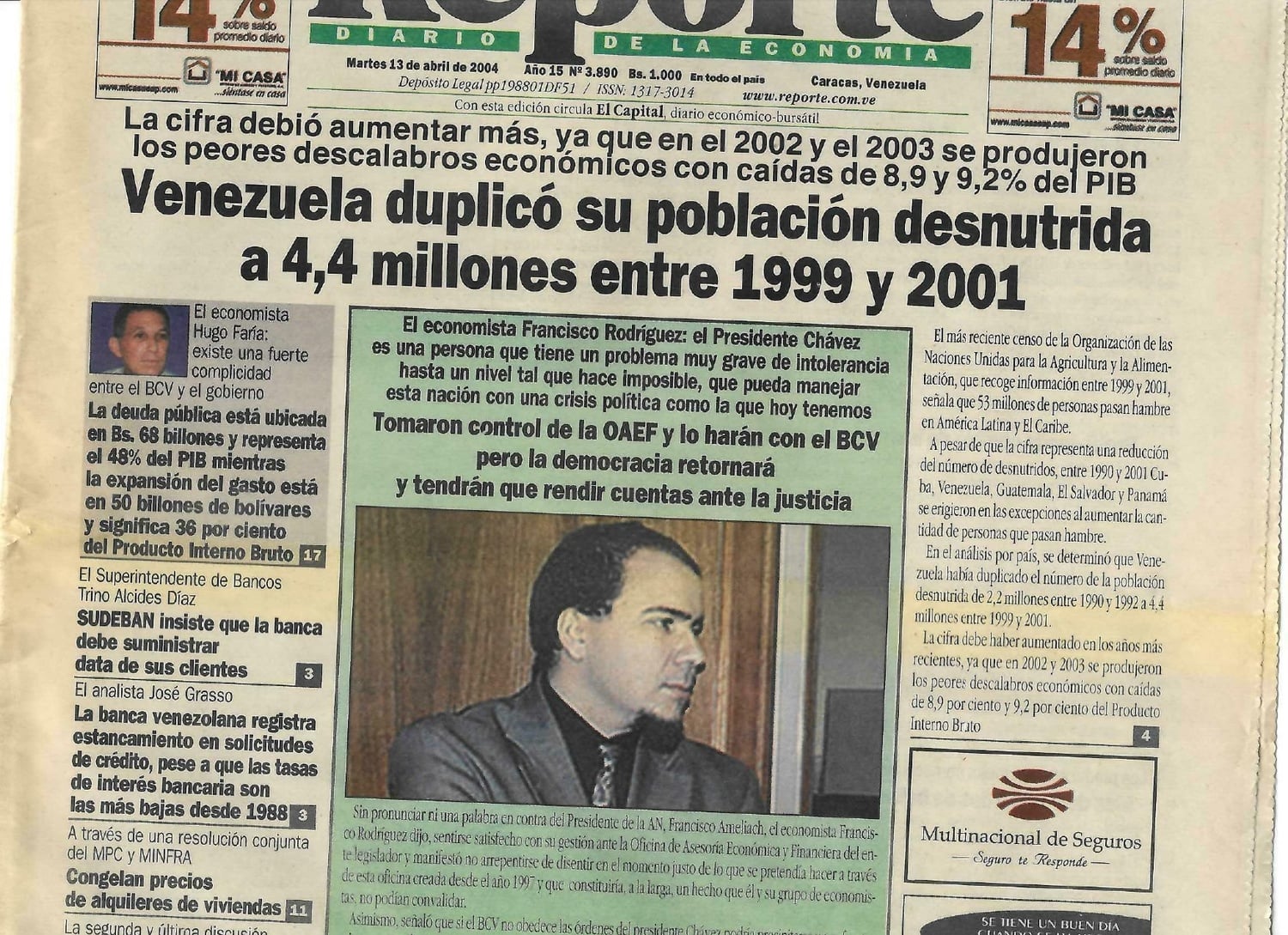
Francisco Rodríguez suggests the term “IESA Boys” was modeled after Chile’s “Chicago Boys,” a group of Chilean students that studied under economist Milton Friedman and later returned to liberalize Chile’s economy.
The comparison, he notes, is imperfect. Unlike the Chicago Boys, the IESA Boys “did not come out of the same institution in the U.S.,” he says. Rather, they all studied at different American universities and were linked by their association with this particular Venezuelan institute.
Hausmann adds that while both are groups of economists working in Latin America, the “context could not be more different.”
“Chicago Boys were part of the Pinochet dictatorship while the IESA professors who joined the government participated in a center-left democratically elected government,” Hausmann wrote in an emailed statement to The Crimson.
Koerner argues that the unequal economic development led by “IESA Boys” in the late 20th century made society ripe for Chavismo. “We do not have the vocabulary to describe the level of poverty inflicted upon the masses,” he says of the neoliberal period.
He believes that these conditions may explain why Chavismo came to power when it did. “Its main priority was paying what it called the Social Debt” — the historical inequality and exclusion of the working class of Venezuela, which was to be solved by redistributing oil wealth — he says.
Hausmann, however, disagrees. He argues that the economy began to recover during the Pérez administration, but a third collapse in oil revenue and lingering discontent popularized anti-establishment sentiments. Amid this discontent, Hugo Chávez rose to prominence.
“Chavismo was elected in December 1998, that was 5 years after the end of the government I participated in. In his 1998 campaign, Chávez blamed the previous 40 years of democracy for Venezuela’s problems, not just the 5-year period of Carlos Andrés Pérez,” he wrote in the statement.
Scholars also debate the extent to which the legacies of the economic reforms designed by the ’IESA Boys’ account for the economic crises under Chávez and later Maduro.
Since 2013, Venezuela’s GDP has fallen by roughly 75 percent — a decline Hausmann attributes to what he calls Chavistas’ “purely self-made decisions.”
“Outside of war, there is no country that has seen the collapsing GDP that Venezuela has seen,” Hausmann says. He blames the government’s failure to diversify the economy and its increasing dependence on oil.
Koerner counters that Chavismo inherited an already catastrophic situation — one shaped by decades of inequality and later worsened by U.S. sanctions — and that many of its harshest critics helped create the conditions they now condemn.
‘Harvard Boys’
ust as the “IESA Boys” were accused of exerting outsized influence during Carlos Andrés Pérez’s second term, a similar critique emerged during the Guaidó years — now aimed at the so-called “Harvard Boys.”
In the spring of 2019, Venezuela’s ruling party introduced the term in an official communiqué. Titled “The ‘Harvard Boys’ (I): Who is Behind the United States’ Theft of Venezuela?,” the document accused Harvard-affiliated Venezuelan technocrats of operating as an economic lobby in serving U.S. interests.
A follow-up article published by the Chilean news outlet El Ciudadano singled out Hausmann’s students as “trained to steal from Venezuela.”
Hausmann dismisses the label as political theater. “Just because you’re abroad at a reputable University, in some sense, makes you suspect. They refer to the U.S. as imperial, so I think it’s more of a symptom of their inability to engage with the arguments, so you engage with the person behind the arguments,” he says.
Hausmann argues that this hostility explains how and why Chavismo “destroyed the oil industry in Venezuela.”
“Maduro never went to university, so Chavismo has a complicated relationship with expertise. They see expertise as privilege and constantly treat it as illegitimate,” he says.
Still, the network the regime sought to discredit is real.
For more than a decade, Harvard — particularly the Kennedy School — has drawn Venezuelan students and political figures seeking training, protection, or a path back home. Many passed through the MPA-ID program or the Growth Lab, often arriving with ambitions of returning to government.
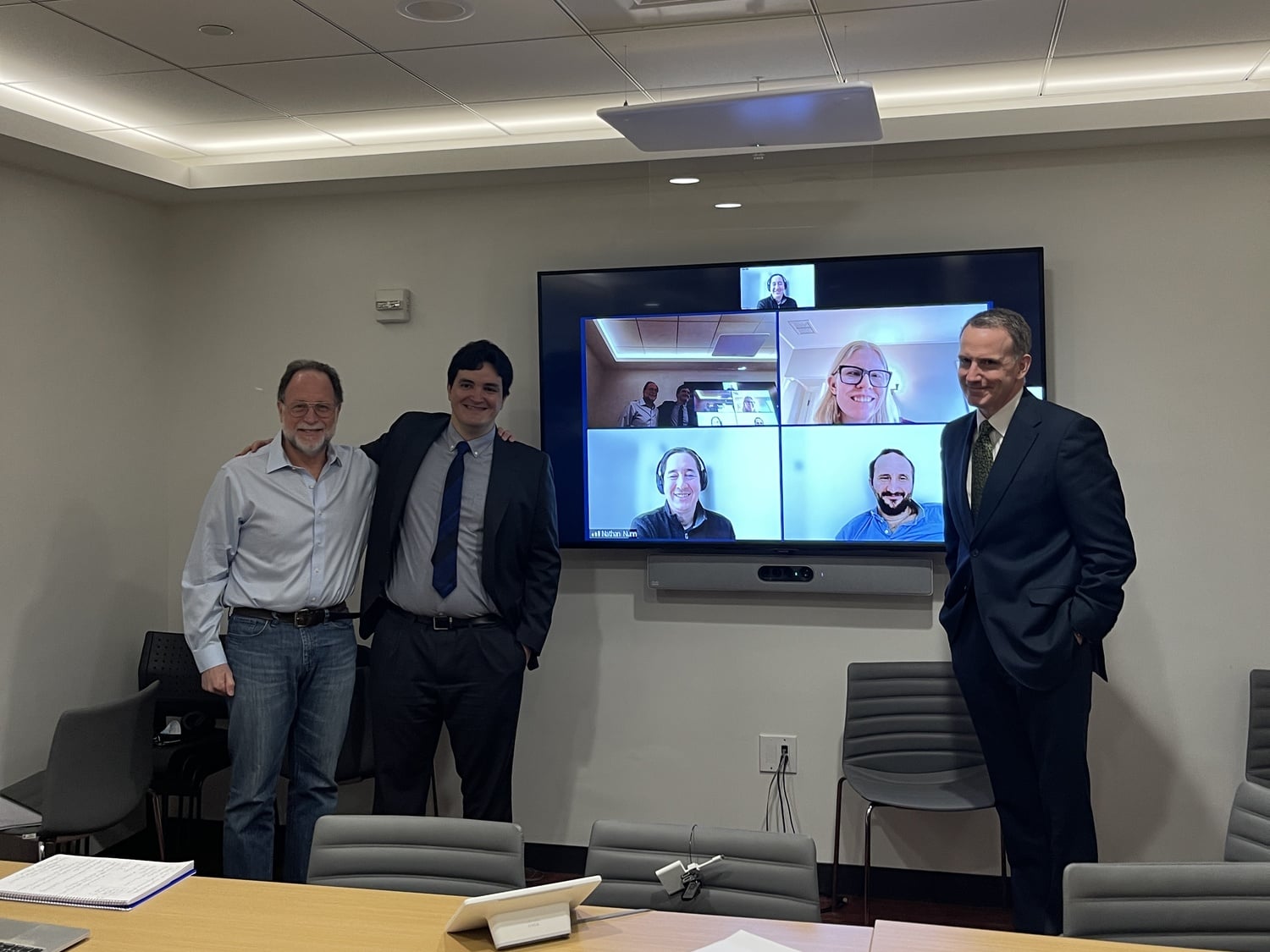
José R. Morales-Arilla, who was politically involved in Venezuela’s opposition, enrolled at the Kennedy School in 2010, convinced that the opposition would defeat Chávez within two years during the 2012 presidential elections.
“We’re going to defeat Hugo Chávez in the elections, I’m going to go into government, we’re going to work a lot, and in 10 years Venezuela will be doing like Chile,” he says.
Chávez won instead. He died months later and was succeeded by Nicolás Maduro.
With his dreams of working in the government complicated by Maduro’s election, the Growth Lab welcomed Morales-Arilla back.
Others arrived under far more extreme circumstances. Rodrigo Diamanti Vidaurre was arrested for anti-government activism shortly after receiving his Harvard acceptance. He was sent to El Helicoide, the infamous torture prison for political dissenters in Venezuela.
Though released under international pressure, he was banned from traveling. Without knowing Diamanti personally, Hausmann helped secure him a scholarship, but the travel ban remained.
Not long after, Diamanti was kidnapped. He was held at gunpoint for four hours and was told that the regime planned on killing him.
He managed to escape from Venezuela, on foot through the Colombian border.
Eventually, he arrived in Massachusetts. It was 1 a.m., and his first class at Harvard was scheduled at 9 a.m. Fleeing with only what he could carry in a bundle, Diamanti recalled that for the first two weeks he practically wore the same clothes.
Hausmann, who had never met Diamanti in person, took him in for his first nights in Cambridge.
Former lawmaker Freddy Guevara Cortez followed a different path into exile. Guevara was a prominent figure in the Venezuelan political scene. He co-founded the Venezuelan progressive party Voluntad Popular and was later appointed as the Vice President of the Venezuelan Parliament in 2016.
In 2017, Guevara led the non-violent civil uprising against Maduro’s dictatorship which resulted in him being sentenced to spend three years under house arrest in Caracas.
In 2021, he was arrested by the Maduro regime on counts of treason and terrorism. For a period of 38 days, he was jailed in isolation.
But when the Venezuelan opposition began to formally negotiate with Maduro, Guevara was appointed as one of its negotiators. These negotiations would take place in Mexico, requiring that he be released from prison to travel there. Upon landing, he was informed he would not be allowed to return to Venezuela, marking the beginning of his exile.
At Harvard, he became a fellow at the Ash Center for Democratic Governance and Innovation, joining an already established Venezuelan exile community spanning at the Kennedy School and the Growth Lab.
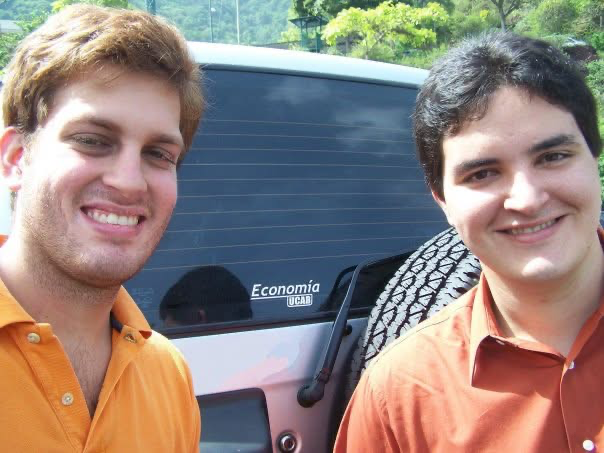
Many of those who move through this network share similar backgrounds. Guevara, Diamanti, and Morales-Arilla have ties to Andrés Bello Catholic University, a private elite university in Caracas. Leopoldo E. López Mendoza — a Venezuelan exile and 1996 graduate of HKS’s Master’s in Public Policy program — helped establish a pipeline between UCAB and Harvard that Hausmann continues to cultivate.
Hausmann says López convinced “young and upcoming leaders” at UCAB, especially those who were opposed to Chavismo, to go study at HKS.
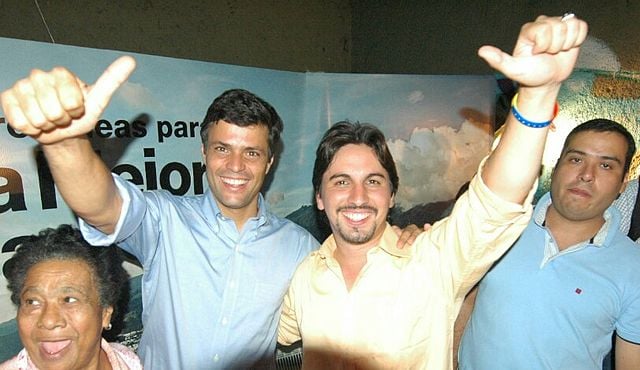
This pipeline has created a new relationship between Harvard and UCAB. “It has become an aspiration of economics students at UCAB to come to Harvard,” Hausmann says.
“We’ve typically been able to recruit the best students of those cohorts.”
Several Growth Lab fellows, who graduated from HKS, now remotely teach a version of Hausmann’s course and coach a senior thesis at UCAB. Others advise the opposition directly. Guevara says he spends several days each week involved in strategy and political coordination.
Yet, the concentration of political commitments and ideological convergence has drawn criticism — even from within the network itself.
“I was elite in Venezuela,” Morales-Arilla acknowledges. “University educated. Upper-middle class.” He notes that Latin Americans with access to U.S. universities are often economically liberal by default.
Steven Levitsky, a professor of government at Harvard, situates this pattern within long-standing inequality. “Latin America has historically been an extraordinarily unequal place, a very hierarchical place. The elite is very small, the academic elite, the people who can travel to the United States, people who speak English, and who can come and be visiting scholars at Harvard,” he says.
Levitsky adds that this demographic generally represents “a small sliver of society, and the questions they ask, the arguments they make, the books they write, are valid or interesting or often very important. But they are not broadly representative, necessarily, of their society.”
Lucas Koerner argues that this imbalance is central to Venezuela’s political story. To understand who arrives at institutions like Harvard, he says, requires grappling with the country’s deeper histories of exclusion. “These are elites offering the wealth of the majority to benefit the few,” he argues — a dynamic Chavismo once promised to dismantle.
Hausmann, however, counters this picture of Latin Americans at Harvard, pointing to scholarship programs that he says have made Harvard more accessible.
“It is wildly inaccurate to caricature the students I see in my class and in my lab, many who don’t come from wealthy backgrounds, and have sacrificed a great deal to come to Harvard,” he wrote in response to a request for comment.
‘Puppet Regime’?
ike many academic institutions, Harvard plays a role in shaping which Venezuelan political figures receive visibility in U.S. academic spaces.
Levitsky — the director of the David Rockefeller Center for Latin American Studies — explains that DRCLAS has “a commitment to opposing tyranny and authoritarianism and defending democracy in Venezuela.”
“That means defending the opposition, giving them a platform,” Levitsky adds.
Over the last decade, the DRCLAS has hosted dozens of Venezuelan politicians, policymakers, academics and exiles — including Juan Guaidó, Leopoldo López, and more recently María Corina Machado.
Among the opposition figures welcomed at Harvard, Machado stands out. To supporters, she embodies resilience, a leader willing to confront a dictator. To critics, her growing closeness to the U.S. — and to Trump in particular — raises questions about the trajectory of her democratic project.
Hausmann describes Machado as a remarkedly powerful figure in contemporary politics. “It is super unusual anywhere in the world to get a political leader with the kind of mandate, legitimacy, and authority that María Corina Machado has.”
In October 2023, Machado won more than 92 percent of the vote in the opposition’s presidential primaries. The landslide victory consolidated her position as the undisputed leader of the movement against Maduro.
But the Venezuelan state barred Machado from running, accusing her of promoting U.S. sanctions and alleging corruption. With her name removed from the ballot, Machado urged voters to support Edmundo González, a leader of a centrist coalition against Maduro, instead. Though the Chavista government proclaimed Maduro’s victory over González, the 2024 election results are widely considered fraudulent.
Machado’s name was not on the ballot, but she continued to lead the opposition from hiding — and Harvard’s Venezuelan leaders have continued to look to her leadership.
“If you’re facing a regime like the Maduro regime,” says Oliver Stuenkel, a Brazilian fellow at the Kennedy School. “You need someone who’s able to operate, unite, and mobilize under extremely challenging circumstances like facing unfair elections and a highly adverse information environment.”
Both times Machado zoomed into Cambridge — once in April and once in November 2025 — she was received with overwhelming support.
Still her relationship with the U.S. has unsettled some observers.
Kathleen Bruhn, a political scientist at the University of California who studies Latin American social movements, says that Machado “has been on the radical conservative side of the opposition for a long time. At one point, she was too radical to be the opposition’s face.”
“She’s definitely been an admirer of Trump for a while now,” Bruhn adds.
That admiration has drawn criticism. Machado has been accused of appealing to a U.S. president who has himself been accused of undermining democratic norms — a contradiction that troubles some of her supporters.
“When Machado embraced the Trump conspiracy theory of the stolen 2020 elections, that was for me difficult to watch because it created a dilemma. There’s someone who’s become so desperate to gain U.S. support that she is willing to paradoxically embrace authoritarian rhetoric and basically support someone who’s a threat to U.S. democracy,” says Stuenkel.
After the Jan. 3 U.S. military operation that captured Maduro, many expected Machado to play a role in Venezuela’s political transition. Instead, she remained on the margins.
Her outreach to Trump — including a January 15 visit to the White House, where she attempted to give him her Nobel Peace Prize despite being told she could not — has been interpreted as an effort to secure influence over U.S. decision-making on Venezuela.
So far, that effort has not translated into formal backing. “You put yourself in a very vulnerable position if you ask for foreign military intervention, because inevitably you are calling for a situation where another country will end up calling the shots,” says Stuenkel. “And, if Machado were in power, she’d still be sort of a puppet regime, because she would be in power thanks to the United States.”
The Jan. 3 intervention itself remains deeply controversial.
Stuenkel describes the operation as “obviously a very blatant violation of international law, of Venezuela sovereignty,” saying it marked the first time the U.S. has overtly removed a sitting South American president through military force.
Some Venezuelans, however, believe that these means justify the end: the removal of Maduro.
Venezuelan economist Francisco J. Monaldi — a former visiting scholar at Harvard from 2012 to 2015 — recalled being surprised by the “very significant support” Latin Americans showed for Maduro’s capture.
He explains that Latin American exile communities living in the U.S. — who have fled from authoritarian regimes like the one in Venezuela — are more open to U.S. intervention. Exiles tend to be more willing to “accept force” due to frustrations with negotiated solutions and international law as mechanisms for democratization failing. Because of this, “Venezuelans in the U.S. were supportive of action against Maduro in a way that would have been unthinkable decades past,” says Monaldi.
Hausmann, an exile himself, argues that “we are not talking about a system where, if we abided by the law, the problems will go away.”
“We abided by the law and the mechanisms of the international community failed,” Hausmann adds.
The international law experience of Diamanti, Venezuelan MPA-ID student and political activist, bears this out.
At Harvard, as an assignment for his class with Luis Moreno Ocampo – the founding chief prosecutor of the International Criminal Court — Diamanti laid out the case for human rights violations under Maduro’s regime.
After not earning full marks on the assignment, he ultimately collaborated a year later with Moreno Ocampo to convince the Organization of American States to investigate Venezuela’s case. Following the investigation, six member states of the ICC jointly brought the case to the ICC’s top prosecutor.
This referral marked the first multi-state referral to the ICC in the Court’s history. Since then, other countries around the world have used the same multi-state strategy to open investigations into alleged crimes in both Ukraine and Palestine
Launched in May 2018, this ICC investigation of Maduro serves as the first and only time that the Court has investigated crimes against humanity not just in Venezuela, but in all of the Americas.
In 2025, the ICC Appeals Chamber ordered Prosecutor Karim Khan to recuse himself after it became known that a lawyer on Maduro’s defense team was his sister-in-law — a blow Diamanti credits with undermining the case’s progression.
Diamanti says that Khan “should have issued the capture order before the United States captured him.”
Still, procedural delays and internal conflicts stalled the case — and the Trump administration ultimately acted faster than international law.
Whether the United States was the right actor to intervene remains contested.
Monaldi argues that Latin Americans’ support for the U.S. military operation in Venezuela runs counter to the region’s historically strong anti-imperialist sentiment. This sentiment developed in response to the direct and covert U.S. involvement in the region that began in the nineteenth century. Monaldi believes that the “majority of Latin Americans don’t have sense” of this history of interference.
Nonetheless, in the wake of the violent Maduro regime, many Venezuelans are willing to accept U.S. involvement — which Machado has been a proponent of — on the condition of democratization.
‘Pro-American Chavismo’
et as Venezuela enters its post-Maduro moment, the role of the U.S. has grown more decisive — and more ambiguous. Rather than clearing a path for democratization, U.S. involvement may now be narrowing the political space available to the opposition.
From Cambridge, Venezuelan exiles affiliated with Harvard continue to call for democratic reform. But many are increasingly uncertain about whether Washington shares that priority.
Francisco Rodríguez, a Venezuelan economist who completed his Ph.D. at Harvard, says the tone of U.S. engagement with Venezuela has shifted. Democracy and human rights, he suggests, no longer appear to be driving the conversation.

Hausmann, too, has raised similar concerns. Drawing on his experience in government and international institutions, he publicly questioned the “degree of relative importance” the U.S. now assigns to democracy and human rights, compared with the rehabilitation of Venezuela’s oil sector.
The Trump administration has justified the U.S capture of Maduro and its presence in Venezuela by claiming it is recovering assets stolen from U.S. companies.
Since the U.S.’s intervention in Venezuela, Washington has moved swiftly to restructure the country’s energy industry. The U.S. has encouraged oil companies to invest at least $100 billion in rehabilitating the nation’s oil sector, while easing sanctions to enable foreign companies to operate in the country. Some oil revenues are being directed into accounts controlled by the U.S. Treasury.
That focus has brought the United States into close cooperation with Delcy Rodríguez, Maduro’s former vice president and now Venezuela’s acting head of state. Under the terms of the post-intervention arrangement, Rodríguez had 30 days to call for elections. She has not yet done so.
Instead, she has begun to work with the Trump administration. Both leaders have cooperated on reforms to the nation’s oil sector, agreed to direct sale of Venezuelan oil to the U.S., and have negotiated the release of nearly 400 political prisoners.
Levitsky, co-author of the global bestseller “How Democracies Die,” reads the collaboration as an indication that there has been “virtually no regime change.” Venezuela’s core institutions — the military, the presidency, the National Assembly, and much of civil society — remain firmly under Chavista control.
Stuenkel believes that the most likely scenario in light of this “fruitful partnership” between Delcy and Trump is that the U.S. will not push for democratization. “Oil will actually be a strong disincentive for Trump to push for any kind of political opening,” he says.
Yet, scholars struggle to reconcile how and why the Chavista regime — which has historically used anti-imperial rhetoric and stood against U.S. intervention in the region — has begun to work so openly with the U.S.
Stuenkel describes the moment as the birth of a “pro-American Chavismo.”
“You’ve got a supposedly left wing revolutionary government that has become a puppet of Donald Trump, which is the most humiliating thing you can have,” says Levitsky.
Since the U.S. operation, Delcy Rodríguez has signed a bill that could lead to the release of political prisoners the country denied holding for decades, met with CIA Director John Ratcliffe, and signed a law that allowed the nation’s oil sector to be privatized.
At the same time, Delcy Rodríguez has publicly pushed back against a list of demands the Trump administration made of Venezuela. In Puerto La Cruz city in late January, she told a group of oil workers that she had “enough already of Washington’s orders over politicians in Venezuela” and demanded that Venezuelan politics be left alone to resolve the country’s “differences” and “internal conflicts.”
Trump, however, told reporters at the White House that he hasn’t “heard that at all” and that he and Delcy Rodríguez have a “very good relationship.”
In the long term, Levitsky expects the Chavismo regime will try to “wait” Trump out. “They will pretend to be going along with Trump and they will try to buy time until the Trump administration loses interest or gets distracted,” he adds.
Unable to return home, Venezuelan exiles at Harvard continue to press for elections, diaspora voting rights, and the legalization of political parties. Hausmann argues that without a clear electoral timetable, claims of democratic transition ring hollow. “There’s a difference between commitment and cheap talk,” he says. “So far, it’s been mostly cheap talk.”
Guevara, the Venezuelan exile, echoed that call at an Institute of Politics event earlier this month.
For him, presence itself is political. He sees Harvard as a place where Venezuelan voices can still shape the thinking of future policymakers.
“I think it’s hypocritical to criticize colonialism but ignore the voices from the people on the ground,” Guevara says.
He views Harvard as a place “to promote debate, discussion, ideas, and knowledge” which can provide people in the U.S. and Venezuela with tools to understand the current situation. Guevara, in particular, believes the students he encounters at Harvard — many of whom will go on to influential positions in government — will help determine Venezuela’s fate.
“Since Venezuela’s future will be tied for a long time — I will say at least for 10 years — to the United States, we need people who are prepared and understand what is happening,” says Guevara.
Stuenkel, who is Brazilian, hopes to contribute more directly. “I’m currently talking to the Brazilian government to see if I can travel to Caracas as a part of a delegation,” he says.
For many Venezuelan exiles at Harvard, the question is no longer whether change will come, but who will be allowed to shape it.
Exiles at Harvard who have actively formed part of the opposition and held key government positions before Maduro, now find themselves reflecting on how to bring change to Venezuela from the hallows of an elite University in the U.S.
For now, Hausmann, the Growth Lab, and MPA-ID are working to train the architects of Venezuela’s future. What that will look like remains unknown.
— Magazine writer Victoria D. Rengel can be reached at [email protected]. Follow her on X @VictoriaRengel_.
— Magazine writer Maria Borrell Ferrero can be reached at [email protected]
Want to keep up with breaking news? Subscribe to our email newsletter
Have a tip for The Crimson? Share it confidentially