Trump’s Former Deputy Special Envoy to Middle East Defends U.S., Israeli Strikes in Iran at IOP Talk
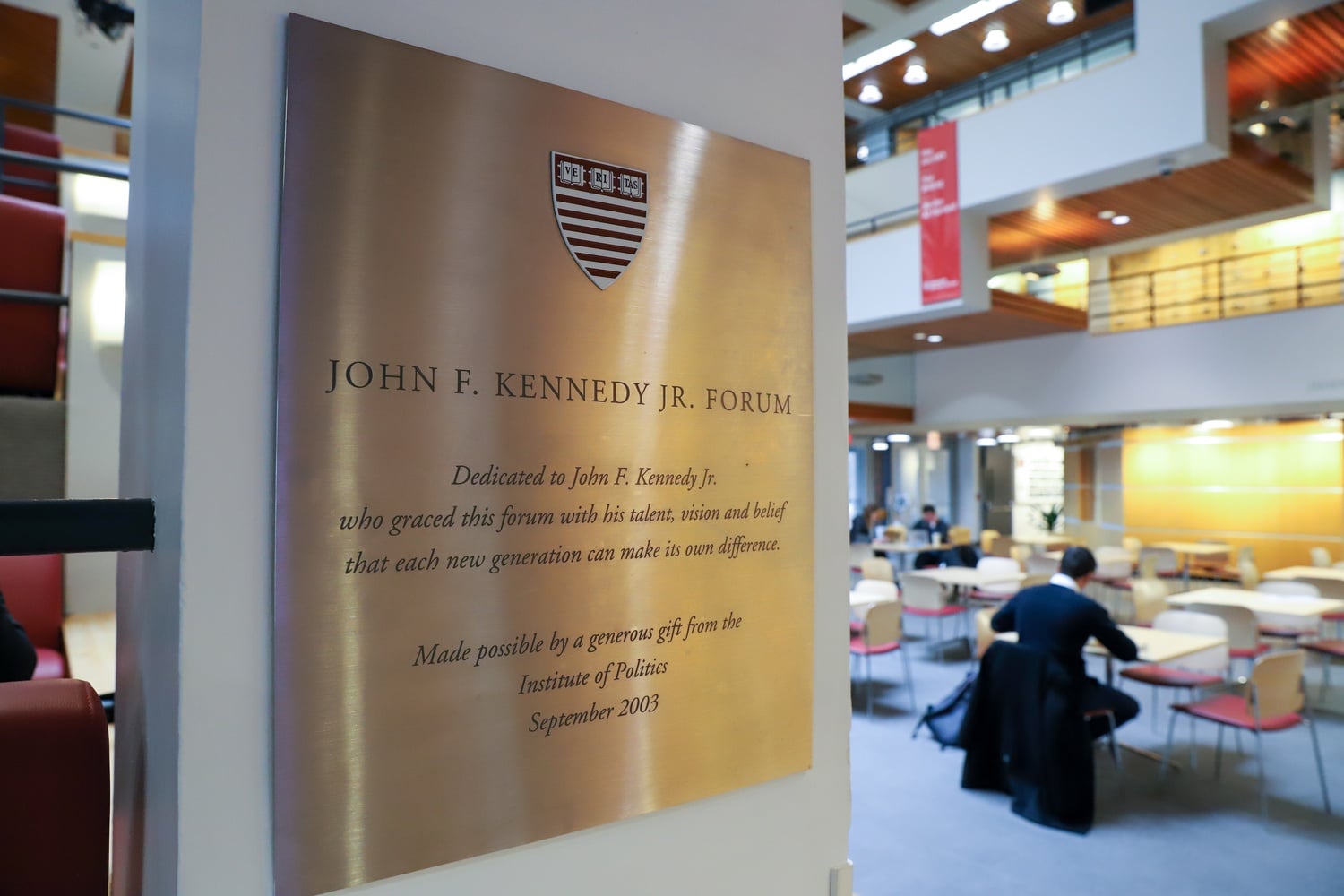
Morgan D. Ortagus, a longtime diplomat who previously served as the U.S. deputy special envoy to the Middle East under the second Trump administration, defended the ongoing U.S. and Israeli airstrikes against Iran during an Institute of Politics event on Tuesday evening.
Speaking to a packed room, Ortagus reiterated the Trump administration’s claims that it had offered the Iranian regime multiple chances to de-escalate rising tensions with the U.S. diplomatically — and was pushed to launch strikes across the country because an Iranian attack was imminent.
“The President and Secretary Rubio have said over the past week that they were days away from the Iranians preemptively attacking the United States, which led to them to make the decision that it was time to go,” Ortagus said.
Ortagus’ comments come 11 days into an ongoing military campaign by the United States and Israel against Iran that has killed more than 1,200 Iranians, including the country’s supreme leader, Ayatollah Ali Khamenei. The strikes have broadened into a wider conflict and unsettled global trade over the last two weeks as Iran embarked on retaliatory strikes across the Middle East.
During the talk, Ortagus criticized the Iranian regime for “terrorizing the United States” over nearly five decades. She pointed to how the regime has killed U.S. military personnel and plotted to murder U.S. politicians, including Trump.
“Iran has been openly engaging in what are acts of war against the United States,” she said.
Ortagus said both the Biden and Trump administrations had repeatedly attempted to stop Iran from threatening U.S. citizens and developing nuclear weapons, but that those efforts had never amounted to real change.
“Both Republican and Democrat administrations extended the hand of diplomacy to Iran, only for the regime to shove it back in our faces constantly,” she said.
Get The Crimson in your inbox.
Ortagus, who made her first public appearance on Tuesday since leaving the Trump administration, praised Trump for taking the drastic step of waging a military campaign against Iran when diplomatic talks broke down.
“They always kick the can down the road to keep us in negotiations, and they just miscalculated — now twice with President Trump — in that they thought that that strategy would continue to work,” she said.
The U.S. and Israeli strikes on Iran are ongoing, and the Trump administration has not made clear how or when the military campaign will end. During the talk, Ortagus said that not outlining an end to the war was an intentional strategy on Trump’s part to give him “maximum flexibility” in dealing with Iran.
“He doesn’t like to be boxed into the corner,” she said.
But Ortagus added that she did not expect the war to drag out, especially given that a majority of Americans and even Republicans have told pollsters that they oppose the war in Iran.
“The majority of the Republican Party is against it,” Ortagus said. “I don’t see this being a monthlong, or even yearlong, conflict.”
The airstrikes killed many of the Iranian regime’s top leaders, and Iran has already chosen Mojtaba Khamenei, a son of the recently killed Khamenei, to be its new supreme leader. Still, Ortagus claimed that the operation’s goal was not regime change, but rather stopping Iran’s production of weapons.
She added that the West does not have a good track record with picking “winners and losers,” and that the Iranian people should choose a new regime once the war concludes.
“Hopefully, there’s been a lot of lessons learned from over 20 years in Iraq and Afghanistan about our ability to reshape governments and societies,” she said.
Want to keep up with breaking news? Subscribe to our email newsletter
Have a tip for The Crimson? Share it confidentially