‘Project Hail Mary’ Review: A Heartwarming but Tonally Uneven Intergalactic Mission
Dir. Phil Lord & Christopher Miller — 3 Stars
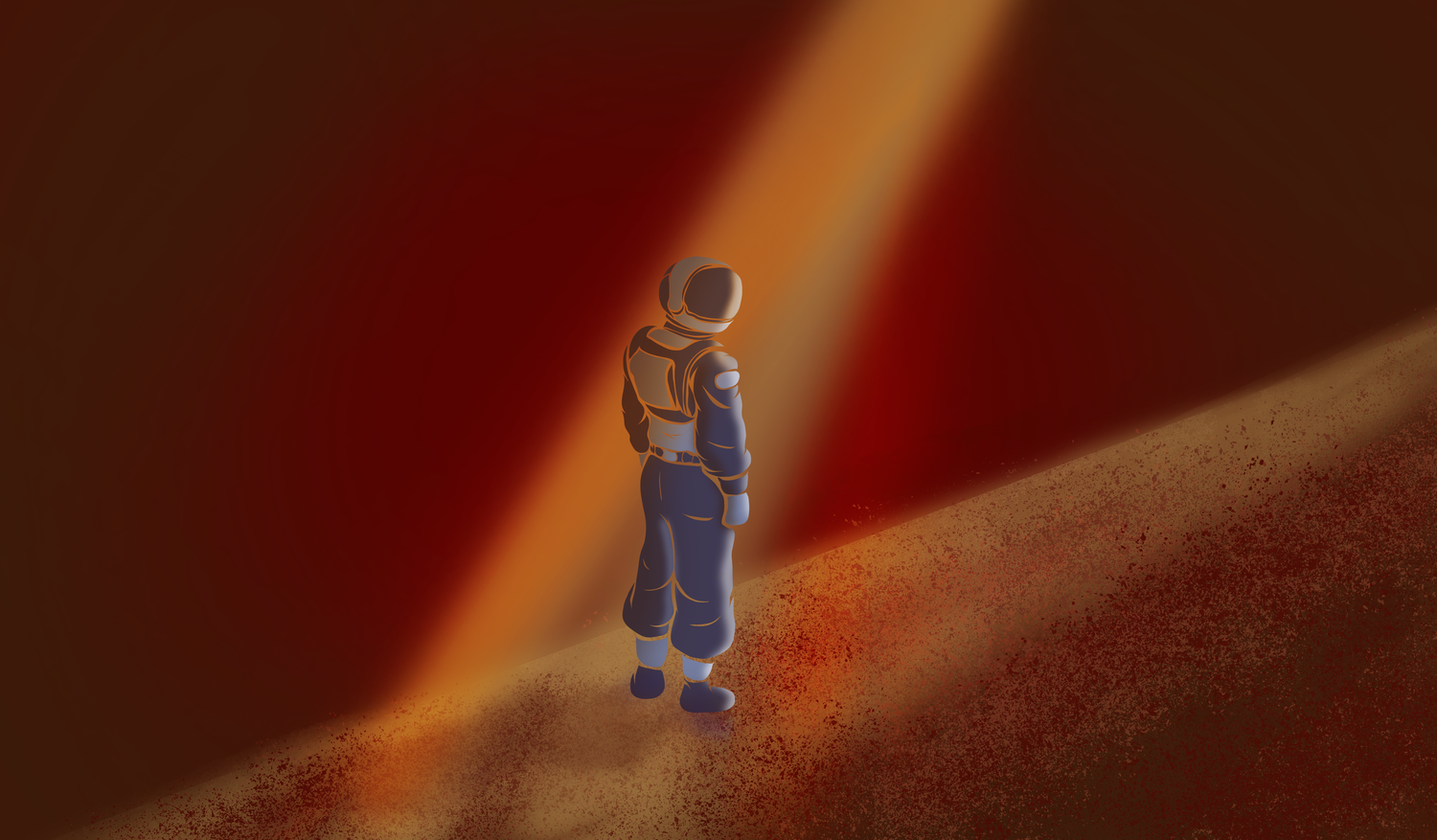
For those yearning for even more of Ryan Gosling’s comedic talents since “Barbie” and “The Fall Guy,” the one-man vehicle that is “Project Hail Mary” is not to be missed.
Directed by Phil Lord and Christopher Miller (“The Lego Movie” and “21 Jump Street”), “Project Hail Mary” is a sweeping science fiction premise budgeted at nearly $200 million. Adapted from the novel of the same name by Andy Weir, the story follows a mission to stop a single-celled organism that is slowly dimming the sun and thereby threatening human extinction.
However, as the film progresses, the dramatic plot beats that such material requires seldom land with the gravity audiences would expect. What emerges is then an unexpectedly light-footed adventure whose greatest asset is Gosling’s signature magnetic presence.
In the first minutes of the film, the audience is plunged into darkness and into the world of Ryland Grace (Gosling). He awakens disoriented, presented in a tabula rasa-like state as he finds himself aboard a spacecraft with no memory of how he arrived there. Gradually, his memory returns in fragments as he explores the dark, industrious corridors of the Hail Mary ship.
The film plays with memory through its structure. Intercut timelines permeate the entire runtime, shifting between the past — life on earth before the mission — and the present, when Grace must carry out his mission. Grace is revealed to have been a junior high school teacher and former molecular biologist, chosen to help save Earth from its escalating solar crisis.
These structural choices build the fuller picture of why a cautious, self-doubting teacher became the only person able to save the entire planet. This guided oscillation constructs an impactful arc of self-actualization for Grace as he confronts life-threatening problems that cannot be deferred.
Gosling carries such a character single-handedly, as “Project Hail Mary” is fully aware of how much it functions as a star vehicle. Gosling’s comedic timing — whether in a command center packed with politicians or alone floating in space — consistently emerges in the form of awkward reactions, creating an incredibly endearing character. Compared with his other space role as Neil Armstrong in Damien Chazelle’s “First Man,” however, this role demands far less emotional austerity.
The more dramatic aspects of his performance are probed by the compelling and unexpectedly cute dynamic with his new alien friend. Rocky (James Ortiz) — an alien sent from a planet suffering from the same conditions as Earth — is an endlessly adorable character whose patient relationship with Grace becomes the beating heart of the film.
Ortiz’s puppeteering and voice acting for Rocky allows the creature to feel embodied and refreshing amidst a slew of CGI. Even extending to the spacecraft’s set, the production designers refused the usage of green screens. “Project Hail Mary” thus manages to feel tactile in a hyper-digitized genre, rendering Gosling’s acting all the more realistic within the setting.
Sandra Hüller flexes her comedic muscles as Eva Stratt. Although her character borders on the German stereotype of blunt humor and a stiff, pragmatic outlook, her character’s rigidity conceals a warmth that her relationship to Grace reveals. In addition, fans grieving the end of “Industry” Season 4 will be delighted to see the iconic Ken Leung operating on the periphery of the film. Still, outside of Gosling, Ortiz, and Hüller, the broader human ensemble fades into the background, given little room to leave a lasting impression.
In a contemporary Hollywood that often treats alien contact as catastrophe, “Project Hail Mary” fuses intergalactic bonds to reframe encounters as collaboration. Two strangers from distant worlds discover that survival depends on mutual trust — a message all too necessary for our current world.
Unfortunately, the film relies too much on maintaining its inspirational and uplifting messaging that it scaffolds its greatest weakness: tone. The audience is constantly bombarded with the fact that the fate of the earth is at risk, but the script rarely wishes to make such a threat felt. Throughout the film, tension is consistently defused by humor. Even a revelatory moment that exposes how Grace ended up on the mission rarely lingers on the moral weight of that decision.
This results in a film that feels strangely safe. Even after some thrilling action sequences, such as a descent into the abrasive atmosphere of a hostile planet, the scene will be punctuated by an insincere one-liner that undercuts its dramatic energy.
“Project Hail Mary” sadly cannot grasp its own gravity even as it commits completely to its vision. Still, the charms of its characters will prove difficult for many viewers to resist.
—Staff writer Kai C. W. Lewis can be reached at [email protected].
Want to keep up with breaking news? Subscribe to our email newsletter
Have a tip for The Crimson? Share it confidentially