As Life Sciences Development Slows, Allston Developers Turn Toward Housing
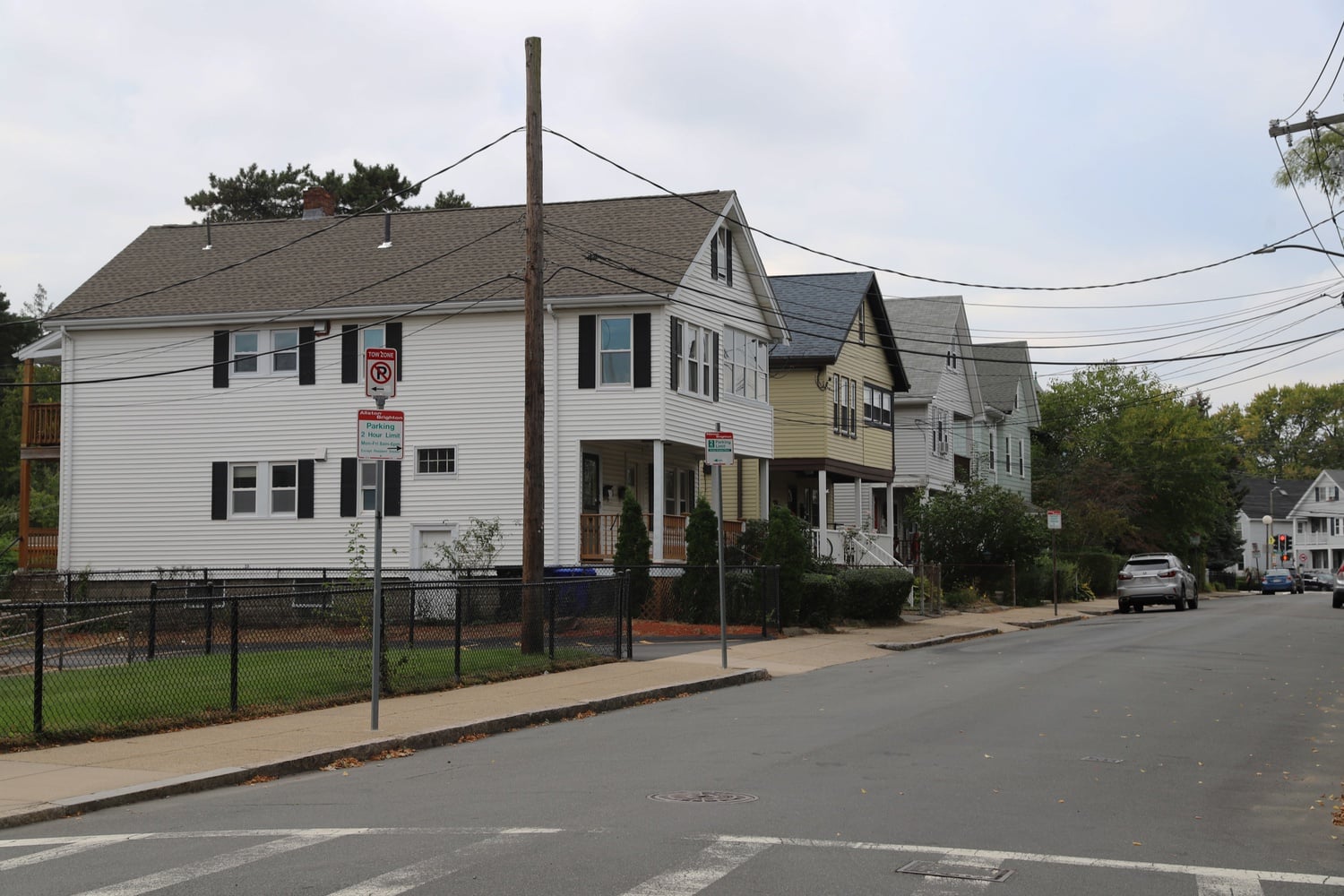
As life science development slows sharply, a different sector is gaining momentum in Allston: housing.
In the past two months alone, developers have moved forward on five residential proposals that would add 266 units to the neighborhood. Four projects are currently under review by the Boston Planning and Development Agency, while another project has been proposed in a letter of intent.
The shift toward housing is also creating space for smaller, locally driven projects. Some proposals are being led by longtime Allston property owners looking to redevelop their own sites.
Hun Jae Lee and May S. Lee, who have operated Flints’ Cleaners near Harvard’s Science and Engineering Complex for four decades, filed a letter of intent in February to redevelop their property into a multifamily building. The couple plans to keep the cleaners operating on the ground floor of the mixed-use project.
The proposal stems from the Lee family’s desire to “make Allston a livable place,” emphasizing walkability and access to public transit.
Another project involves the site at 1170-1200 Soldiers Field Road. National Development had planned to construct a new WBZ-TV station there in 2019, including 62,000 square feet of commercial and office space. But the project was abandoned in 2024 as market conditions shifted.
Thunderome LLC purchased the lot at 1200 Soldiers Field Road in December and filed a letter of intent on Feb. 11 to develop a 58-unit residential building on part of the property.
The BPDA is also reviewing three additional proposals: a six-story residential building on Brighton Avenue, an eight-story building on Western Avenue, and a four-story building on North Harvard Street.
If approved, the larger projects would fall under Boston’s inclusionary zoning policy, which requires developers to designate 20 percent of units as income-restricted affordable housing.
Get The Crimson in your inbox.
Housing affordability has long been a concern in Allston, where strong demand and limited supply have pushed rents higher. A 2019 report from the Allston Brighton Community Development Corporation found that the shortage of multifamily housing had placed significant pressure on the neighborhood’s housing market.
But affordability requirements can complicate development economics, particularly for larger projects, according to Demetrios Salpoglou, chief executive officer of the real estate data platform BostonPads.
Having a large proportion of income-restricted units creates uncertainty for developers, who are not guaranteed to recoup their investments if rental markets are weak once the project is completed, he said.
“Costs are real and revenues are fictitious, right? You know what your costs are. You don’t know what — by the time you’re done with that lease up project — what your actual rents are, because a lot of things could impact it,” he said.
The shift comes as commercial lab development in Allston, which totaled roughly 1.3 million square feet at the end of 2025, has slowed dramatically. Nearly 70 percent of the lab space now sits vacant — a figure significantly higher than surrounding areas, with 42.4 percent of space vacant in Boston and 27.4 percent in Cambridge, according to a report from real estate consulting firm Colliers.
Jeff Myers, a research director at real estate consulting firm Colliers focused on life science development, said much of Allston’s lab space entered the market during the past two years — when demand for it was particularly weak.
He pointed to developments such as Allston Labworks and FORUM at Boston Landing, both of which completed construction and opened in 2025.
But the supply of commercial lab space quickly outpaced the demand, and Myers said the trend is unlikely to reverse in the near future. Even with relatively healthy levels of absorption and uptake of these new spaces, Myers said it would likely take years for demand to normalize.
“It’s going to take a long time to get back to a ‘normative market’,” he said.
Developers are also facing elevated borrowing, construction, and labor costs, Myers added, making large commercial projects harder to finance.
“We certainly have seen some developers that have said we’re going to look to develop residential, for instance, rather than some of the commercial offices or labs that previously proposed,” he said.
Several housing developments are already underway in the neighborhood. Earlier in February, Mill Creek Residentials broke ground on a six-story development project that will add an additional 240 units, replacing a vacant commercial building at 250 Everett Street.
—Staff writer Thamini Vijeyasingam can be reached at [email protected]. Follow her on X @vijeyasingam.
Want to keep up with breaking news? Subscribe to our email newsletter
Have a tip for The Crimson? Share it confidentially