Harvard Is Probing Its Ties to Epstein. A Reckoning Must Follow.
Harvard is digging into its ties to Epstein. The question now is how it will bury them.
Last month, Harvard expanded its probe into Jeffrey E. Epstein’s ties to the University after newly released files shed light on new or deepened connections across campus — including prominent donors, professors, and the former Faculty of Arts and Sciences dean Henry Rosovsky.
The existence and depth of Epstein’s chilling web of connections cuts into the University’s moral fibre. While the new probe is commendable, ensuring that Harvard doesn’t commit moral failures of such magnitude again will require more than an investigation — an actionable reckoning is overdue.
With its most recent decisions, Harvard has set a guide for what to do. Professor Martin Nowak — who had close ties to Epstein and facilitated his presence on campus — was only temporarily sanctioned by the University in 2021 but placed on paid administrative leave last week. And on Tuesday, former University President Lawrence H. Summers announced he will resign from his University Professorship, following the launch of Harvard’s investigation last November into his close friendship with the child sex trafficker.
Harvard should continue investigating as the depth of these ties become clearer. But if it wants the attempt at moral redemption to be read earnestly, the University has to show its work. That means sharing the results of its examinations and acting on them.
The aim should be to make sure that there is no place at Harvard for individuals who knowingly maintained extensive ties to Epstein in the wake of his crimes.
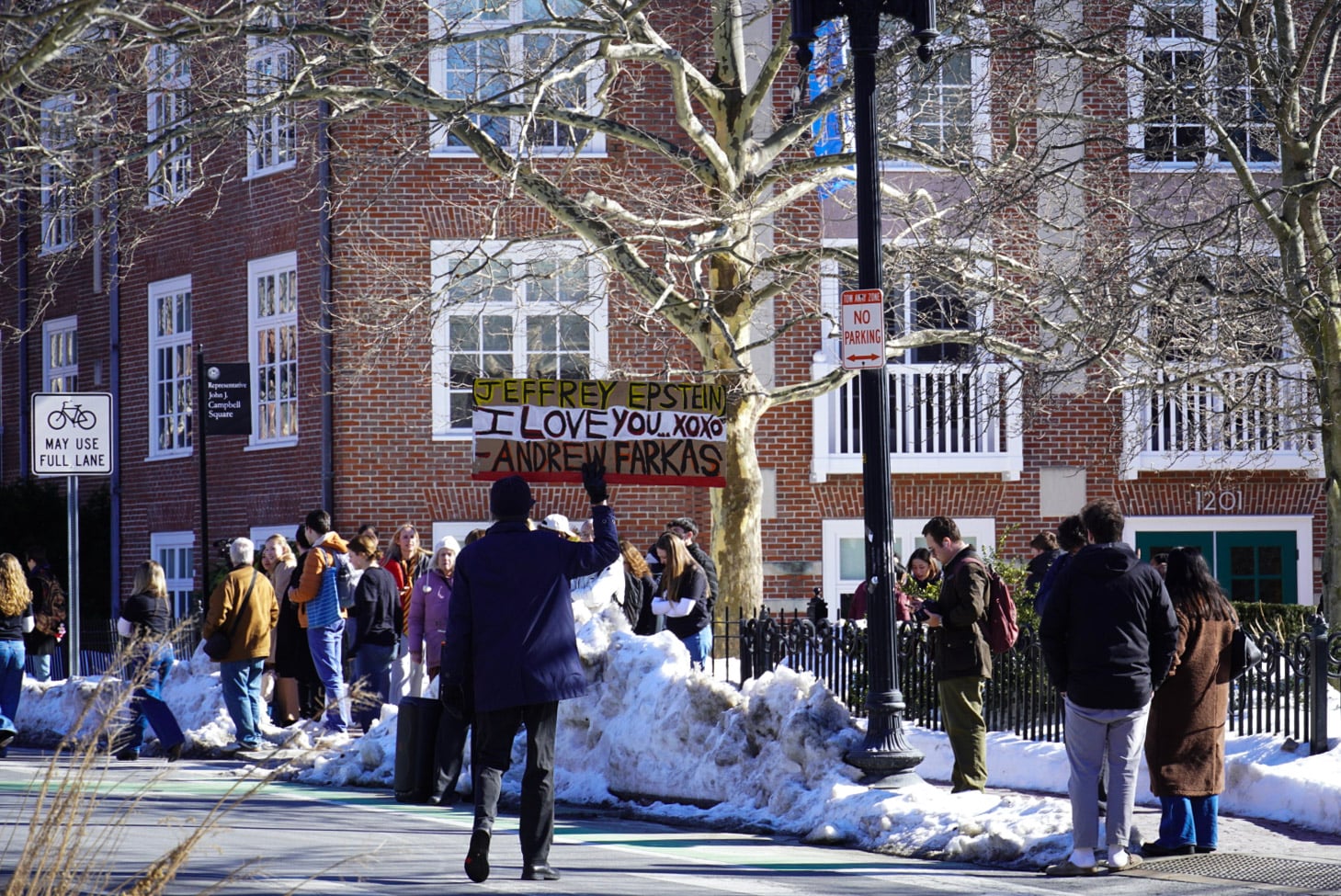
Often more pernicious than mere friendships is the way Epstein left his mark on Harvard through his association and support for organizations and buildings on campus. In one instance, Epstein gave $375,000 to the Hasty Pudding Institute, a performing arts and social organization chaired by his associate Andrew L. Farkas ’82, with whom he exchanged almost 2,000 personal emails. And yet, today, the historic home of the Pudding’s annual show still bears Farkas’s name.
Further down Mt. Auburn Street, Epstein was able to continue leveraging his foundational financial relationship with Harvard Hillel. As late as 2011, years after Epstein’s conviction for soliciting prostitution from a minor, former Hillel leaders sought donations from the sex offender. It appears that Rosovsky, a former high-ranking administrator and namesake of Hillel’s building, was key in facilitating communication between parties.
To truly clean its image, Harvard should pressure such organizations to remove connections to Epstein wherever possible, including by removing the sex offender’s affiliates from positions of power or donating the tainted funds to worthy causes. From there, Harvard should seriously consider using its denaming process to answer calls for altering names that maintain Epstein’s legacy on our campus.
That said, Harvard’s introspection can’t end there. The University community should feel deeply alarmed by the fact that so many Harvard professors, donors, and organizations overlooked Epstein’s publicly known sex crimes for the sake of personal gain. The question is how to make sure it doesn’t happen again.
That’s why, to begin, it’s paramount that Harvard adopts yet clearer standards when vetting its benefactors. After all, it is easy for donations to become relationships — and Harvard gets a bit more than a few donations.
The University’s Gift Policy Guide was released in 2020 in response to an earlier failure in Harvard’s Epstein saga. It requires, among other things, that donations adhere to Harvard’s values and prohibits gifts meant to advance donors’ business interests rather than those of the University.
It’s well intended, but it feels incomplete when we’ve now seen that Harvard’s 2020 investigation failed to uncover several donations by the financier and that University policies didn’t appear to prevent affiliated organizations from seeking and acquiring Epstein gifts of their own. Harvard’s Gift Policy should be improved to ethically reinforce our institution and prevent donors from snaking their money onto campus.
Harvard should know that its faculty and organizations may go blind in endeavoring after funding and power; stronger guidelines are needed to make the community adhere. It’s in Harvard’s best interest — especially considering the current political limelight cast on the University — to stop its affiliates from implicitly supporting abhorrent criminals.
As such, the line Harvard draws now will matter more than the files it opens.
This staff editorial solely represents the majority view of The Crimson Editorial Board. It is the product of discussions at regular Editorial Board meetings. In order to ensure the impartiality of our journalism, Crimson editors who choose to opine and vote at these meetings are not involved in the reporting of articles on similar topics.
Have a suggestion, question, or concern for The Crimson Editorial Board? Click here.
Want to keep up with breaking news? Subscribe to our email newsletter
Have a tip for The Crimson? Share it confidentially