‘Half His Age’ Review: Complex Themes Reduced to Flat Female Characters
1 Star
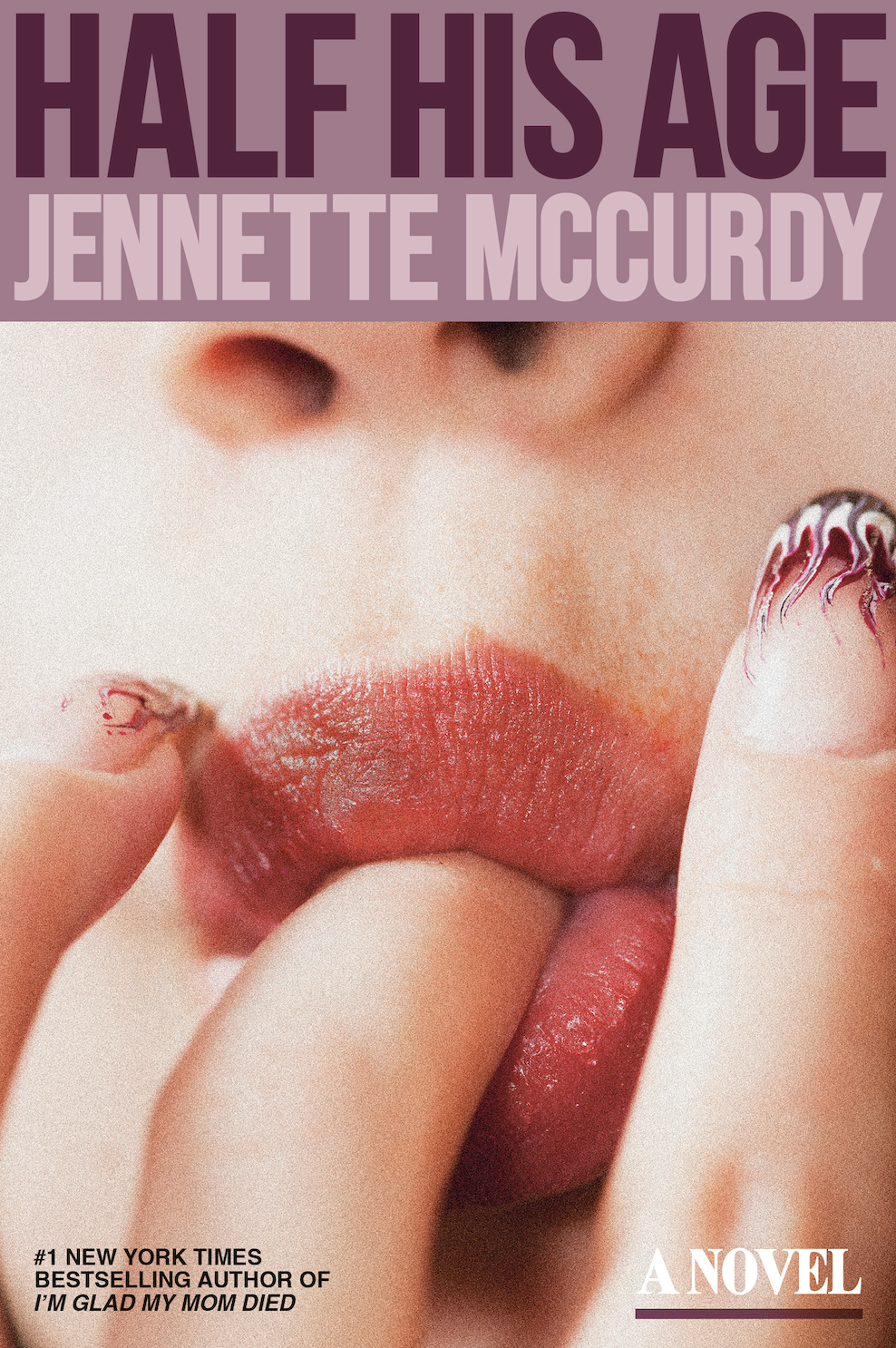
Age-gap relationships have never ceased to intrigue, befuddle, or — increasingly — enrage audiences, and in former Nickelodeon star Jennette McCurdy newest novel “Half His Age,” this dynamic is on full display. The semi-autobiographical novel deals with a relationship between a 17-year-old-high school student and the creative writing teacher who is infatuated with both her and her writing. Intended as an exploration of female angst, “Half His Age” struggles to live up to its author’s ambition, with shallow character development and a story that never quite delivers the emotional impact McCurdy promises.
McCurdy, who shot to fame as a child actress on Nickelodeon’s iCarly and spinoff Sam & Cat, became a #1 New York Times bestselling author with her memoir “I’m Glad My Mom Died.” In the memoir, McCurdy writes candidly about growing up in the entertainment industry while navigating both an emotionally abusive relationship with her mother and a relationship with an older man during her teenage years. Those experiences clearly inform the emotional terrain of “Half His Age.” With this new novel, McCurdy expands her literary ambitions, turning to fiction to probe a relationship that sits at the intersection of desire, power, and exploitation.
The question was whether she could establish herself as a serious literary talent, or if her debut was merely a one-hit wonder — the latter appears to be the case.
Waldo, McCurdy’s protagonist, is a 17-year-old high school senior in Anchorage, Alaska. She lives in a cramped apartment with her mother, who she often feels neglects her as a result of her long work shifts and her revolving door of boyfriends. Waldo herself is frustrated in love and struggles to find the affection she craves in her high school relationships. After she breaks up with her boyfriend, she develops an intense crush on her creative writing teacher, Mr. Krogy, who admires the raw honesty of her work. Their connection quickly escalates into a heated affair.
It’s a loaded subject, and not one that McCurdy handles well.
The novel unfolds almost entirely through Waldo’s stream of consciousness, which is marked by biting, often cynical observations. Her internal monologues stretch on for paragraphs — sometimes even pages — while little narrative action occurs. As a result, the pacing slows and the reader remains immersed in Waldo’s thoughts rather than in the unfolding events of the story. When the narrative eventually returns to external action, the shift can feel abrupt, leaving the reader momentarily disoriented and struggling to reconnect with the plot and surrounding characters.
Waldo’s narration also often slips into heavy-handed commentary that instructs the reader to interpret events in certain ways, rather than allowing their meaning to emerge naturally. Instead of creating space for ambiguity or reader interpretation, the narration frequently explains too much, diminishing the subtlety that stream-of-consciousness narration can achieve when used more sparingly.
In addition to these formal faults, Waldo’s character is a crude and unconvincing description of what the 21st-century teenage girl is — horny, self involved, and deeply insecure. McCurdy reinforces this characterization in two main ways. The first is through Waldo’s growing obsession with Mr. Krogy. Waldo’s mood rises and falls with Mr. Krogy’s level of attention, making his approval the central force shaping her emotional life. The second unconvincing element of Waldo’s character appears through her compulsive shopping. She repeatedly turns to Amazon and fast-fashion purchases as a way to fill the emotional void left by these disappointments. These scenes are written as long catalogues of purchases, sometimes filling nearly an entire page with item after item. The repeated cycle of obsession, shopping, and regret soon becomes predictable and exhausting. By the end, Waldo emerges as a flat, one-dimensional character.
Now let’s get to the sex. McCurdy has said she wrote the novel to make readers feel “uncomfortable,” and in that sense she succeeds — though not always as intended. The discomfort stems less from moral complexity than from the sexual relationship between Waldo and Mr. Korgy, which is rendered through scenes that feel engineered for shock value. Grotesque details – licking belly-button hairs, period sex, bad breath – pile up in ways that feel more cringeworthy than revealing. Any narrative built around such a well-worn pornographic trope risks collapsing into cliché and here the novel hardly escapes that danger. At times it reads less like a literary exploration and more like smut, relying on sensationalism rather than the psychological depth or insight that might have given the story real substance.
“Half His Age” is a deeply personal novel for McCurdy. In an interview with “The New York Times,” she shared that “she was in a relationship with a much older man. And it was only through writing ‘Half His Age’ that she was able to work through her rage, understand her desire and reclaim her power.” Given this personal foundation, it is disappointing that the novel fails to live up to its promise. Waldo never completes a fully realized character arc, and Mr. Korgy remains frustratingly shallow. The real shame is that, as book bans increase, many authors are shying away from complex or taboo topics, making novels that tackle difficult subjects with honesty even more necessary. Yet McCurdy’s attempt falls short, promising a raw exploration of desire and power but delivering little of the nuance or depth the subject deserves.
—Staff Writer LeMonie K. Hutt can be reached at [email protected].
Want to keep up with breaking news? Subscribe to our email newsletter
Have a tip for The Crimson? Share it confidentially