‘Stereophonic’ Review: Time to Start Again, Again
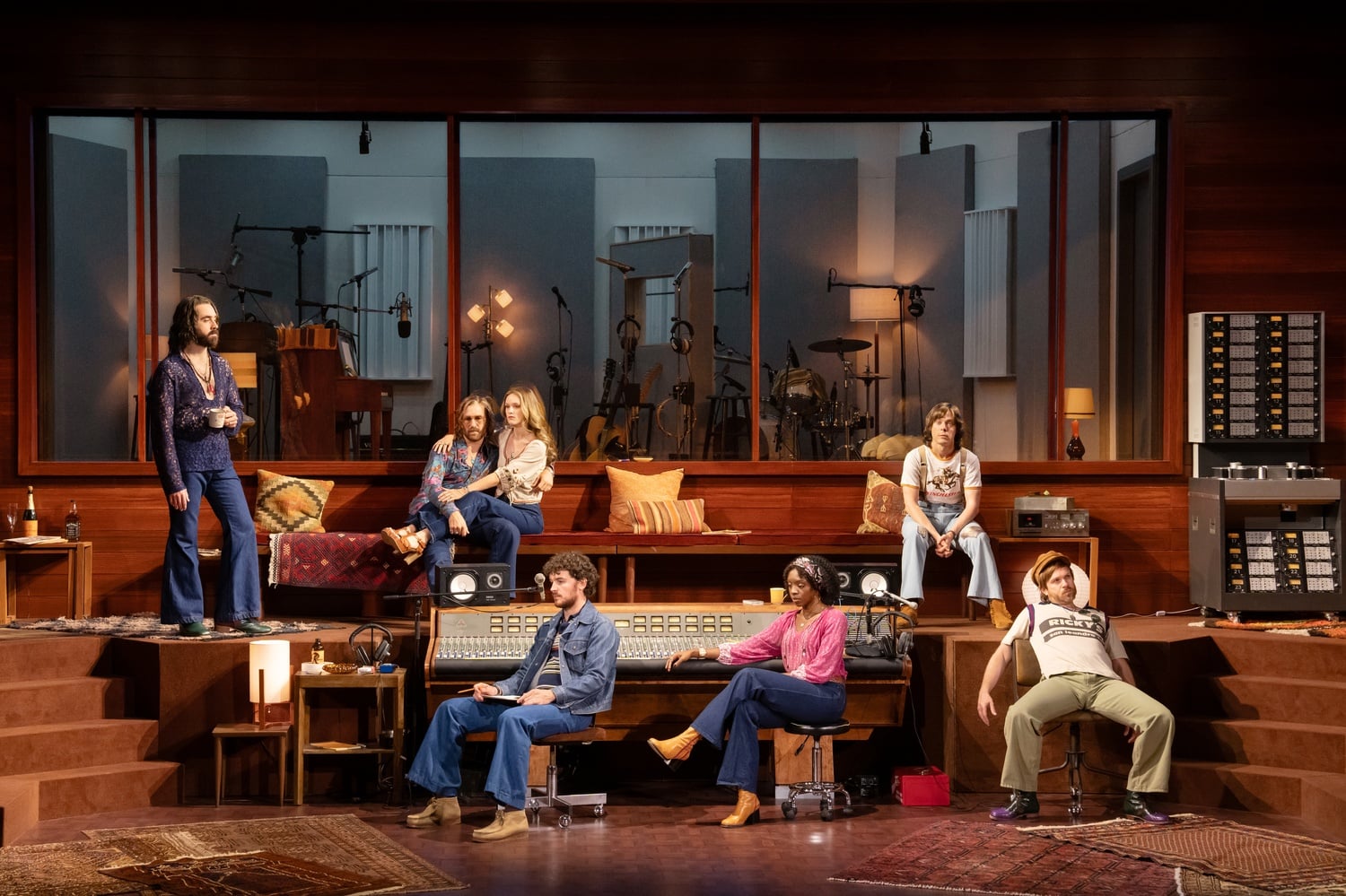
After an extraordinarily successful Broadway run that garnered the most Tony Award nominations for a play in theater history, it’s only natural that David Adjmi’s “Stereophonic” would hit the road. Daniel Aukin’s taut direction and Adjmi’s searingly insightful writing, along with memorable performances from many of the touring cast, make “Stereophonic,” which played at the Emerson Colonial Theatre in Boston from March 10 to March 15, deserving platinum status.
“Stereophonic” tells the story of an unnamed Fleetwood Mac-esque band and the trials and tribulations they experience while recording an album. In fact, Adjmi recently faced a lawsuit from Ken Caillat, the producer of the Fleetwood Mac album “Rumours,” who claimed that Adjmi had stolen copyrighted material from his memoir. Caillat ultimately lost that court case, and the script of “Stereophonic” remains mostly the same. It has been slightly trimmed from its original 190-minute runtime and Adjmi’s program note refers to the new version as a “radio edit.”
“Stereophonic” opens with Grover (Jack Barrett), a young engineer who lied about his credentials in order to work with the band, checking the sound levels in the recording studio. Designed with impressive accuracy and artistry by David Zinn, the studio is the centerpiece of the play — all of the action takes place either in the various seats surrounding the soundboard or behind a glass screen where the actual recording happens. Ryan Rumery’s sound design ensured that in the transition from the intimate Playwrights Horizons, where “Stereophonic” premiered, to a palatial touring house, not a line or a lyric got lost.
Will Butler, a former member of the indie rock band Arcade Fire, penned a handful of songs for the show, which are catchy and authentic to the 1970s rock ‘n’ roll sound. The songs “Bright” and “Masquerade” are given especially prominent positions in the piece, as the torturous process of orchestrating both songs is shown in skillful detail during the first act. These moments required every performer in the show to be an exquisite musician, and their chemistry as bandmates and co-stars was well-honed by Aukin and his team.
Barrett and Claire DeJean – who played the band’s lead singer, Diana — both made their stage debuts in this production. While Barrett’s performance lacked some of the quirkiness that Eli Gelb memorably brought to the role on Broadway, he remained an appealing anchor for the band members’ wild antics. DeJean gave a charismatic performance, and both she and Broadway veteran Emilie Koutachou — who played pianist and singer Holly — provided impressive pop vocals throughout the show. Both were luminous in Enver Chakartash’s flowing, beautiful costumes, and their success in the roles were all the more impressive given the unenviable task of having to live up to Sarah Pidgeon and Juliana Canfield’s iconic performances.
Christopher Mowod gave the most disappointing performance as the bass player Reg, turning the character from the delightfully irresponsible sprite that won Will Brill a Tony award in 2024 into a bland and only occasionally funny side character. The “houseboats” monologue, for which Brill’s offbeat delivery gained critical attention, garnered far less emotional and comedic power than it should have. Steven Lee Johnson’s portrayal of the assistant engineer Charlie lost much of the nerdy appeal that Andrew R. Butler had in the role. Johnson still got every laugh in Adjmi’s script, but his fairly generic portrayal made the production less colorful.
Meanwhile, Denver Milord — who played the album producer and guitarist Peter and was an understudy for the same character in the New York production — struck gold in his role of a classic male manipulator. Many of his cruel statements were appropriately shocking, and he managed to portray Peter’s obvious narcissism while elucidating the deep insecurity it comes from. Cornelius McMoyler, another member of the original Broadway company, was equally effective as Simon, the calm and collected “daddy” of the group.
The amount of overlapping dialogue in “Stereophonic” proves just how bonded the band is, and Aukin directed every stutter and interruption with virtuosic precision. In this production, every gesture, no matter how small, meant something, and every relationship was vividly drawn. Adjmi’s masterful dialogue ranges from profound, philosophical truths to pleasant comic diversions. Towards the end of the play, Holly sagely points out that “it’s a torture to need people.” Contrastingly, just moments before, Reg breaks the tension during an unpleasant meeting by suggesting that the group title their forthcoming album “Mudfuck.”
The emotional rollercoaster of “Stereophonic” is just one reason why each moment of the play’s three hour runtime is unfailingly engrossing. In an era when audiences are being presented with shorter and shorter content to fit their decreasing attention spans, “Stereophonic” might seem like an endurance test. Instead, it is a reminder that an intelligent, thoughtful exploration of humanity is never boring; great art has no time limit.
“Stereophonic” ran at the Emerson Colonial Theatre from March 10 to March 15.
—Staff writer Charles E. Kirsch can be reached at [email protected].
Want to keep up with breaking news? Subscribe to our email newsletter
Have a tip for The Crimson? Share it confidentially