‘Framing Nature: Gardens and Imagination’: The MFA Launches Collaborative Multimedia Spring Exhibition
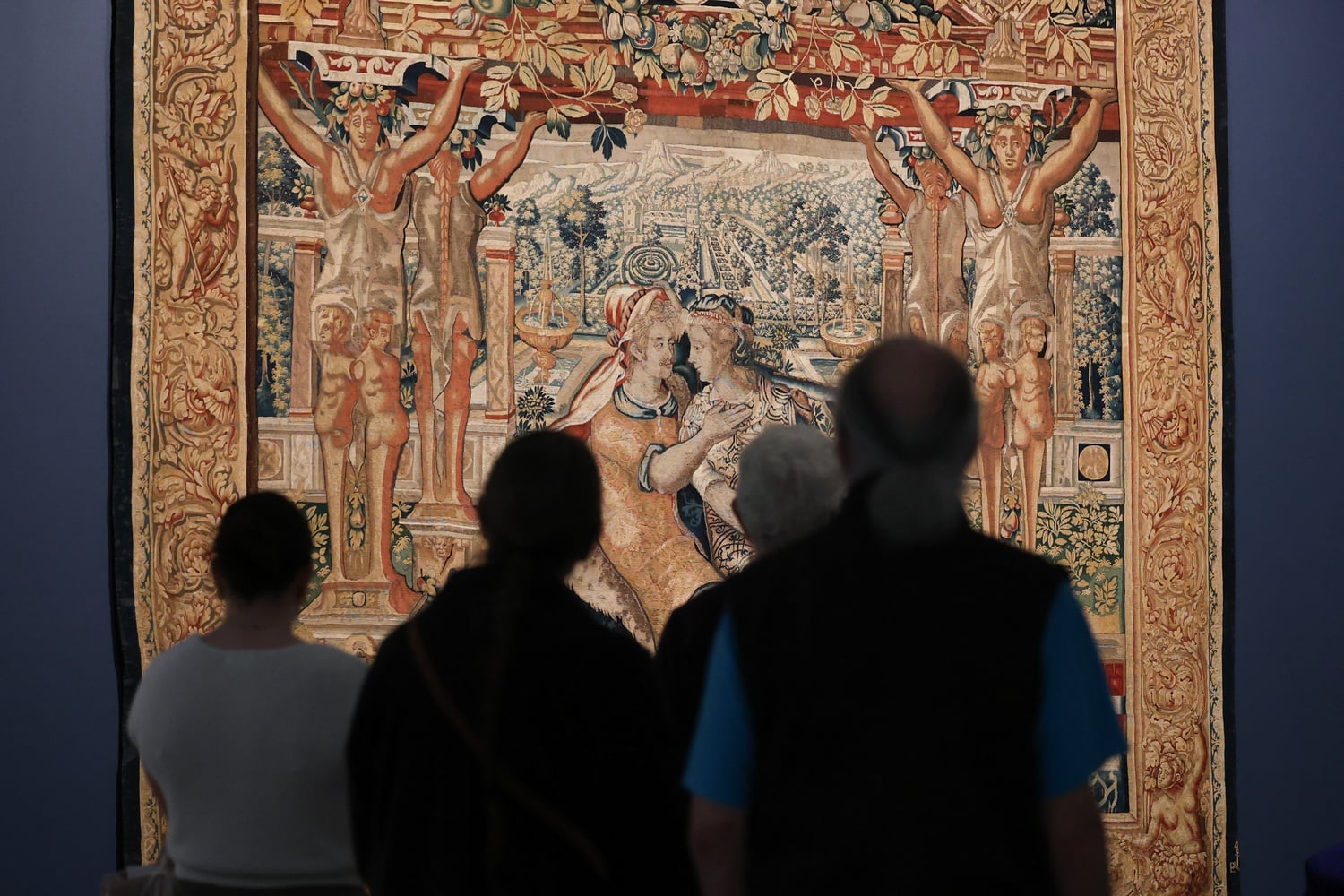
Visitors of the Museum of Fine Arts Boston’s spring exhibition “Framing Nature: Gardens and Imagination” are immediately immersed in an imitation of nature through sounds of birds chirping, leaves rustling, and gravel crunching, all of which accompany the wool and silk “tapestry with park scene.” This opening room serves as a pseudo-table of contents for the gallery.
“Framing Nature: Gardens and Imagination” sets out to explore the many interpretations of gardens found in art over the course of eight connected gallery rooms, with each focusing on slightly different dimensions of the theme.
“We had the garden theme as our sort of overarching subject, and that gave us a freedom to go in many different directions and allowed us to go much broader, sort of in terms of time periods and cultures and also media,” said Meghan Melvin, Senior Curator of Prints and Drawings at the MFA, in an interview with the Crimson.
The extensive collaboration between various departments and programs at the MFA was a defining feature of the curation, allowing for a unique combination of media throughout the gallery. This collaboration extended to the participation of students in the MFA’s teen summer program, whose work can be seen throughout the gallery.
“The MFA teens program began pretty early on in this academic year, working with concepts in the show, and they selected objects to write labels about,” said Elizabeth Dospel Williams, Chair of Fashion, Textiles, and Jewelry at the MFA, in an interview with the Crimson. “It was very important that they have authored labels, that their names be on the labels to credit their work, credit their thinking.”
The teens were the engineers of the soundscape found in the opening room, guiding visitors into the next room, titled “Gardens as Art.” This gallery includes a selection of pieces in various media including other textiles as well as a collection of plates by Andrew Raftery.
“We had the wonderful opportunity to work directly with [Raftery] and to create a new and different backdrop for presenting the plates,” said Melvin.
This showing is but one example of the interaction with living artists and combinations of media, both of which are prevalent throughout the gallery.
“We have, as you can see, even in this gallery here, everything from, you know, ceramics to prints to quilts, books, hand painted scrolls, you name it,” Melvin said.
The gallery “Gardens Through Time” features paintings from antiquity, including a wall fresco panel from Pompeii, as well as more recent paintings by John Singer Sargent and Joyce J. Scott depicting garden scenes.
“Opportunity, on the one hand, to learn more about other cultures and other time periods and other geographic areas, but it also became an opportunity then — once we had thought about that — to reconsider our own preconceptions or our own expectations,” Dospel Williams said.
In between the rooms, the interlude of the Japanese Garden is flanked by the galleries “Gardens and Gardeners” and “Artists and Gardens.” The interlude is designed to be a resting space with bean bag chairs and videos of the MFA’s outdoor Japanese Garden throughout the seasons projected onto the walls.
“Artists and Gardens” houses two paintings side-by-side: “Water Lilies” by Claude Monet and “Les dahlias, jardin du Petit Gennevilliers” by Gustave Cauillebotte. These two artists were friends who would write to each other discussing their gardens. This element of human connection was a focus of the curators when planning the gallery.
“We were very interested in bringing out the human story, and also the human story that comes with the individual artists too,” said Melvin.
Flowerprint dresses by Christian Dior and Yves Saint Laurent stand beside a gardenscape wallpaper made for the 1855 World’s Fair in Paris in the “Taking the Garden with You” gallery.
Many of the pieces in this collection have either never been on display, or it has been decades since they have seen museum lights, due to either delicacy or lack of gallery space.
“Gardens and Power” is the penultimate gallery which leads into “Gardens and Futures,” the final room in the exhibition, which offers viewers an opportunity to reflect on the entirety of the gallery and what their take away is.
“I think my colleagues absolutely agree [that] we couldn’t do a show about gardens and not talk about climate change and about our concerns for the planet in the future,” said Karen Haas, Senior Curator of Photographs at the MFA, in an interview with the Crimson.
“Framing Nature: Gardens and Imagination” seeks to present viewers with the different facets of gardens and nature as depicted in art through diverse media and numerous millenia. The gallery is open to visitors from March 15 through June 28 in the Ann and Graham Gund Gallery of the MFA.
Want to keep up with breaking news? Subscribe to our email newsletter
Have a tip for The Crimson? Share it confidentially