From Sundance: ‘How to Divorce During the War’ Proves a Promising Vision That Falls Short
Dir. Andrius Blaževičius — 3 Stars
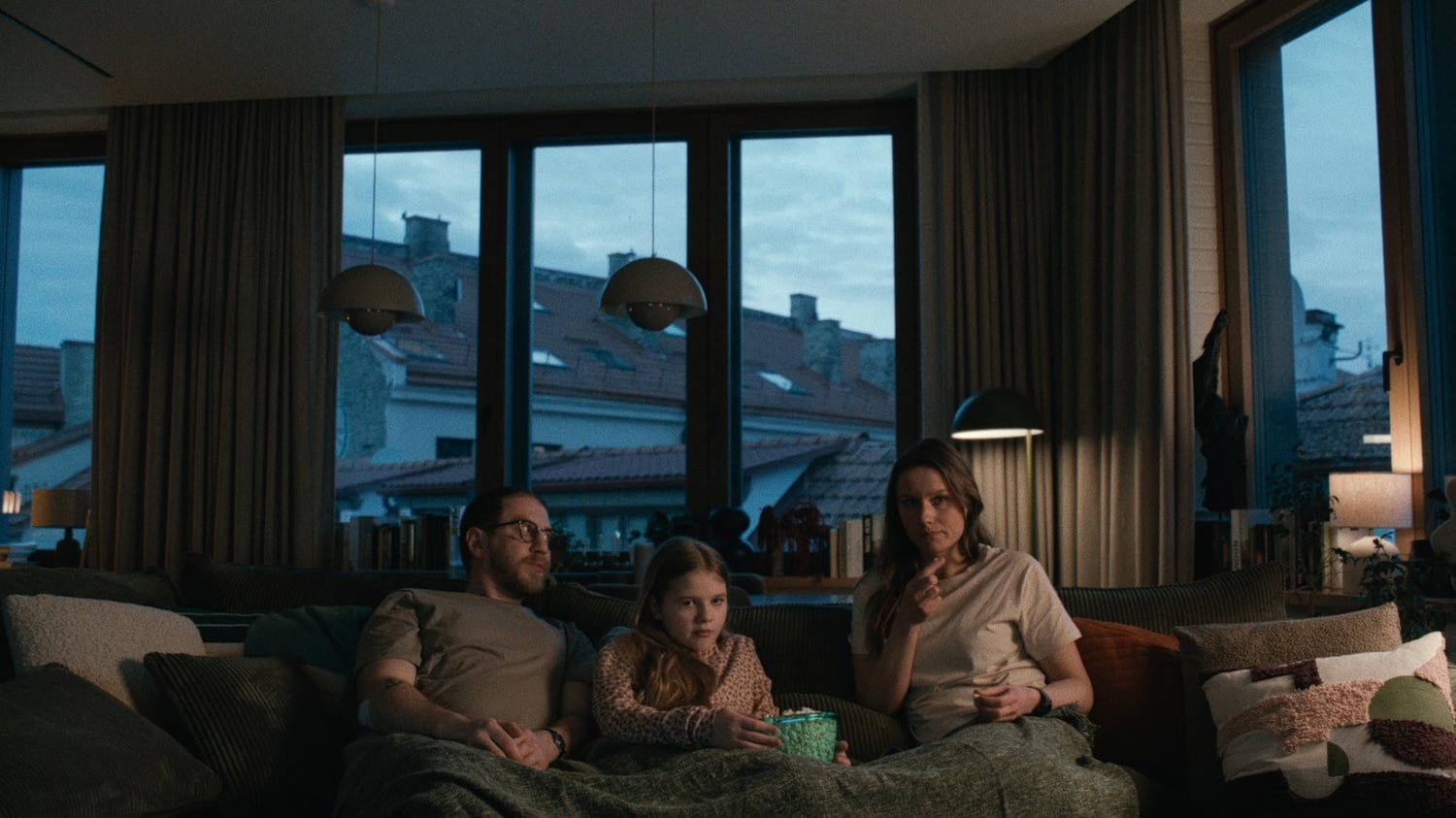
When private heartbreak collides with public catastrophe, it’s guaranteed to get messy. “How to Divorce During the War” presents an emotionally charged exploration of love, estrangement, and survival set against the unfolding chaos of the Russia-Ukraine war, but its storytelling feels more underdeveloped than its subject matter suggests.
At its core are Vytas (Marius Repsys) and Marija (Zygimante Elena Jakstaite), whose crumbling marriage mirrors the broader unease reverberating through their home country of Lithuania. Though vividly brought to life through emotionally nuanced performances from Repsys and Jakstaite, the relationship gradually loses its initial dramatic force as the narrative struggles to sustain its momentum.
The film captures the frustration of feeling constrained, not only by a failing relationship, but by personal beliefs, sexuality, and the often unforgiving restrictions imposed by life itself. Winner of Sundance’s Directing Award: World Cinema Dramatic, Andrius Blaževičius amplifies this tension with raw, unflinching camera work, most notably in a single, relentless shot during the couple’s breakup that makes the audience feel almost complicit. This immersive cinematography forces viewers to inhabit the couple’s emotional space, trapped alongside the characters and subtly compelled to take a side.
The story continually flips perspectives, keeping the audience off-balance but still reinforcing an uneasy sense of connectivity between the couple. Equally entwined is the shadow of the war, with the film capturing subtle but telling signs of social fracture — vandalized cars bearing Russian license plates, playground fights, and workplace tension.
Adding to this is a commentary on performativity and the subtle ways in which identity shifts under the pressure of national crisis. Acts of patriotism, moral conviction, and even grief of the main characters begin to feel staged at times, as though the characters are negotiating not only what they believe but also how they wish to be perceived believing it. Yet the film’s thematic ambition ultimately outpaces its narrative clarity, leaving the story rich with implication but hesitant to probe its own emotional core.
In its attempt to weave together themes of divorce, generational separation, and wartime strife, “How to Divorce During the War” struggles to grant each thread the depth it demands. The idea that Vytas and Marija’s differing approaches to coping — both with their separation and the war — are fundamentally rooted in the same principles is compelling in theory. However, the execution feels inconsistent, and their emotional trajectories become difficult to fully track, muting what could have been the film’s most resonant insight.
Even more frustratingly ambiguous is their daughter Dovile (Amelija Adomaityte), whose limited character development feels less like an intentional restraint and more like an underwritten subplot. The repercussions of her parents’ emotional and ideological conflict are hinted at rather than meaningfully explored, leaving a central emotional question — how a child internalizes both domestic fracture and national instability — unsuccessfully examined.
Adomaityte’s performance, however, stands out. Her most compelling work arrives in the final act, where a number of nuanced emotional scenes convey her quiet accumulation of confusion and hurt. Unfortunately, these moments are partially obscured by the rushed and somewhat muddled resolution that prioritizes thematic suggestion over emotional payoff.
“How to Divorce During the War” might also have benefited from more confident tonal variation. While not the most obvious setting for levity, the film makes several attempts at humor that ultimately fall flat. Sharper comedic beats could have added dimension and rhythm, but instead, these moments feel tentative and occasionally contribute to a sense of narrative clutter.
Admirably ambitious in its scope, “How to Divorce During the War” pairs dynamic performances with sharp cinematography to establish itself as a technically assured entry in independent cinema. Yet, it never quite harnesses its sprawl into something sharper, leaving behind flashes of insight in a film that’s ultimately more powerful in moments than as a whole.
—Staff Writer Sara R. Eyjolfsdottir can be reached at [email protected].
Want to keep up with breaking news? Subscribe to our email newsletter
Have a tip for The Crimson? Share it confidentially