‘A One-Way Street Towards Silence and Oblivion’: The Shuttering of The Washington Post’s Book Section
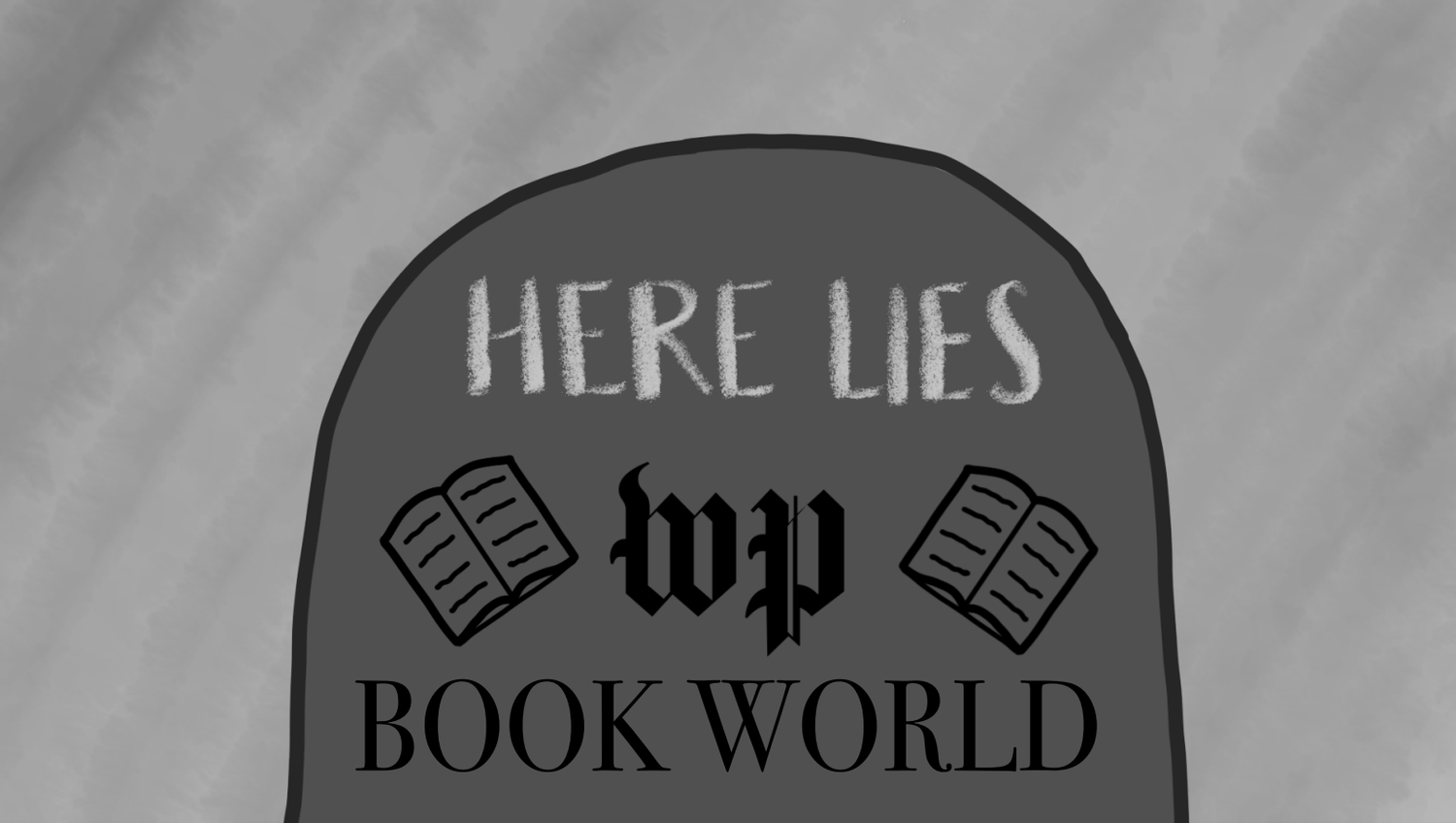
On Feb. 4, The Washington Post fired 30 percent of its employees across all boards in a “strategic reset.” International coverage was reduced, sports reporters who survived the cut were moved to features, and the books section — known as “Book World” — was completely eliminated. Although The Post’s executive editor Matt Murray cited financial strain as the reason for the layoffs, “Book World” maintained a dedicated readership and high engagement with its articles.
For Becca Rothfeld, the former nonfiction book critic at The Post, the decision to cut “Book World” — one of the last mainstream sources of book reviews by a major news publication — drives her “crazy.”
“Our numbers were consistently increasing, and even when the numbers of the rest of the paper were stagnating, our numbers were increasing. So I don’t think it’s a foregone conclusion that people don’t want to read book reviews,” Rothfeld said in an interview with The Crimson.
Although the closure of “Book World” is tied up in the broader struggles that journalism faces as an industry, The Post’s decision also suggests a shift towards the idea that people should engage with literature as entertainment rather than a thought-provoking activity that informs their personal and civic lives.
“We covered interesting books that might not have been covered elsewhere. Books in translation, books from small presses, really serious — kind of difficult to read — intellectual books, along with more popular books,” Rothfeld said. “I think that there is a sense that we weren’t condescending to the reader, that we were taking them seriously, intellectually challenging them and introducing them to books they might not have heard of before.”
General-interest newspapers like The Post are unique because they provide people who might not have otherwise interacted with books an opportunity to discover high-quality literature. If newspapers like The Post stop their books coverage, popular social media platforms cannot adequately replace them. Although the tag #BookTok on TikTok has 75.1 million posts and generates excitement around the book industry, the short format — consisting of clips of 11 to 18 seconds that are recommended for virality — makes it impossible to discuss complex or challenging texts with nuance. In addition, the sorts of books that often blow up on social media are not of the same quality that The Post would typically review.
Despite social media’s weaknesses, both investigative journalism and cultural commentary have struggled with the advent of the digital revolution, and the fate of books sections is inextricably linked with wider trends in the industry.
“You have the problem that many people may not see the value of journalism and may not understand that a lot of the information [they see] is being disseminated to them indirectly because of reporting that journalists have done,” Rothfeld said. “They’re able to access it on social media so they don’t understand the value of journalistic institutions.”
In the face of such structural challenges, The Post’s executive editor Murray declared in a February interview with The New York Times that The Post “can’t be all things to all people” and narrowed The Post’s scope to coverage on national politics, business, and health.
However, this decision does not consider that books can contribute to these conversations as well — whether they are autobiographical accounts, nonfiction pieces by professors, or fictional stories critiquing contemporary events and ideas, books are a powerful medium to understand the real world.
James Wood, Harvard English Professor, believes that literary criticism through the public medium of a newspaper is a societal necessity.
“The idea of a newspaper review was that it was sort of a drag net, and it just caught its ordinary readers, and suggested to them that there were things they might be interested in, and that there was a dimension of ordinary existence that isn’t simply to be found in news coverage or politics, but that exists in books and arts, dance, film, and so on,” Wood said in an interview with The Crimson.
For Wood, the systemic dismantling of book coverage has been going on for many decades, even when he was a freelance reviewer in 1980s London.
“Wherever I’ve been to write about books, there’s always been a sense that the chance of writing about books will only last for a few years, and then inevitably the suits will come in and basically say, ‘Who cares about books? Let’s just get rid of books,’” Wood said.
The dismantling of “Book World,” however, illustrated that many people still care about books. Widespread backlash followed The Post’s announcement, and hundreds gathered to hold a wake for “Book World” in Washington, D.C. this past February. Casual readers as well as academics decried the decision to cut the section, including Harvard Senior Fellow Maria Tatar, whose work on storytelling and folklore has been reviewed by “Book World.”
“We’re losing something. We’re losing voices, we’re losing a gold standard in criticism, and, to me, it’s just a dark day for the soul of journalism,” Tatar said in an interview with The Crimson.
Some critics, including Glenn Kessler, former fact-checker for The Post, and current contributor Sally Quinn, have attributed the encroachment of business on traditional arts in public culture to The Post’s current owner, Jeff Bezos, who is projected to be a trillionaire by the end of the decade.
“It’s deeply ironic that Jeff Bezos, a man who built his empire basically on the backs of books and writers, is the person who pulled the plug on one of the most powerful machines of literary culture,” Tatar said.
In 1994, Bezos named his startup business “Amazon” after the biggest river in the world, because he believed that his company — which began as an online bookstore — would become the biggest bookstore in the world. He bought The Post in 2013. Since then, cost-cutting measures have, according to critics, contributed to the decline of one of the last newspaper book sections.
“It was a sort of practical, pragmatic approach to everything. And I think that’s a tremendous loss for us, because we need not just books, but stories. We need stories to protect us against the tyranny of reality. We are living in dark times, there’s no doubt about it,” Tatar said.
The end of book coverage in the once-vibrant ecosystem of broadsheet newspapers is a devastating blow to intellectual freedom. When book analysis is limited to a 30-second TikTok, our ability to tell and critique stories will be replaced by mindless consumerism. Recent research — including studies from the National Bureau of Economic Research — has further examined how digital technologies may be eroding our capacity for sustained attention and deep thinking.
If books sections are deemed irrelevant — or if books themselves lose their place in the cultural consciousness — humans will lose the ability to see themselves in literature, and think about their place in the world.
“It doesn’t have to be a one-way street towards silence and oblivion,” said Wood.
Without continued financial support for books sections, it might as well be.
—Staff writer Laura B. Martens can be reached at [email protected].
Want to keep up with breaking news? Subscribe to our email newsletter
Have a tip for The Crimson? Share it confidentially