‘I Hope You Find What You’re Looking For’ Review: A Family Portrait, Dissected Across History
4 Stars
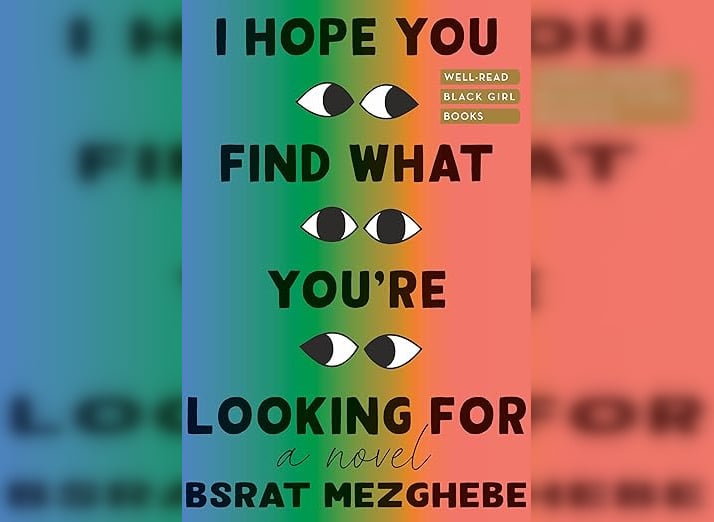
In a luminous portrait of an Eritrean family grappling with their post-war future, “I Hope You Find What You’re Looking For,” revisits the Eritrean War for Independence 35 years after it ended. Set in Washington, D.C. in 1991, Bsrat Mezghebe’s debut novel captures the complexities of the Eritrean diaspora through the story of a family reflecting on their past and facing future challenges as their countries — both the United States and Eritrea — change before their eyes. Sharp and familial, “I Hope You Find What You’re Looking For” merges the family’s two worlds in a chronicle of the diasporic experience and a celebration of ancestry across time and continents.
“I Hope You Find What You’re Looking For” follows an Eritrean immigrant mother, Elsa, as she raises her daughter, Lydia, surrounded by family members and neighbors in the United States. Elsa, a former freedom fighter for the Eritrean People’s Liberation Front, a paramilitary group primarily responsible for securing Eritrea’s independence from Ethiopia, must face her past as Lydia begins to question more of her family’s history — most pertinently, the story of her late father. Shifting between flashback chapters — taking place in the 1960s at the beginning of the conflict — and ones set in 1991, the novel weaves together Eritrean history and its impacts across generations by focusing on the perspectives of Lydia, Elsa, and their neighbor, Zewdi. As the women navigate their complex worlds, the looming independence of Eritrea crowds their minds, leading them to reflect on their role in history and how they will change as their country triumphs.
The novel’s exploration of diaspora centers the experiences of these three distinct women, offering a deep understanding of their relationship to their motherland in a starkly different home. With such a strong cast of characters, the book maintains intrigue and seamlessly ties the diverging plots together, creating an engaging yet realistic portrayal of a family both separated and reunited.
Despite their relation to one another, the characters of Elsa and Lydia are distinct, as Mezghebe carefully portrays the natural similarities and differences between the two. Elsa — painted as more reserved and introspective — never loses her power as a character. Often in conflict with either Lydia or Zewdi, her pensiveness doesn’t diminish her role as the family matriarch. On the other hand, Lydia — though only 13 years old — is characterized as a curious teen who knows her value.
Avoiding common mistakes in adult fiction, Lydia’s portrayal is not a careless perspective of a child, nor is she unrealistically mature for her age. Rather, Mezghebe effortlessly balances Lydia’s moments of innocence while still thoroughly developing her voice in the plot.
While Mezghebe’s characterization excels, the plot progression lags behind. Although the book is based on real historical events, much of the novel takes place in the internal monologue of the characters. The plot progresses most clearly in the flashback chapters, as Elsa recounts her freedom fighter history and the war’s development. However, in to the present, the storyline moving forward only becomes obvious through the pages that denote passing months and brief mentions to affairs of the 1990s.
Still, this slow narrative doesn’t impede the novel’s intrigue, as the characters’ arcs fully follow the growth of each individual. Albeit slow at points, the book still manages to create moments of reflection that allow the stellar characterization to shine.
At the same time, this focus on introspection prevents a deeper dive into some of the book’s crucial moments, as the story passes over some irrevocable mistakes made by characters without much consideration of their impact on the plot. For example, the interactions between Lydia and her cousin, Berekhet, leave the audience desiring further explanation as Lydia’s character arc faces an unexpected twist. Because the novel hurries past these scenes, their significance falls through the cracks. Even with a satisfying ending, these points of confusion remain, demanding reasoning behind some crucial moments in the novel.
Though without an intense plot propelling the novel forward, “I Hope You Find What You’re Looking For” gains strength by celebrating the mundane. Through honest descriptions of the family’s everyday life contrasted with the monumental shifts occurring in Eritrean politics, the book creates a multidimensional landscape that seamlessly blends worldwide milestones with personal victories.
With Mezghebe’s often simplistic language capturing the characters’ routines — Zewdi cooking injera, Lydia coming-of-age in the U.S., and Elsa supporting her family with her hot dog stand — the novel invites the audience into domestic life with the family.
A story that honors a tumultuous past, “I Hope You Find What You’re Looking For” oozes living history. As Elsa’s former comrade tells her, their history should be protected “like gold.”
The novel does just that, as it wanders through the experiences of Lydia, Elsa, and Zewdi and their relationships with Eritrea’s history. Rich with communal celebrations and struggles, “I Hope You Find What You’re Looking For” presents a testament to the diaspora, the Eritrean community, and family — both from blood and choice.
Want to keep up with breaking news? Subscribe to our email newsletter
Have a tip for The Crimson? Share it confidentially