‘The Drama’ Review: A Wedding for the History Books
Dir. Kristoffer Borgli — 4 Stars
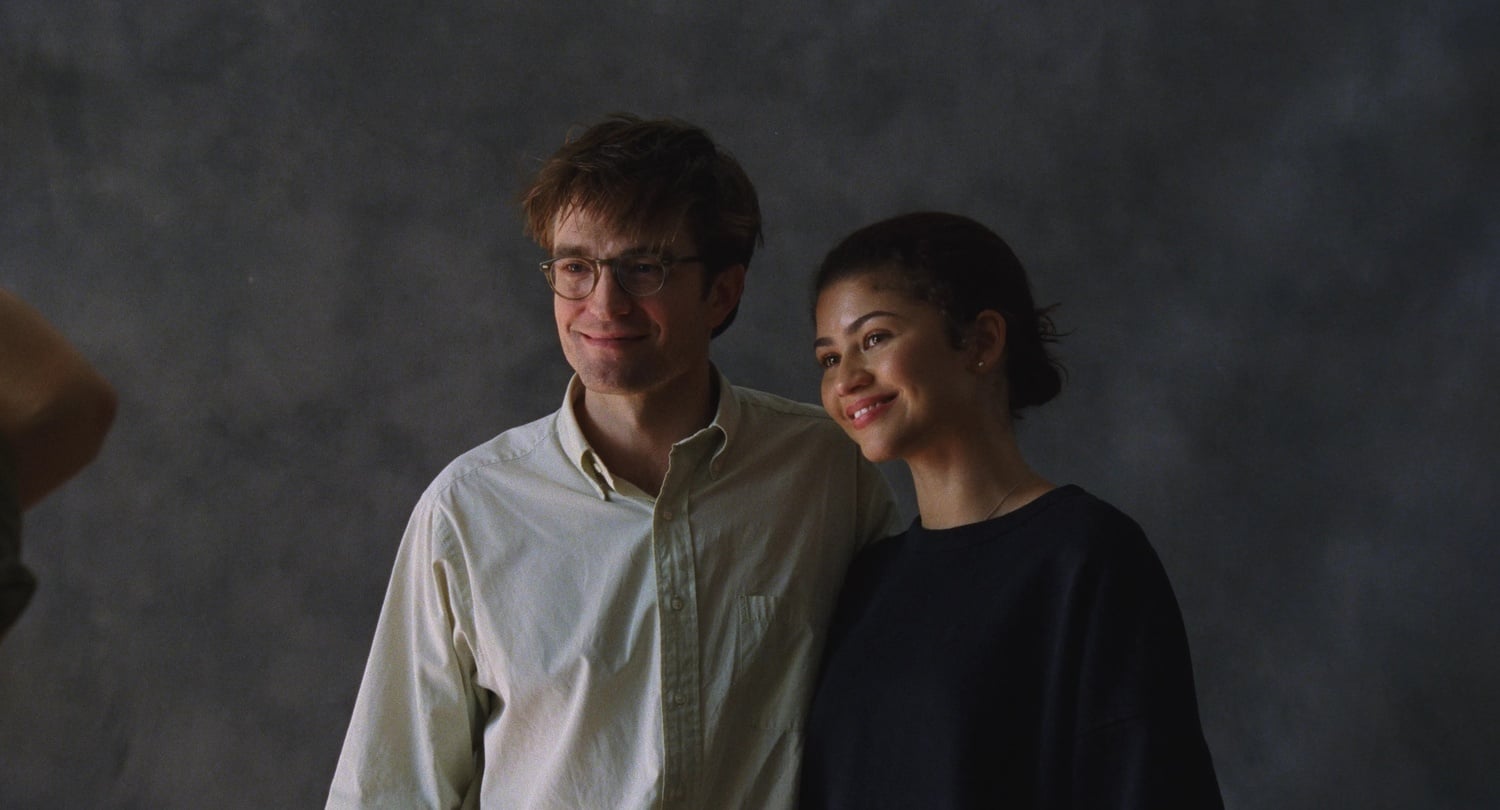
Kristoffer Borgli’s “The Drama” is not a film about a wedding. Not in the traditional sense, anyway. And, of course, this is despite the way the film has been publicized. From its very first press release, the internet — and anyone who has walked past its poster — has been “cordially invited” to celebrate the wedding of Charlie and Emma, played by Robert Pattinson and Zendaya, respectively.
The world Borgli creates is as curated as the exhibitions Charlie oversees as director of the fictional Cambridge Art Museum. The film is bathed in a gauzy warmth — shot by cinematographer Arseni Khachaturan on 35mm film — that overlays dark, wooden interiors, Scandi fashion sensibilities, and a beautiful couple with a social calendar full of dinner parties and wine nights. Music often floated over scenes through a retro-sounding tinny radio, as well. In short, this is a couple dancing at the very pinnacle of taste — at the intersection of classic and contemporary.
At one such dinner table scene, the couple sits down with the best man and best woman, who ask an ill-fated question: “What’s the worst thing you’ve ever done?” As wine flows freely and intoxication rises, Emma’s startling confession shifts the tone of the night from playfully taboo into a moral crisis. As Charlie struggles in the aftermath, the film probes what happens when the person you think you know best isn’t who you thought they were. This psychological grappling eventually takes thematic precedence over the wedding itself. By contrast, when the wedding day arrives, it serves as a reminder of the unyielding passage of time as dictated by societal convention.
It is interesting that the couple spends much of the film rehearsing for the wedding despite this emotional derailing. Alongside the expected prenuptial flurry of first dance rehearsals, menu testing, and sample bouquets, there is also a feeling that the characters are rehearsing to perform before society. Odd idiosyncrasies are swept beneath gorgeous Persian rugs as characters defer to aesthetics. The film relies on the doors and archways of elegant interiors to frame much of its disturbing action, using beauty to draw into relief just how flawed people can be.
It is against these aestheticized visuals that Borgli employs a thriller-inspired filming style. Several scenes at dinner tables employ whip-fast shifts in camera perspective before voyeuristically honing in on an individual. This technique creates a strange, adrenaline-fueled focus, recalling the feeling of blood rushing to one’s face and their vision tunneling — watching an interpersonal interaction sour before one’s eyes. While such scenes often take place in stagnant silence, Daniel Pemberton’s flute-led score leans on a Ravel-esque dissonance, instilling on-screen relations with a seeping discomfort. Personal histories are haplessly resuscitated, leading to a spike in paranoia that manifests as alarming, near-Freudian visions. The film’s earthy color palette increasingly gives rise to glimpses of a diffused blood red.
“The Drama” asks whether it is possible for people to hide away their cruelest tendencies and pasts. In being invited to this wedding, the audience becomes implicated in the couple’s dysfunctional social circle, obsessively digging up the pieces of their “drama” and reflecting on pieces of darkness found within themselves.
While the film’s heavy stylization produces an unconvincing character in the form of a maid of honor, and raises questions about its longevity, the lead actors’ masterfully honest performances and moments of sharply funny dialogue cement “The Drama” as an earnest, touching portrait of the modern-day quest for love. In spite of the inevitable ugliness found in personal truth, “The Drama” argues that relationships are indeed a case of to have and to hold, for better or for worse.
Want to keep up with breaking news? Subscribe to our email newsletter
Have a tip for The Crimson? Share it confidentially