Former Education Secretaries Criticize Trump’s Education Policies at IOP Forum
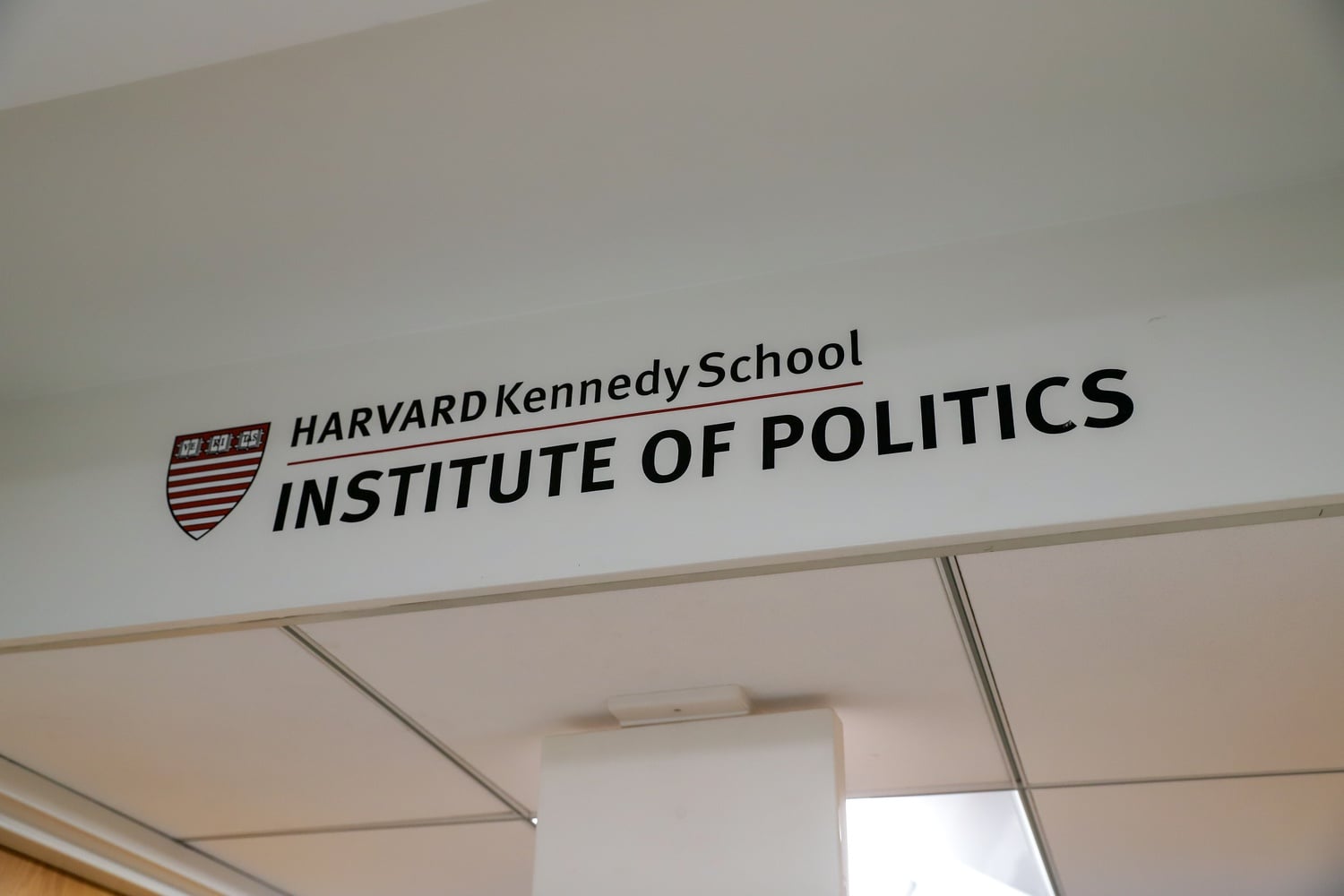
Former U.S. Education Secretaries John B. King Jr. and Margaret M. Spellings criticized the Trump administration’s education policies at an Institute of Politics forum, warning that the administration’s moves could erode the relationship between higher education and the federal government.
King, who served as education secretary from 2016 to 2017, said U.S. President Donald Trump has effectively hollowed out the Department of Education by shifting some of its responsibilities to other federal agencies and sharply reducing its staff — even though he cannot unilaterally abolish the department without congressional approval.
King said efforts to dismantle the department have diverted national attention from student learning outcomes. Though declines in national education standards have often been attributed to the Covid-19 pandemic, he said those problems have persisted long after schools reopened.
“Those losses have been largest for the most vulnerable students. So we should be talking about how our hair is on fire, about fixing that,” King said. “Instead, we’re distracted by this conversation about whether there should be an Education Department.”
King, who served on Harvard’s Board of Overseers until June, also said the Trump administration’s attempts to slash federal research funding have threatened a long-standing partnership between universities and the federal government.
“The Trump administration came into office trying to dismantle that, trying to cancel grants, asking Congress to stop funding federal research efforts,” he said. “Disaster,” he added.
Harvard’s federal funding came under attack last year when the Trump administration moved to condition billions of dollars in grant funding on sweeping changes to the University’s governance, hiring, and disciplinary systems — including external oversight.
Get The Crimson in your inbox.
After Harvard refused, the federal government froze billions of dollars in multiyear research grants, a move that a federal judge struck down in September. The Trump administration appealed the ruling in December and asked the U.S. Court of Appeals for the First Circuit last month to reinstate the funding cuts.
Spellings, who served as education secretary from 2005 to 2009, said the federal government has a basic responsibility to ensure equal access to education nationwide. She said the creation of the Department of Education in 1979 signaled that education was “a national imperative.”
But Spellings argued that federal education funding should come with clear expectations and measurable outcomes. She warned that the Trump administration’s attempts to pare back federal investment in public education risk weakening learning standards.
She pointed to the No Child Left Behind Act — a 2001 law that sought to hold schools accountable for student performance through annual testing and public reporting — as a model for tying federal funding to oversight. But she said the law failed to impose sufficient consequences when schools fell short.
“That something — and this is the part we flubbed — ought to happen when failure occurs,” she said.
Asked how to change the federal government’s relationship with education, Aimee Rogstad Guidera, a former Virginia secretary of education and an IOP Spring 2026 resident fellow who moderated the panel, urged audience members to press 2028 presidential candidates on student achievement.
“Every potential 2028 candidate on both sides is going to do an event here quite soon,” she said.
“They will all come here, and every single one of them should be asked, ‘What are you going to do to raise student achievement?’” she added.
Want to keep up with breaking news? Subscribe to our email newsletter
Have a tip for The Crimson? Share it confidentially