Harvard Authors Profile: Kelly Yang ’05 on Secret-Keeping, AI, and Aging
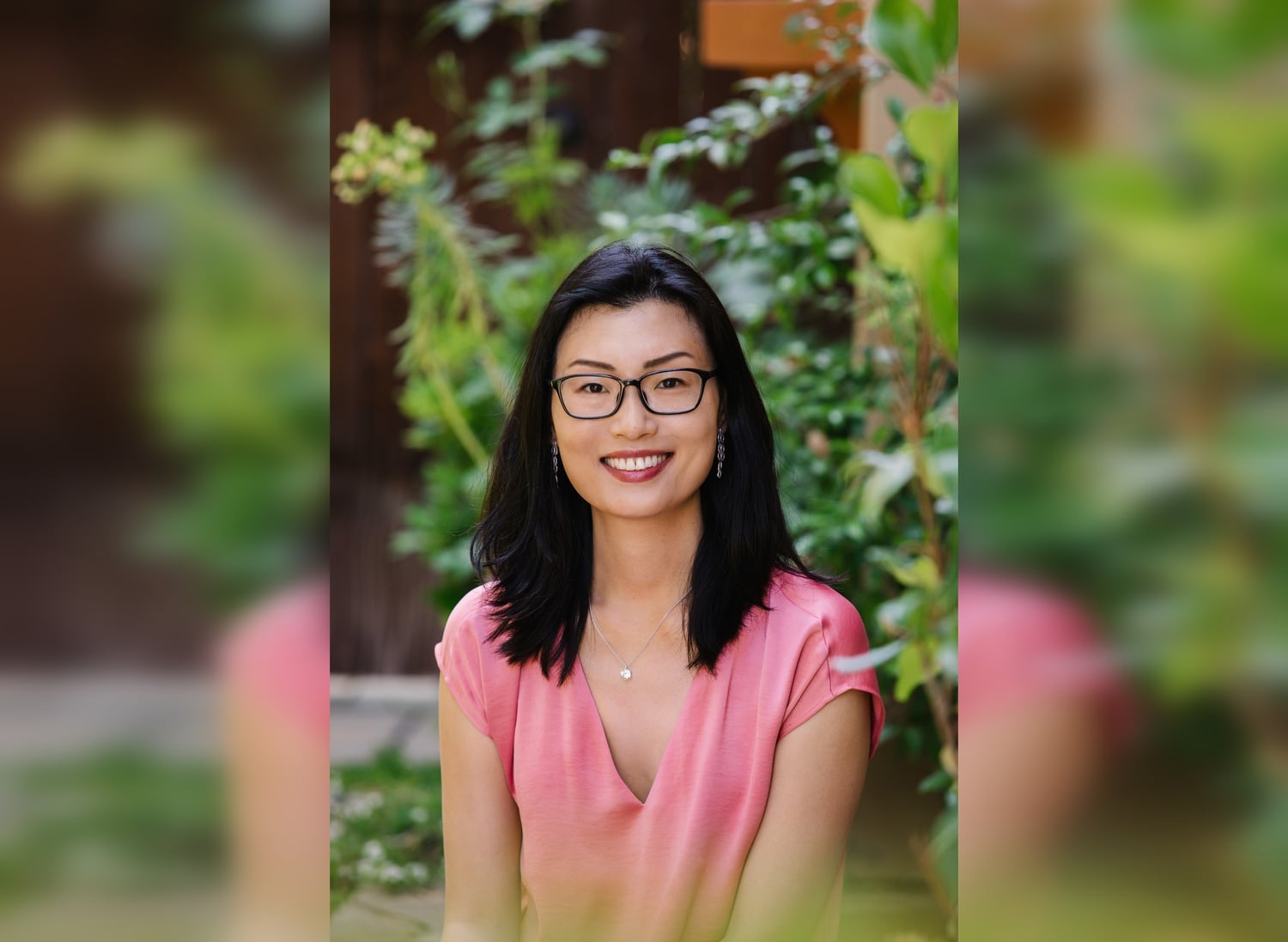
“There are days where I’m like, ‘what the hell am I doing?’ You know?” Kelly Yang ’05 said in an interview with The Crimson. “But I do think that writing, for me, helps me get there because every story is full of conflict and full of hardship and full of these intense, crazy moments, right? And so, if that’s what makes a book what it is, I’m not so scared to receive all those moments in my life.”
Yang is a #1 New York Times bestselling author of over 15 books for children, teens, and adults. When her first book, “Front Desk,” was optioned to be made into a major feature film, Yang wanted to be involved so she could protect a story closely modeled on her own life.
“It was a very intense, weird experience for me, because at the same time that everybody wanted a story that was based on my life, I felt like I wasn’t really welcome at the table. And there was this pressure to kind of take this life story from me, but for me to still be invisible and in the background, and it was a trip, to say the least,” Yang said.
In “Front Desk,” the ten-year-old protagonist manages the front desk of the motel where her parents work, mirroring Yang’s own experiences. In the book publishing industry, Yang has autonomy over her own story; the same cannot be said for TV and film.
“You could come up with something in Hollywood, and you’re fired off of it, and somebody else gets to write it, and now it’s their story, and your name is not even on it anymore. And that story could still be about you,” Yang said.
The “vampire-ish feeling of Hollywood” inspired Yang’s 2026 adult debut, “The Take.” White movie producer Ingrid Parker — “trying not to disappear” as an older woman in Hollywood — offers broke Asian American writer Maggie Wang $3 million to be her transfusion partner in an anti-aging blood swap treatment.
“It wasn’t something you could talk about because, just like Maggie, everybody tells you, ‘You should be so grateful because you’re in this position — especially if you want to be in the creative arts. Just to be in the room at all, you should be so grateful.’ But are we really in the room?” Yang said.
Embodied in the character of Ingrid Parker, a sense of insecurity among peers is one that Yang knows all too well, experiencing it in both her childhood and teenage years. Although she began working at the front desk of her parents’ motel at age eight, an evidently large part of her life, Yang kept this side of her identity a secret from her peers.
“I couldn’t even talk to my friends about my real life, because I never wanted to tell them the truth of what I did, because I felt like it wasn’t something I ever read about, so I worried that it was just too ‘out there,’ too ‘weird.’ I didn’t know whether I should be ashamed of it, so I just kept it a secret, and that whole part of my life had to disappear while I was at school, and the whole part of me being a kid had to disappear when I was at the motel,” Yang said.
The bullying that plagued Yang caused her to “[start] to skip school.” She wanted to “jump past all this awkwardness” and study political science at a collegiate level. She was accepted to UC Berkeley at age 13 and graduated from Harvard Law School at 20. Yang is one of the youngest graduates of Harvard Law, but she “wouldn’t recommend” going to school with such a gap between one’s academic and emotional ages.
“The awkwardness just kept following me over and over and over again, because the lie that it was holding literally since I was eight just kept growing, and it kept morphing into different shapes. So instead of hiding the fact that I was also a motel manager, now I was hiding the fact that I was actually a teenager while I was in law school,” Yang said.
In Yang’s experience, secrets take on a life of their own and become terrifying to let go.
“I didn’t tell anyone my age. I know that, at law school, a lot of the section events happen at bars. I just didn’t go to them. I really didn’t socialize that much. I mean, that’s the thing about having a secret, it eats you up inside.” Yang said. “I don’t know when I finally told someone. I don’t know. I feel like I didn’t tell anyone until third year. Really, some of my best friends, I didn’t tell them, because I didn’t want them to judge me. I didn’t want them to think that I didn’t understand what they were going through. I was also just so fascinated by everyone and their lives, I didn’t want to miss out on anything.”
Before the release of “Front Desk,” Yang was “petrified” that her secret would be revealed to people who had known her for years but had no idea what her life story was.
“I find that is the true holy grail that you’re able to share, and you have nothing to hold back anymore, because you’re proud of the decisions you made, as hard as they were, and you want to tell the next generation — or whoever — ‘You can get through things. Look at me, I got through some really horrendous things, here’s how I did it, and it’s a very empowering thing to feel,’” Yang said.
Yang began The Kelly Yang Center — a writing and debating program for children in Asia and the United States — as a way to encourage kids to tell their own stories and supplement traditional education with creative arts.
“I would love for creative writing, any kind of creative arts, to be more incorporated into school, especially nowadays when so many kids are facing this question of, ‘What about AI? What’s going to happen to the creative arts? I have all these stories to tell, but I’m not sure if there’s even room for me to tell them,’” Yang said.
The impact of AI on the publishing industry, and on children’s creativity in particular, is something that she hopes to combat.
“I think it’s terrifying if we start outsourcing that innate, fundamental human ability to machines, and I want everyone to embrace that side of them, and I hope that it can be part of more curriculums instead of just more test-driven education,” Yang said.
She believes that writing offers people something deeper than pure entertainment — a way to process emotions and empathize with others.
“For me, writing is always the way I process something I’m feeling, or a question that I have about the world,” Yang said. “Writing ‘The Take’ was just so therapeutic because, for a long time, I’ve had to live with this experience, I’ve had to live with these unanswered questions. The whole thread about Maggie’s mom letting her hang out with this white family — where she thought that she would get a real childhood through hanging out with them — that’s something that happened to me when I was a kid. And for so long, I never asked my parents why that happened.”
Losing creative writing to AI, Yang argues, would take away an essential part of the writing process: a fundamental curiosity about other people that pushes the writer to see the world through other perspectives.
“Ever since I was a kid, I’ve always just processed life through writing. It’s my way of thinking more deeply and trying to puzzle it out in my head from every single person’s angle, what led them to do or say what they said,” Yang said.
Yang believes that society “consistently underestimates how intelligent children are,” arguing that literature can be a powerful way of helping kids understand what is going on with the world, and a motivation for adults to topple power structures — like AI — that do more harm than good.
“The one thing about humans that gives me hope is we’re so resilient, and we’re so rebellious. So I think it is not that easy for us to just fade into the night,” Yang said.
The very things that make life difficult are what have enabled Yang to create her unique stories — experiences that no one else, human or otherwise, could have.
“The great thing with being a writer is that every ugly moment that happens, every one of those existential crises that you have, makes its way into the work,” Yang said.
—Staff writer Laura B. Martens can be reached at [email protected].
Want to keep up with breaking news? Subscribe to our email newsletter
Have a tip for The Crimson? Share it confidentially