Harvard’s Outreach Can’t Stop With the Powerful
There is no better place to weather criticism than in the eye of the storm.
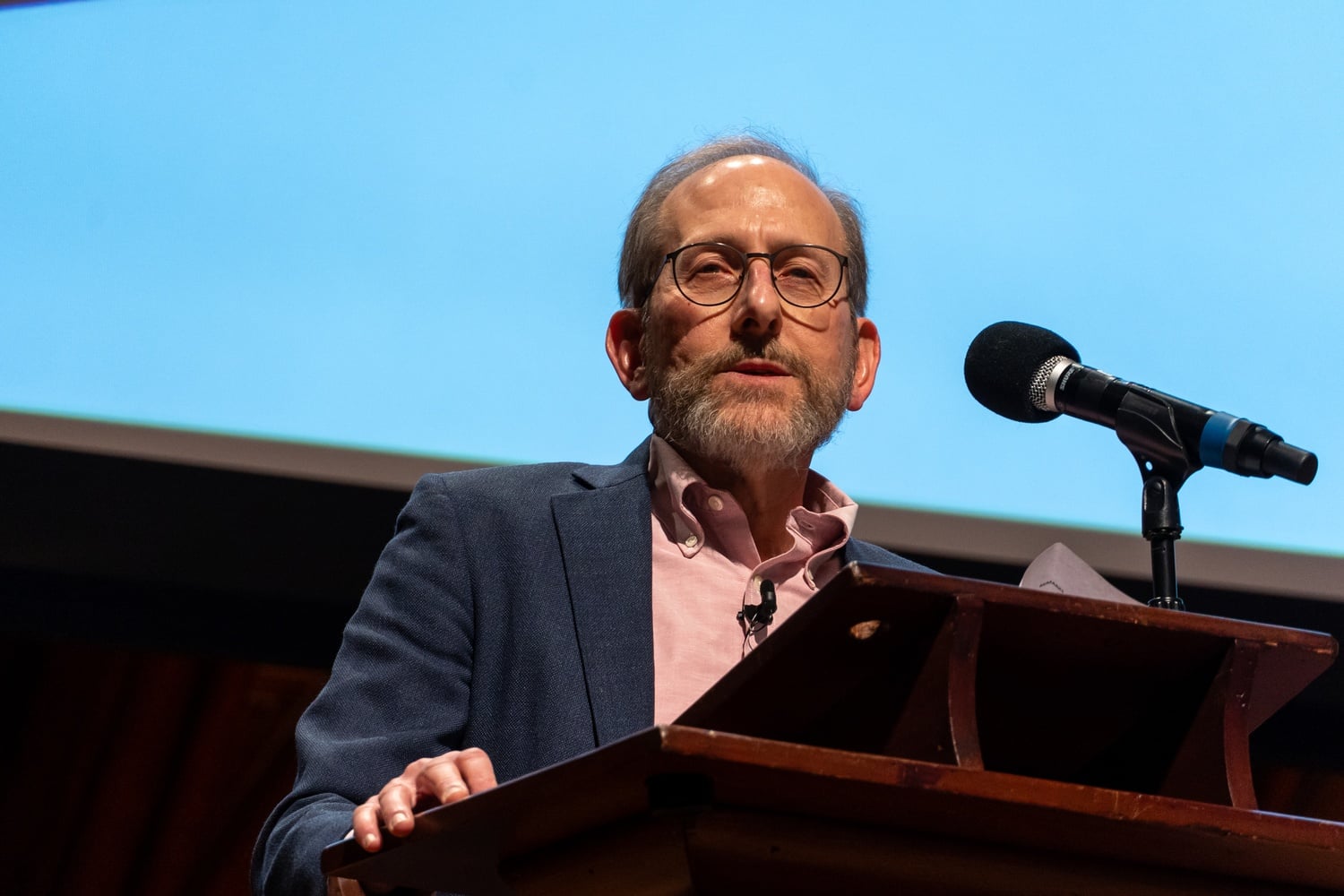
For Harvard President Alan M. Garber ’76, that storm happened to gather last month on a private island off the coast of Georgia. At the annual World Forum hosted by the American Enterprise Institute, President Garber discussed the Trump administration’s attacks on elite universities to an audience of conservative power brokers, politicians, and businessmen.
While news of Garber’s appearance at the forum sounds controversial, his decision to attend was advantageous. Garber is right to defend Harvard to diverse audiences who criticize us — but we hope his charm offensive will extend beyond the conservative elite.
Harvard is facing no shortage of acute problems from the Trump administration, including funding cuts from the federal government and probes pertaining to antisemitism and admissions policies. Zooming out, the University faces a crisis of trust — people across the country are losing confidence in the value of higher education more generally.
Hence, Garber’s decision to attend this forum was smart: meet some of our most powerful critics where they are.
In times of extreme polarization, it is important to consort with people of all ideological stripes, rather than be pigeonholed into a silo of ideas. By hearing from all different perspectives — even reprehensible ones — a leader, Garber in this case, can better establish and defend our values as we know them. This type of engagement can be beneficial for Harvard’s soft power and fundraising, two elements that certainly can’t hurt when you’re up against a bellicose government.
Nevertheless, it is unclear how successful Garber’s escapade was, and it’s worth questioning how much potential it had to begin with. Conservatives have attacked Harvard for decades – long before the current political landscape. Not even two weeks after Garber completed his talk on the island, fellow conference attendee U.S. Education Secretary Linda E. McMahon launched two separate investigations of Harvard.
Still, we can’t fault Garber for trying. Given that Harvard’s public image crisis is not new, it is conversely true that conservative leaders’ opinions of Harvard will matter long after Trump is gone.
An investment into Harvard’s image today might bear fruit years from now.
We hope, however, that this advocacy will go beyond schmoozing conservative elites on a private island. However powerful the conference attendees, Garber’s roadshow in support of Harvard’s mission must extend further. The University’s crisis demands broad national support to insulate it from political attacks moving forward.
Repairing Harvard’s reputation with everyday Americans will require a consistent, concerted effort by Harvard’s administration to reach the American people and champion Harvard’s mission. Garber — and his level-headed pragmatism — is the right diplomat for this mission, and we applaud his effort to advocate for the University in even the most hostile environments.
Harvard may need friends in high places. But to keep afloat, it will need the country beyond them.
This staff editorial solely represents the majority view of The Crimson Editorial Board. It is the product of discussions at regular Editorial Board meetings. In order to ensure the impartiality of our journalism, Crimson editors who choose to opine and vote at these meetings are not involved in the reporting of articles on similar topics.
Have a suggestion, question, or concern for The Crimson Editorial Board? Click here.
Want to keep up with breaking news? Subscribe to our email newsletter
Have a tip for The Crimson? Share it confidentially