‘The Pitt’ Season 2 Review: An Eye-Opening Portrait of the U.S. Healthcare System
5 Stars
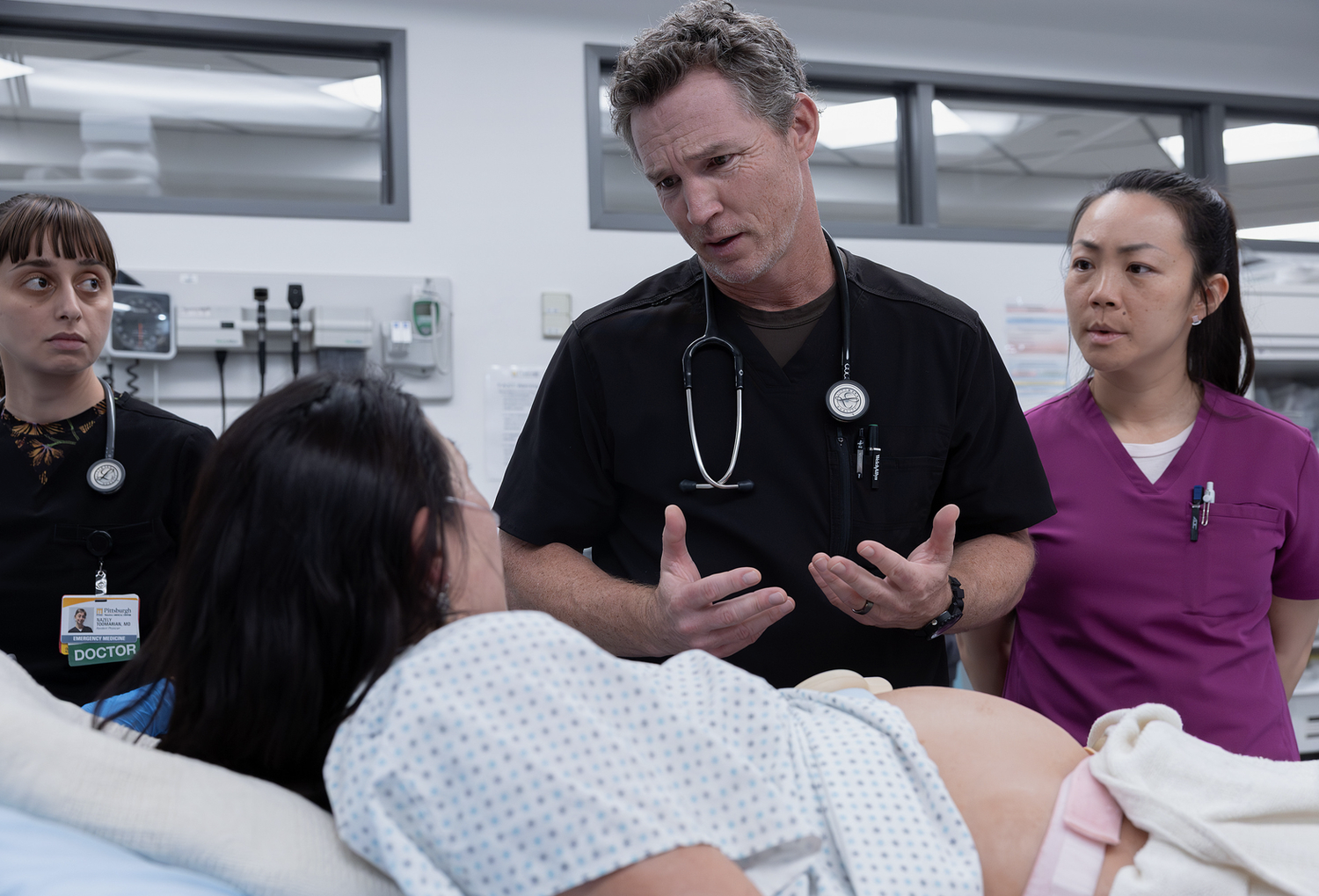
After a massively successful first season, winning the award for the Golden Globes’ Best Drama Series, “The Pitt” delivered an equally heart-wrenching and compelling series for Season 2. The first season set a seemingly unattainable standard, delivering compelling narratives of patient cases, including opioid overdose and gun violence.
Following the same 15-episode format, Season 2 takes place on the 4th of July, with each episode covering one hour of an ER shift. It tackles questions that currently plague the healthcare system in the U.S., offering powerful perspectives on AI in medicine, doctor burn-out, and healthcare accessibility. Altogether, the second season of “The Pitt” creates an emotionally riveting portrait of the hospital patient in America and the doctors who take care of them.
Season 2 highlights the growing push for artificial intelligence in medical settings, introduced via Dr. Baran Al-Hashimi (Sepideh Moafi), a new attending physician brought in to replace Dr. Robby (Noah Wyle). However, when AI is used for a patient chart, it hallucinates an appendectomy and mistakes neurology for urology. Consequently, the show’s messaging is clear: AI can be faulty and cannot easily fully replace human doctors.
Along these lines, the series also highlights the need for doctors’ discernment, depicting cases in which patients require care beyond the standardized criteria for a dischargeable patient. Multiple patients are saved throughout the series on account of doctors subverting the standardized mode of care, trusting their intuition instead.
One of the strongest themes tackled is healthcare inaccessibility, providing two life threatening cases in which patients lacked necessary medical care because of the deficiencies of Medicaid. The series specifically highlights undocumented immigrants and people who straddle the poverty line, too poor to afford private insurance, but ‘wealthy’ enough to be ineligible for Medicaid. In foregrounding this issue, “The Pitt” underscores its credibility, offering a perspective on a current issue actively afflicting U.S. healthcare.
Doctor burn out is additionally apparent, with Dr. Robby’s frustration, suicidal ideation, and ensuing danger-filled sabbatical a major subplot of the series. Other coworkers’ mental exhaustion is depicted too, covering panic attacks and self-harm. In a genre that often aestheticizes healthcare workers’ gruelling sacrifices, “The Pitt” reminds us of these heroes’ frailty.
The cinematography of the series simulates that of an ER, with a documentary style, handheld approach — almost as if the audience is another doctor following along with each case. The clips are fast paced, up-close, and fluorescently illuminated, mirroring the speed at which doctors transition between cases.
The realism of the shots, while enthralling, may be inadvisable for the more weak-stomached. Clips include graphic and detailed images of a variety of injuries, which — while immersive — can also leave the audience disturbed.
Differing from comparable shows like “Grey’s Anatomy,” “The Pitt” has no soundtrack, its background instead filled with hospital sounds. Thus, the show must evoke heart wrenching, emotional reactions from its audience without the assistance of musical cues. This is a testament to the acting, with actors delivering raw, vulnerable performances.
“The Pitt” celebrates the independence of the United States after unabashedly highlighting the deficiencies of the American healthcare system, depicting the lives harmed by its inadequacies. Taking place on the 4th of July, the show juxtaposes bright fireworks with weary and drained doctors, urging the audience to question whether these patients’ experiences reflect the alleged values of freedom and liberty on which this nation was founded.
Ultimately, “The Pitt” Season 2 is a flawless, riveting, and poignant portrayal of healthcare in the United States. The series enlightens its audience to the systems’ current imperfections and illustrates a clear message on the future of medicine.
Want to keep up with breaking news? Subscribe to our email newsletter
Have a tip for The Crimson? Share it confidentially