Yunchan Lim and Boston Symphony Orchestra: Flexibility and Delicacy in Schumann and Tchaikovsky
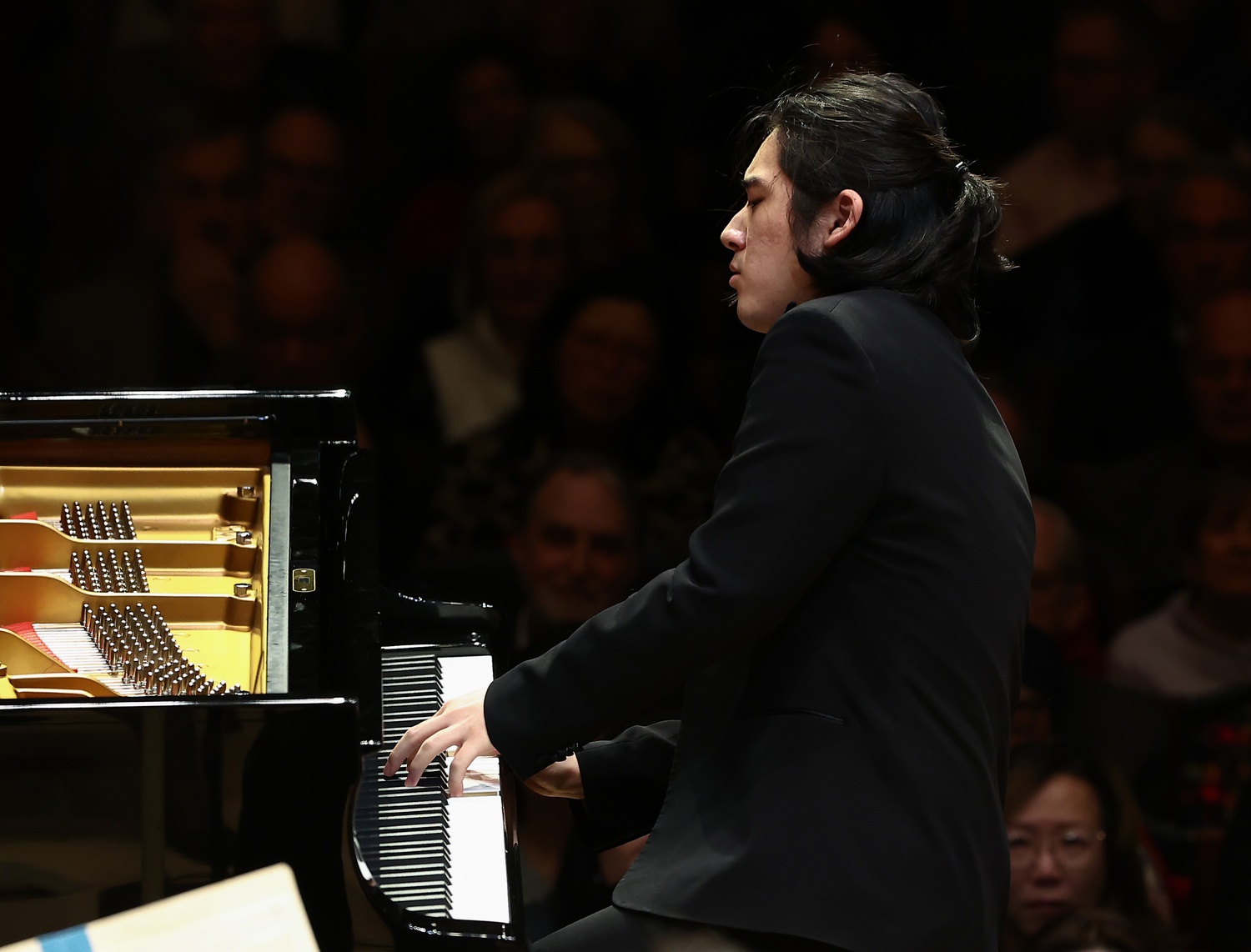
Boston Symphony Orchestra’s March 19-21 concerts took place in Symphony Hall, featuring award-winning South Korean pianist Yunchan Lim. He performed Robert Schumann’s Piano Concerto in A Minor, which was written for the composer’s wife, Clara. Known for its lyrical beauty and fluidity, the concerto was a testament to Schumann’s persistent admiration for her. In addition, BSO presented their rendition of Pyotr Ilyich Tchaikovsky’s Manfred Symphony. This piece was based on Lord Byron’s closet drama of the same name in which the titular character mourns the mysterious death of his beloved Astarte. The two pieces, one of devotion and one of grief, created a cathartic experience.
Four years ago, Lim became the youngest winner of the Van Cliburn International Piano Competition. A current student of the New England Conservatory of Music in Boston, Lim has proven to be much more than just an overnight sensation. Not only did he sign an exclusive contract with Decca Classics, he released multiple studio albums that have topped global charts.
Lim’s stage presence shone through the moment he plopped down onto the piano bench. The notes flowed out of his fingertips like tender ripples of a stream. Not only did he demonstrate a mature understanding of Schumann’s romanticism, he also stayed aware of the orchestral accompaniment at all times. For example, during the clarinet solo, he turned around to face the wind section fully — his gaze distant and contemplative.
The first movement was treated like a fragile porcelain doll — every phrase was interpreted meticulously. The cadenza, in particular, had multiple contrasting voices and clearly enunciated trills. Lim performed technically demanding passages with a smoothness and reserved energy that was gentle on the audience’s ears but simultaneously at risk of being covered up by other instruments. For instance, there were some climactic moments that felt muted.
In the second movement, Lim further emphasized the piece’s poise and elegance. Perhaps the most unforgettable element of this movement was the resounding cello melody — the entire section moved together and added textural diversity to a relatively simple tune. The piece transitioned quickly into the final dance-like movement in which Lim displayed a high level of sensitivity to harmonics. He demonstrated the ability to bring about a thousand different colors to the same rhythmic motif.
The concerto ended in a flourish, but Lim kept the audience hooked with his encore — a rendition of Frédéric Chopin’s Waltz No. 2 in A Minor. Rather than a high-energy, pompous showpiece, Lim opted for a somber and pensive waltz.
After a brief intermission, conductor Andris Nelsons and the BSO returned with Tchaikovsky’s Manfred Symphony.
The first movement describes Manfred traveling through the Alps and suffering from guilt and regret. Following a brooding opening, the violins attacked their strings with glissandos and made a stormy entrance. Briefly, the piece threatened to fall apart because the chaotic runs in each part were not perfectly aligned. However, thanks to all the players’ careful listening and adjusting, Nelsons was able to keep everything together, and the orchestra redeemed itself with a passionate acceleration led by the percussion.
The orchestra’s ability to communicate across sections carried over to the second movement, which was defined by its fantastical and lively atmosphere. The first and second violins connected their lines without any gaps, resulting in a delicate overarching melody. Although the movement was a bit repetitive, the violin solo by concertmaster Nathan Cole, along with the pizzicato from the rest of the strings, added some sparkle.
The last two movements of the symphony brought back the gusto from the very beginning. The BSO treated the third movement as a torrential transition into Byron’s underworld kingdom instead of a carefree pastorale. Hence, the continuously loud dynamics were quite overstimulating. In spite of that, the musicians showcased their enormous stamina and passion. After an intense fugue section, the music calmed down, drifting into a sacred, wedding-like coda before coming to a halt.
Overall, the concert highlighted emotional depth in music, from Yunchan Lim’s nuanced take on Schumann to the sweeping, turbulent narrative of Tchaikovsky’s Manfred Symphony under Andris Nelsons. Despite minor imbalances, the BSO delivered a compelling and poignant performance.
— Staff writer Sophie Tung can be reached at [email protected].
Want to keep up with breaking news? Subscribe to our email newsletter
Have a tip for The Crimson? Share it confidentially