Growing Older and Wiser in Cambridge
Cambridge is widely known, if not defined, by its youth. It continues to draw students, researchers, and professionals from all around the world. It is a place where people come to begin new chapters. But that identity only tells a part of the story.
ach morning, the city of Cambridge slowly comes alive.
As the sun rises, runners pass each other along the Charles River, shoes striking against the sandy trail. Rowers cut clean lines through the water. A few blocks inland, young moms push strollers past triple-deckers along uneven brick sidewalks. Businesses turn on their lights and unlock their doors. Beeping car horns and angry shouts break the quiet as drivers rush to get to work — often by cutting each other off. Students flood out of dorm rooms and apartments on their way to class.
And, on Concord Avenue, at the Harvard Institute for Learning in Retirement, seniors begin their mornings with classes like “Woodstock at 55: Three Days of Peace, Music, Sex, Drugs & Rock & Roll” and “Lorca, Dalí, Buñuel: A Surrealist Bromance.”
Cambridge is widely known, if not defined, by its youth. It continues to draw students, researchers, and professionals from all around the world. It is a place where people come to begin new chapters. But that identity only tells a part of the story.
A growing number of older residents are choosing to stay in this place they call home. By 2030, a projected 20 percent of residents will be over 65, according to a 2012 report by Cambridge’s Community Development Department and Department of Human Service Programs, a sharp increase from 10.6 percent in 2010.
Their experiences — from building social networks to navigating rising housing costs — reveal another version of life that exists alongside the city’s constant forward motion. As more people choose to stay, what does it mean to age in this city today, and what does it take to thrive?
‘Not in a Hurry’
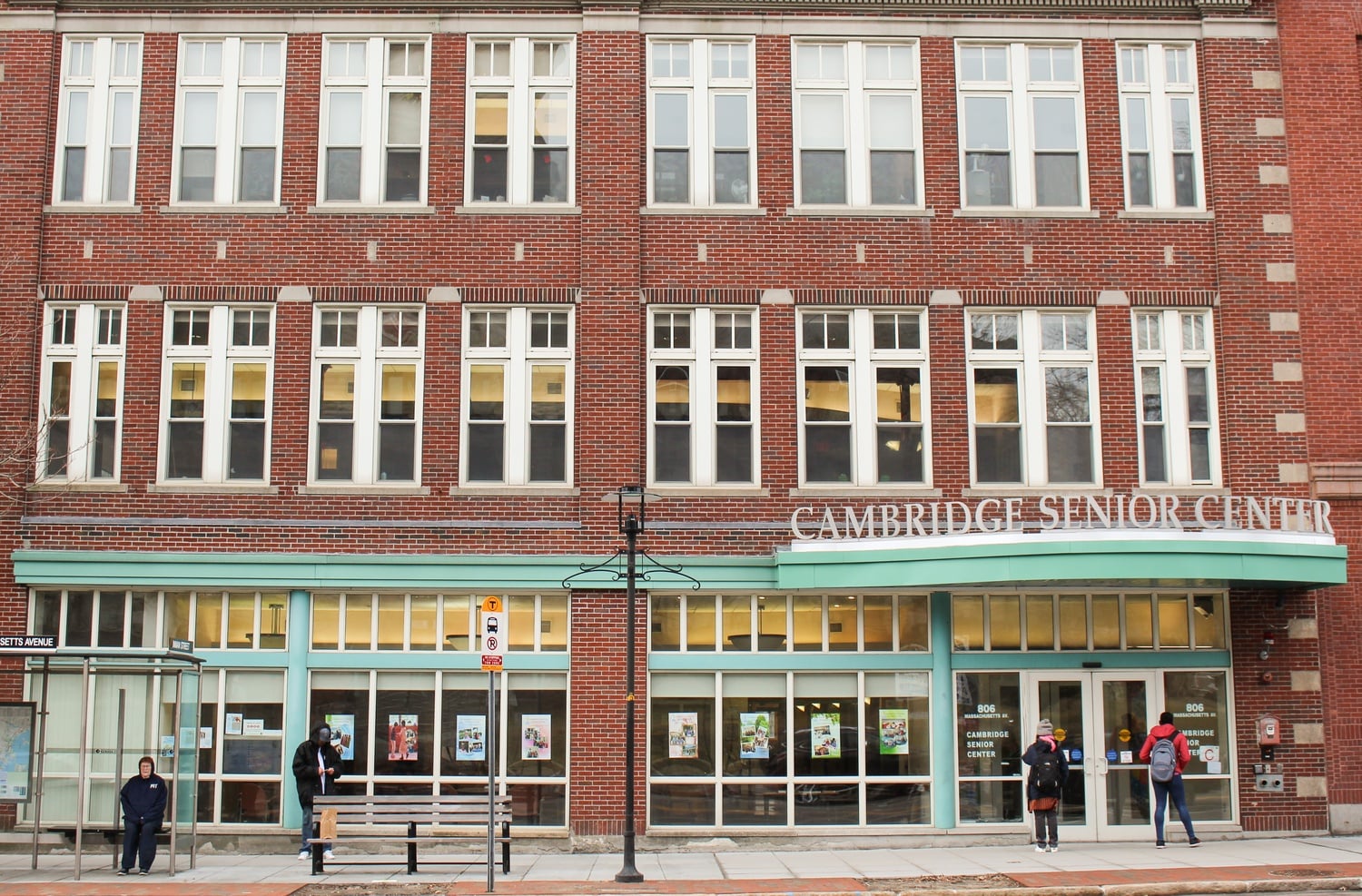
n Massachusetts Avenue in Central Square, sandwiched between the YMCA and a post office and facing Cambridge City Hall, sits the Cambridge Senior Center. Built from stone and brick, this block serves as a hub of social services housed within buildings that appear, at first glance, unassuming. Steps away from a Route 1 bus stop and two blocks from a Red Line station, people of all ages pass by: teenagers grabbing a slice of pizza, new parents pushing cooing babies, and older adults looking for a place to spend their day.
The Senior Center stands weathered red and gray, a faded teal awning stretching across its double doors. Tall windows with the blinds drawn grid the outside of the building on every floor.
Inside, the atmosphere shifts. A cacophony of “Good to see you!” and “See you later!” echo through the check-in room as people come and go. Employees greet each participant by name.
A large bulletin board, rimmed with floral duct tape, covers one wall. It advertises a plethora of events: weekly Introduction to Theatre meetings, immigration legal screening clinics, digital privacy workshops, a pink events calendar listing Zumba, English classes, and monthly Bingo. Each flier is color-coded by category and written in plain English, designed to be accessible for people with memory concerns or cognitive decline and those who use translation devices.
Among a group of four playing pool in one of the rooms upstairs, are William Yao and Paul Gregoire. Yao, 82 retired from the shipbuilding business and previously lived in China, Hong Kong, Canada, and New Jersey. 21 years ago, he settled in Massachusetts with his wife; they now live in Lechmere Square in East Cambridge.
Yao remembers when Lechmere was a hub for factories 30 years ago. Today, he notices students moving in. “Living conditions change a lot,” he says, remembering a time before the Green Line connected him to hubs like Harvard Square and MIT.
His teammate Gregoire, 76, sits calmly, waiting for his turn. A retired media and AV technician and former employee of Harvard Law School, he moved to Massachusetts from Maine 23 years ago to work and be closer to his daughter and grandchildren.
Gregoire was hesitant at first to go to the senior center: “I thought it was for old people,” he says. But once he learned of the pool table, he gave it a visit. Pulled in by the game and the friendly faces, Gregorie is now a regular visitor.
“It got me out of my little bubble,” he says. “Socially, it’s great because you get to be with people. I love the diversity.”
Today, Gregoire plays for the Cambridge Senior Center’s billiards team, which competes in 10-week leagues each fall and spring against senior centers in the greater Boston area. Their league times and meeting places, both home and away, are printed and posted on the wall.
“So that’s a way we get to know people from other towns, and some of those people are really good,” he laughs.
The adjacent rooms are just as lively. In one, a group recites sentences in an English as a Second Language class, and in another, several seniors set up music stands for a music class. Back on the first floor, long-time friends Sherrie Cox and Wanda Queen’s infectious laughs cut through the low buzz of conversation. Around them, people lounge. Some read newspapers, others stop by for a meal: free for Cambridge residents.
Though Cox has been visiting for less than a year, she has come to deeply value the senior center for giving her a space for activity and freedom.
“Like as we’re sitting here now, nobody’s rushing us out, which is very good. We can sit here and talk as long as we want,” she says.
Cox says she spent the majority of her life working — she was a business owner — and became used to filling every day to the brim. But the physical challenges that come with growing older have forced her to readjust.
“It’s hard to slow down from a hectic life,” says Cox. “I can’t walk as fast as I used to, and I wish I could.”
These limitations once filled her with frustration, but she adds that she has slowly been coming to terms with the need to meet her body where it’s at.
“I’m not in a hurry to go anywhere anyway,” she says. “Just moving at my own pace is for me, very good.”
Cox says the center has been instrumental in helping her adapt to her new phase of life, giving her a place away from her home but close enough to walk to, even if slowly. She wishes that more seniors would do the same.
“People of our age should come and join. It gets them out,” Cox says. “They don’t have to stay all day, right? But they can come and socialize, and when they’re ready to leave, nobody stops them.”
With most classes and activities offered at no cost, a growing number of older adults from both within and outside of Cambridge are flocking to the center, according to Cambridge Senior Center director Alicia Johnson at a Cambridge Council for Aging Board Director meeting. Some make the trek all the way from Gloucester, an hour’s drive away, to take advantage of the center’s programs.
All are welcomed.
Housing a City at Every Stage
ox leans forward in her sage green cafeteria chair, an easy, welcoming smile on her face. As a friend walks by, she waves. “Good night!” she calls out, imbued with the kindness of familiarity.
A year ago, she was homeless.
“The rent had just escalated to the point it was beyond what I could pay,” Cox says. Despite formerly owning a business, she found herself priced out of her previous home, forcing her into a shelter.
“Very, very difficult, not knowing one day to the next where you’re going to be,” she says. The shelters, she adds, “can only help so much.”
Jennifer Molinsky, who directs the Housing an Aging Society Program at Harvard’s Joint Center for Housing Studies says one reason why is high demand for social support.
“At a population level, we see more affordability challenges as people get older, because their incomes are often fixed or just not keeping up with the rising costs around them,” she says. “They have more needs, such as for things like services and supports, that eat into that household budget.”
But city councilors also note that a larger problem is at play: a lack of affordable housing and rising costs in the city in general. In 2010, the median rent for a one-bedroom apartment in Cambridge was $1,725. In 2025, that number jumped to $2,700 — a more than 50% increase.
As young and old residents get pushed out by rising rents, how exactly to address the issue of housing has become the most contentious issue in Cambridge politics. Some suggest adopting an “abundance” philosophy and building more market rate housing, while others encourage greater housing assistance and rent control.
The city has passed rezoning legislation that favors nonprofit organizations in building housing, according to former Cambridge mayor and Cambridge City Council member Marc C. McGovern. While this legislation has allowed nonprofit groups to better acquire the appropriate land and outcompete private companies to build cheaper, denser housing, the construction process is often bottlenecked by costs, bureaucratic red tape, and a lengthy process of design and community consultation.
But Molinsky points us to look away from infrastructure and what is and isn’t being built, and instead, towards the kind of community that Cambridge should want to create.
“If we want to build a really interconnected, intergenerational, robust, mutually supportive neighborhood community — that vision drives me — then we need to have housing options that meet all of those needs,” Molinsky says.
On April 10, Molinsky organized a half-day event centered around multigenerational living at the Harvard Graduate School of Design. The event attracted city officials, urban planners, and scholars, all part of the group calling for environments where people can live alongside neighbors at all stages of life.
Though approximately 20 percent of Americans live in multigenerational households, these arrangements are rarely long-term — and only 2 percent of Americans live in truly intergenerational communities, despite proven social benefits such as children holding fewer ageist stereotypes and seniors finding purpose through mentorship.
Just a few T stops away from Cambridge, the city of Boston has tried to promote such housing. In 2017, the city launched an intergenerational homesharing pilot program aimed at alleviating seniors’ social isolation and a lack of affordable housing in the city. City officials hypothesized that matching people looking for housing with seniors who have rooms to rent could create more sustainable and community-centered housing options.
The pilot was successful: there was significant interest, with eight pairs successfully matched. The website boasts that new connections were made, guests were able to alleviate financial pressure, and that the homesharing environment bridged generational gaps. In February 2020, the city expanded the program, pledging to make 100 matches. Though progress briefly stagnated due to Covid, they ultimately met their goal.
Andrea Burns, the director of the Age Strong Commission’s Age Friendly Boston initiative, hopes the program’s success will encourage residents to initiate homesharing independently. Along with building more affordable housing, the city is now experimenting with new ways to create lower-cost, intergenerational housing for seniors. Recently, Boston legalized the construction of Accessory Dwelling Units, additional living spaces that homeowners can build on their own property.
“It’s just about giving people choices and having the flexibility to keep your home and maintain your investment and stay in your community,” she says.
Cutting Costs
ging in place” — the idea that people should have the choice to grow older in their home — bleeds beyond housing and into how the city is designed.
Stephanie Groll, Cambridge’s Parking and Transportation Demand Management Planning Officer, describes living a whole life as not just meeting the basic necessities — going to a doctor’s appointment, picking up the groceries — but everything in between. To call a friend and decide, on a whim, to meet for coffee without needing to coordinate rides days in advance. To move through the city without friction, trusting that sidewalks, buses, and public transportation will take you where you need to go. To stay embedded in the networks of relationships, routines, and places that give life its texture and flavor.
At the heart of all of these connections is transportation. When these systems work well, they expand the bounds of daily life, and when they don’t, the boundaries tighten.
Recognizing this importance, the city has recently launched multiple programs aimed at accessibility across all demographics.
In March 2025, Cambridge introduced a bike voucher program for low-income residents, including adaptive and e-bicycles, with the goal of encouraging active lifestyles and enabling more expansive car-free travel. The city also offers a taxi discount and door-to-door transportation to places like grocery stores and doctor’s appointments for residents over the age of 60.
In March of this year, the city partnered with the Cambridge Health Alliance and the Cambridge Commission on the Status of Women to coordinate a wellness event on sexual health for older women. Cambridge has also collaborated with Somerville-Cambridge Elder Services and registered dietitians to inform elders about how food can relieve chronic conditions. The partnership has also led to a Healthy Aging Cycling series in April and a walking club that meets throughout the year.
But despite the support programs the city has offered its elders, the city’s efforts at expanding transportation options continuously poses new challenges for them as well. This year, for example, the city hiked up parking permit prices from $25 to $75.
These permits allow caregivers for older or disabled adults to park in Cambridge for the duration of their shift — sometimes up to 12 hours. Each additional caregiver requires an additional permit, which becomes costly.
This increase in fees places a disproportionate amount of burden upon the older population who are both most often in need of these permits and have fixed or limited incomes.
This isn’t the first time that city policies have undercut seniors’ quality of life . A few years ago, when the city began installing more bike lanes, it had to remove nearly 900 curbside parking spaces. A few years later, parking meters on Mt. Auburn Street were taken down, further limiting available street parking and making it harder for seniors and their service providers to access their homes.
Many service providers, such as Meals on Wheels, which fill in, no longer have a designated site where they can park to deliver food to these Cambridge residents. If they choose to stop, they run the risk of getting fined. To be able to pull into parking spaces, many drivers have resorted to putting up “take pity on me” signs in their dashboard.
“It’’s easy for many people to say, ‘Oh, it’’s just a matter of increasing a parking permit, you know? But how the impact of that increase will have on different residents is going to be a lot,” said Susan Pacheco, the executive director of the Council on Aging in Cambridge, at a board meeting in March.
To combat the lack of parking spaces, the Council on Aging has drafted a letter to city council detailing its detrimental effects upon seniors.
Pearl Hines, 81, a Council on Aging board member, mentioned other shortcomings. Over the winter of 2025, Boston saw an unprecedented amount of snow fall. It piled up in parking spaces and sidewalks, and seniors like her often relied on public works to shovel out these spaces. But, Hines says, when the handicapped space filled in front of her building, her myriad phone calls to public works requesting help were refused.
“It’s incumbent upon us to pay our own money to shovel out city owned spaces,” she says at the Council on Aging board meeting.
National politics, however, have handicapped the city’s ability to address these issues. The Somerville Cambridge Elder Services, a nonprofit funded by various organizations including the Massachusetts Executive Office of Aging & Independence, hasn’t been paid by the federal government since July 2025, and they haven’t received funding from the state since October of the same year. Thus, they’ve been forced to tap into their reserves and cut down on programming.
In the past, SCES served lunch every Monday through Thursday for free at nine meal sites across Boston and Cambridge, encouraging donation but not requiring it. Pacheco says that in the coming fiscal year, however, they will have to take down the free-food messaging from their website and charge a membership fee, albeit a low one: $3 for Cambridge residents and $5 for non-residents.
“That is significant, and this is going to be a change for our friends,” says Johnson, the Cambridge Senior Center director, “but it is going to be done in a very thoughtful process, in an equitable process.”
‘Aging is Living’
at Whelan, who has lived in Cambridge for over 40 years and is now in her mid-70s, used to commute nearly 100 miles round trip every day — a schedule she says didn’t leave her a lot of time for meeting new people. Now that she’s retired, that structure has disappeared. In its place is freedom, new friendships, and the ability to define who she wants to be on her own terms.
The Living Well Network, a Maria L. Baldwin Community Center program that aims to keep older adults active, engaged, and socially connected, was crucial to helping her develop “rich relationships” after retirement. One group within the organization has been particularly instrumental to her: the book club focused on aging. Established just prior to quarantine, it began as a group to talk about “death and dying,” says Meredith Thompson, 81, a longtime resident of Cambridge Friendships developed quickly, and during challenging times like quarantine, she says it turned into a sort of support group at times.
“It really got us through Covid,” Thompson says.
The group meets twice a month on Tuesdays, and reads about the topic of aging from a variety of perspectives — philosophically, politically, and spiritually. The space has been foundational to her understanding and coming to terms with the process of aging.
Many of the books they have read focus specifically on covering ageism, which is the discrimination against older people. Their current read is “This Chair Rocks: A Manifesto Against Ageism,” written by Ashton Applewhite, a call to “end discrimination and prejudice on the basis of age.” The book asserts that modern media has been feeding a narrative to the younger generation that aging is something to fear, and to conceal.
Thompson says she feels these pressures in her life as well, “You turn on the TV and there’’s ad after ad after ad about things older people ought to do to look younger.”
In “This Chair Rocks”, Applewhite pushes back against these myths by drawing on her own experience, urging others to embrace this natural process. Lynne Reiss, another member of the book club, says through these readings, she has “grown to appreciate the advantages of being an old person.”
“Aging is living,” Thompson recalls, quoting a phrase she read, saying it’s representative of many of the book club’s discussions. But this club opens up a space where people are all weighing the same things, and there’s no expectation to just get over it or to suppress their fears, because they are all at the same stage of life.
“We’re struggling with what it’s like as our body changes,” says Randi Freundlich, 73, the manager of the Living Well Network. “You can come to a group and go, ‘Oh look, I’m not the only one who is using a cane here’ or ‘I’m not the only one with gray hair.’”
Although the conversations are largely sparked by the content of the books, they often spiral into larger, more existential discussions about what it means to age. A few months ago, the group did a deep dive into the topic of death, and how to face one’s inevitable end. The conversation was so memorable that when someone asked Reiss what the book club was about, she accidentally told them “death and dying.”
“In terms of thinking about death, I think that it’s a kind of a taboo subject, and most of the time you’re not supposed to talk about it, or people are uncomfortable talking about it,” says Freundlich.
Having others to discuss these realities with has made finding resolutions easier. Thompson, for one, says the experience of the club has helped her find “comfort” in the fact that she’s “going to die and that that will be real when it happens.”
But that doesn’t mean that these worries ever disappear. Although one has gained wisdom from previous life experiences, there are always new challenges that accompany such questions. But the beauty of the process lies in having the time to ponder and the support to grapple with them.
“We’ve been fearlessly able to, together, really have deep conversations about any of those things,” Weyland says.
One member, Peggy E. Kutcher, 68, continues to work as a Project Administrator for Cambridge’s Community Development Department. She says that knowing that she won’t be a huge success in her field has allowed her to not feel like she is constantly striving for accolades. She says accepting that lets her to sit more comfortably with who she is now, and instead, consider what kind of resource she can be for others. Now, she chooses to focus on nonprofit and public service work to address issues that are dear to her – homelessness and food access.
Although most of the book club members haven’t come to concrete conclusions about what it means to age, they’ve found direction.
“I can do my part in making the world a better place,” Freundlich says. As she gets older, she says she wants to ask, “How can I be the solution?”
To Love a City
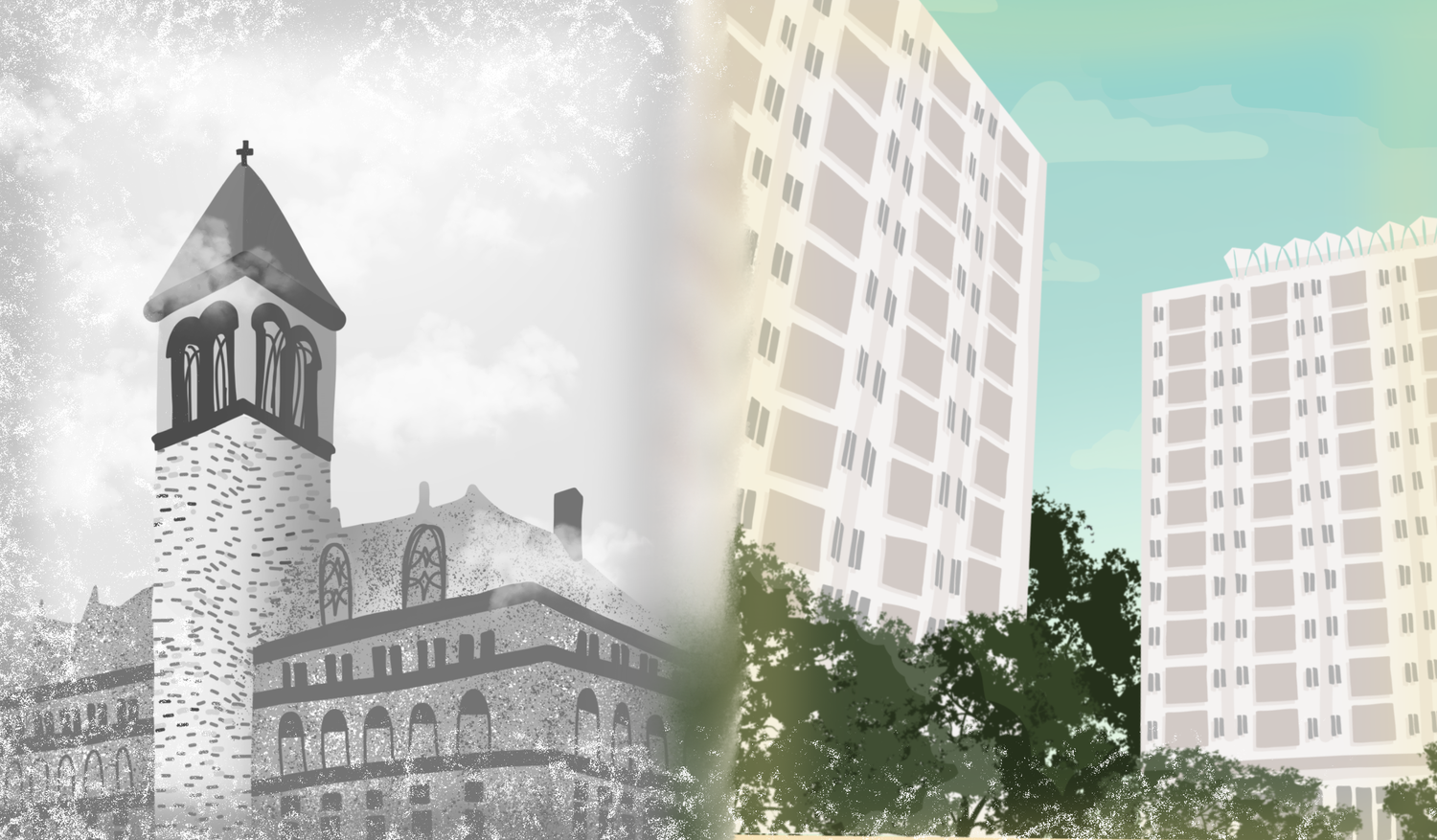
ext year in Cambridge, a new group of babies will be born, starry-eyed college freshmen will arrive with suitcases and expectations, and people will begin building lives they cannot yet imagine. The city will keep moving and reshaping itself, with new faces and new paths crossing where others once did. Cambridge is home to people’s beginnings, conclusions, and all the chapters in between.
Despite turmoil over activity funding, housing policy, and infrastructure construction, a deeper-seated feeling thrums: genuine satisfaction and affection for the city. Much of that comes from Cambridge’s forward-looking nature and the very fact that it’s defined by what comes next — new ideas, new people, new encounters. And in that constant motion, people find one another.
“It’s inspiring and interesting always to know that the neighborhood evolves, and you’re going to just be crossing paths with people,” says Kutcher.
Kutcher grew up in the suburbs of Philadelphia and moved to Cambridge forty years ago, following a roommate who had been accepted to graduate school. The two of them lived in Harvard-subsidized affordable housing, getting by on modest means. But even then, something about the city captured her heart — perhaps its walkable streets, its culture, lectures, and storefronts, or the sense that life was constantly unfolding around her.
“I was in love with the place,” she says.
And for generations to come, that love may begin in the same way — it starts and ends with the people that they meet, the ones they return to and grow alongside.
Back at the senior center, music emanates from a red- and cream-walled ballroom to the right of the bulletin board, where rows of seniors are singing. Some sway to the beat, others clutch sheet music, while an instructor corrects the class on a melody. It’s Wednesday morning’s Chinese Singers and Folk Dancing class, a popular gathering place for Chinese seniors looking for a place to connect with their heritage. The class is conducted entirely in Mandarin, and Chinese newspapers sit stacked on a bench next to the door.
Upstairs, a cacophony of English, Spanish, and Mandarin can be heard. Groups gather around re-upholstered pool tables, laughing as they play. Strategic whispers, the clink of balls, and congratulatory cheers swell for good shots.
William Yao, 81, sinks a ball straight into a side pocket. “Very, very, very, very good,” a teammate says.
Moments later, Yao lines up what could be the game-winning shot: “15-corner,” he announces. He doesn’t make it. And the game continues wordlessly, while a woman hums at the next table.
“I’ve been here 79 years,” says Queen, another one of the seniors at the Center, talking about her life in the city. “I wouldn’t want to live anywhere else.”
Correction: May 20, 2026
A previous version of this article incorrectly stated that the Living Well Network was an independent organization and that Randi Freundlich was a member of it. In fact, the Living Well Network is a Maria L. Baldwin Community Center program and Freundlich is the manager.
—Magazine writer Jocelyn E. Shek can be reached at [email protected]. Follow her on X @jocelyneshek
— Magazine writer Anne Sun can be reached at [email protected].
Want to keep up with breaking news? Subscribe to our email newsletter
Have a tip for The Crimson? Share it confidentially