Harvard Legacy of Slavery Initiative Releases Database Identifying 1,613 Enslaved People
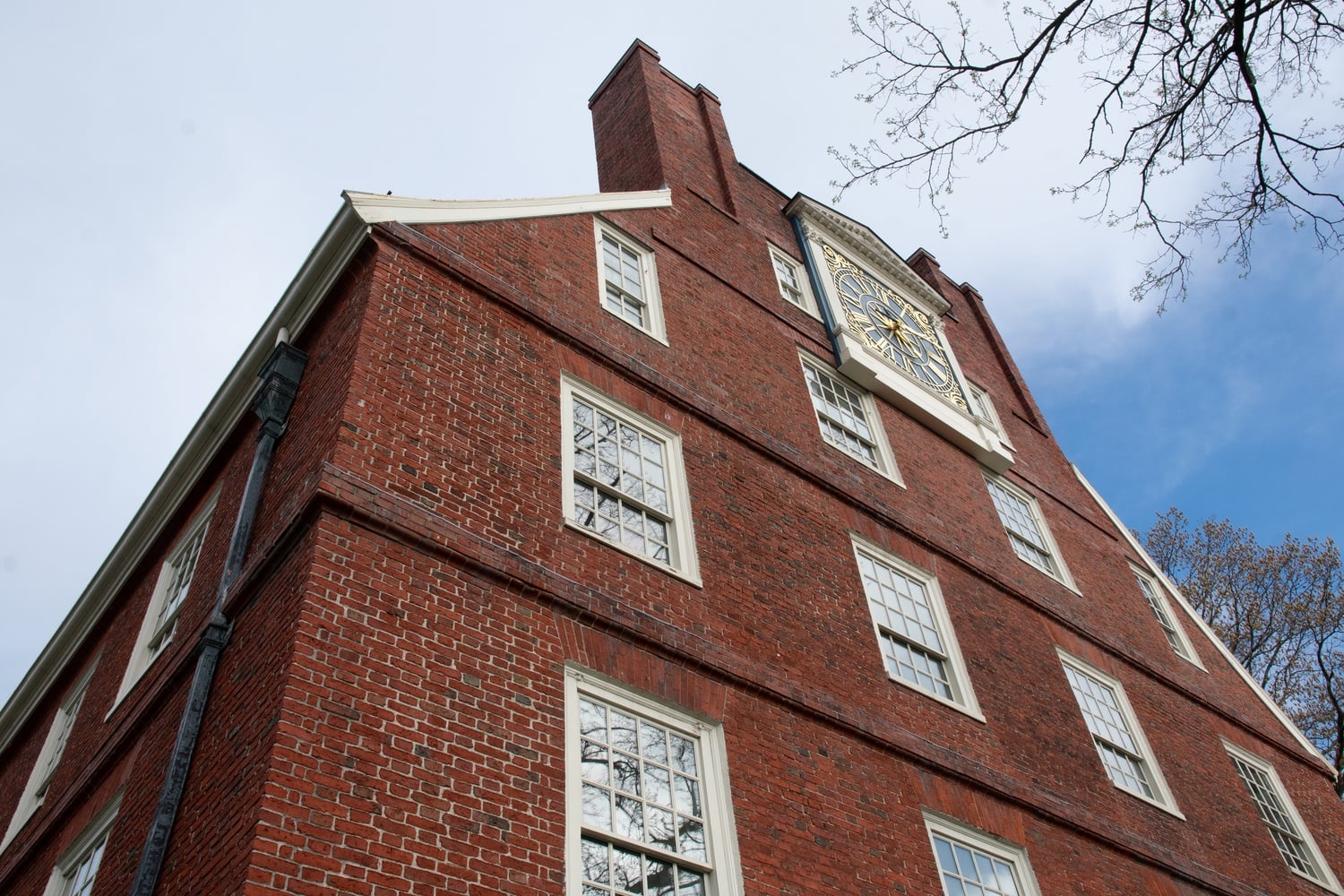
Harvard’s Legacy of Slavery Initiative released a public database Tuesday identifying 1,613 people who were enslaved by Harvard leaders, faculty, and staff or who labored on Harvard’s campus between 1636 and 1865.
The database is the largest public expansion of Harvard’s research into its ties to slavery since the University released its 2022 report on Harvard and the legacy of slavery, which identified roughly 70 enslaved people connected to Harvard affiliates.
The database lists enslaved people’s names, the Harvard affiliates connected to their enslavement, the years and locations of enslavement, and citations to the records used to document each entry. The Initiative also released a methodology document explaining how researchers compiled the database and how each piece of information should be interpreted.
The research was conducted by American Ancestors, a nonprofit genealogical research organization that partnered with the Initiative on the database. Researchers used records including wills, journals, letters, probate files, estate inventories, tax lists, deeds, vital records, newspapers, and federal documents to identify enslaved people and the Harvard affiliates who enslaved them.
As of April 1, researchers had identified 259 Harvard leaders, faculty, and staff who enslaved people between 1636 and 1865. The database includes a large number of entries connected to members of Harvard’s Board of Overseers, including Andrew Ritchie, an Overseer from 1818 to 1820; Isaac Royall Jr., an Overseer from 1752 to 1774; and John Hull, an Overseer from 1642 to 1643 and from 1654 to 1655.
The records also include affiliates whose names remain visible across Harvard’s campus, including Cotton Mather, John Hancock, Benjamin Wadsworth, and Edward Holyoke.
The release comes after years of controversy surrounding Harvard’s handling of the Legacy of Slavery Initiative. A 2024 Crimson investigation found that the $100 million effort had been marked by internal tensions, staff turnover, and allegations from current and former affiliates that senior administrators pushed for public-facing progress while seeking to limit the scope of the research. Richard J. Cellini, the former director of the Harvard Slavery Remembrance Program, later alleged that administrators had pressured him not to find “too many descendants.” Harvard has denied that claim.
In January 2025, Harvard laid off the staff of the Harvard Slavery Remembrance Program, the unit originally tasked with identifying enslaved people and their descendants, and transferred the work to American Ancestors. At the time, Harvard said the move would allow the research to continue at a larger scale.
Researchers also identified more than 600 living descendants of people enslaved by Harvard affiliates, according to a video released by the Initiative alongside the database.
University Professor Henry Louis Gates Jr., a member of the Initiative’s Advisory Council, said in the video that the number of identified enslaved people had grown substantially since Harvard’s initial findings.
Get The Crimson in your inbox.
“We now know that the original number of approximately 70 enslaved individuals has grown significantly to more than 1,600 individuals who have more than 600 living descendants,” Gates said.
The Harvard Slavery Remembrance Program, the Initiative’s descendant research arm, was launched in 2022 in collaboration with American Ancestors. The program was created to advance one of the 2022 report’s recommendations: identifying and supporting direct descendants of people enslaved by Harvard leaders, faculty, and staff.
In the video released Tuesday, Lindsay Fulton, chief research officer at American Ancestors, said researchers first had to reconstruct Harvard’s institutional structure across more than two centuries before they could identify enslaved people connected to the University.
“In researching the people who were enslaved by Harvard affiliates, we first needed to understand the structure of the University, the different positions people held, and how these changed over time,” Fulton said.
According to Fulton, researchers compiled a list of more than 3,000 Harvard leaders, faculty, and staff who worked at the University from 1636 to 1865. They then searched historical records to determine which of those affiliates enslaved people.
According to the methodology document, researchers reviewed records for both enslavers and enslaved people. For Harvard affiliates, researchers examined documents such as probate files, land and property records, marriage records, tax records, and institutional records. When a document suggested that a Harvard affiliate had enslaved people, researchers then searched for records that could identify those individuals by name, location, family relationship, or other biographical details.
“Because enslaved individuals were not named in censuses until after emancipation, and because federal censuses only began in 1790, after the abolition of slavery in Massachusetts, researchers turned to a wide range of records to find enslaved people’s names and the names of their family members,” Fulton said.
Sara N. Bleich, Harvard’s vice provost for special projects, said in the video that the database is part of Harvard’s effort to confront its institutional history.
“When we can understand our institutional ancestry, no matter how complicated or painful, we can help create a better future,” Bleich said.
Harvard has said records produced through the Slavery Remembrance Program will eventually be contributed to 10 Million Names, an American Ancestors-led project that aims to recover the names of people of African descent who were enslaved in the United States.
Correction: May 15, 2026
A previous version of this article incorrectly stated that the database identifies more than 600 living descendants. In fact, researchers have identified the descendants, while the database names enslavers and enslaved people.
—Staff writer Shalini N. Ramchune can be reached at [email protected] and on Signal at shaliniramchune.03. Follow her on X @ShaliniRamchune.
Want to keep up with breaking news? Subscribe to our email newsletter
Have a tip for The Crimson? Share it confidentially