Timothée Chalamet Isn’t Entirely Wrong About the Dying Arts
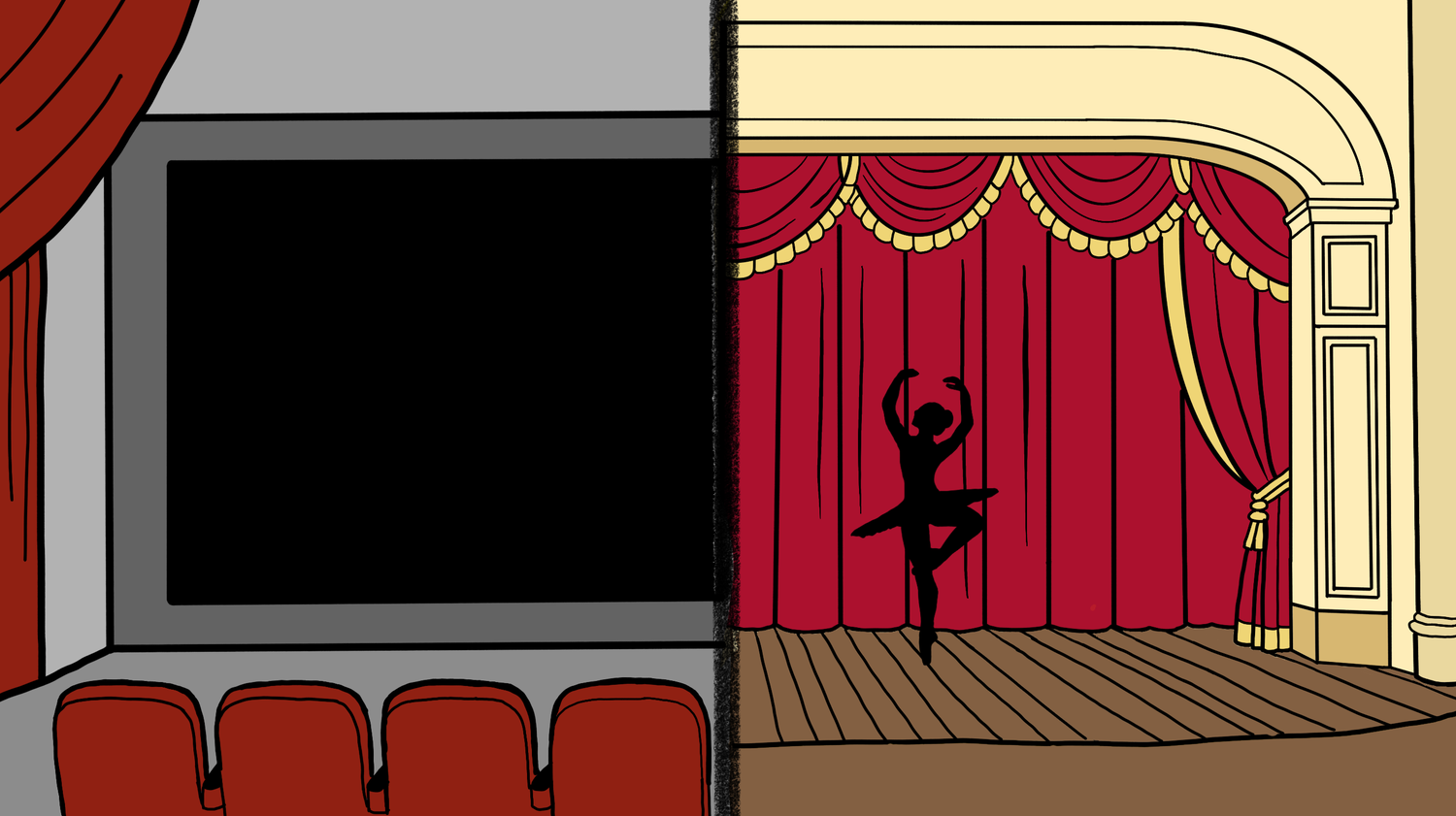
“Timothée Chalamet Gets WRECKED!” scream videos announcing the downfall of Timothée Chalamet, which had taken charge across the internet earlier this year. In a moment that quickly went viral, during a Variety & CNN Town Hall Chalamet dismissed traditional art forms such as ballet and opera as practices maintained out of obligation.
“Things where it’s like, ‘Hey, keep this thing alive,’ even though it’s like, no one cares about this anymore,” said Chalamet in the Town Hall.
Chalamet’s statement provoked strong reactions, particularly from affiliates of the classical arts, who condemned the remark as disrespectful of longstanding cultural traditions. While Chalamet’s remarks were undeniably brash and reductive, the reason that the vitriol against his statement may be so intense is because there’s some truth to it — younger audiences are not as engaged with these traditional art forms and are rather engaging with culture through accessible forms of media, primarily social media. His remarks point to a cultural tension: a growing disconnect between traditional art forms and contemporary modes of cultural engagement.
In effect, Chalamet’s remarks are excessively narrow — ballet, opera, and other forms of the classical arts continue to attract devoted audiences. Major institutions such as the Metropolitan Opera and the New York City Ballet regularly sell a large share of their seats for major productions, even as small companies face financial instability. Yet his provocative statement still gestures towards a real shift: these art forms are increasingly out of line with how contemporary audiences engage with culture.
Historically, art has often functioned as a domain for the elite, serving as a marker of status through systems of patronage and exclusive consumption. The art market, in particular, has long been shaped by wealthy patrons whose tastes have influenced both artistic production and valuation. Similarly, opera and ballet — traditionally categorized as “high art” — emerged from systems of royal and aristocratic patronage, reinforcing their association with exclusivity.
Today, these institutions have made efforts to broaden access by offering discounted tickets for people under 30 and public outreach initiatives. However, their legacy of exclusivity continues to shape how they are perceived and experienced. Attending the opera or ballet still carries expectations of formality, like wearing formal dress. For example, the “What to Expect” page on the Metropolitan Opera’s website features a lookboard showcasing attendees in formal gowns and tuxedos.
In contrast, most contemporary cultural consumption is immediate, casual, and individualized. Films, television, and music are streamed on demand, often from the comfort of one’s home. Art is no longer something one must enter a grand space in order to experience; it is something that is generally accessible to everyone. Within this landscape, Chalamet’s comment is merited: his claim is less about the literal disappearance of art like ballet or opera than about their diminishing relevance within a culture defined by accessibility and scale.
This shift makes the success of Chalamet’s own work particularly revealing. His recent film, “Marty Supreme,” employed a highly unconventional marketing strategy built around viral videos and real-world stunts, explicitly targeting a Gen Z audience. This approach proved successful: the film generated record-breaking engagement and became A24’s highest grossing release to date.
Yet, despite its commercial success and popularity, the film failed to secure any awards at the 98th Academy Awards. While it remains unclear whether the controversy directly influenced award outcomes, critics have framed this moment as the beginning of Chalamet’s “downfall,” with some even calling it a form of “karma” for his remarks about the traditional arts. But moreover, it is clear that there is dissonance between what succeeds with mass audiences and what is validated by traditional cultural institutions, like the Academy Awards.
Seen in this light, the controversy surrounding Chalamet stands as a collision between two forms of culture — on one side are institutions rooted in conserving tradition while on the other is a rapidly evolving media landscape that is followed by mass appeal.
To say that “no one cares” about ballet or opera is clearly an overstatement. But his comment also points towards a reality that cannot be dismissed: art is no longer confined and in the hands of exclusive spaces, but is increasingly shaped by accessibility and widespread public engagement.
—Staff Writer Grace S. Rhee can be reached at [email protected].
Want to keep up with breaking news? Subscribe to our email newsletter
Have a tip for The Crimson? Share it confidentially