After Gay, Harvard Corporation Pledged Transparency. Its Biggest Decisions Still Move Privately.
More than a year after President Claudine Gay’s resignation forced the Harvard Corporation to seriously reckon with its internal processes for the first time in over a decade, its members have engaged in intentional outreach to dozens of University elite — but many say their deliberations remain as opaque as ever.

When Jeffrey S. Flier walked into his annual meetings with the Harvard Corporation, he expected to give the University’s most powerful governing board a meaningful window into Harvard Medical School.
Instead, he remembered the meetings as largely perfunctory.
As dean of the Medical School, Flier said he briefed the Corporation nearly every year. Before each meeting, the Office of the Governing Boards asked him to send over the PowerPoint he planned to present. Then the office sent it back with edits.
Slides could be deleted. Lines were removed from others. The revised presentation would be loaded onto a computer before Flier entered the room.
He called it “one of the strangest things I had ever seen.”
Flier said the meetings themselves offered little real exchange with University leadership.
“I don’t recall having any significant back and forth with the Corporation on any of the details,” he said.
For Flier, the meetings were one of the few regular points of contact between a Harvard dean and the recently-reformed Corporation — the small governing board with final authority over the University’s long-term direction.
But even there, he said, the interaction was controlled before it began and limited when it started.
More than a decade later, the same pattern is at the center of Harvard’s debate over Corporation transparency: more contact with the board, but little visibility into how the board uses what it hears.
Get The Crimson in your inbox.
Since Gay’s resignation in January 2024, Corporation members have taken steps to make themselves more available to Harvard affiliates. They held a rare faculty town hall, announced a committee to review the presidential search process, increased meetings with deans and faculty leaders, and consulted more frequently with the Board of Overseers.
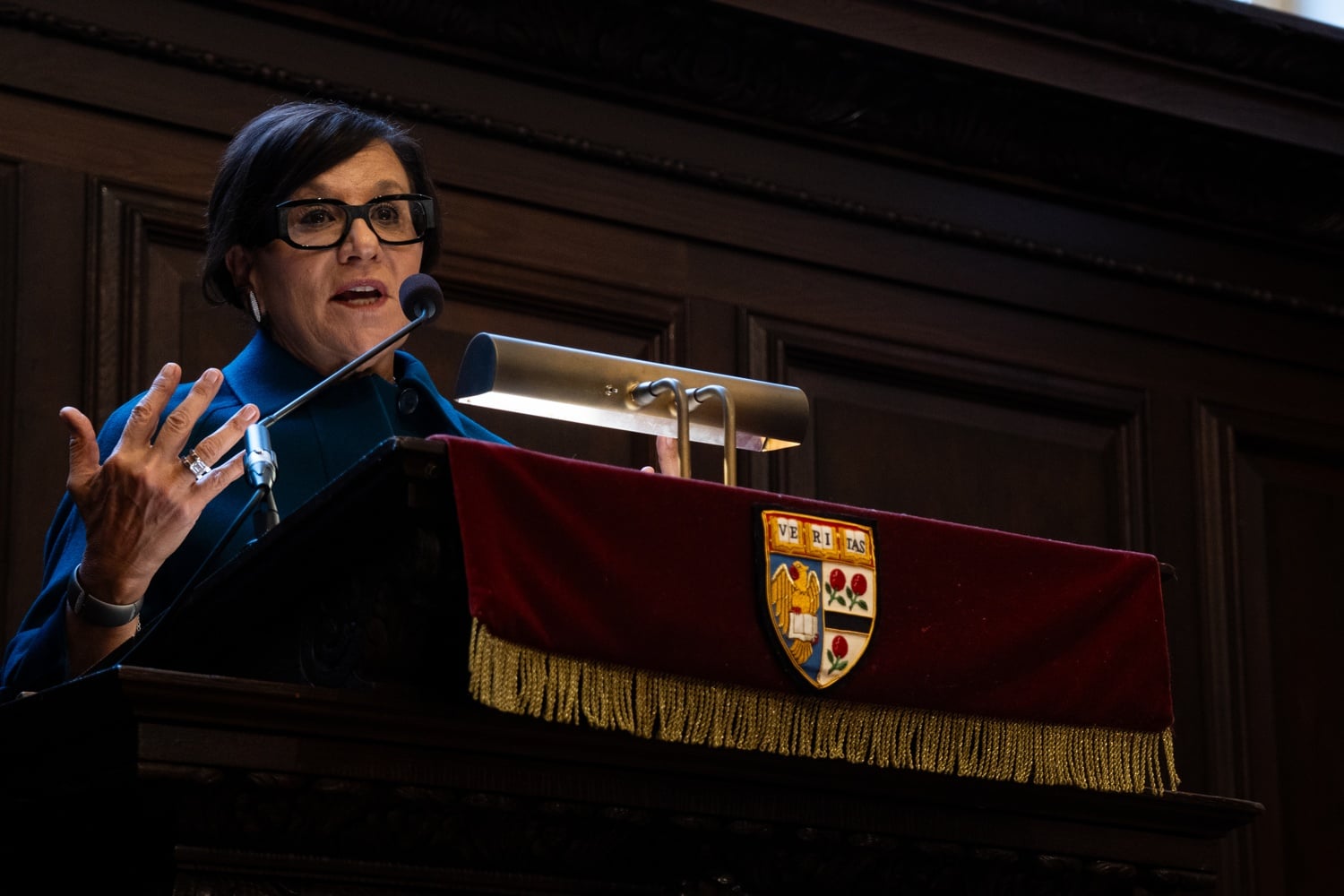
Corporation Senior Fellow Penny S. Pritzker ’81 wrote in a Friday statement to The Crimson that the board has taken steps to “increase the volume and depth” of its engagement with Harvard affiliates, saying input from formal and informal events “deepens our understanding of opportunities to strengthen the University and enhances our deliberations as a Corporation.”
Pritzker also wrote that the presidential search process has consulted Harvard affiliates and external parties since its founding. She wrote that when Harvard next undertakes a presidential search, the committee’s work will help shape “how we structure and approach that process.”
But Pritzker did not answer whether the committee would release its findings to the public. More than two years after her initial announcement, no public report has been released, no search reforms have been announced, and the Corporation’s most consequential decisions have continued to unfold through private channels.
More than 50 former administrators, faculty members, alumni, governance experts, and members of the Board of Overseers told The Crimson that while the Corporation has become more accessible in a non-negligible way since Gay’s resignation, it has hardly achieved the same strides in transparency.
From Interim to Indefinite
The Corporation’s transparency push faced its clearest test yet in its handling of University President Alan M. Garber 76’s tenure.
When Garber was formally appointed to Massachusetts Hall in August 2024, the appointment came with an expected endpoint: he would serve until June 2027, and a search for his successor would commence the year before.
The arrangement made Garber a full president by title, but temporary in practice.

A member of the Board of Overseers said that as late as last summer, internal conversations continued to refer to Garber as an interim-style president while the expected search remained on the horizon.
Publicly, Harvard wasn’t as direct. In an August 2024 message to affiliates, Pritzker wrote that the Corporation had asked Garber “to hold the title of President, not just Interim President,” calling the moment “a time not merely for steady stewardship but for active, engaged leadership.”
By fall 2025, the distinction had become less relevant. Garber had led Harvard through months of pressure from the Trump administration, including federal funding cuts, threats to the University’s tax-exempt status, and an effort to block Harvard from enrolling international students.
The Corporation wanted him to stay longer, the Overseer said, citing Garber’s work mending donor relations and staying the course, unlike some of Harvard’s peer institutions.
In the weeks before a December meeting, Corporation members called Overseers individually to solicit their views on extending Garber’s tenure, according to the Overseer. The proposal was then brought to the 30-member alumni-elected board, which approved it by vote.
The Corporation did not hold the kind of listening sessions with faculty and alumni that typically accompany a presidential search. Instead, because the decision was framed as an extension rather than a new appointment, outreach was largely limited to the governing boards, the Overseer said.
The move came after Pritzker had announced a formal presidential search process committee in November 2024, saying it would recommend reforms for the next search.
The committee included current Corporation members Diana L. Nelson ’84 and Kenneth C. Frazier alongside prominent investor Bradley M. Bloom ’75, federal judge Patti B. Saris ’73 and former U.S. Secretary of Health and Human Services Sylvia M. Burwell ’87. Carolyn A. “Biddy” Martin, who left the Corporation earlier this year, chaired the committee. (Burwell, who currently serves as the President of the Board of Overseers, will join the Corporation in July.)
The committee was expected to produce recommendations by the end of the 2024-25 academic year and later share them with affiliates, according to Pritzker’s 2024 interview with The Crimson.
In her Friday statement, Pritzker referred to the subcommittee’s work in the past tense, writing that its members “approached their work thoughtfully” and that “that work will provide input” when Harvard next undertakes a presidential search.
But she did not say whether the subcommittee had produced written recommendations, whether these recommendations had been shared with the Corporation, or whether they would eventually be made public.
When reached by phone, Saris declined to comment on the committee’s work. Bloom separately declined to comment. Other members did not respond to a request for comment.
The Pipeline to The Corporation
The Corporation does not just select Harvard presidents. It also selects itself.
The search for new Corporation members can draw input from deans, alumni, and Overseers, but the power to choose remains concentrated among the sitting fellows. Those selections must be approved by the Board of Overseers, giving Harvard’s alumni-elected governing board a formal check on the Corporation’s membership.
In practice, that check appears limited.
According to the Overseer, the Corporation presents the Board of Overseers with a brief rationale for each nominee before the confirmation vote. The Overseer said a nominee had not been rejected in that setting in their time on the board.
Former Faculty of Arts and Sciences Dean Michael D. Smith said he was asked during his tenure to suggest potential Corporation members. Some Overseers also sit on the search committee for new fellows.
But those consulted are not necessarily told how their suggestions are weighted, which candidates advance, or why one person is chosen over another.
The Corporation’s recent appointments have been shaped in part by an effort to replace the expertise of outgoing members, according to an Overseer, who said recent appointments have been made with attention to maintaining a balance among fellows with backgrounds in three fields: education, finance, and law.
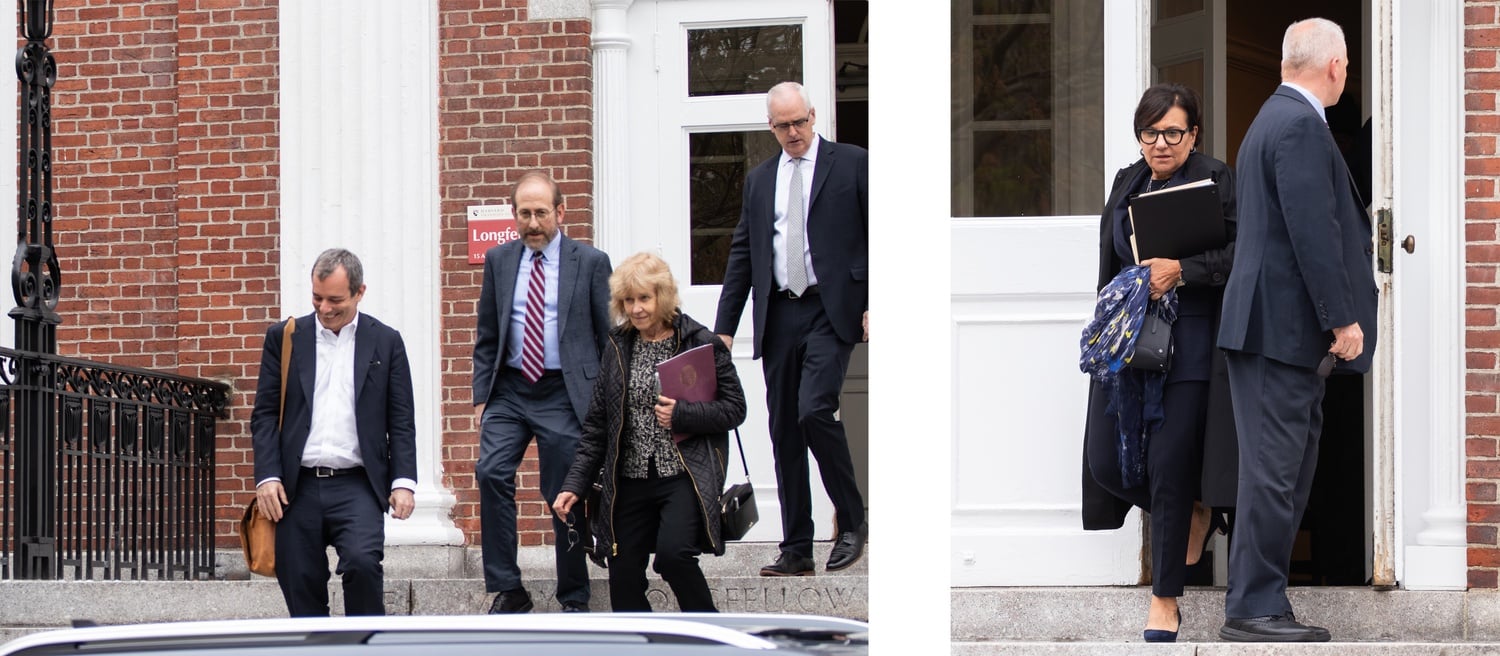
For instance, as Theodore V. Wells, Jr. prepared to leave the Corporation in 2025, the board picked Kannon K. Shanmugam ’93 to succeed him. Wells, then a sitting fellow, was involved in the selection process, and Shanmugam and Wells overlapped as partners at top law firm Paul, Weiss.
Two people familiar said the Corporation has looked for expertise in technology and finance — fields that now shape its research enterprise and long-term financial strategy.
That expertise-based approach reflects one of the goals of the 2010 reforms, which expanded the Corporation partly in order to broaden the knowledge available to the board.
But it also gives the Corporation broad authority to determine what, and whose, expertise it needs.
Psychology professor Steven A. Pinker wrote in an email that the Corporation lacked the perspectives of academics and experts in higher education.
“Missing are analysts of higher education from think tanks, journalism, and academia itself who combine expertise and an outsider perspective,” Pinker wrote.
Flier said the selection of new Corporation members remains “not transparent at all.”
“They just announce who the new member is, that’s all that happens as far as the external world is concerned,” he said.
Harvard Law School professor J. Mark Ramseyer described the Corporation as “self-select” and “self-perpetuating.”
“That’s always been the word on the street among the faculty, is that the Harvard Corporation selects their successors,” he said.
More Meetings, Fewer Answers
Since Gay’s resignation, the Corporation has responded to criticism of its secrecy by making its members more visible across campus.
The outreach has extended beyond routine governance meetings. Roughly six months ago, a Corporation member met with several faculty members to discuss the future of research at Harvard amid the Trump administration’s attacks on federal funding, according to a person familiar with the meeting.
The conversation, the person said, ranged from the future of federally funded biomedical research to whether Harvard should seek more philanthropic support, rethink the size and shape of its research enterprise, or develop new models for working with industry.
The question of industry was especially pointed. As federal research dollars become less certain, the discussion touched on whether Harvard should revisit older boundaries around corporate sponsors — including new models that would allow company scientists and Harvard researchers to spend time in one another’s labs.
The meeting was one of several new touchpoints between the Corporation and Harvard affiliates since Gay stepped down. Over the past two years, fellows have met over dinner with members of the Provost’s Academic Leadership Forum; faculty whose scientific research has been recognized with awards; life sciences faculty; leaders of cross-disciplinary initiatives; members of the University Faculty Advisory Council; and University Professors.
Fellows also hold an annual lunch with the deans of Harvard’s schools. This year, Corporation members met with deans in their first or second year in their roles, including Divinity School Dean Marla F. Frederick, Kennedy School Dean Jeremy M. Weinstein, Graduate School of Education Dean Nonie K. Lesaux, Harvard College Dean David J. Deming, and Law School Dean John C.P. Goldberg.
Pritzker has also become more visible than before — appearing in front of alumni and current students from across the University. Over the past year alone, she met with students at the Harvard Business School, delivered remarks at the Harvard Clubs of Chicago and Southern California and gave an address at Memorial Church.
But that visibility has carried political risk. As Harvard’s battle with the Trump administration escalated, Pritzker’s leadership drew scrutiny from faculty critics and from Washington. White House officials privately expressed frustration with Pritzker’s role on the Corporation, according to a person familiar with the matter.
Pinker wrote that Pritzker’s family ties to Democratic politics could complicate Harvard’s confrontation with the Trump administration. The senior fellow’s brother, J.B. Pritzker, is a prominent Democrat and the current governor of Illinois.
“Trump is notorious for prosecuting personal and political grudges, and the conflation of Harvard with the Pritzkers puts it at a disadvantage in lifesaving negotiations with the Trump administration. It seems to me that Pritzker (through no fault of her own) is harming the interests of Harvard,” Pinker wrote in an email.
Pinker added that he believed Pritzker should resign. (In a statement through a Harvard spokesperson, the Corporation “reaffirmed” their support for Pritzker.)
The post-Gay outreach builds on the Corporation’s last major structural overhaul. In 2010, after more than three centuries with no structural change, the board doubled the number of fellows, imposed term limits, and created standing committees on governance, finance, and facilities and capital planning.
Richard P. Chait, the Harvard Graduate School of Education professor who advised the 2010 review process, said the changes were necessary because the old board could no longer handle the University’s complexity.
“There were huge vacuums of expertise. There was too much work that taxed too few people,” Chait said. “It’s no longer a group of six ministers from Boston who could come together pretty easily and had little reason to do so.”
The reforms made the Corporation larger — drawing in more specializations — and more internally structured.
But some faculty members and former administrators said the changes have not answered the central transparency question.
Sanjiv Chopra, a professor at Harvard Medical School, said he would welcome more regular communication from the Corporation to the faculty.
“I think the Corporation should reach out to the entire faculty a couple of times a year, and say, ‘This is what we are planning to do in the next six months, a year, we would welcome your input,’” Chopra said. “And then there should be a link to the mission statement, and say, ‘Please look at the mission statement. Tell us if this resonates for you. Does this further our mission?’”
Flier was more blunt, arguing that the Corporation had still not become more transparent to the broader University body.
“They’re not more transparent, as far as I could tell, with the entire community of professors or any other aspect of the community,” he said. “I haven’t seen that.”
—Staff writer Hugo C. Chiasson can be reached at [email protected] or on Signal at hcc.35. Follow him on X @HugoChiassonn.
—Staff writer Sebastian B. Connolly can be reached at [email protected] or on Signal at sbc.23. Follow him on X @SebastianC4784.
Want to keep up with breaking news? Subscribe to our email newsletter
Have a tip for The Crimson? Share it confidentially