Praised in Public, Criticized in Private: Elow Leaves Cambridge Police Department After 30 Years
Christine A. Elow rose through the ranks of the Cambridge Police Department, promising reform and a new model for policing as its commissioner. But behind her abrupt retirement this spring, those familiar with her leadership describe a department strained by internal dysfunction, resistance to change, and mounting scrutiny.
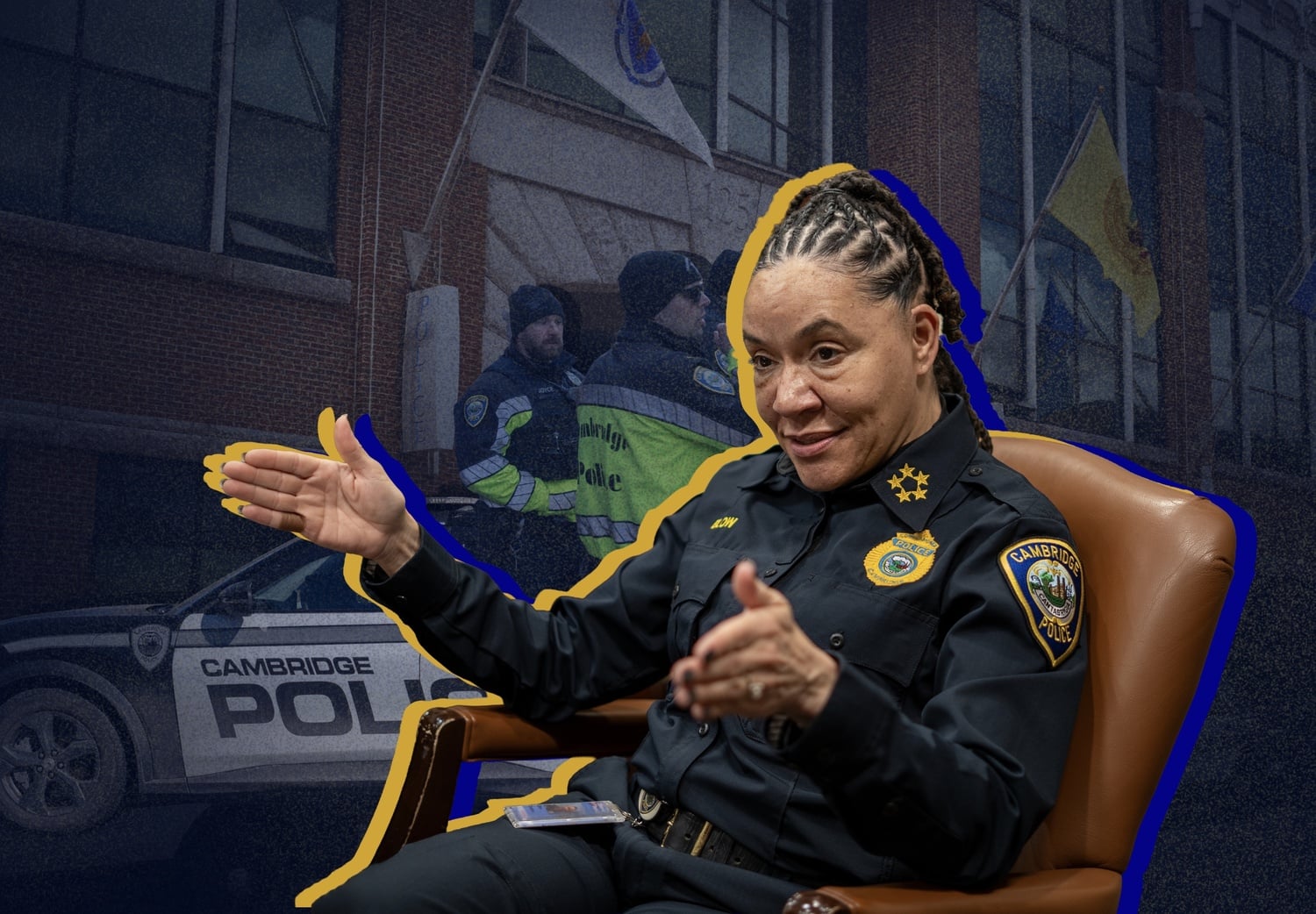
Buckowe Yam spent his entire career working alongside Christine A. Elow — as classmates in the training academy, patrol officers, and later as Cambridge police’s top brass.
For 31 years, Yam — now a deputy superintendent in the Cambridge Police Department — said he knew her as a “community-oriented” leader. Former officers who worked with Elow described her as “very approachable” and “down to earth.”
“Everything that she wanted us to do, she would have done first,” Yam said in an interview.
Elow was appointed to lead CPD in 2022, becoming the first woman to serve as commissioner in the department’s history. The day she was sworn in, Elow wrote in a press release that she hoped to be “the model for policing” on a national level.
She has been praised by city officials for ushering in extensive reform in the wake of a fatal 2023 shooting of an unarmed civilian by a Cambridge police officer: equipping officers with body-worn cameras, pairing social workers with officers to respond to mental health calls, and expanding reporting for police-citizen interactions.
But behind closed doors, Elow struggled to bring internal change to the department — often facing resistance from senior members.
Three people familiar with Elow’s leadership — including two former city employees — said that leading the department became progressively harder for Elow. All three alleged she fostered a department culture where they felt disagreement with her leadership could jeopardize their jobs.
And after three decades climbing the ranks of CPD, Elow’s exit was swift — giving the department only one day’s notice before her retirement took effect.
An Abrupt End
Get The Crimson in your inbox.
To her officers, Yam said Elow’s abrupt departure was a “very sudden” surprise.
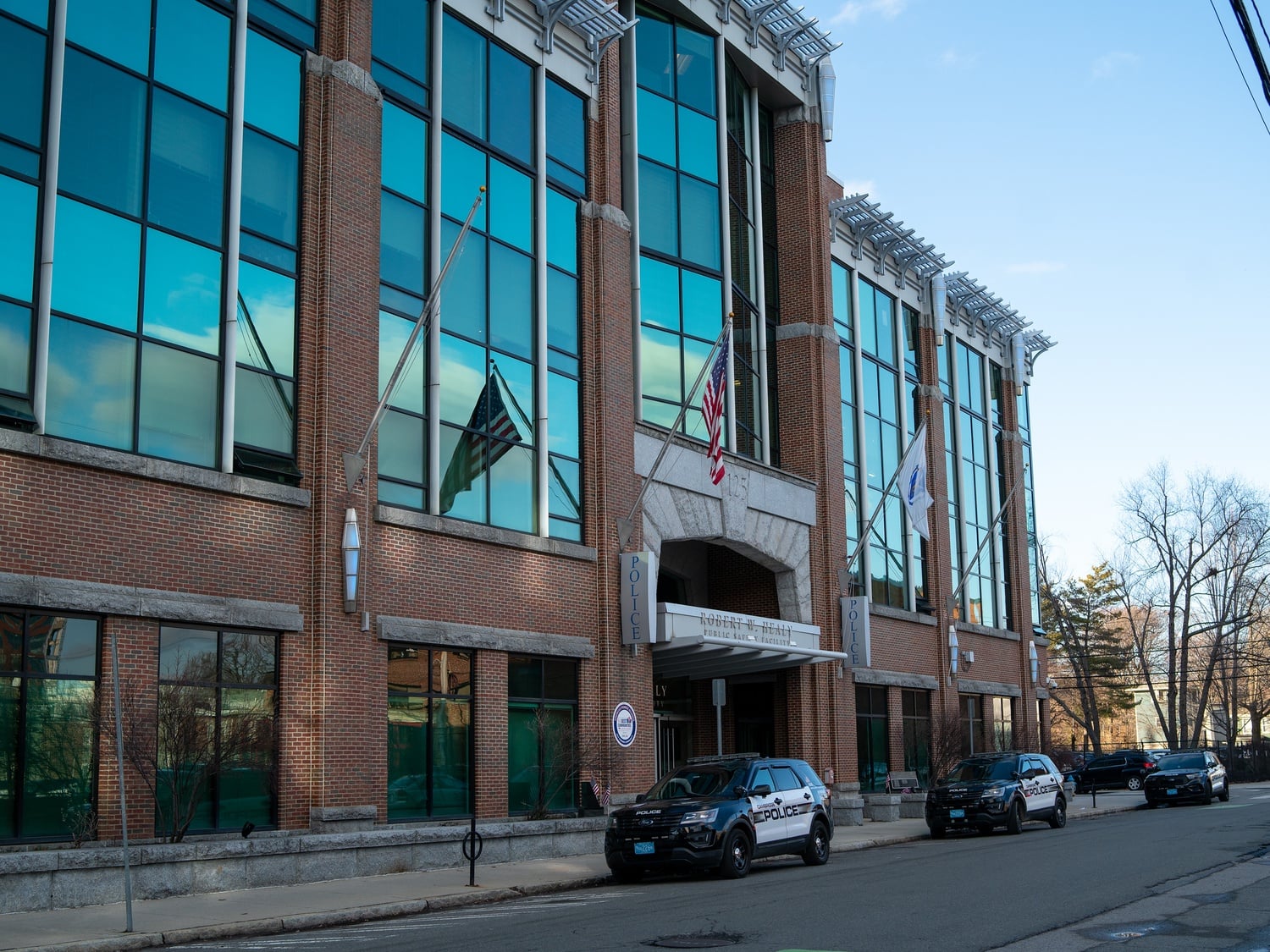
City Manager Yi-An Huang ’05 called Elow in for a meeting at City Hall on April 3. Elow did not return to the department afterwards, according to a spokesperson for the CPD patrol officers’ union. She was voluntarily on leave, according to city spokesperson Jeremy H. Warnick.
She retired due to “personal circumstances” effective April 17, according to a separation agreement signed with the city.
As a part of the agreement, Elow received a lump sum of nearly $309,000 — a payout not outlined in her employment contract with the city, which was extended until 2029 last January. The city agreed to “honoring the severance provisions” in her contract regardless “in recognition of Elow’s long career and dedication.”
Elow’s last day came two weeks later.
She formally announced her departure in an email to the police department’s senior leadership on the morning of April 16. The news was formally shared with the rest of CPD in a separate email sent just an hour and a half later, and Huang sent a message to city department heads naming Superintendent Pauline E. Wells as acting commissioner.
Huang refused to comment on what occurred during his meeting with Elow or when he learned she would be leaving. But in a May interview with The Crimson, Huang said the city “tried to manage a transition,” adding that “it all happened pretty quickly.”
Asked when Wells first learned she would be leading the department, Huang sidestepped the question, but said that the city “had run a short process to decide on an Acting Commissioner.”
Elow wrote that her retirement was “not something I had long planned,” in a Saturday statement to The Crimson.
“Leadership is never without challenges, particularly during periods of change and growth, but I always approached this work with dedication, humility, and a deep commitment to both the department and the community,” she wrote.
At the time of Elow’s departure, she was under an active city investigation. Elow and the city declined to comment on the contents of the investigation — and Warnick confirmed that her retirement was unrelated to the investigation.
With Elow’s retirement, the investigation will not be completed, according to Huang.
“If there’s no action coming out of it, then it doesn’t make a lot of sense to finish the investigation, to devote those resources,” Huang said.
The only other mark on Elow’s 31-year record is a written warning from then-Police Commissioner Branville G. Bard Jr. in 2021.
According to a writeup of the warning, Elow “sighed exasperatedly,” clenched her fists, and threw a pen down against the desk in frustration after Bard asked her to clarify a statement made in a virtual meeting.
“I have spoken to you about raising your voice with colleagues during meetings in the past,” Bard wrote in the complaint, obtained by The Crimson through a public records request.
Three people familiar with Elow’s leadership alleged she struggled to effectively lead the department.
All three described a similar culture behind closed doors: tense, retaliatory, and dysfunctional. They alleged that Elow often deflected blame when the department came under fire, made work difficult for those she disliked, and lacked the ability to manage the force.
On at least two occasions, staff in the department who raised issues with Elow and her leadership sought opportunities with other city departments, according to two former city employees.
“As the first woman to lead the department, I worked hard to build a culture that was open, inclusive, communicative, and supportive of both the department and the community we serve,” Elow wrote in a statement. “I believed strongly in visibility, accessibility, and making sure employees felt informed and supported.”
Carl W. Pilgrim, a former Cambridge Police officer, worked in the department from 2001 to 2012 as Elow rose from patrol officer to deputy superintendent.
He described his relationship with Elow as “jagged,” but detailed an unstable department culture that existed long before she took the helm.
“Imagine going into work every single day, wondering: Is today the day they’re going to come after me and try to fire me over some bullshit? And imagine you have a wife and kids and a mortgage and car payments and school payments,” Pilgrim said in an interview.
Push to Reform
Less than a year after Elow took the helm of the department, she was faced with one of the hardest challenges of her career.
On the afternoon of Jan. 4, 2023, CPD responded to reports that a man — later identified as Arif Sayed Faisal, a 20-year-old determined to have been suffering from a mental health crisis— had jumped out of a window and was holding a knife, cutting himself. After a brief chase, Faisal allegedly turned and approached CPD officer Liam McMahon while still holding the knife. McMahon fired a non-lethal round at Faisal, which failed to deter him; when Faisal kept moving towards McMahon, the officer shot and killed him.
The backlash from the shooting was immediate.
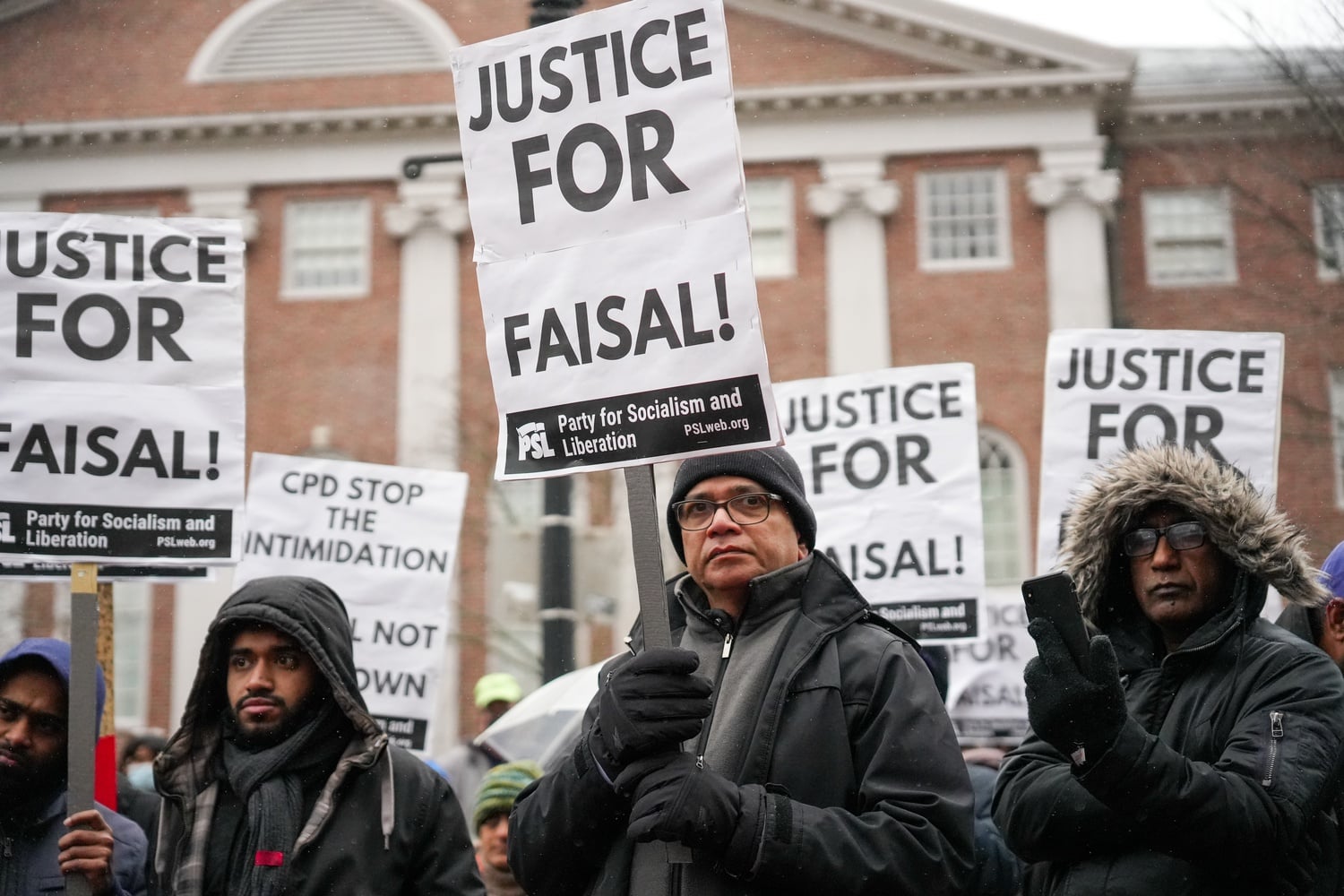
In the months after the shooting, the city erupted into protests. Elow and Huang were slammed with public pressure to name the officer involved, though both held out — citing department policy to withhold the officer’s name until the investigation concluded. Ten months after the shooting, McMahon was named and not prosecuted as the Middlesex District Attorney found his actions “objectively reasonable.”
The city contracted a third-party external review of the department’s handling of the shooting that concluded that McMahon could have been publicly identified long before the conclusion of the investigation. The report also outlined a number of recommendations for CPD — including new training, improved mental health response, and the rollout of body-worn cameras.
The push to implement body cameras took nearly two years to bear fruit as negotiations with the department’s unions stalled amid disputes over compensation for officers maintaining the cameras — and was only completed last April. The department then added a unit to oversee the cameras, bringing on four full-time staff with a nearly $1 million allocation in CPD’s fiscal year 2026 budget.
Owen Elrifi, a former organizer with the Cambridge Democratic Socialists of America, recalled protesting for police accountability and reform after Faisal’s shooting — calling widely for “proactive solutions to stop the killings in the first place” rather than reactive accountability measures.
“I don’t want a flawless system for every time a cop kills a kid, I want no cops killing no kids,” he said in an interview with The Crimson.
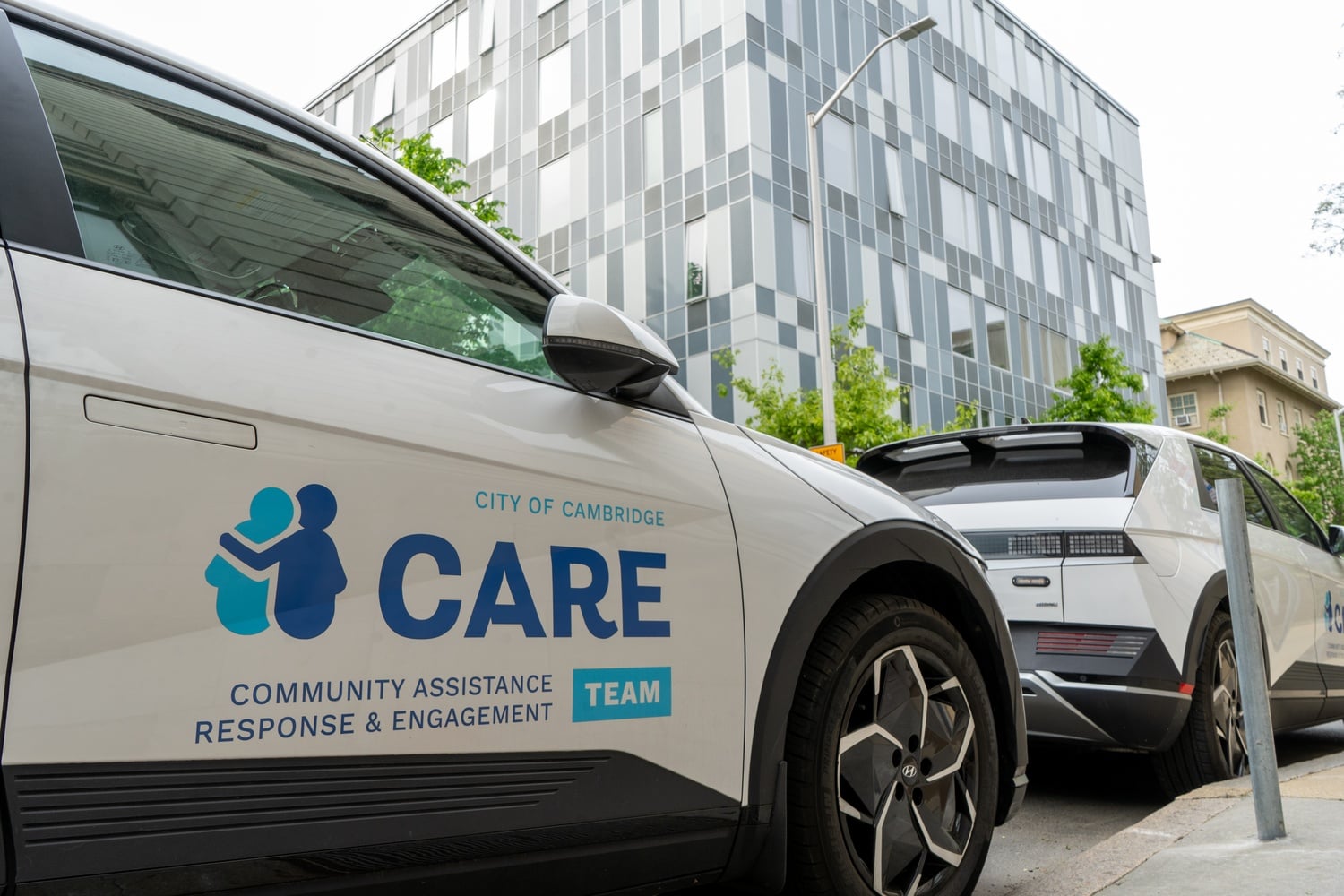
After the external report, both CPD and the city launched alternative response measures in parallel, but with little coordination. As CPD dispatched a clinician and officer to mental health calls, the Community Safety Department’s civilian responders found their responsibilities often overlapping – a point of tension that, in part, led to the departure of CSD’s inaugural director. CARE responded to 1,015 calls and saw a 70 percent increase in calls where police requested CARE in 2025, according to a May report.
“These are real, structural changes, and they should be recognized,” Cambridge City Councilor E. Denise Simmons wrote in a statement. “To the extent that Commissioner Elow helped advance that work, that is an important part of her record.”
But even after piloting sweeping departmental changes, Elow continued to lead the department through scrutiny from residents and elected officials who have criticized CPD’s use of surveillance technology and chemical agents to de-escalate emergency situations.
In August, an officer dispelled a chemical irritant similar to pepper spray to end an 18-hour standoff inside an apartment complex, where a man who previously attacked a bystander with a machete barricaded himself in a room. The irritant spread to other units in the building, and three were hospitalized with respiratory distress.
Elow stood behind her officers’ actions, commending the nonviolent resolution to the incident, while acknowledging that the impact on those inside the apartment building was “deeply regrettable.”
Elow also found herself repeatedly defending the expansion of surveillance technology — from license plate readers to surveillance cameras and gunshot detection software. Twice, the Cambridge City Council walked back contracts for technology CPD had already implemented, citing concerns over data sharing with the federal government.
The first contract — automated license plate readers from Flock Security — was cut short in December by a Council vote. Despite initially defending the technology, Elow told them she had already asked Flock to terminate the contract.
The second reversal came just last week, when the Council moved to end the city’s decade-long use of ShotSpotter — a gunshot detection software that residents alleged could share audio recordings with federal immigration enforcement. Following the Council’s vote, the devices must be removed within 90 days.
Outpour of Support
Word of Elow’s retirement prompted an outpouring of support from her colleagues, according to emails obtained by a public records request.
According to emails obtained by The Crimson, at least ten staff in her department and City Hall sent well wishes in the hours after Huang’s announcement. Claire Spinner, Cambridge’s assistant city manager for fiscal affairs and public investments, praised Elow’s “passion and grace” in leading a department that is “a complex and enormous responsibility.”
“I have so much respect for your work—especially as our first female commissioner. We have been lucky to have you and will be greatly missed!” Spinner wrote.
Current and former members of the department echoed the sentiment. Michael N. Wyche, a patrol officer who worked under Elow from 2022 to 2024, described her as “100 percent supportive” when he requested to transfer to a different city.
“She didn’t want me to go, and she expressed that. But yeah, she was happy to sign off on me transferring, because she knew it was going to be better for me in my life,” Wyche said.
Adam J. Patten — CPD’s former director of community outreach who worked under Elow when she was a superintendent — said she was “very approachable and easy for me to go to for support.”
Cambridge Police Patrol Officers Association thanked Elow for working “through many significant issues affecting the department and its officers,” in a written statement.
Huang said that the city has not confirmed if a national search for Elow’s successor will take place, or when a permanent commissioner may be named.
—Staff writer Shawn A. Boehmer can be reached at [email protected] and on Signal at shawnb.18. Follow him on X @ShawnBoehmer.
—Staff writer Claire A. Michal can be reached at [email protected] and on Signal at ClaireMichal.154.
Want to keep up with breaking news? Subscribe to our email newsletter
Have a tip for The Crimson? Share it confidentially