
Who Does Harvard Call When Business Isn’t Booming? The Business School.
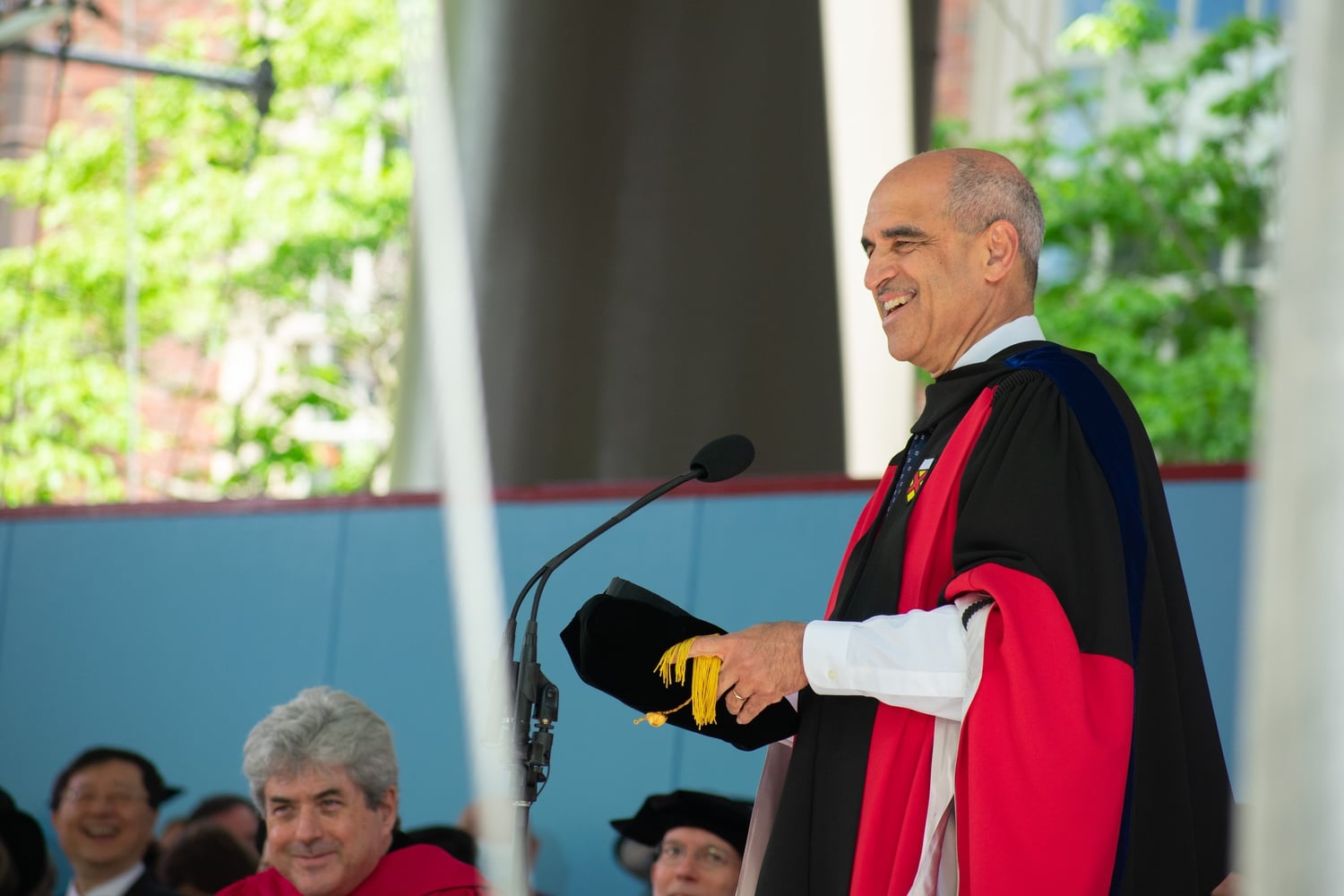
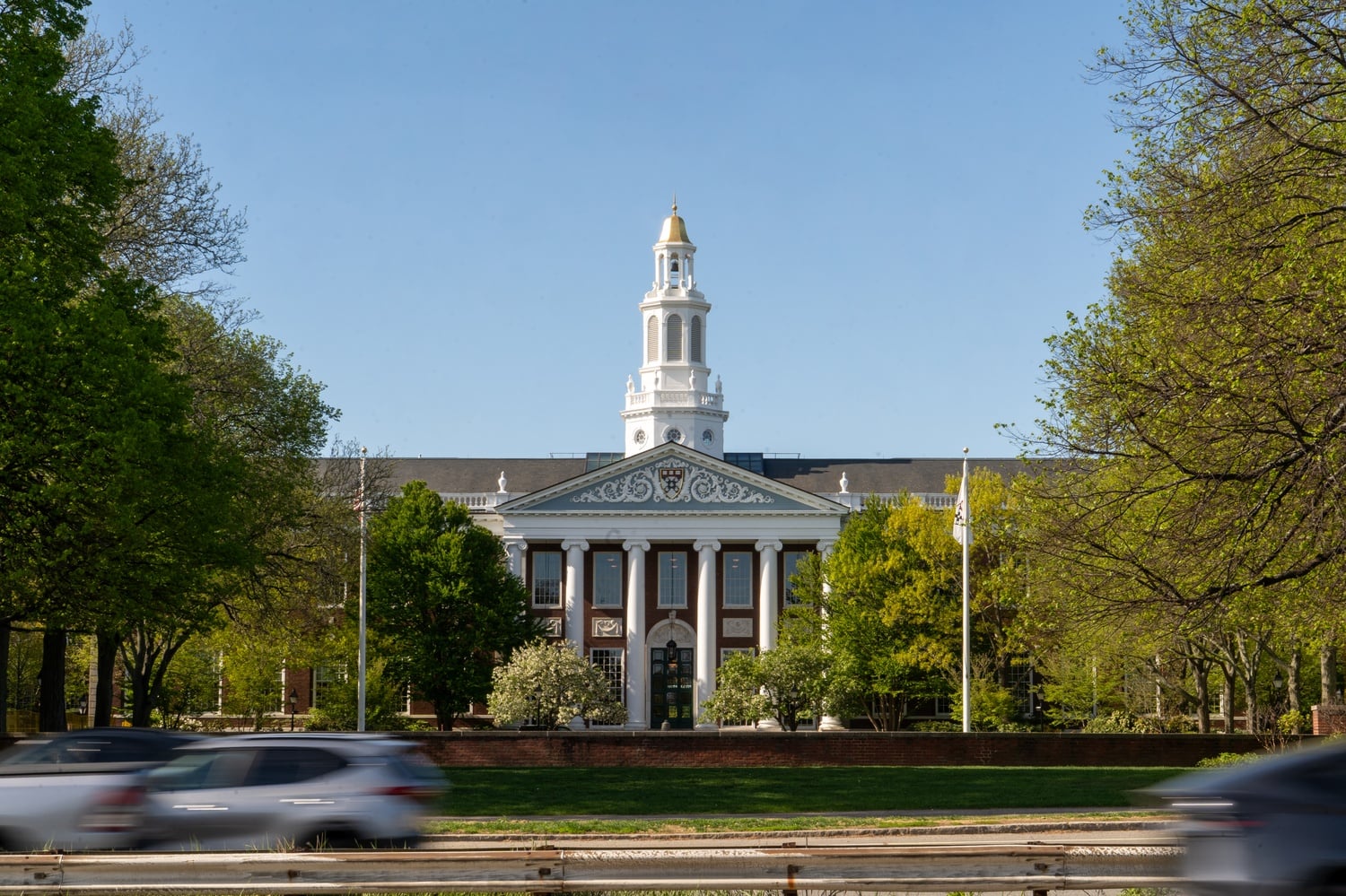
When Harvard’s finances began to buckle last spring, the University turned to one of its most reliable sources of cash: Harvard Business School.
The ask was unusual in scale, if not in concept. HBS, which has long run annual surpluses, was told to raise its contribution to Harvard’s consolidated operating results for fiscal year 2026 — a target that climbed over the summer from roughly $60 million to $82 million for fiscal year 2026, according to notes from a November 2025 presentation from a school financial officer obtained by The Crimson.
During the presentation, Julie Raimo, senior director of financial planning and analysis at HBS, said the money would not be transferred out of the Business School, according to the notes.
But because Harvard reports the operating results together, a larger HBS surplus could help offset losses elsewhere at the University, where federal research cuts, hiring freezes, and budget reductions have strained schools more dependent on federal grants and endowment income.
“Given the many challenges to the University’s financial model in recent years (endowment tax, cuts in federal funding), every school is being asked to do what it can to improve the overall picture,” HBS spokesperson Brian Kenny wrote in a statement.
“With the current challenges, there has been an increased focus on the surplus HBS might be able to generate,” he added.
For a school that brought in roughly $1.1 billion in revenue last year, the mandate was hardly existential. But it punctured the image of HBS as a haven across the Charles River, insulated from Harvard’s broader crisis by executive education, publishing, and deep-pocketed alumni.
Over the past year, HBS has had to trim spending, manage a higher surplus target, reassure donors irate at the school’s reaction to Hamas’s Oct. 7, 2023 attack on Israel, and prepare for a decline in international student demand as the Trump administration tightened visa restrictions.
“It’s definitely been a communication of being very careful with our resources in a period of time when the University and HBS is more strained than in years prior,” HBS professor Robin M. Greenwood said.
A Bigger Ask From Harvard
Get The Crimson in your inbox.
The higher target marked the first time in roughly two decades that Harvard has explicitly asked HBS to increase its surplus to help stabilize the University’s broader finances, according to the November meeting notes.
The school was well positioned to absorb the request. Its $1.1 billion in annual revenue comes primarily from executive education tuition, publishing revenue, endowment distributions, and MBA tuition and fees. Only roughly 20 percent of HBS revenue comes from the endowment, and federal research funding makes up a negligible share of its revenue — a sharp contrast with schools like the Faculty of Arts and Sciences, which draws more than half its annual revenue from the endowment and close t0 10 percent of its budget from federal awards.
But the target kept moving.
Last spring, the University asked HBS to aim for a $60 million surplus in fiscal year 2026, a slight increase from the $58 million surplus the school recorded in fiscal year 2025. By August, the target had risen to $82 million, according to the notes. HBS Dean Srikant M. Datar told some faculty over the summer that the school would likely have to make an increased contribution, according to a person familiar with the matter.
An April staff presentation by HBS Chief Financial Officer Richard P. Melnick and Raimo also listed a University target of $97 million for fiscal year 2027. HBS was projected in January to finish fiscal year 2026 with a $77 million surplus, short of the $82 million target. Its fiscal year 2027 budget was below the University’s initial goal, aiming for a $76 million surplus rather than $97 million.
The April slides outlined a mix of cost savings and revenue increases meant to help HBS move toward the higher targets. The school urged departments to submit self-funded project requests, kept staffing tight through “attrition” and “selective hiring,” reduce spending on catering, events, travel, and materials for its Executive Education and MBA programs, save $1.1 million through measures like reducing infrastructure, and save $2 million by deferring information technology projects.
In the earlier November presentation, Raimo said that the school had also reduced expenses on salaries and benefits by $4 million overall, according to the notes. Kenny said the reduction came mainly from a smaller faculty pool and fewer staff positions filled.
Together, the school planned to achieve $29 million in expense cuts and additional revenue in fiscal year 2026 and another $13 million in fiscal year 2027. The April slides also identified potential new revenues from sponsored research, additional Executive Education programs, and endowment reserve investments, while pointing to possible savings from reduced telephone-line spending and contingent labor.
The cuts have not produced the sweeping layoffs that roiled other Harvard schools. But the attrition has nevertheless made some jobs more difficult.
Faculty support specialist Cameron Wetzel said workload for his position averaged around three to four faculty members. After a colleague left and was not replaced, he said, his workload rose to six.
“It’s because you’re restructuring and deciding not to rehire, or dragging your feet in terms of rehiring and getting people back in the door,” he said.
Still, faculty and staff said they understood why Harvard would look to HBS as other schools faced more direct hits from federal cuts.
“We have a few joint degree programs with SEAS, the Law School, GSAS doctoral programs, etc., so we’re attuned to the research funding issues they face, and speak up about them,” HBS professor Rosabeth M. Kanter wrote in a statement.
Pressure on the Model
The surplus push comes as HBS faces pressure on some of its most dependable revenue streams.
Harvard Business Publishing, one of the school’s largest sources of revenue, was projected to bring in roughly $10 million less than the $303 million budgeted for fiscal year 2026, according to the April slides.
Revenue had already declined by roughly 1 percent from fiscal year 2024 to 2025. According to Kenny, the drop was driven by an 8 percent drop in paid circulation at Harvard Business Review and decreases in advertising revenue and book sales through Harvard Business Publishing Press — though gains in a Higher Education segment partially countered them.
Faculty members’ book publications have also seen a downward trend, dropping from 16 in 2021 to eight in 2025.
At an alumni event in February, an attendee questioned HBS executive dean for administration Angela Q. Crispi about the low number of publications.
In response, Crispi acknowledged that the number of books had dropped, pointing to a potential shift in faculty publication priorities.
“What’s happening more is that they start with an article and eventually get to a book,” she said, according to the transcript obtained by The Crimson.
According to Kenny, HBS faculty also concentrate their efforts on writing cases, which are used in HBS classes and can eventually be adopted by faculty at other business schools.
The school is also watching international enrollment closely. International students make up roughly 37 percent of the HBS Class of 2027, and according to Kenny, roughly 70 percent of the participants in its Executive Education program come from outside the U.S.
HBS moved quickly to prepare contingency plans after the Trump administration issued a proclamation preventing international students from entering the U.S. to attend Harvard.
Two days after the proclamation, HBS emailed faculty a survey asking how they would teach if international students could not return to campus.
At faculty lunches this semester, Datar said international demand had declined, according to two people familiar with the matter, but did not provide a precise figure. According to one person, Datar said applications had declined by double digits.
Kenny confirmed in a statement that while the figures were not final, the percent of international applicants this year has decreased by double digits.
“Though HBS does have many ways to produce revenue, we are still affected by the broader landscape around the University,” Kanter wrote. “We depend on international students to fill our executive programs and have many international MBA students, so we have a stake in how the University navigates this issue.”
In recent discussions by HBS’s alumni board — a group of nearly 80 alumni that meets twice a year in Boston and serves as a sounding board for the dean and faculty — some members raised concerns to Datar about financial management at HBS while other parts of Harvard struggled, according to a person familiar with the talks. They also pointed to growth in the school’s staff while MBA enrollment remained relatively flat.
The April staff presentation showed HBS staffing rising from 1,840 full-time employees in fiscal year 2020 to 2,193 in fiscal year 2025. The school projected a modest decline to 2,138 full-time employees in fiscal year 2026 and 2,121 in fiscal year 2027.
MBA student enrollment has also increased generally, but less steadily — dropping off in fiscal year 2025, according to the school’s annual report.
Kenny wrote in a statement that staff growth has been mainly to support growth in Executive Education and Publishing and to bolster new activities, including HBS Online and new research institutes.
Gifts and Gripes
HBS has also had to navigate complex alumni interests.
New gifts and pledges fell from $145 million in fiscal year 2024 to $121 million in fiscal year 2025, but HBS is on track to raise close to $200 million in fiscal year 2026, according to a person familiar with the matter.
Kenny declined to comment on pending gifts and donations.
The rebound mirrors broader fundraising trends at Harvard, where some donors increased their giving after the Trump administration moved to cut the University’s federal funding. The FAS collected $222 million in the second half of 2025 alone, $62 million more than it had raised at the same time in 2024.
Sumir Chadha, an HBS alumnus and donor, said he had increased his donations in recent years in part because of the political pressure on Harvard.
“The last few years I’ve been upping my gifts to Harvard, and I feel great about the University administration and what they’re doing,” he said.
Part of Datar’s work could be helping direct some of the University’s wealthiest donors toward other schools.
One HBS staff member said they recalled a manager using the term “One Harvard” while discussing budgeting decisions at HBS last year — a callback to a campaign under former University President Drew Gilpin Faust to encourage resource sharing between Harvard’s schools.
At the time, Faust and former HBS Dean Nitin Nohria had brainstormed ways that wealthy HBS donors could direct their contributions to other schools.
The initiative stuck, for some: One donor who gave solely to HBS said they decided to expand donations to Harvard Medical School and other initiatives outside the Business School after the implementation of the initiative.
That messaging has not let up since, according to a person familiar with University fundraising. Faculty added that the ethos of cross-school giving has remained, particularly amid the funding cuts.
“It’s even the case that some HBS donors get steered to other opportunities to give more broadly to Harvard,” Kanter wrote in a statement.
But HBS has still faced vocal backlash from some alumni who say Harvard and HBS responded inadequately to Hamas’ Oct. 7, 2023 attack on Israel and subsequent pro-Palestine protests on campus.
Five high-profile HBS alumni, including former U.S. Senator Mitt Romney, wrote an Oct. 23, 2023 letter to Harvard’s top leaders, including Datar, condemning Harvard’s response to campus protests.
Some donors responded by cutting their gifts to $1.
Doron D. Grosman, an HBS alumnus and donor, said he reduced his giving after Oct. 7 and has continued the $1 protest because he remains dissatisfied with the school’s response to antisemitism.
“Every time I’m just about ready to give more, there’s another incident,” he said.
One of those incidents, Grosman said, was a spring HBS case on divestment that became a flashpoint among students, alumni and administrators.
The case, obtained by The Crimson, looks at whether the Norwegian Government Pension Fund Global should divest from four companies with ties to Israel.
After students and alumni got wind of the case, they quickly lobbied the school’s top leadership to take action.
The case was then revised. But when the final version of the case was presented, delayed from its initial date, it was different.
The April version, obtained by The Crimson, included assertions from observers that Israel “was a functioning democracy with independent courts, a free press, and full legal rights for all citizens.” It also included a reference to a study that found that daily rations of roughly 3,000 kilocalories per capita arrived in Gaza through Israeli borders in the first half of 2024.
“Professor Hussam received feedback from a number of sources on the initial draft case,” Kenny wrote in a statement. “Revisions to the case responded to that feedback, with the goal of ensuring a robust class discussion on the question of whether the Norwegian sovereign wealth fund should divest from companies with ties to Israel.”
Hussam did not respond to multiple requests for comment.
Grosman continued his $1 commitment after seeing how HBS handled the case.
“There are progressive incidents along the way that lead me to believe that it’s still not time to reinvest in the school,” he said.
Jason E. Klein, an alumnus who also dropped donations to $1, also expressed frustration with the case — adding that HBS has not publicly released materials from the school’s working group on antisemitism.
In a January 2025 update, Datar wrote that four working groups on antisemitism, Islamophobia and anti-Arabism, classroom culture and norms, and free expression and community values had surveyed and interviewed upwards of 200 people.
The full results of those surveys and interviews were never made public — but parts of them appeared to surface in March documents from the House Committee on Education and the Workforce, labeled “ASWG Working Draft.”
Kenny wrote in a statement that Datar “explicitly asked” the working groups not to produce a report but “to take steps, as quickly as possible, toward changes that would benefit the community.”
He also pointed to actions the school had taken in recent years — including “approving and launching” an MBA Israel Business Club, an HBS Jewish Alumni Association, and constructing an outdoor space for religious celebrations like Sukkot.
Donor withdrawals perhaps haven’t been enough to tank overall HBS fundraising. But the backlash indicates that Datar will continue to have to win back some donors’ trust.
“The dean has a lot of work to do,” Klein said.
—Staff writer Katharine E. Chavez can be reached at [email protected]. Follow her on X @KatharineEC7.
—Staff writer Siena G. Devine Guzmán can be reached at [email protected]. Follow her on X @sienadevinee.
—Staff writer Amann S. Mahajan can be reached at [email protected] and on Signal at amannsm.38. Follow her on X @amannmahajan.
Want to keep up with breaking news? Subscribe to our email newsletter
Have a tip for The Crimson? Share it confidentially