John Manning Was Seen as Harvard’s Conservative Signal. Now, He Is Forging His Own Path as Provost.
Harvard Provost John Manning was appointed as a figure who could speak to the University’s critics — but as Washington talks move around him, he has turned inward, using the provostship to reshape hiring and faculty power from inside Massachusetts Hall.
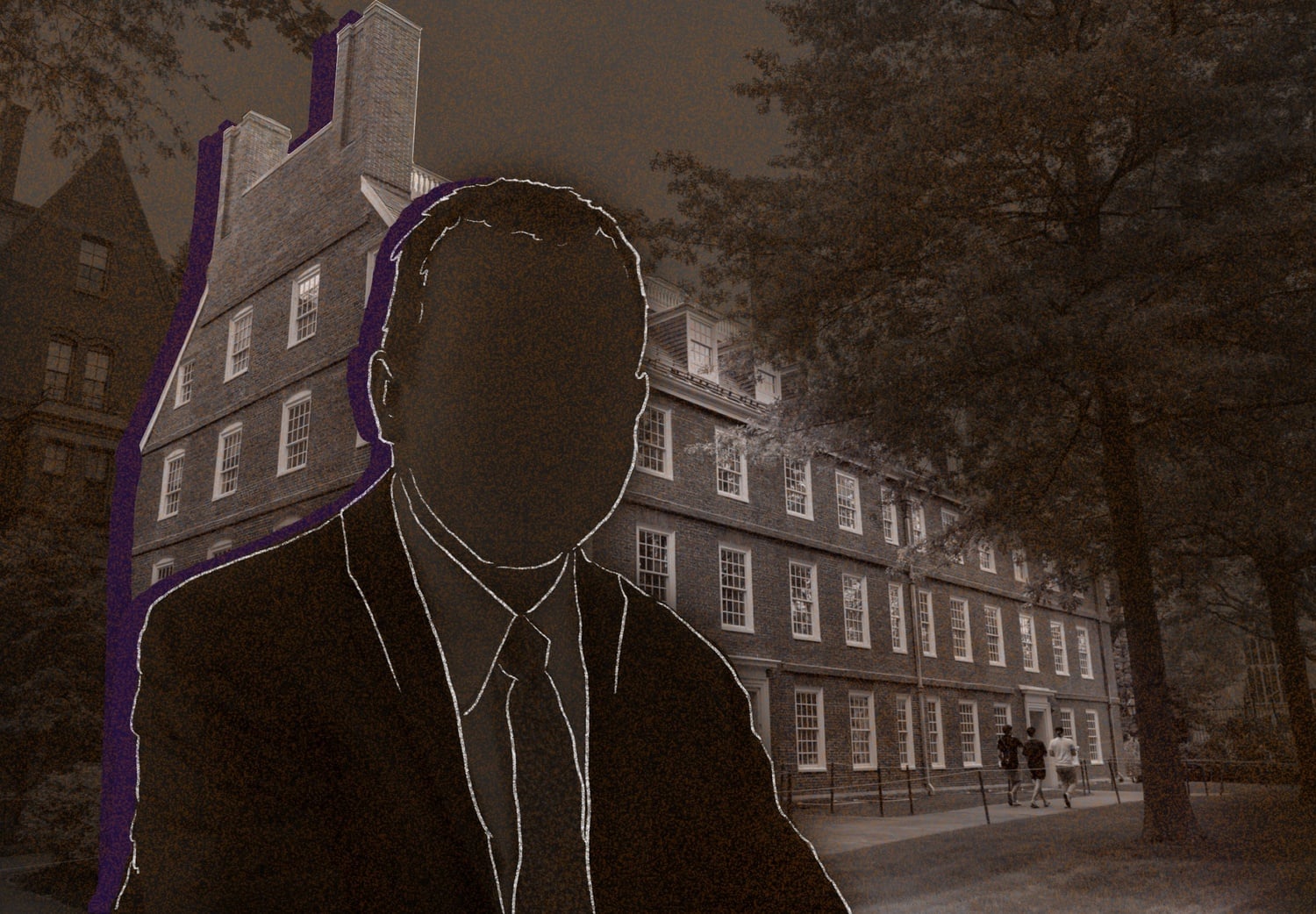
When Harvard’s war with Washington began, John F. Manning ’82 seemed almost engineered for the moment.
He was a former Scalia clerk, a onetime Republican, and a conservative legal scholar who had spent decades moving easily through liberal academic institutions. He was Jewish, persuasive behind closed doors, and fluent in the legal language of the fight Harvard suddenly found itself in.
To some, that was the logic of his appointment as provost. Manning looked like the rare senior Harvard administrator who could speak credibly to the University’s critics — a conservative-coded Harvard loyalist at a moment when the school was straining to show it had not become intellectually sealed off.
“I thought he looked right politically,” Peter J. Solomon ’60, the ex-chairman of Harvard’s Friends of the Center for Jewish Studies, said of Manning’s selection.
“We’re in a very charged environment,” he added. “So if you can find somebody who looks like he’s more conservative and looks like he would be a good balance, then it’s a smart thing to do.”
But as Harvard moved toward a possible settlement with the federal government, Manning was not the University’s emissary in Washington.
Harvard President Alan M. Garber ’76 led the talks, and Manning remained largely outside the settlement effort, according to a person familiar with the arrangement.
The person said Manning’s conservative background was not viewed as an advantage in negotiations because White House officials were unlikely to see him as an ally after he broke with the party in 2016 over Trump’s nomination.
Instead, Manning turned inward.
Interviews with more than 40 faculty members, administrators, alumni, and people close to Manning show that he has used the provostship to assert himself in Harvard’s most guarded power channels: faculty governance, tenure review, hiring approvals, and the University’s push for viewpoint diversity.
Get The Crimson in your inbox.
On paper, the job description is the same. Like each provost before him, Manning leads cross-faculty initiatives, approves hiring lines, adjudicates the tenure process, and oversees school leadership.
In practice, he has made the office unusually forceful.
If successful, Manning’s tenure could shake up Harvard’s academic ranks and permanently shift power toward Massachusetts Hall. It could also establish him as a strong candidate to replace Garber.
“John is someone who was perceived by the Corporation — which makes the decision, ultimately — as a highly credible next president of the University,” University Professor Noah R. Feldman ’92 said.
“What’s going on now is he’s going through the learning process that you can only learn as provost that would enable him to be president,” he added.
The Makings of Manning
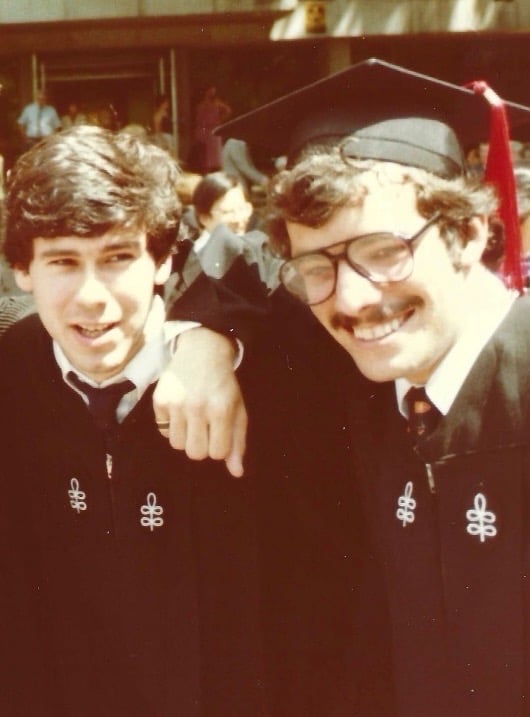
Manning did not arrive at Harvard as the sort of person who seemed destined to run it.
He grew up in California, the son of a single mother who worked as a casting director. He moonlit as a child actor, sporadically appearing on shows including a 1974 episode of “The Odd Couple” as “Little Felix.”
He was the first in his family to attend college. He often tells alumni that when he got an on-campus admissions interview, he had no idea what to wear and at the last minute purchased a Harvard shirt at J. August.
Once in Cambridge, Manning was brilliant but aloof, three undergraduate classmates said. A History concentrator, he preferred foosball in Quincy House and late-night dorm conversations to parties, and was difficult to get to know.

At Harvard Law School, he found a sharper identity. Manning became a serious intellectual conservative and joined a small group of right-leaning editors on the Harvard Law Review who bonded over frequent disagreements with the liberal majority.
U.S. District Judge Patrick J. Schiltz, a fellow editor, recalled Manning as sharp and at ease in disagreement.
“He had a kind of an irreverent sense of humor,” Schiltz said. “He liked to poke at people who were full of themselves or institutions that were full of themselves.”
After graduating, Manning followed the elite conservative legal path. He clerked for former D.C. Circuit Court Judge Robert H. Bork and former Supreme Court Justice Antonin G. Scalia, then worked in former U.S. President Ronald Reagan’s Office of Legal Council.
Even after taking a faculty position at Columbia Law School, he remained steeped in an influential conservative milieu — one that included future Supreme Court justices Brett M. Kavanaugh and John G. Roberts ’76 — and advised George W. Bush during the 2000 election recount fight.
But Manning did not follow some of his peers into Republican government. According to two people, he ruled himself out of an appointment in the Bush administration after disclosing that he had smoked marijuana.
Instead, he built his career in academia.
At Columbia, Manning chaired the appointments committee early in his tenure, helping recruit young scholars into the faculty. His closest colleagues recalled spirited academic disagreements with Manning but said they never interfered with personal relationships.
“At Columbia, we used to pal around,” recalled Columbia professor Charles F. Sabel ’69. “And yeah, very different views, but that made it all the more fun.”
One year, Manning co-taught a class with Columbia professor Peter L. Strauss ’61. At the end of the semester, students bought the professors boxing gloves as a tribute — the right glove for Manning, the left for Strauss.
But Harvard interrupted his ascent through Columbia’s ranks. With Manning’s family ready to leave New York — his wife had been working near the World Trade Center during the Sept. 11 attacks — Manning joined the Law School full time in 2004.
At HLS, Manning embedded himself in the intellectual life of the faculty, rose internally to deputy dean, and was appointed to a University-wide Task Force on Inclusion and Belonging in 2016.
Manning — who was by then an independent — sometimes surprised liberal colleagues at HLS. At one faculty meeting, he voiced support for transgender students and encouraged colleagues to respect preferred pronouns, HLS professor Michael J. Klarman said.
“I think it would have been hard to become dean of Harvard Law School if you belonged to the Republican Party when Trump was the nominee,” Klarman said.
“I don’t know that anyone told him that, but John’s an astute person,” he added.
The Room Gets Bigger
Manning’s first major test as provost came in a room that did not know him well enough to trust him.
In May 2024, just two months into his stint as interim provost, Manning appeared before the Faculty of Arts and Sciences, Harvard’s largest faculty body. The meeting came after the University’s handling of the pro-Palestine encampment in Harvard Yard had enraged many faculty members.
By all accounts, the meeting did not go well.
Faculty members immediately took issue with Manning’s statement on the encampment. During the question-and-answer portion, he struggled to maintain composure as professors openly groaned and laughed at his responses.
For Manning, the episode exposed the problem of scale.
At HLS, he had governed through familiarity. Faculty had engaged with him closely for years before he became dean. As provost, he was standing before professors who knew him mostly as an envoy from Massachusetts Hall.
“If you just appear at the front of a meeting, you don’t come in with the kind of credibility and trust that you come in with if you spent a decade or 15 years on the faculty with people, and they’ve come to know you personally and intimately,” Feldman said. “So that’s a real challenge for John.”
Over the past year, Manning has tried to build that familiarity school by school.
This spring, he appeared at faculty meetings at the School of Public Health, the Harvard Kennedy School, Harvard Divinity School, the Harvard Graduate School of Education, the Harvard Graduate School of Design, the Harvard Business School, and the FAS.
But he has not spoken as provost at his first home, the Law School.
Faculty members described many of those sessions as routine — itself a recovery from the rocky FAS meeting that marred his early months in the role.
At an April meeting with Kennedy School faculty, Manning smoothly sidestepped a pointed question about a formal request filed by HKS affiliates in March to remove Leslie H. Wexner’s name from a school building, according to one faculty member in attendance.
The same week, he met with the School of Public Health, and according to a faculty member present at the meeting, Manning’s answers to faculty questions, though anodyne, were widely satisfying.
But when negotiating directly with faculty who want increased representation and voice in University governance, he has been more forceful in his approach.
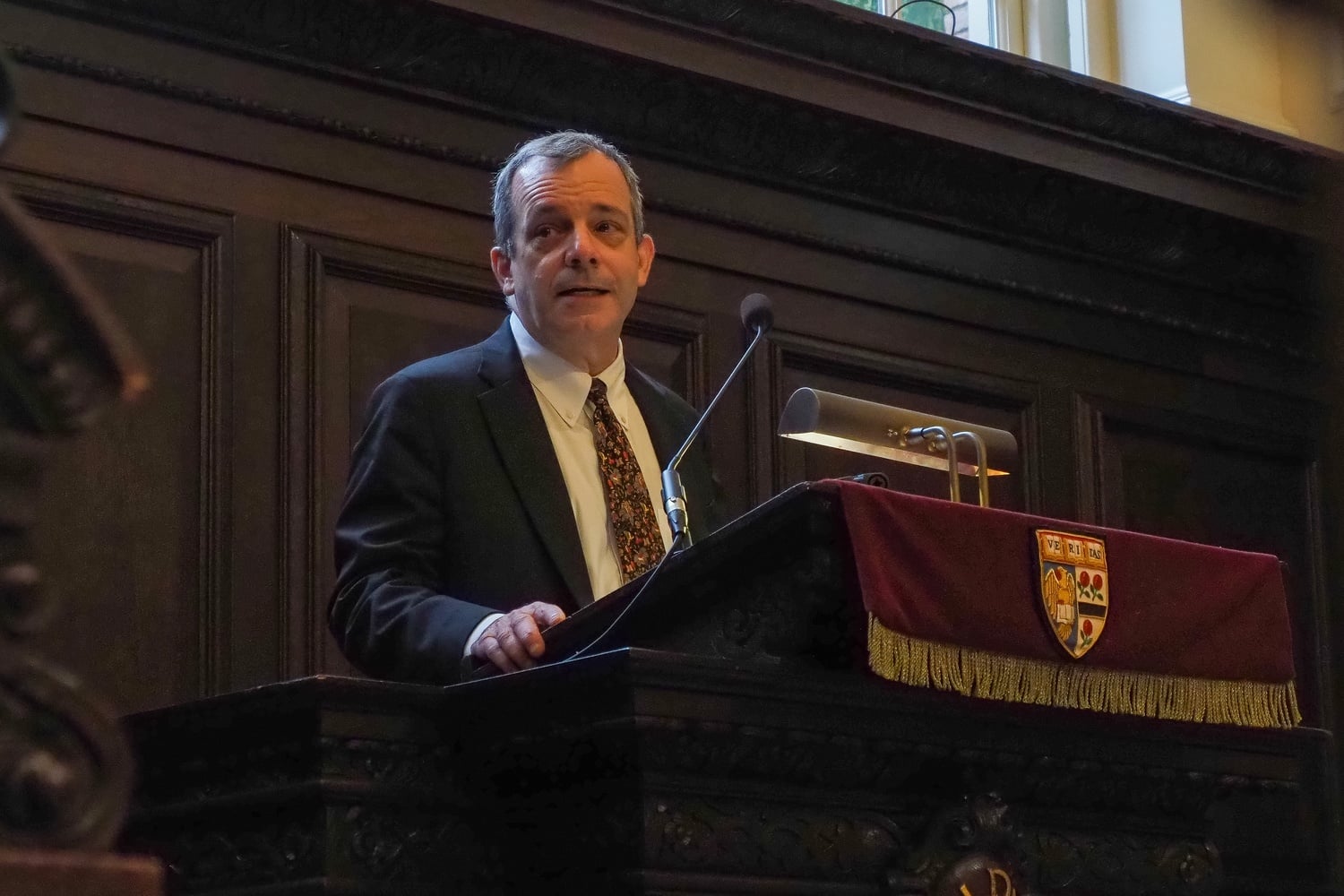
In a Feb. 24 meeting with Garber, Manning, and members of the Faculty Senate Planning Body, the provost took charge of conveying the University’s response to the proposed bylaws. He made clear his opposition to the proposal, at least in its existing form, and presented a plan to sidebar negotiations between the central administration and the planning body to four-on-four discussions, according to a faculty member on the call.
The intervention disrupted the group’s timeline. According to two faculty members familiar with the matter, the bylaws were intended to be released shortly after the meeting for distribution to each school. One said the release was scheduled to occur within roughly two days.
Instead, the planning body approved the negotiations schema in mid-March and has not received an update since, the faculty member said. Meetings have occurred only between the representatives for the faculty and for the administration.
Manning operated similarly at the Law School, where he moved to centralize control over the course of his deanship, according to two faculty members. During his tenure, Manning sent fewer issues to faculty votes, they said.
Some of his Law School colleagues said Manning was right to keep decisions at the decanal level and the move was only possible with widespread trust from the body.
“The provost is a managerial job, managing all the pressures from all the different schools,” HLS professor Mark V. Tushnet ’67 said. “And he had been a terrific manager at the Law School. He knew how to handle things.”
The Gatekeeper
As provost, Manning also has authority over who becomes a professor — a lever he has pulled to tightly manage the composition of the faculty body.
Last summer, three faculty members — historian Durba Mitra, data scientist Soroush Saghafian, and historian Arunabh Ghosh — saw their tenure cases stall after they had cleared review at the school level.
Their cases, in particular, reached the Office of the President and Provost, the opaque final state of Harvard’s tenure process, where they slowed for months.
In Mitra and Saghafian’s case, both were left for months without clarity before eventually learning of their denials. Saghafian’s process was extraordinarily slow — he did not get an answer until weeks after the July 1 deadline for tenure approval, according to a person familiar with his case.
Ghosh’s tenure case was delayed, denied initially, and then reversed. He was appointed a full professor in late September.
The cases have become a window into one of the least visible powers of the provost: the ability to revisit a school’s judgement on a tenure case after its faculty have already voted.
They also point to a broader shift. According to FAS data, a greater share of tenure cases are being rejected after departments have reviewed and recommended candidates. Both Garber and Manning have recognized an increase in the proportion of tenure cases that departments are bringing forward, according to a person familiar with the matter.
Steven E. Hyman, who served as provost from 2001 to 2011, said his own turndown rate at the provost level was roughly 15 percent, a figure he considered high.
He was rarely skeptical at the ad hoc level, Hyman said, because departments were trusted to “stop it earlier” if candidates were not qualified.
“What you’re looking for are honest, sober discussions of quality, creativity, the future plans — insofar as we know them — in the context of what the department needs,” Hyman said. “But the department has already made that decision. That’s why they’re putting the person up.”
After ad hoc committees finished their review, Hyman said, the president’s final approval typically involved “five second conversations.” He recalled disagreeing with the president on a tenure case only once.
Manning appears to take a more muscular view of that final stage.
Feldman said Manning’s active role in ad hoc committees made “perfect sense,” pointing to the Law School’s culture of rigorous scholarly debate.
“He’s not some neutral arbiter,” Feldman said. “He’s supposed to understand the scholarship, understand what’s being said by the experts, understand what’s being said in the ad hoc and take a view.”
Harvard Medical School professor Dan H. Barouch ’93, who served on a senior academic committee with Manning at HMS, said that while Garber was “deliberate” in academic settings, Manning has been “certainly outspoken” in committee meetings.
“He’s approached matters of academics really with the question of academic excellence at heart as opposed to field-specific questions,” Barouch said.
For the past 15 months, Manning has also exerted exceptional latitude over Harvard’s external hiring practices. Because Harvard entered a University-wide hiring freeze in March 2025, new hiring lines must pass through Manning’s desk.
Manning has used that power to prioritize faculty lines that appear to increase viewpoint diversity across Harvard’s departments. He has approved exceptions within at least the Graduate School of Design, the Kennedy School, and the FAS.
Feldman said that schools that can tie a proposed hire to broadening students’ intellectual exposure are likely to find “automatic and serious support” from Manning.
“If you can show that your new faculty line is closely connected to trying to broaden perspectives for your students, John is going to intuitively be sympathetic to that,” Feldman said. “You have to back it up, but he’s going to be intuitively supportive of that.”
The Launching Pad
Manning’s newest initiative will require a heavier hand than his first assignments as provost.
Early in his tenure, he was given ownership of two interfaculty working groups — one on institutional voice, the other on open inquiry and constructive dialogue — that were among Garber’s first major academic priorities.
But Manning’s role in those groups was limited, according to two faculty members involved in the work. To maintain the groups’ independence, he appeared at the first meeting and then largely left the faculty members to produce recommendations on their own.
His latest external push is different.
Over the past year, Manning has courted major alumni for a several-hundred-million-dollar effort to endow professorships in the name of viewpoint diversity. The initiative would bring in dozens of new faculty members, each with a $10 million price tag.
The proposal has already drawn unease from some faculty members, who have questioned both its goals and the possibility that donor money could steer academic priorities.
Hyman, the former provost, said cross-faculty initiatives can succeed only if schools believe they are supported rather than imposed.
“The kind of issue comes up, and does come up, I know for John now, which is how welcome and how well supported are interfaculty initiatives,” Hyman said.
Several people familiar with Manning’s style described him as someone who connects best in informal, one-on-one settings. As HLS dean, he avoided regular interviews with The Crimson. He did not respond to repeated requests for interviews through a spokesperson this semester and for this article.
At his best, Feldman said, Manning could emerge as “more individualistic” and “more interpersonal” as provost than Garber was.
Manning’s private style has served him well before. In the aftermath of Hamas’ Oct. 7, 2023 attack on Israel, the University’s response was widely criticized as stuttering and impersonal. Manning, meanwhile, emerged relatively unscathed from the political crisis and came off as genuine to alumni and donors.
At a meeting of HLS alumni shortly after the attack, Manning put aside his folder of prepared remarks and spoke off the cuff about the personal impact of the conflict. One person present said the remarks earned him a standing ovation and brought attendees to tears.
“He was emotional, and shared in a way that one does not usually see in these contexts, and it was powerful,” said Leslie A. Cornfeld ’81, who attended the meeting.
But the provostship has forced Manning into a broader role. At the Harvard-Yale game in November 2024, Manning called the job “daunting,” his classmate Ellen M. Jakovic ’82 recalled, and recounted just how much of the University he was unfamiliar with. Last year, at the American Repertory Theater gala, he privately joked about wrangling Harvard’s various schools into accord, an alum said.
He described the challenge as managing an “unruly flock.”
The expanded role has also made it harder for Manning to avoid speculation about what comes next.
His name has been circulated as a potential Harvard president since he was an internal finalist in the 2023 presidential search that landed on Claudine Gay. Last winter, he was a serious contender in Columbia University’s 2025 presidential search, two people close to the search said, before the job went to University of Wisconsin Chancellor Jennifer L. Mnookin ’88.
Those close to Manning deny he has higher ambitions.
His Columbia colleagues — though they said Manning was a presidential favorite among several faculty — doubted Manning ever seriously considered the job. Columbia professor Jeffrey N. Gordon, for one, thought Manning was too loyal to Harvard, and too absorbed in the University’s dispute with the federal government, to leave at such a precarious moment.
Gordon said he “never put a lot of stock” in rumors that Manning’s name was floated to the search committee.
“The president chose him and depended upon him, so I just didn’t think it was really in the character of the person to leave Harvard at that point, even for a job like Columbia,” he added.
At home, Feldman also rejected the idea the provostship is simply a waiting chamber for Manning.
“I think John would say, correctly, ‘There’s no such expectation, I’m going to do the best job I can, and when the time comes — when the Corporation decides it’s time to choose a new President — I hope they’ll look at me because I’ve done a good job, not because I was sitting in the chair,’” he said.
—Staff writer Hugo C. Chiasson can be reached at [email protected] or on Signal at hcc.35. Follow him on X @HugoChiassonn.
—Staff writer Elise A. Spenner can be reached at [email protected] or on Signal at elisespenner.82. Follow her on X @EliseSpenner.
Want to keep up with breaking news? Subscribe to our email newsletter
Have a tip for The Crimson? Share it confidentially