From Cannes: ‘Fjord’ Ponders the Limits of Freedom
Dir. Cristian Mungiu — 5 Stars
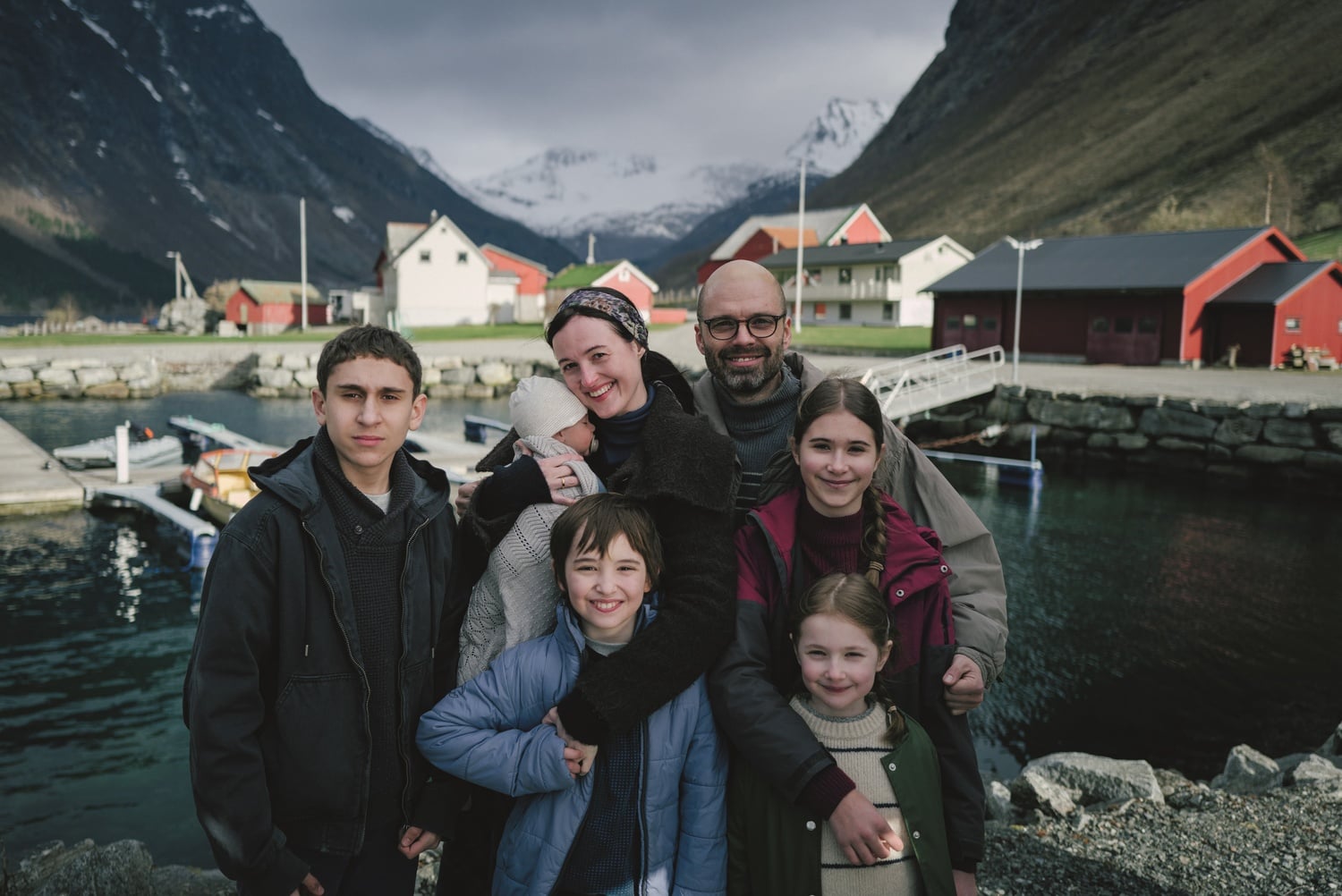
The winner of the 79th Palme d’Or, “Fjord” is a philosophical film that questions how much liberty a progressive society truly affords. Without giving an explicit answer, the film uses thought-provoking techniques to challenge the audience to reconsider their views, whether liberal or conservative.
“Fjord” examines the domestic life of the Gheorghius, a Romanian evangelical family of seven that moves to Norway. As they navigate the migration from a Christian and conservative nation to a progressive Scandinavian society, they struggle to integrate.
The opening scene perfectly introduces father Mihai (Sebastian Stan) and mother Lisbet Gheorghiu (Renate Reinsve). Within their first few interactions with the children, the audience quickly grasps that Lisbet is warm-hearted while Mihai is cold and punishing. Together, they are harsh on their kids and enforce strict evangelical values, requiring Bible study and prayers every night.
Several Norwegian characters in the film deem the parents coercive and controlling, “brainwashing” their children with these principles. One teacher, already suspicious of the parents’ religious beliefs, calls child protective services after finding bruises on the couple’s daughter Elia (Vanessa Ceban), and what follows is a long trial determining whether the Gheorghiu children will stay in the custody of their parents. In the process, “Fjord” effectively puts the Gheorghius’ parenting style and, more interestingly, their religious beliefs on trial, threatening imprisonment for their severe techniques.
At a high level, the film examines the notion of freedom across multiple storylines. As well as following the Gheorghiu parents who are controlled by social services, it follows children of several families who are also constrained by their parents, and a senior citizen who — after having a stroke — is confined to a wheelchair. The film makes its audience consider that these controlling forces are not wholly innocent or callous, finding gray areas within a system that attempts to extract a black-and-white narrative.
Every minute detail — from the exact shirt a character wears to the length of a scene — fosters this theme. Norway is a left-leaning society that praises humility and equality. In the same vein, nothing in the film is flashy. Rather than using a musical score, the background is filled with calm chatter and natural sounds. The dialogue is kept simple and concise; characters say exactly what needs to be said — nothing less and nothing more — with few complex words or vocal intonations.
Visually, the film is harsh yet beautifully shot, capturing Norway’s stunning natural landscape, while maintaining a muted icy-blue tint. The sets are similarly restrained. The buildings are basic, the houses have gray walls and are only lightly decorated with family photos, and the food served is never extravagant. This effect is furthered through editing, with sharp and abrupt transitions from scene to scene.
The costume design is perhaps the most effective reflection of these characters’ beliefs. The Norwegian teachers and social workers, particularly the women, wear ill-fitted, colorless clothing that rejects the patriarchal standards of women’s beauty. The women do not wear skirts or other feminine attire, and the teacher who instigates the trial has a pixie cut. These choices fully immerse the audience in Norway’s liberal culture. By contrast, Lisbet wears long skirts, covered clothing, and a headband, emphasizing her conservative femininity.
The pacing of “Fjord” is similarly crucial. At times, it feels intensely slow, and at its 156-minute runtime, could have easily been cut down. However, Norwegian culture often values restraint and modesty where intense ambition is heavily criticized; speeding up the film would be disingenuous.
Its atmosphere is therefore oppressively simple, forcing the audience to consider, even if they ultimately disagree, whether this society is as tolerant and inviting as they claim.
“Fjord” does not outright condemn Norway. During the press conference, director Cristian Mungiu admitted that the film could be safely made precisely because Norway is a democracy. Moreover, Stan openly raised concern over rising conservatism and censorship in today’s United States, at the same press conference, two years after his Donald Trump biopic, “The Apprentice.” The film never sides with the Gheorghius, but rather demonstrates that the Norwegian reaction to a right-wing family mirrors the exact discrimination left-wing people would face under authoritarianism. In other words, the film asks: If the far left cannot accept different views than their own, how different are they really from the conservatives they condemn?
What the film does unambiguously condemn is the enforcement of belief. “Fjord” takes an ambivalent stance on politics. It critiques the teachers who restrict the Gheorghius from playing church melodies on the piano just as much as it critiques the Gheorghuis. The film even portrays other home lives where the children raised with liberal values also suffer emotionally. Nevertheless, in many ways, “Fjord” admits that Norway excels at protecting the beliefs of most minorities and ensuring equality and care through its systems. But it also admonishes the country for its lack of protection of other minority groups — in this case, a passionately religious family.
In a modern world, where many nations experience the privilege of democracy and supposed freedom, the restriction of belief rarely comes to the forefront of political discussion, being instead muddled by hate against an opposite party. “Fjord” raises an important concern, and does so with care. It refuses to take a political side, instead critiquing the aggression and lack of tolerance between the two parties. With its nuanced social commentary and skillful filmmaking, acting, and technical design, “Fjord” is certainly deserving of this year’s Palme d’Or.
—Staff writer Anat Goldstein can be reached at [email protected].
Want to keep up with breaking news? Subscribe to our email newsletter
Have a tip for The Crimson? Share it confidentially