From Cannes: ‘Once Upon a Time in Harlem’ Is a Vibrant Reconnection With the Harlem Renaissance
Dir. William & David Greaves — 5 Stars
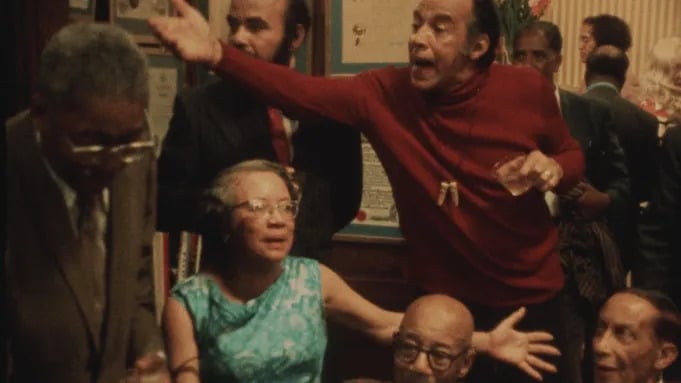
Filmed on 16mm in a house in 1972 Harlem, “Once Upon a Time in Harlem” premiered at Cannes as one of the festival’s most charming films. The documentary captures over three hours of conversation, critique, and laughter between some of the Harlem Renaissance’s most prominent artists and writers in Duke Ellington’s townhouse on a summer evening.
Started by prominent filmmaker William Greaves over 50 years ago and finished by his son David Greaves in 2026, “Once Upon a Time in Harlem” is a family project decades in the making. Throughout the film, the group discusses their memories from the iconic artistic era and the impact they made on American culture.
Restored through a decades-long creative process, the camerawork in “Once Upon a Time in Harlem” complements the liveliness of the room, constantly moving without feeling chaotic. The setup of the documentary mirrors the kind of gatherings the artists had 54 years earlier: The same friends meeting over the same conversations in the same rooms.
The group engages in compelling discussions about the relationship between African American and African art and liberation during the period when many African nations were entering their first years of independence — a dialogue still poignant decades after the Renaissance as Black people across the diaspora consider ways to combat neocolonialism and promote economic development. As figures like visual artist Aaron Douglas, civil rights activist Richard B. Moore, and poet and writer Richard Bruce Nugent discuss their personal relationships with and opinions on Pan-African activist Marcus Garvey, “Once Upon a Time in Harlem” reminds audiences of the intersection between art and politics, and of the idea that art itself functions as social commentary. In doing so, the documentary emphasizes the timelessness of artistic expression and the discourse that it breeds.
The documentary captures history in a unique way, reflecting on the past through those who actually lived it. When the group finds themselves in larger gatherings, the focus often falls on the particularly vibrant Ida Mae Cullen, widow of renowned poet Countee Cullen, who repeatedly reminds the crowd to recognize her late husband’s contributions. Tender moments like these serve as gentle reminders of the beauty of human storytelling as both an art form and a means of connection.
Throughout “Once Upon a Time in Harlem,” William Greaves guides the conversation and moves the discussion from poetry to politics to theater. As legendary theater duo Eubie Blake and Noble Sissle reflect on creating their 1921 musical “Shuffle Along,” the documentary adds in perspectives from Leigh Whipper, prominent actor and co-founder of The Negro Actor’s Guild of America, as well as Nugent, revealing just how interconnected the Renaissance artistic community was.
William’s son David masterfully shapes the narrative of the Renaissance around a few central protagonists: photographer James Van Der Zee, librarian and playwright Regina Andrews, and journalist Gerri Major — each presenting different perspectives on the decade of artistic innovation. Van Der Zee, who had photographed nearly everyone in the room, remembers the Renaissance in snapshots, and reflects on the role photography played in propelling the movement. Andrews and Major remember a more social development of the era, as Andrews’ library work and apartment parties created artistic hubs for poets like Langston Hughes, Claude McKay, and Cullen. In the documentary, Major considers herself a “helpful journalist,” having provided space for artists to mingle in her townhouse in the 1920s and refusing to publish anything critical about Renaissance artists’ pieces.
Other women in the room, including activist Louise Thompson Patterson, remind the crowd to remember the women of the Renaissance: writers Zora Neale Hurston and Jessie Redmon Fauset, sculptor Augusta Savage, and patron A’lelia Walker. William Greaves highlights the social and artistic influence of women on the Harlem Renaissance, making for a well-rounded artistic history. The diversity of the crowd Greaves gathered immensely enriches the film, creating a lively buzz that keeps the audience engaged and inspires new conversation.
Moreover, Lynn True and Anne de Mare’s editing is triumphant. By intercutting scenes with Van Der Zee’s photos and Ernest Crichlow’s artwork, True and de Mare transport audiences to the 1920s, providing valuable visuals that aid the oral storytelling in the house. In other moments, the collaboration between the editing and camerawork makes for incredibly humorous scenes, as the film cuts between attendees’ reactions to one another’s comments and moments of people struggling to enter the conversation. Clive Davidson and Roland Mitchell’s sound design likewise ensures that the literary masters of the Renaissance also have their time to shine, allowing space for the narration of McKay and Cullen’s poetry.
Gathering its legends, The Greaveses breathe life into artistic history, highlighting the voices of the Harlem Renaissance. Through brilliant camerawork and editing, the documentary creates an immersive experience, inviting audiences into the room with artistic icons of the early twentieth century. A beautiful and electric film, “Once Upon a Time in Harlem” is a beautiful tribute to a generation that should never be forgotten.
—Staff writer Dzifa A. Ackuayi can be reached at [email protected].
Want to keep up with breaking news? Subscribe to our email newsletter
Have a tip for The Crimson? Share it confidentially