Evgeny Kissin and the Boston Symphony Orchestra: A Masterful Convergence of Classical and Russian Romanticism
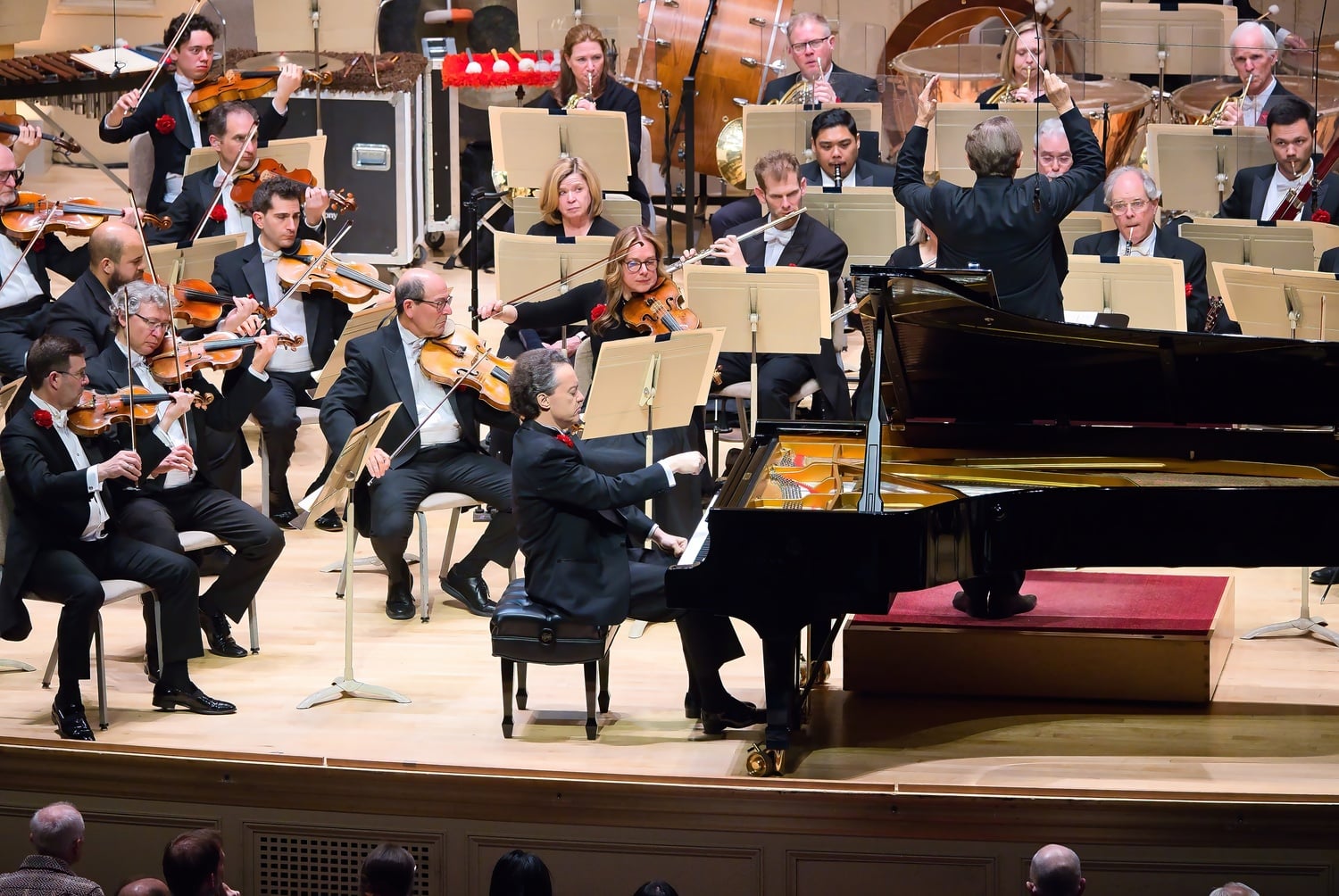
On April 25, the Boston Symphony Orchestra presented a program at Symphony Hall that served as both a homecoming and a masterclass. Led by guest conductor Andrey Boreyko, the evening featured the return of Russian pianist Evgeny Kissin, a figure whose history with the BSO stretches back to his American debut at Tanglewood — a world-renowned music festival — in 1991. Now a seasoned virtuoso, Kissin brought a program that spanned from the highly melodic Mozart’s Piano Concerto No. 12 in A major, to the dense, Romantic landscape of Alexander Scriabin’s Piano Concerto in F-sharp minor — the latter a work that remains a rarity in the standard orchestral repertoire.
Kissin gained international fame at age 12 when he performed both Chopin piano concertos with the Moscow Philharmonic. Since then, he has become a frequent guest at the BSO, making his subscription series debut — shows, where subscribers get benefits as well as attend concerts within that same series — in 1993.
The concert began with the BSO’s rendition of Rimsky-Korsakov’s “Russian Easter Overture.” Boreyko steered the orchestra through the piece’s liturgical themes with careful attention to the piece’s dynamics. The woodwinds especially were a highlight of the overture: the soft sound of the flute and clarinet produced a bird-like humming that gave the pastoral sections a light, airy quality. The BSO handled the wide dynamic shifts effectively, moving from quiet, meditative passages dominated by the harp to full orchestra crescendos without losing balance. The violin section’s impeccable use of pizzicato further contributed to the piece’s nimble, agile character.
In the second piece of the night, Mozart’s Piano Concerto No. 12 in A major, Kissin took to the stage to thunderous applause. From the first few stanzas, it was clear that his playing was not focused on over-interpreting the classical style. Mozart’s concertos are often described as being deceptively easy to play but difficult to master. Kissin’s performance made the technical demands seem unnoticeable. His playing was defined by astounding clarity — every note was distinct and delivered with purpose, even during the faster legato runs of the concerto.
The performance showed a high level of cohesiveness with the BSO, as Kissin and the violins played off of each other without one overpowering the other. Even the climactic moments felt somewhat restrained, with Kissin’s slower interpretation of Mozart prioritizing clarity of each note over grand solos, and his crisp articulation and dry touch avoided the heavy pedaling often heard in later Romantic works.
After a brief intermission, the second half of the program shifted its focus to Russian folklore through three tone poems by Anatoly Liadov. A student of Rimsky-Korsakov and a contemporary of the “Mighty Handful” of composers — who included Rimsky, Balakirev, Cui, Borodin, Mussorgsky — who defined the 19th century Russian classical music scene, Liadov was known for his small output but brilliant orchestration.
“Baba Yaga” and “Kikimora” each featured sharp, intense staccatos from the piccolo and xylophone, creating a sense of restless energy reminiscent of the infamous Slavic witches whom the pieces are named after. This effect was balanced by “The Enchanted Lake,” where the BSO strings and harp utilized sul ponticello — a technique where the bow is played very close to the instrument bridge — and tremolos to create a delicate atmosphere. The movement’s lack of a forceful climactic ending and its reliance on shifting harmonic colors effectively transitioned the hall into a more somber mood.
The evening culminated in the rare appearance of Alexander Scriabin’s Piano Concerto in F-sharp minor, Op. 20. Scriabin remains a peripheral figure in many orchestral seasons, often overshadowed by his contemporary Rachmaninoff. But at only 24 years old, Scriabin wrote this concerto with a dark, brooding passion that Kissin captured with terrifying intensity.
Kissin’s approach to the Scriabin work was a stark departure from his Mozart. He utilized the lower registers of the piano with a forceful prominence, creating a sound that was rich and suited the piece’s brooding nature. While each stroke was noticeably more powerful, Kissin never pounded the keys. Instead, he maintained a profound depth of sound that resonated through the floorboards of Symphony Hall.
The climax in the Allegretto moderato movement was the highlight of the night — a moment where the piano blended in perfect synchronicity with the BSO’s soaring violins, yet Kissin’s individual notes still reached the audience with complete clarity. It was a testament to his technical skill that he could maintain such distinct articulation amidst the thick, layered movements of the orchestra.
As the final notes of the Scriabin faded, the silence in Symphony Hall was brief before erupting into a standing ovation. Overall, the concert highlighted the technical and emotional range of the BSO: from the nimble, folk-inspired textures of Liadov to the dark, expansive world of Scriabin under Boreyko’s direction. Despite the stark stylistic shifts between the two halves, the BSO and Kissin delivered a compelling and poignant performance.
—Staff writer Maya Y. Koreth can be reached at [email protected].
Want to keep up with breaking news? Subscribe to our email newsletter
Have a tip for The Crimson? Share it confidentially