From Cannes: ‘Lucy Lost’ Is a Tender Tale of Love and Belonging
Dir. Olivier Clert — 4.5 Stars
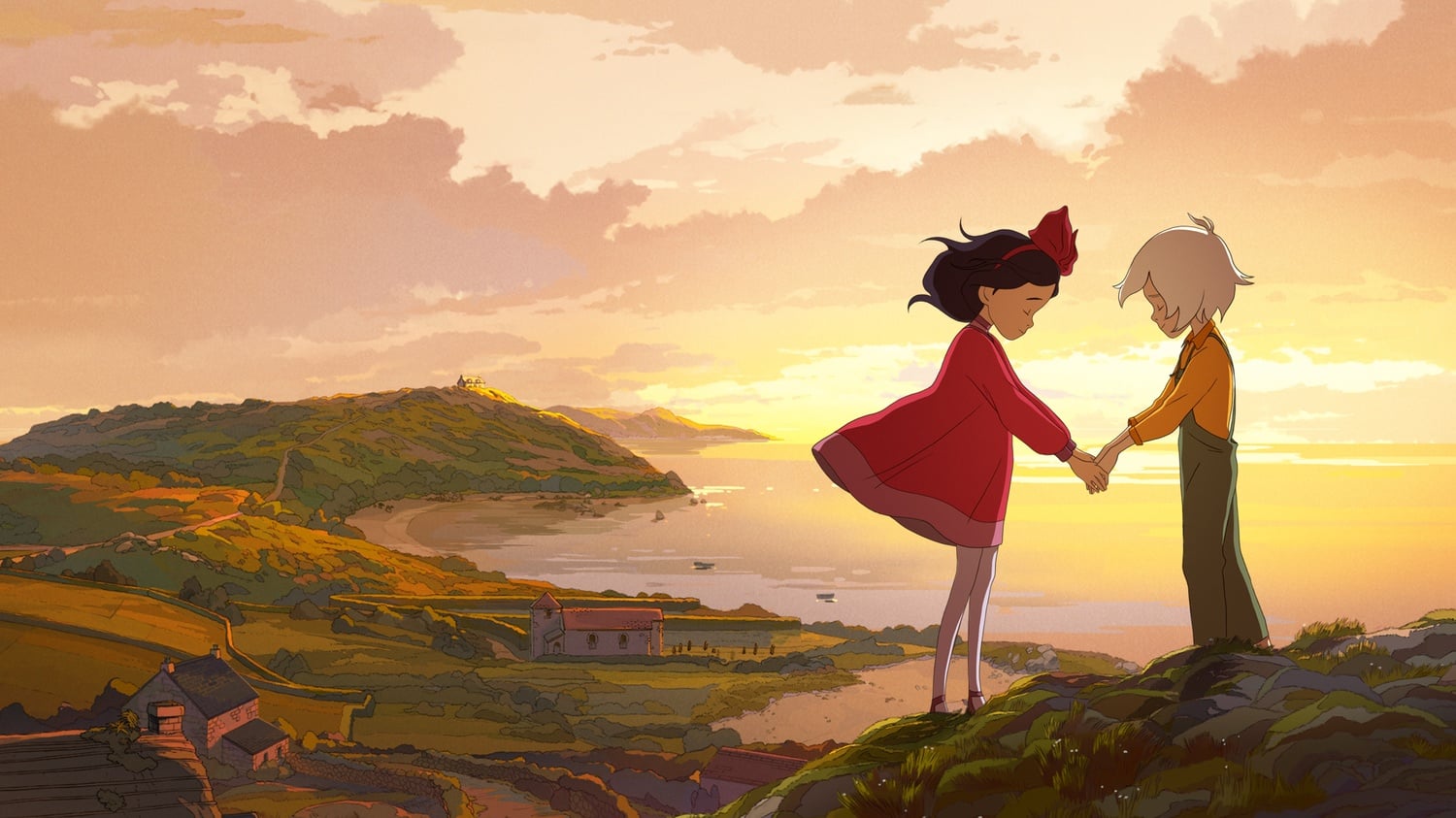
Tackling the world’s harshness through a tender children’s story, Olivier Clert’s animated feature “Lucy Lost” is a quiet triumph. Adapted from Michael Morpurgo’s 2014 novel, “Listen to the Moon,” the film tells the story of Lucy (Charlie Rosenzweig), who is taken in by a family on a remote French island. Her extraordinary gifts and mysterious origins make her an outsider until she meets Milly, a girl only she can see, who takes her on a great journey to unveil the secrets of her powers.
When the film begins, the audience is as lost as Lucy about her background. Standing out from her redheaded family, Lucy’s hair is strikingly white, and she possesses a mysterious magic that concerns her family and scares the rest of the town. From the start, the animation is vibrant, colorful, and immediately engaging. Set in a rural French town during World War I, the animation led by Joyce Colson masterfully uses color to tell the story. Lucy is surrounded by blues, pinks, and whites — a palette that inspires imagination and liveliness — while the rest of the town’s apparel and surroundings sit in browns, grays, greens, and beiges. Still, the film never falls flat, with truly rich color throughout.
Despite its harsh historical background, “Lucy Lost” features beautiful and comedic relationships, primarily between Lucy and her brother Alfie. While her parents take every effort to protect her from the scrutiny of the town and from the danger her powers put her in, Alfie aims to protect her youth, breaking tense moments with laughter. Even as the town’s children turn against the family, the relationship between the siblings remains strong — an example of truly unconditional love.
Clert and co-writer Helen Blakeman also craft a heartbreakingly tender relationship between Lucy and her mysterious friend Milly. The two can travel between their two worlds, supporting each other during hard times. Their relationship highlights the value of companionship, especially in periods when war isolates.
Beyond its relationships, “Lucy Lost” boasts a tear-jerking plot with effective character development and shocking twists. As Lucy’s origins continue to go unanswered and the state of the war worsens, the town grows increasingly angry, forcing Lucy to turn more toward Milly and away from her family. “Lucy Lost” carries an important message about isolation and scapegoating in times of conflict. The children’s movie impressively tackles themes of bigotry, hatred, and violence in a digestible manner that never lowers the stakes. As the film progresses, small details scattered throughout pay off in surprising yet satisfying plot twists. By the end of the story, every door opened is convincingly closed, and the mysteries it chooses to keep don’t feel incomplete.
The film forces its adult audiences to reckon with how quickly people allow anger and fear to change the way they view people. In “Lucy Lost,” the adults influence their children to hate, attack, and alienate an 11-year-old girl. Fear of the unknown and fear of the enemy quickly overtake compassion and empathy. In this way, “Lucy Lost” persuades viewers to assume goodness in everyone, have hope, and choose to live without shame.
—Staff writer Dzifa A. Ackuayi can be reached at [email protected].
Want to keep up with breaking news? Subscribe to our email newsletter
Have a tip for The Crimson? Share it confidentially