Federal Judge Allows Whistleblower Lawsuit Against Harvard Over NIH Grants to Proceed
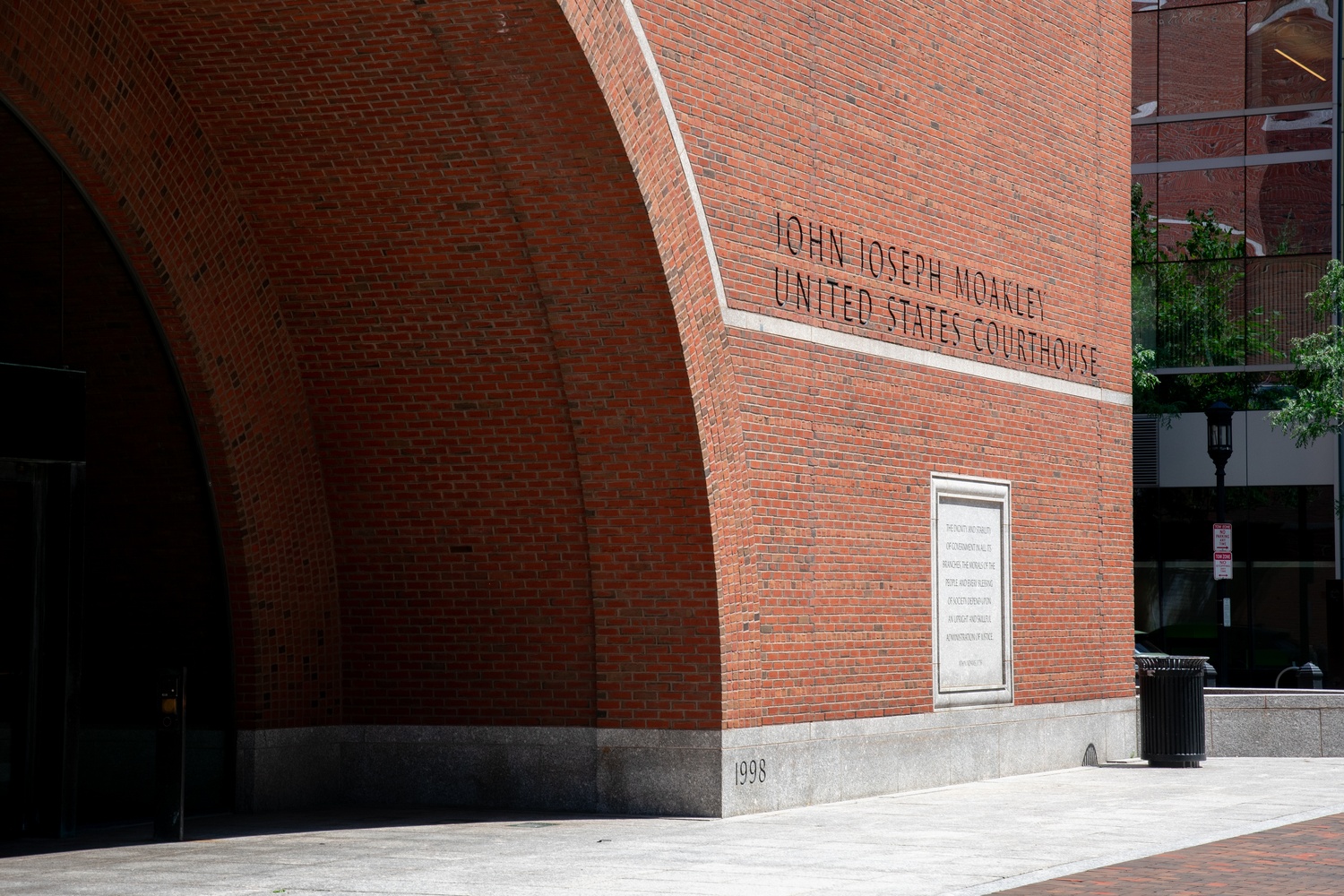
A federal judge allowed most of a whistleblower lawsuit against Harvard to proceed Tuesday, letting two claims advance in a case accusing the University and a Harvard Catalyst principal investigator of misusing National Institutes of Health grant funding.
The suit, filed by David S. Zielinski, the former executive director of Harvard Catalyst — formally the Harvard Clinical and Translational Science Center — alleges that the University and the center’s founder, Lee M. Nadler, collected $275 million in NIH grants while abandoning or repurposing promised research work in violation of the False Claims Act.
The lawsuit was filed in March 2024 and remained under seal while the Department of Justice reviewed the allegations until November 2025.
U.S. District Judge Myong J. Joun rejected most of the University’s motion to dismiss in his 28-page order, tossing one count of “reverse false claims” while allowing two claims alleging false claims and false records to advance.
At the motion-to-dismiss stage, Joun did not rule on the truth of Zielinski’s allegations, only that the surviving claims were sufficiently pleaded to proceed. Harvard has 14 days to answer the two surviving counts.
The NIH awards to the center are cooperative agreements, a funding mechanism under which NIH “expects to be substantially involved in carrying out the project.”
The University had argued that the court should “be skeptical” that the NIH “somehow missed that two-thirds of the work contemplated was never done,” arguing NIH would have been able to make that determination by reviewing the annual reports and choosing whether to renew the grants.
Joun wrote that the University’s arguments did not make the allegations “implausible” and that “the very purpose of those statements is to keep NIH in the dark” from the truth. He added that it would be a “futile effort” for the court to immediately compare all the reports with the allegations, noting that Nadler allegedly “used crafty grantsmanship to obscure their true usage of the funds.”
Zielinski’s attorneys wrote in a statement that Joun’s ruling made clear that Zielinski “sufficiently alleged with particularity that Harvard defrauded NIH.”
Get The Crimson in your inbox.
“We are eager to move forward with the prosecution of the claims,” they wrote. “We look forward to completing discovery and remain committed to seeing this matter through and to vindicating the important interests at stake.”
A University spokesperson declined to comment on the ruling. Nadler and his attorneys did not respond to requests for comment.
The suit alleges that Nadler and the University “repeatedly, year after year” submitted falsified reports attesting that progress was made in compliance with the terms of the NIH award.
Harvard Catalyst works on “supporting and innovating” translational science, a field of research that aims to turn laboratory work into real-world public health interventions. Since 2008, Harvard Catalyst has received $275 million in NIH grants through the Clinical and Translational Science Awards Program and was slated to receive $76 million from 2023 to 2030.
Zielinski, a former NIH official, alleged that Nadler told other colleagues in the center that he wrote grants to receive funding and then “decides what to do with the money.” Zielinski further alleged that Nadler “was uninterested in modifying his behavior” despite warnings from Zielinski.
Zielinski wrote in the suit that Nadler stated “this is how he handled grants for decades” and “frequently made no effort to perform the work they had certified they would conduct” or change the scope of the grant.
Zielinski alleged that the center repeatedly had no intention to perform “much of the work for which he received hundreds of millions of dollars.” He alleged that the center had falsely represented progress since annual reports in 2013. In one instance, he alleged that Harvard Catalyst failed to complete 41 of 56 objectives identified in a $93 million 2018-2023 grant application, 21 of which Zielinski alleged had no work completed.
The NIH — the largest federal funder of Harvard’s research — began returning millions of dollars across 200 grants to the University in September following a separate ruling by U.S. District Judge Allison D. Burroughs, who called the Trump administration’s suspension of Harvard’s federal research funding unconstitutional and struck it down.
Several other whistleblower complaints and lawsuits have applied pressure on the University and its affiliates as of late. In November, the State Department began investigating the Harvard Cognitive Aesthetics Media Lab following a whistleblower complaint that the lab mishandled admissions for its visiting scholars.
The Dana-Farber Cancer Institute agreed to pay $15 million in December to settle allegations that a Harvard Medical School affiliate used NIH grant funding to publish studies with manipulated images, after a British biologist raised concerns in a whistleblower lawsuit.
—Staff writer Uy B. Pham can be reached at [email protected] or on Signal at ubp.88. Follow him on X @uybpham.
Want to keep up with breaking news? Subscribe to our email newsletter
Have a tip for The Crimson? Share it confidentially