Massachusetts House Votes To Allocate $30 Million for Alewife Brook Sewage Infrastructure
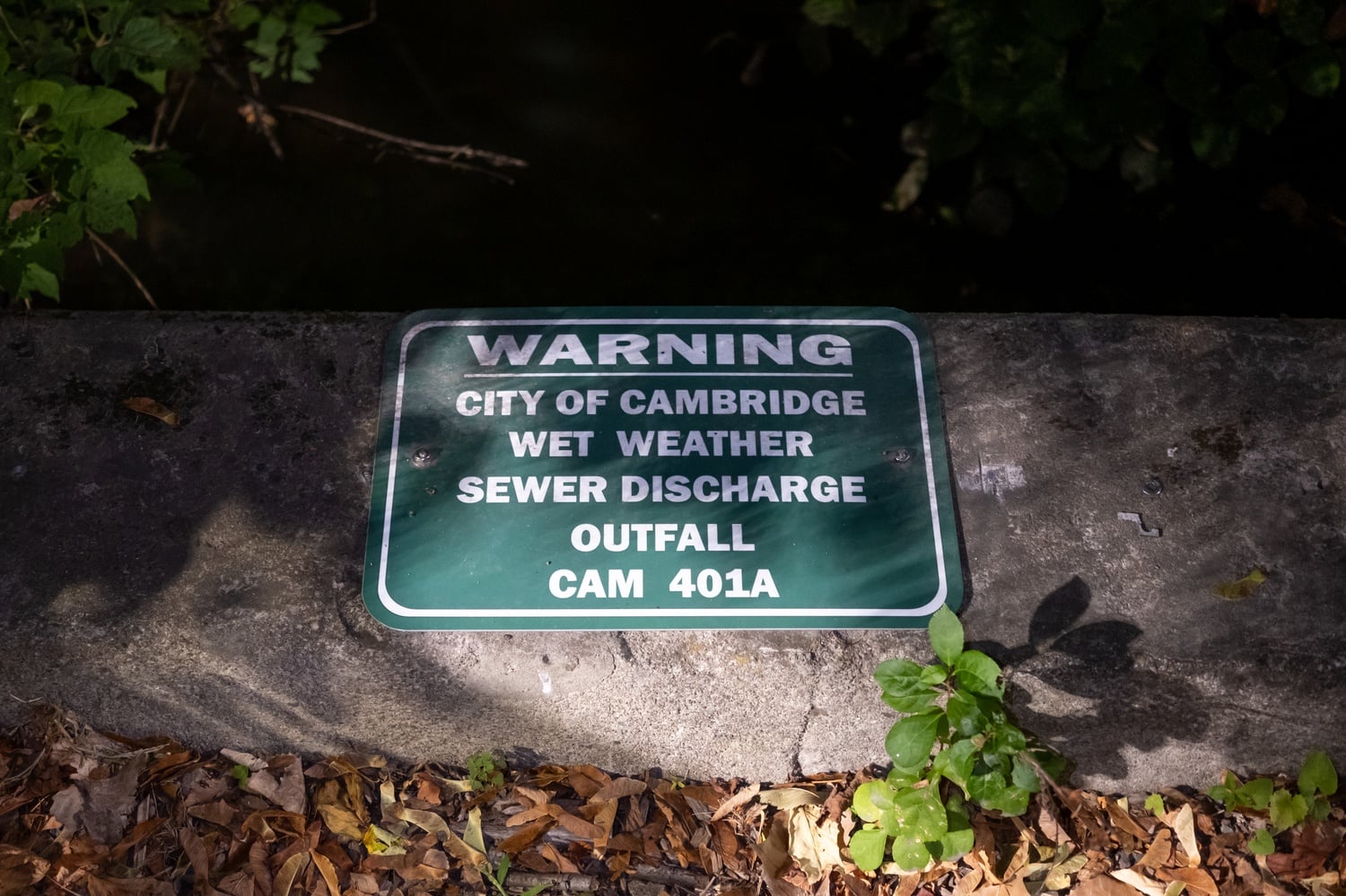
Massachusetts House lawmakers voted to allocate $30 million for infrastructure projects designed to eliminate combined sewer overflows into the Alewife Brook — marking a major step forward in addressing a longstanding environmental issue.
The funds are part of an amendment to the “Mass Ready Act,” a $3 billion environmental bond bill designed to finance environmental projects statewide passed by the State House on June 17. The State Senate passed an earlier version of the measure in April, meaning the two chambers are headed towards reconciliation before a final version is approved.
For decades, the Alewife Brook has been flooded with untreated sewage — a problem stemming from the sewer system below the brook, which sometimes combines sewage water and rainwater. During these floods, waste can flow onto surrounding sidewalks and into residents’ houses.
Legislators serving Cambridge and Somerville prioritized allocating funds to Alewife Brook because it is most severely impacted by CSOs, meaning it also receives the highest volume of raw sewage in the Mystic River watershed, according to state Representative Steven C. Owens, one of the amendment’s sponsors.
“When it rains, when the combined sewage storm water and sewer system can’t handle it, we are dumping that sewage into the brook,” Owens said. “It is not a situation that we want to have continue.”
On Tuesday, sustained rainfall caused a CSO discharge roughly 25-minutes long in the Alewife Brook, according to a city alert. Residents were advised to avoid contact with the body of water for two days due to potential health risks from the bacteria present.
Earlier this year, the Massachusetts Water Resource Authority in partnership with the Cities of Cambridge and Somerville unveiled a draft plan that would “dramatically reduce” CSOs across Alewife Brook, Mystic River, and Charles River by a typical 2050 year, at an estimated cost of $1.3 billion to residents. Lawmakers and advocates see the amendment’s funding as a commitment from the state to easing some of the costs associated with the draft plan, which surrounding cities would otherwise be responsible for.
“It is my hope that through this funding from the state, we can help alleviate some of the projected increases on ratepayers and assist in reaching the highest level of CSO control,” state Representative David M. Rogers, who co-sponsored the amendment, wrote in a statement.
Patrick Heron, executive director of the Mystic River Watershed Association — which oversees Alewife Brook — said that the amendment “sends an important signal” that legislators are invested in this issue.
Get The Crimson in your inbox.
State Representative Christine P. Barber, another sponsor, wrote that state support was “essential to help offset the significant costs” of eliminating CSOs that would otherwise be placed on residents.
“While the adopted amendment did not include the full amount we requested, securing this initial funding is meaningful progress,” Barber wrote. “We will continue working to secure the additional investments needed to fully deliver this critical project and protect the health, safety, and resilience of our communities.”
Kristin Anderson, a Save the Alewife Brook steering committee member, said the MWRA’s current plan for Alewife Brook “falls far short” because it relies on minimal sewer separation rather than complete elimination of overflow, allowing untreated sewage to continue flooding residents’ basements during storms that exceed the typical-year model.
“It’s kicking the can down the road,” she said. “At the end of the day, this is about public health and environmental responsibility, because during heavy storms untreated sewage is still going to get dumped into Alewife Brook, unless they do sewer separation.”
According to the MRWA, the agency has solicited public feedback on the plan and is now recommending alternatives that would eliminate CSOS in a 2050 typical year for all three water bodies.
Despite her concerns, Anderson expressed appreciation for the representatives who sponsored the amendment.
“It’s exactly what we’ve been asking for,” she said.
—Staff writer Uy B. Pham can be reached at [email protected] or on Signal at ubp.88. Follow him on X @uybpham.
—Staff writer Alexa M. Schmitt can be reached at [email protected] or Signal at alexaschmitt.15. Follow her on X @alexa_m15_s.
Want to keep up with breaking news? Subscribe to our email newsletter
Have a tip for The Crimson? Share it confidentially