Here’s Who Is Backing Harvard in Its Fight to Keep $2.7 Billion in Federal Funding
Universities, alumni, former government officials, hospitals, and advocacy groups are backing Harvard as it fights to preserve nearly $2.7 billion in restored federal research funding.
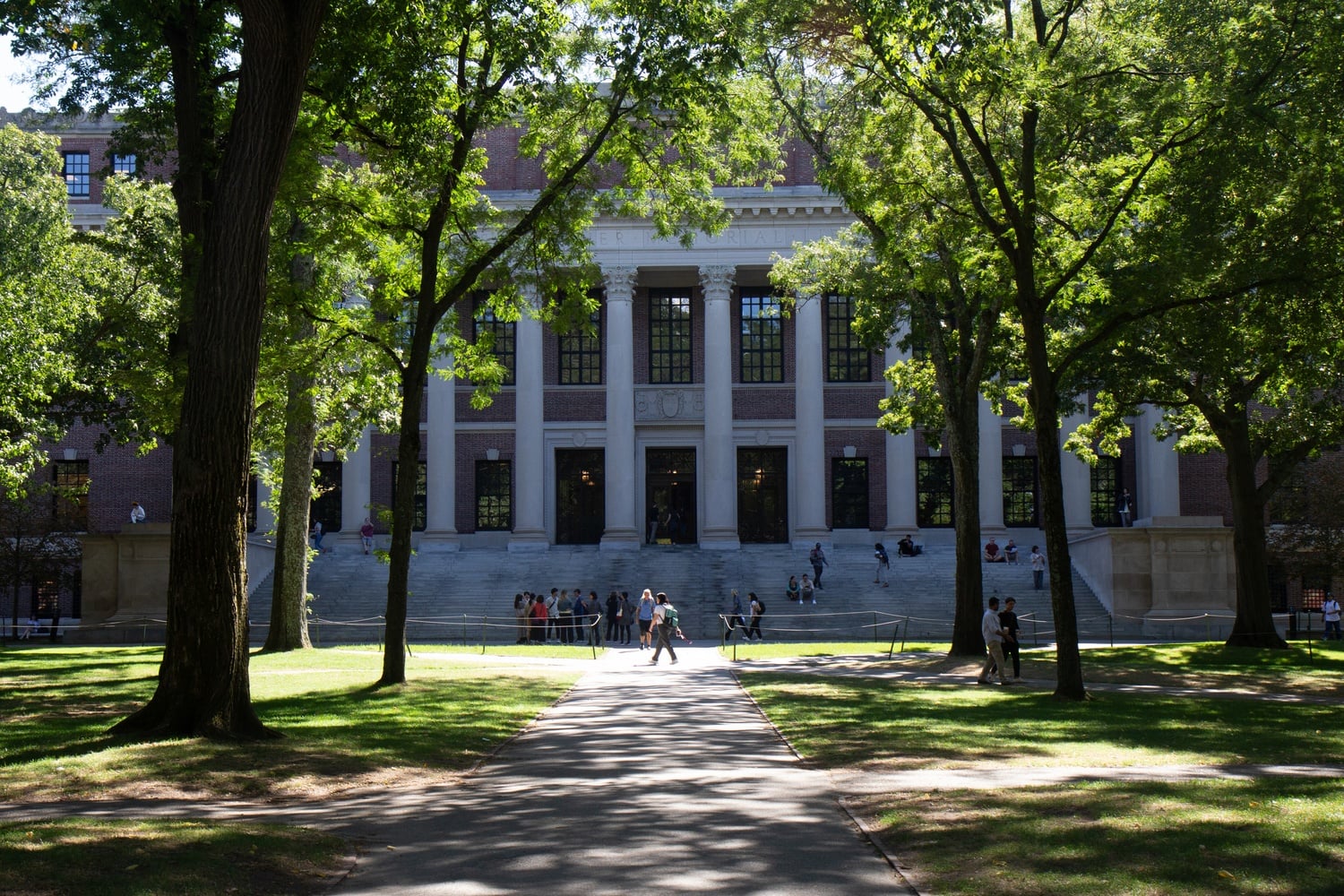
When Harvard sued the Trump administration to take back nearly $2.7 billion in federal research funding, the University’s legal case attracted support from a swath of outside groups, including former top government officials, peer universities, and local hospitals.
More than a year later, many of those groups returned for round two as Harvard seeks to keep in place a sweeping district court ruling that restored its grant funding and found the Trump administration’s funding actions violated the First Amendment and federal law. The federal government appealed in December.
Universities, alumni, government officials, and civil liberties groups filed amici briefs in advance of a July 22 deadline urging the First Circuit to affirm the lower court ruling.
Harvard also picked some new backers. A dozen more former government officials – including several who served in Republican administrations — added their names to a brief, and a wider swath of universities signed on to support the University.
Particularly notable is the addition of Columbia University and Cornell University – the two Ivy League schools that reached settlements with the Trump administration after facing federal funding – to the list of universities backing Harvard. A group of Columbia alumni also filed its own brief, alleging the settlement their school brokered “has diminished the University and caused it serious ongoing harm.”
But absent this time are several groups that backed Harvard last year: the Foundation for Individual Rights and Expression, the Middle East Studies Association, the Muslim Legal Fund of America, Jewish Scholars for Jewish Studies, Jewish Voice for Peace, and the Harvard Undergraduate Palestine Solidarity Committee.
After Harvard filed its response brief July 15, outside groups filed a new round of amici briefs supporting the University.
The legal arguments are not entirely new. Many echo arguments U.S. District Court Judge Allison D. Burroughs accepted in her September ruling, including that the administration not bypass Title VI procedures or retaliate against Harvard for protected speech.
Here’s who’s backing Harvard.
Former Federal Officials
Get The Crimson in your inbox.
The roster of former U.S. agency and administrative officials has grown from 18 to 30, with several new signers who served in Republican administrations.
New additions include Donald B. Ayer, who served as deputy attorney general under former President George H.W. Bush; Peter D. Keisler, an assistant attorney general for the Civil Division under former President George W. Bush, and Alan C. Raul, who served as assistant counsel to former President Ronald Reagan.
While the brief sketches a similar argument to its earlier counterpart, it points to more recent court cases to argue the Trump administration’s use of Title VI to cut Harvard’s funding over discrimination is unprecedented among previous administrations, saying that terminating federal funding was intended to be an “option of last resort” when Congress enacted the law.
“In terminating all federal financial assistance to Harvard, defendants have violated Title VI’s procedural and remedial requirements as no administration has ever done,” they wrote.
Universities and National Education Organizations
Thirty-six colleges and universities — including Yale University, MIT, and Brown University — painted the administration’s funding cuts as “arbitrary” and dangerous to national “economic strength” in their brief.
Thirteen additional universities that did not sign last year joined the brief, including public universities such as the University of Michigan, Arizona State University, and the University of California system. Brandeis University and Carnegie Mellon University, along with several liberal arts colleges, also joined. Columbia and Cornell signed on as well, bringing the full Ivy League beside Harvard.
Unlike the collective brief filed last year, the University of Delaware did not sign on.
A separate Columbia alumni group, who filed a brief last year while the University itself did not, returned with its own arguments in support of Harvard.
A new passage in the universities’ brief rebuked the termination of research over ideological objections, arguing that sweeping cuts over “a single particular aspect of the university’s conduct — even if that concern is justified” are atypical.
The American Council on Education and 26 other higher education organizations argued that answering “good faith disagreements” with “enforced conformity” threatens universities’ autonomy, pointing to historical cases of academic repression in Germany, the Soviet Union, and Argentina.
The coalition now includes the Presidents’ Alliance on Higher Education and Immigration and the American Association of State Colleges and Universities, which represents more than 500 regional public colleges, universities, and systems.
A group of 14 university professors from around the world also filed a new brief, including scholars of democratic governance and authoritarianism at the University of Chicago, Yale, and Princeton.
Among them are Francis Fukuyama, a Stanford political scientist who worked in the State Department in the Reagan administration, and Lucan Way, a University of Toronto political scientist who co-authored a seminal book on competitive authoritarianism with Harvard professor Steven R. Levitsky. The brief compared the administration’s tactics to patterns in Hungary, Venezuela and Turkey, arguing that they mirror “how rising authoritarians interfere with the independence of universities” to stifle dissent.
Hospitals
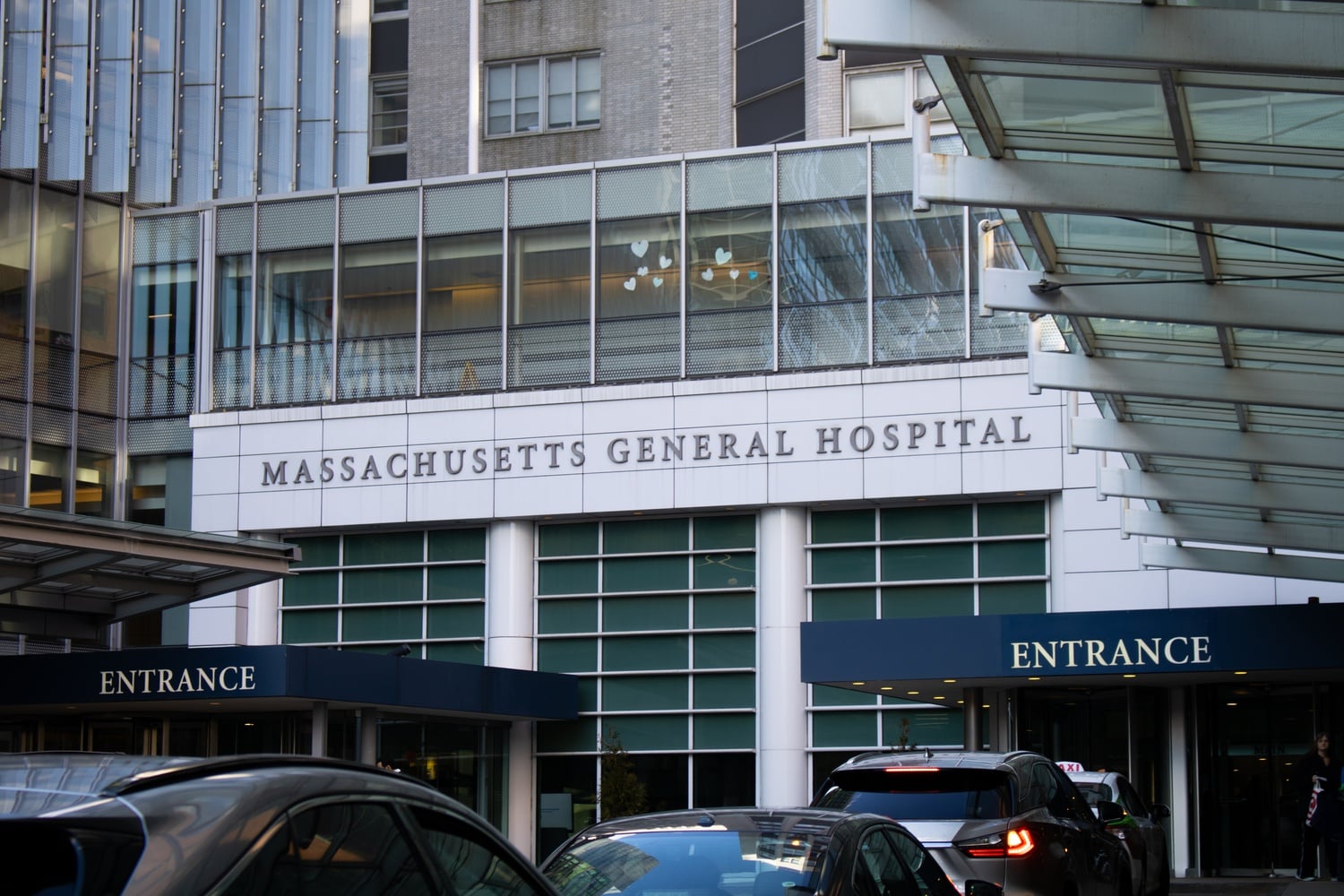
A group of Boston-area hospitals refiled an amicus brief in support of the University, arguing that research disruptions continued to reverberate even after federal grants were restored following Burroughs’ September ruling.
The Conference of Boston Teaching Hospitals — eight of whose 12 members are Harvard Medical School affiliates — argued that the administration’s funding cuts to programs like Harvard Catalyst stalled research across its member hospitals.
The brief described 17 Harvard graduate students whose federally funded fellowship awards were caught in the freeze. The hospital used other funds to support them until the awards were restored, diverting money from faculty recruitment, internal career development grants, and equipment purchases.
“The funding freezes impact not just Harvard but the entire innovation ecosystem, and by extension the nation more broadly, because scientific breakthroughs are often the culmination of years or decades of collaboration between scientists at universities, hospitals, and other research institutions,“ they wrote.
The brief pointed to the decades-long Diabetes Prevention Program Outcomes Study at Columbia. Its funding was restored after four months, but the interruption led to staff layoffs across 30 centers, lost longitudinal data, and lost research infrastructure.
Blue States
Virginia joined a brief led by Massachusetts and backed by 20 states and the District of Columbia. Wisconsin, which signed last year’s brief, did not return.
The states took aim at the “devastating impacts” of research funding cuts, citing a Boston Globe survey in which more than two-thirds of scientists said they would recommend their students pursue careers outside academia.
“The federal government’s unlawful funding freeze at Harvard has caused devastating spillover effects to the Massachusetts economy,” they wrote.
The states also echoed a warning Harvard President Alan M. Garber ’76 raised during an April talk at the 92NY in New York, writing that instability in U.S. research funding could push researchers to conduct their work in other countries.
The brief laid out cuts’ impacts on state economies, citing research universities as major employers and catalysts for startups and businesses. It argued that the cuts stymie the “innovation systems” that rely on universities for a skilled workforce and delay collaborations with state and local partners.
The brief used the example of Cambridge and Allston, historic Harvard partners, who have previously warned of the local impact on the surrounding neighborhoods if Harvard’s resources deplete.
Civil Rights Organizations
A dozen civil liberties and free speech groups led by the American Civil Liberties Union warned that withholding federal funds after Harvard refused demands for viewpoint diversity violated the First Amendment.
The brief, which included four newly added ACLU chapters in the First Circuit’s jurisdiction, argued that the government “cannot attempt a hostile takeover” of any private university. Repeat-signers included free speech organizations like the Knight First Amendment Institute and the libertarian Cato Institute.
Constitutional democracy advocacy group Lawyers Defending American Democracy — a nonpartisan group of attorneys, law professors, former judges, and former government officials — filed a brief for the first time, warning that the Trump administration’s attacks threaten American democratic institutions.
The brief argued that the actions against Harvard were part of a “broader campaign against independent institutions” drawn from a “playbook followed by would-be autocrats.”
It also argued that the Trump administration was using “autocratic legalism” to erode democratic guardrails through formal legal processes, comparing the approach with those used by leaders in countries such as Hungary and Venezuela.
“The conduct challenged is not an isolated regulatory decision but rather one episode in a comprehensive campaign to disable the institutions — universities, the Bar, law firms, courts, independent executive branch agencies, civil society, and the media — whose independence is necessary to maintain our democratic form of limited government,” they wrote.
The Leadership Now Project, a business-leader organization that also filed at the district court, returned with a brief arguing that the funding cuts threaten the university research ecosystem that American businesses rely on for innovation and global competitiveness.
Jewish Groups
Three national Jewish advocacy organizations – the Jewish Council for Public Affairs, the Religious Action Center of Reform Judaism, and the National Council of Jewish Women – filed a joint brief arguing the administration’s funding freeze hindered efforts to address antisemitism.
The amici wrote that the government’s actions “are not truly responsive to the Jewish community’s needs,” citing broad opposition to the funding freeze from Harvard affiliates who are Jewish.
Other Jewish organizations that filed briefs at the district court level did not return this time.
Jewish Scholars for Jewish Studies, a group of 27 Jewish studies scholars, and the progressive advocacy group Jewish Voice for Peace did not refile briefs from last year. They argued at the time that the Trump administration’s policies marginalized anti-Zionist Jews and criticized the University’s updated protest and disciplinary guidelines, which were intended to combat antisemitism.
Hillel International briefly backed Harvard, filing — and then quickly withdrawing — a 22-page brief calling research funding freezes a “draconian, one-size-fits-all” response to campus antisemitism which may do more harm than good.
Hillel International spokesperson Kenneth Baer said the July 22 brief had been filed without going through the usual review process. It was withdrawn the next morning.
Alexander “Shabbos” Kestenbaum, who sued the University in 2024 after his time as a student at the Divinity School, said Hillel International President and CEO Adam Lehman told him that evening he had not seen the brief before it was filed.
Several prominent Jewish figures publicly questioned the organization’s support for Harvard before the brief was yanked.
Harvard Affiliates
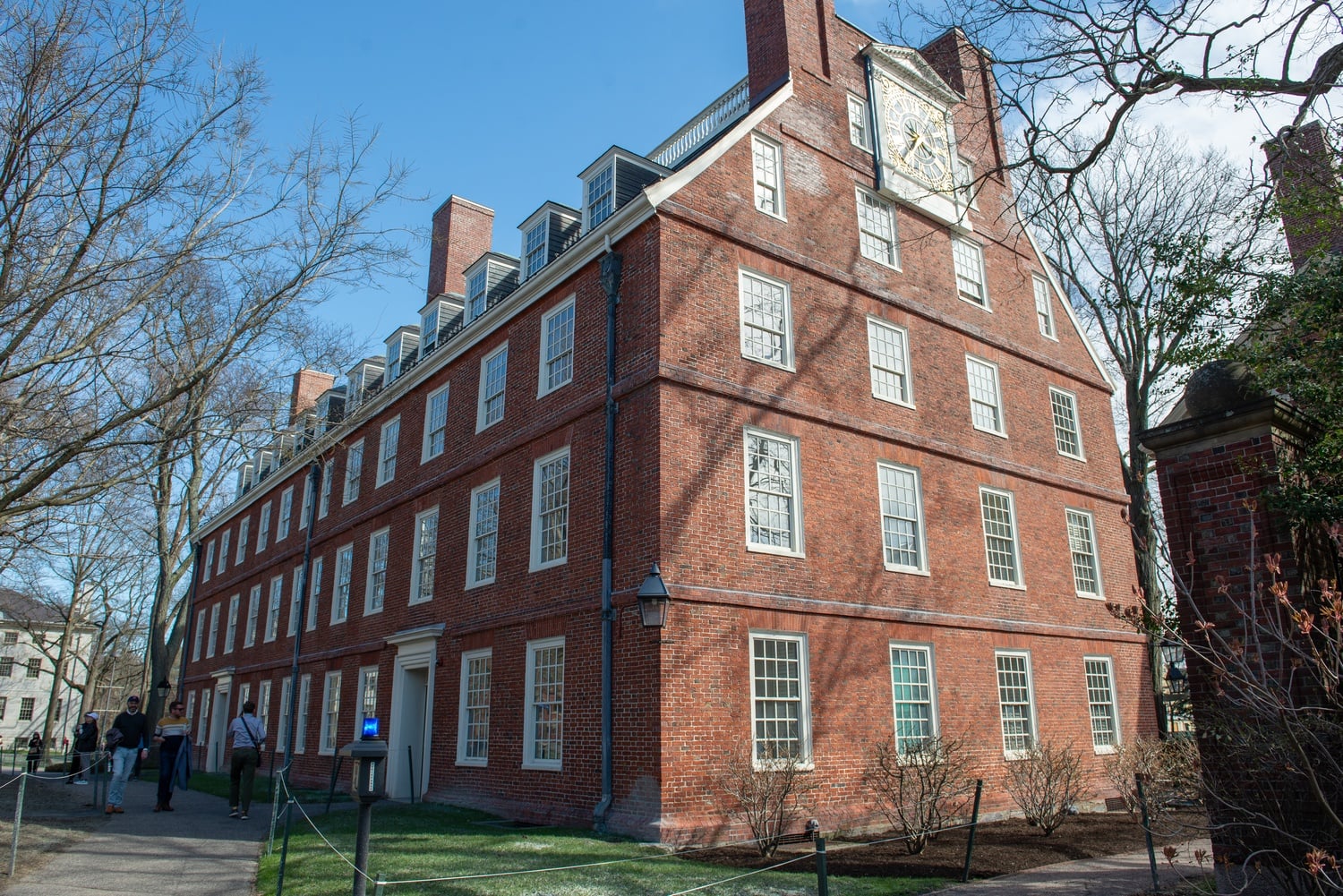
A group of 10,982 Harvard alumni decried the government’s federal funding freeze as an attack on “the very core” of the University’s mission in a brief nearly identical to one signed by 12,041 last year.
The alumni described the administration’s entanglement with Harvard as an “escalating campaign of bullying, coercion, and extortion,” arguing the funding cuts were only one part of a broader effort to exert control over Harvard.
The brief attracted signatures from every graduating class since 1950, graduates across all 12 of Harvard’s schools, and residents of all 50 states. U.S. Senators Chuck Schumer ’71 (D-NY), Tim Kaine (D-VA), and Representative Jamin B. “Jamie” Raskin ’83 (D-MD), who signed last year’s brief, did not join this one. Senator Richard Blumenthal ’67 (D-CT), a former Crimson Editorial chair, and Massachusetts Governor Maura T. Healey ’92 signed again.
A spokesperson for Raskin said he was not asked to sign onto the brief. Schumer and Kaine did not respond to a request for comment.
Anurima Bhargava ’96, counsel for the brief, said the administration’s actions disturbed alumni dedicated to service in almost every industry.
“This is not about a titan versus a titan,” Bhargava said. “This is about an effort to really destroy people who are at work.”
Harvard Law professor Ben Eidelson and University of Virginia Law professor Deborah Hellman filed a more technical amicus brief focused on how the appeals court’s reasoning could affect the scope of Title VI in cases involving campus antisemitism.
They also urged the First Circuit to affirm Burroughs’ ruling without suggesting that the government’s broad allegations of campus antisemitism necessarily fall within Title VI, warning that the court’s reasoning could have “significant implications for that important issue.”
The professors argued that Title VI covers discrimination based on Jewish or Israeli ancestry, not hostility to a religious belief or political cause such as Zionism or the State of Israel.
The faculty members advanced a similar argument in an amicus brief filed on Harvard’s behalf in a separate lawsuit alleging the University violated Title VI in its response to campus antisemitism.
—Staff writer Theresa F. Bartelme can be reached at [email protected] and on Signal at theresabartelme.15. Follow her on X @theresabartelme.
—Staff writer Hugo C. Chiasson can be reached at [email protected] or on Signal at hcc.35. Follow him on X @HugoChiassonn.
—Staff writer Elise A. Spenner can be reached at [email protected] or on Signal at elisespenner.82. Follow her on X @EliseSpenner.
Want to keep up with breaking news? Subscribe to our email newsletter
Have a tip for The Crimson? Share it confidentially