Authors Profile: Marie Benedict and Victoria Christopher Murray on Remembering Women’s Stories and Forging Their Own
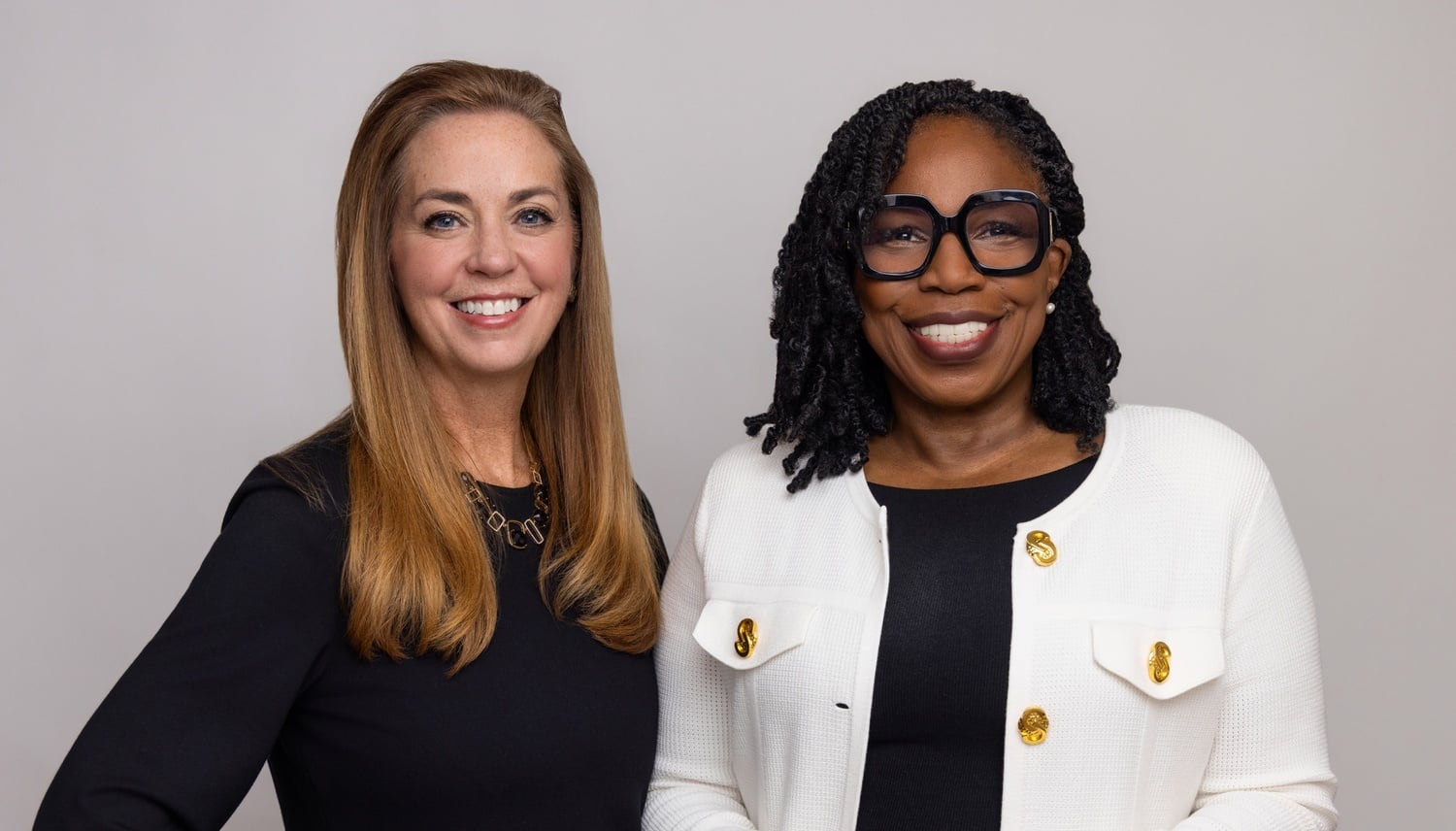
Before she became the New York Times and USA Today bestselling author “Marie Benedict,” Heather Terrell was a litigator at a top law firm who secretly wanted to be a time-traveler.
“I was a New York City lawyer for a long time — for over a decade — and I was really always meant to be a historian or work in the historical field. That’s what I love, that’s what I went to college for. And I would often visit the cultural institutions of New York City, kind of envisioning different paths,” said Benedict in an interview with The Crimson.
She visited J.P. Morgan’s library of rare and priceless manuscripts frequently and eventually learned that it was curated by a woman named Belle da Costa Greene. Benedict added Greene to the “running list of fabulous historical women” she hoped one day to write about.
“And then about a decade after that, I learned that she was actually a Black woman passing as white and I knew that she deserved to have a Black woman tell her story, too,” Benedict said.
By that time Benedict had become a successful novelist. As she began considering who might join her in telling Greene’s story, Benedict reached out to Victoria Christopher Murray, whose “masterful” contemporary novel “Stand Your Ground” had caught Benedict’s attention. Murray is one of the country’s top African American contemporary authors, with over 3 million books in print. Although Murray was initially “a little confused” by the request, given that she had never written historical fiction, she read Benedict’s synopsis.
“Not only was I enthralled by the story, but we connected the next day on the phone because I took too long to really respond to her. And when I was on the phone with her, absolutely within 10 minutes, I knew that we were going to be great collaborators. I just never knew that it was going to grow to be, ‘she’s my sister,’” said Murray.
After they told Greene’s story in “The Personal Librarian” in 2021, Benedict and Murray joined forces again on “The First Ladies” in 2023. Released this June, Murray and Benedict’s newest novel is “A Pair of Aces.” It imagines how Eunice Carter — the first female Black prosecutor in New York City — worked with the madam Polly Adler to bring down mob boss Lucky Luciano.
Although she sees research as the “foundation, the pillars, and the roof” from which the story hangs, Benedict explains that there are many gray areas where historians have a piece of the story but not the full picture. She emphasizes that her work is an interpretation of real women, yet still remains fiction.
“The more I saw that [Eunice Carter] played this huge role in this massive case against the mob — and knowing as a lawyer the kinds of evidentiary chains she would have to establish to have a successful case — it occurred to me that maybe there was somebody on the other side of the law helping her,” Benedict said.
Murray emphasized that many of these stories of women would be completely erased as the centuries pass without fictional accounts, like “A Pair of Aces.”
“I think a history that’s untold is a history that can be erased. That’s one of the reasons I’m so grateful that Marie brought me into this genre. Because I wasn’t writing historical fiction before. But these are women who’ve done such important life-changing things, women whose shoulders we stand on,” said Murray.
Murray explained that Benedict was one of the first authors to do these sorts of biographical novels focused on the female experience.
“I’m so grateful that she did that because these stories, they’re not going to rise up from the dirt. You have to go back into history and find them and get them,” Murray said.
Benedict and Murray work on a shared google doc, constantly texting, writing, and calling. After Benedict does the initial historical research, the authors each choose a character to become an expert on.
“After we outline and discuss every part of the story, like everything is discussed, we each determine what we’re going to write, and then we write the first draft, just the first draft. And then we switch. And so every word of every novel we’ve written together,” said Murray.
During their collaborations, the pair has had many difficult conversations that challenge each other’s perspectives. Murray calls them “learning experiences [for] both of us racially,” and they are often woven into the books.
“Those are my favorite things because I think they’re going to lead to great discussions for the readers. And we write these books with that in mind. We really want it to open up conversations between Black women and white women,” said Murray.
Murray and Benedict have always been storytellers, although they circuitously had careers in finance and law before becoming published authors.
“This was what I was always meant to be doing. I just didn’t know it yet, and so often we start on one path and we don’t realize that it’s just a building block to another path,” Benedict said.
Murray commiserated, but noted that in many of her early books, all of the women were business women, aligning with Murray’s personal experiences of working in corporate America and launching her own financial services agency for Aegon, where she managed the number one division for nine consecutive years.
“Every character had her own business in some way. So it really is kind of, ‘you write what you know,’ because I knew those kinds of women. But the biggest way my career has helped me is really on the business side of being a writer, because a lot of writers think it’s just the creative side, but I’m as focused on the business side as I am on the creative side,” said Murray.
Although the law was not her calling, Benedict’s legal training gave her skills that are “invaluable” for the deep dive research and fact-finding that she does today.
“You’re creating a narrative on behalf of a client when you’re a lawyer, and then you’re writing very often. Usually it’s legal briefs or courtroom arguments, things like that, advocating for that client. And that’s basically what I do now,” Benedict said. “I research. I’m on a fact-finding mission. I’m writing a narrative that advocates for my client. The client is a historic woman who, I’ll be honest, I care a lot more about than my corporate clients. These women don’t have the chance to have their stories told.”
For both authors, the step to leave their corporate careers was deeply rooted in their childhoods. Murray’s father had the maxim “watch how children play,” and her parents knew she would be a writer from a very young age because she preferred reading books to anything else.
For Benedict, her aunt — an English professor and poet — gave her a copy of Marion Zimmer Bradley’s “The Mists of Avalon” when she was in middle school, sparking a lifelong passion.
“It was like a thunderbolt. It was like, ‘oh my god, where are these other voices?’ First of all, it made me question how history is formed. And it made me have this desire to ferret out the women’s histories,” said Benedict.
When speaking publicly, Benedict asks her audiences what they loved when they were in middle school, whether that be a subject or a skill.
“Because usually that’s the truest part of ourself. That’s the part of ourself that is our pure self before society has gotten hold of us and told us what we could and should be. And so the biggest advice I’d give anybody is to ask yourself: ‘Who was that person? What would she or he want for you right now?’ And ask yourself if you want that for yourself, too,” said Benedict.
—Staff writer Laura B. Martens can be reached at [email protected].
Want to keep up with breaking news? Subscribe to our email newsletter
Have a tip for The Crimson? Share it confidentially