ShotSpotter Temporarily Reactivated in Cambridge, Weeks After Council Vote
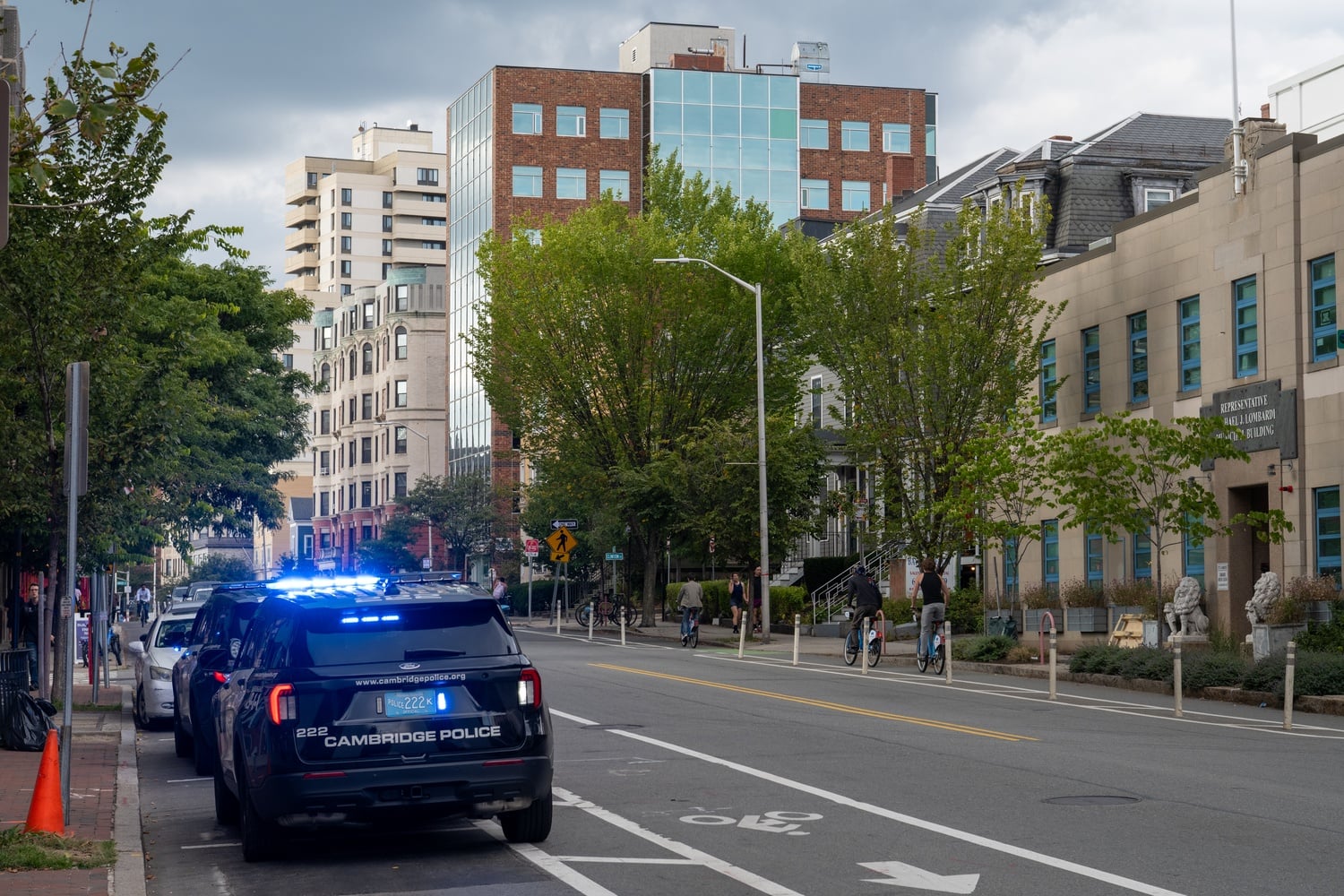
Two weeks after the Cambridge City Council voted to temporarily reactivate ShotSpotter, the gunshot detection system is operational again, according to the Cambridge Police Department.
In May, the council voted to end the city’s use of ShotSpotter, which uses acoustic sensors to detect potential gunfire and alert police. But after a city employee was fatally shot on July 4, the council moved on Aug. 3 to reactivate the system for 90 days.
It took two weeks for SoundThinking, the company that owns ShotSpotter, to bring the city’s system back online. Cambridge’s Emergency Communications Department regained access on Aug. 14 and CPD regained access on Aug. 17, according to Jennie Lopez, the police department’s director of communications.
SoundThinking had to reinstall the devices it had removed three months earlier, and both the company and CPD conducted quality testing before the system became fully operational, Lopez wrote.
ShotSpotter costs roughly $50,000 per year in Cambridge, funded through the Urban Area Security Initiative. SoundThinking confirmed that the reinstallation and 90-day activation came at no additional cost to the city.
The system is designed to listen for loud, impulsive noises and sends an alert and seconds-long audio recording to local police if a sound is flagged as potential gunfire. CPD has said SpotSpotter can improve response times, particularly when no 911 call comes in.
But the use of ShotSpotter in the city has remained a point of contention for residents and elected officials for years.
Get The Crimson in your inbox.
Cambridge first deployed the devices in 2014, covering roughly one square mile in the city, though CPD and ShotSpotter have not disclosed the location of the sensors. Activists and city officials have raised concerns over the system’s efficacy and potential data-sharing with federal authorities, pushing the council to reconsider the use of the technology entirely in May.
Just weeks after the Council narrowly voted to end the city’s use of ShotSpotter, 32-year-old Xavier Bautista was found fatally shot early on July 4 near Sennott Park. Police believe Bautista was fatally shot around 4:30 a.m., but he was not discovered until roughly an hour later, when a pedestrian called 911.
In the days after, some residents decried the council’s move to deactivate ShotSpotter, arguing that it could have alerted police to the scene sooner. The vote to restore the system came just a month later.
In a newsletter after the reactivation vote, The Black Response, an activist group that has spent years pushing for the city to end its use of ShotSpotter, wrote that it was “furious” over the reinstatement of the system as a response to Bautista’s death.
The group claimed the council’s reversal stemmed from “political pressure” and wrote that it was “dismayed and disappointed” with the councilors who voted in favor.
The order reinstating the devices also called on City Manager Yi-An Huang ’05 to form a “pilot resident assembly,” composed of a representative group of Cambridge residents selected through a lottery, to deliberate on the city’s use of ShotSpotter and weigh whether it should continue after the 90-day limit.
The city has not yet provided a timeline or additional detail on the assembly.
—Staff writer Shawn A. Boehmer can be reached at [email protected] and on Signal at shawnb.18. Follow him on X @ShawnBoehmer.
Want to keep up with breaking news? Subscribe to our email newsletter
Have a tip for The Crimson? Share it confidentially