Inside Harvard Chabad’s Path To Changing Cambridge’s Zoning
Emails and calendar records show Cambridge officials discussed a legislative path to help Harvard Chabad build its new Banks Street center months before a zoning amendment was publicly filed — and while the group’s legal fight with the city was still unfolding.
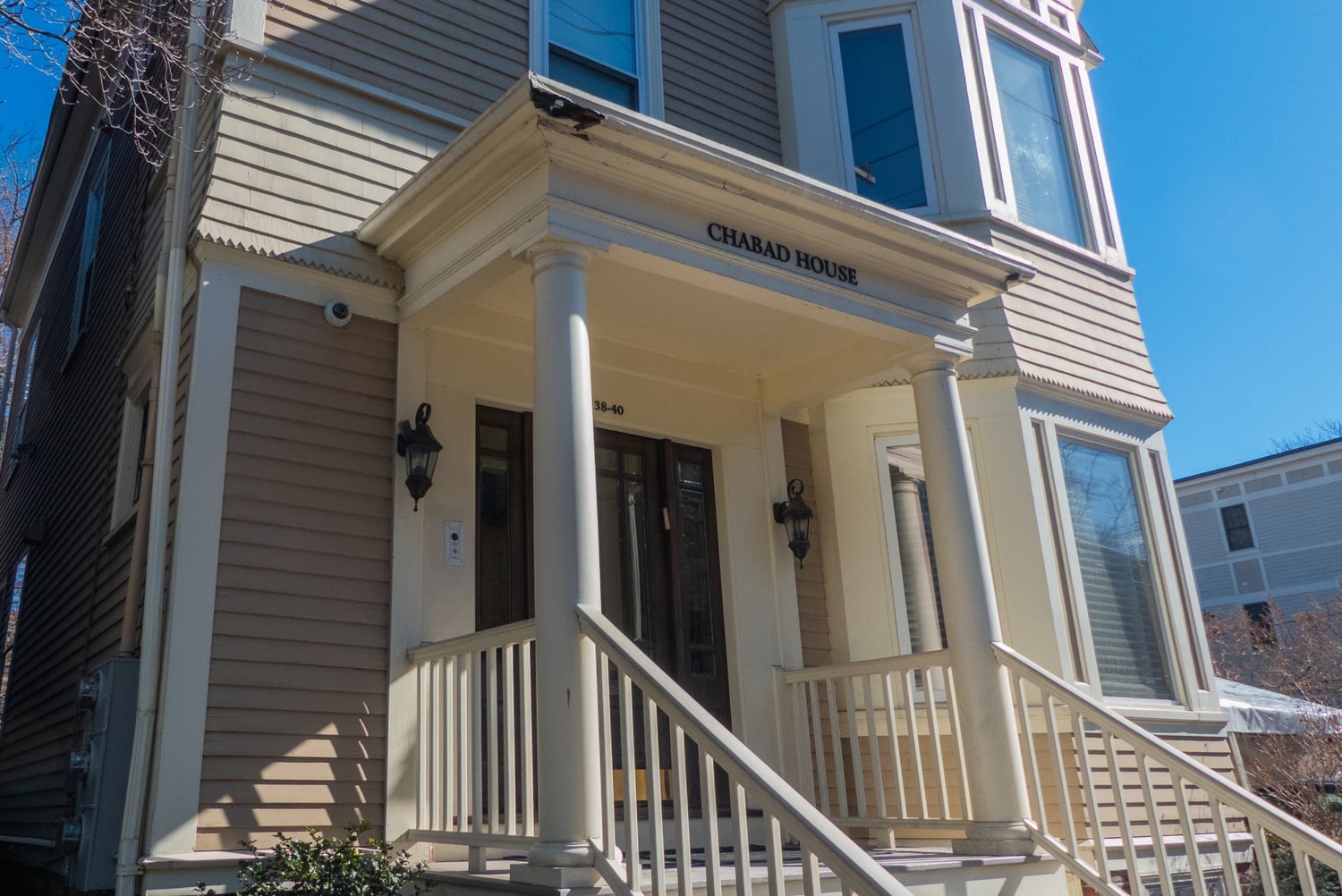
When Berl Hartman moved to her Banks Street home nearly three decades ago, no house on the block rose above three stories.
This summer, the low-rise block began to come apart. In late July, demolition work began at Harvard Chabad’s three properties near Hartman’s home. Chabad plans to replace them with a five-story Center for Jewish Life — the culmination of a years-long zoning fight and months of discussions with Cambridge officials.
The fight grew out of a relationship that began decades earlier. In 1999, Rabbi Hirschy Zarchi, who leads Harvard Chabad, and his wife moved two doors down from the Hartmans into the Banks Street house that became Chabad’s home.
Harvard Chabad says it has since grown into one of the largest campus Chabad operations in the United States. For years, the group gathered under a tent during the winter to accommodate overflow, according to Zarchi. His solution was an expansion that would combine two of Chabad’s three Banks Street houses into one roughly 17,000-square-foot center.
But the building Chabad envisioned was nearly twice the size allowed under the neighborhood’s zoning. To build it, Chabad needed a variance from Cambridge’s Board of Zoning Appeal.
The neighbors pushed back. The Kerry Corner Neighborhood Association argued that the building’s scale and intensity of use would overwhelm a residential street of mostly smaller historic homes. On June 20, 2024, after two hearings, the zoning board rejected the project. Three of its five members voted in favor, one short of the four votes required for approval.
City Manager Yi-An Huang ’05 said the denial came despite guidance from the city’s lawyers. Huang said in an interview that the city law department had advised the board about the Religious Land Use and Institutionalized Persons Act, a federal law that restricts substantial burdens on religious exercise and prohibits discriminatory or unequal treatment of religious institutions in land-use decisions.
Chabad alleged that religious discrimination and antisemitism among some board members and neighbors drove the rejection. It sued the city in federal court in September 2024 under RLUIPA. Then, in March 2025, at least 10 registered Cambridge voters, represented by Lubavitch of Cambridge, the organization behind Harvard Chabad, filed a zoning petition that would remove floor-area limits for religious uses and largely subject them to the same dimensional rules as residential buildings.
But the public petition was not the beginning of the effort
Emails and calendar records obtained by The Crimson show that months before the petition was filed publicly, Zarchi was discussing a legislative path with the city manager, councilors, and planning staff. The records show city officials helped explore possible zoning solutions, solicited proposed language, and discussed draft amendments with Chabad and its lawyers months before the petition became public.
‘Resolve This Quickly’
Get The Crimson in your inbox.
Chabad pursued two paths around the rejection: challenge it in court and seek a change to the city’s zoning law.
The legislative path had an opening. Since the late 1970s, Cambridge had unusual state authorization to regulate religious and certain educational uses more tightly in some residential districts. But that authority applied only in districts with minimum lot-area requirements — rules that Cambridge’s pending multifamily housing overhaul was poised to eliminate.
Two weeks after the project first faced opposition, Zarchi and Huang met at Harvard’s Commencement exercises in 2024. Days later, on May 28, Zarchi thanked Huang for “offering to assist with our project.”
Huang offered to have then-Deputy City Manager Owen O’Riordan meet with Zarchi to talk through where the project had become stuck and see “if we can resolve quickly.”
Huang said in an interview that Zarchi had reached out to share “the development and his understanding of the RLUIPA law” and that his own conversations with Zarchi centered on the group’s federal rights.
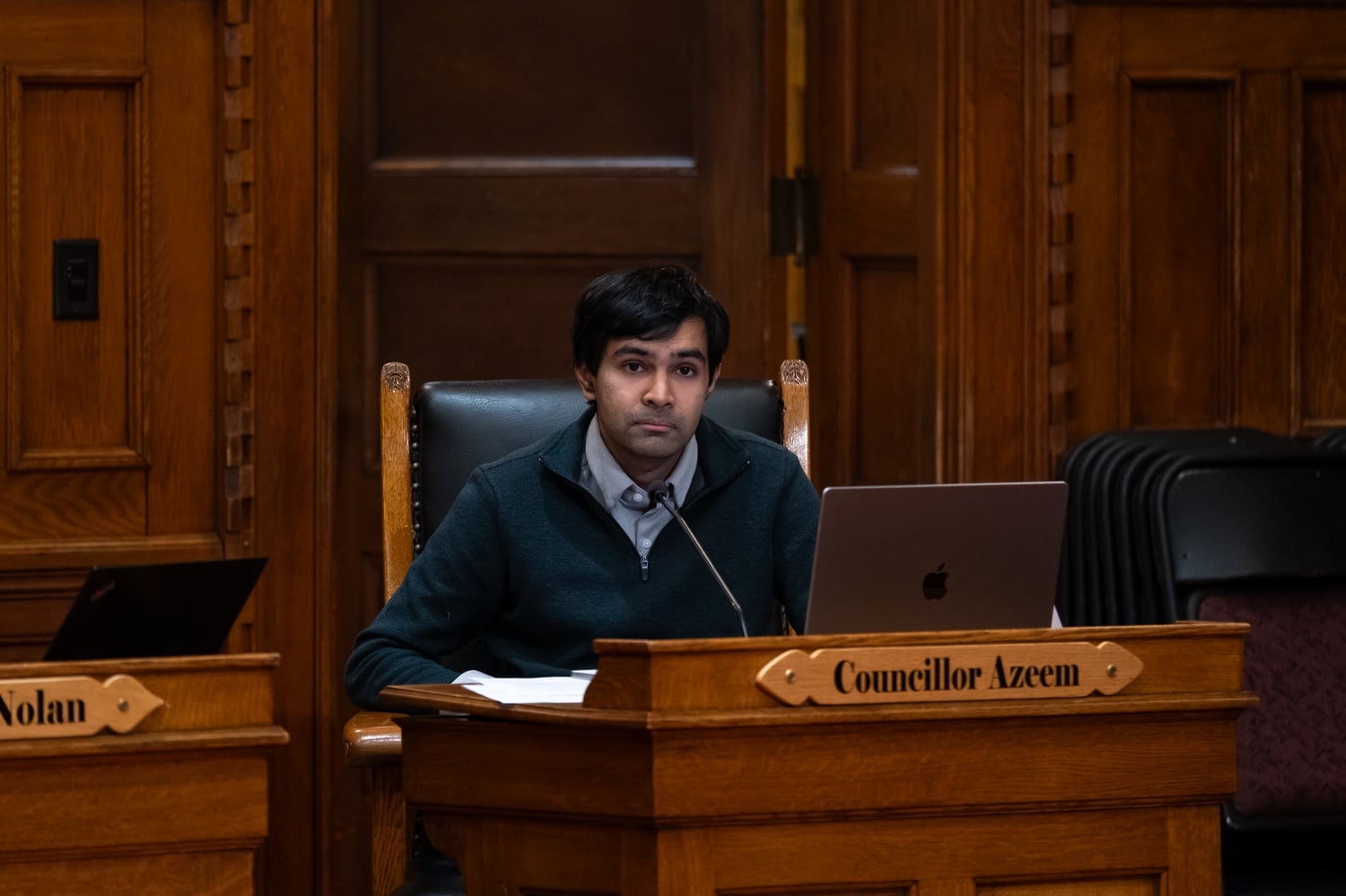
By June 2024, Zarchi was also speaking with members of the City Council. After an early-June meeting with then-Councilor and now Vice Mayor Burhan Azeem, Zarchi thanked Azeem on June 11 for his “time and support” and wrote that he was “encouraged by your offer to support our project by including religious spaces in upcoming changes in zoning.” He listed rezoning the Chabad properties as another possible route. The email came before the zoning board’s final rejection of the variance.
After the board rejected the variance, Zarchi was even blunter about the stakes.
“We are relying on the zoning change to include religious spaces to get our project approved,” Zarchi wrote to Azeem, asking which councilors he should email.
Azeem advised him on his outreach.
“Maybe try emailing every city councilor 1:1 and see who is willing to meet,” Azeem wrote. “I know it’s difficult, but I think getting 1 more councilor in support is critical.”
Zarchi also said that Harvard economics professor Jason Furman ’92 “said he would reach out to some of them as well.”
Furman confirmed in a statement that he had discussed the issue with “various members” of the City Council and said he was “strongly supportive” of expanded building in Cambridge, including residential construction and religious facilities such as Chabad.
Azeem, in interviews, described his support as a matter of consistency rather than special treatment, pointing to a concurrent expansion by Cambridge’s Islamic Center.
“It’s very important that religious groups be allowed to practice without being judged for other political beliefs that they have,” he said. “I think that every religious group has some political beliefs that are unpopular, and I think that’s okay.”
He described himself as supportive of the project but “not a champion of it necessarily” and said his preferred outcome was always “a legislative solution to a lawsuit” — a simple amendment that he said would align the city’s code with federal law.
Nathan Klima, one of Azeem’s former aides, framed the meetings as constituent service, saying Zarchi was “upset” by neighborhood pushback and viewed the multifamily effort as a potential way for his project to proceed by right rather than through a variance. Klima said they did not work on the housing proposal’s policy details.
‘I’ll Meet With Anybody’
By the fall, discussions had turned to possible amendment language.
In August 2024, Azeem emailed two senior planning officials — Jeffery Roberts, the city’s director of zoning and development, and Iram Farooq, the assistant city manager for community development — and copied Zarchi, McGovern, and Huang. Azeem wrote that they had spoken “at length about Harvard’s Chabad zoning.”
“Maybe it would make sense for all of us to meet and figure out if contract zoning or a separate amendment makes sense,” he wrote.
Zarchi replied that the cleanest answer would be to give religious buildings the same benefits as the city’s “pending zoning change.” Farooq responded that a separate zoning amendment would be the best way to pursue the change.
On Sept. 10 — 10 days before Chabad sued — McGovern, Azeem, and Zarchi met online. A calendar invitation also listed senior planning and legal staff. McGovern said in an interview that he could not recall the conversation in detail, but that it covered a possible Chabad zoning amendment, the multifamily housing ordinance, and whether the two “fit with each other.” In an earlier interview, he had said he had not worked jointly with Azeem on the project.
“I’ll meet with anybody,” he said, adding that he meets with “hundreds of other people over the course of a term.”
Days later, Azeem connected Zarchi with Patrick W. Barrett III, a developer and zoning attorney who has separately sued Cambridge over its requirement that new housing include below-market units. In an email to his contractor, Zarchi described Barrett as “an attorney working with City of Cambridge Councilor Burhan Azeem on drafting a zoning solution for our project.”
Azeem acknowledged making the connection in an interview. Before Barrett filed his inclusionary-zoning lawsuit — which Azeem said he “strongly” disagrees with — Barrett was “just a land use lawyer in Cambridge” who “had done amendments for a lot of people in town,” he said.
“I was like, hey, maybe you can meet with this guy and come up with an amendment,” Azeem said. “But that is not what happened.”
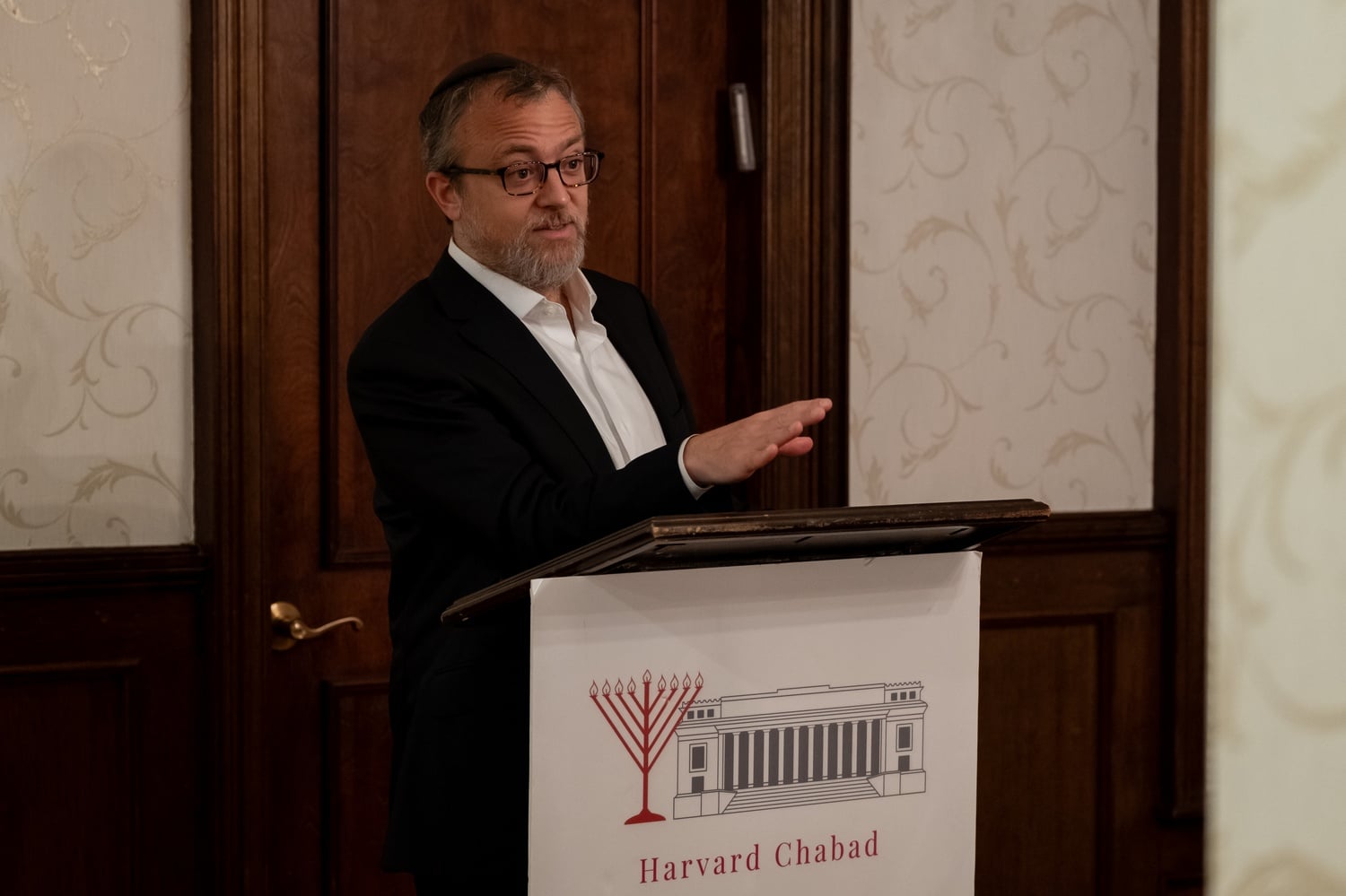
On Sept. 20, Chabad filed its federal lawsuit. The same day, Zarchi emailed O’Riordan, McGovern, Azeem, and Huang, attached the complaint, and emphasized that Chabad did not want the litigation to drag on.
“I’m writing to make it clear that we have no desire to engage in protracted litigation,” he wrote, calling the views of the two BZA members who voted against the project “problematic” and “illegal.”
“We look forward to our continued urgent work with the City on a comprehensive solution to resolve the zoning in a way that will ensure that the Jewish community has its needs met, as protected by the law,” he added.
McGovern said the lawsuit was where his involvement ended.
“I stopped talking to them when they filed the lawsuit,” he said.
“I’ve been around long enough to know that when somebody files a lawsuit, anything you say or correspond can be brought up in that lawsuit,” he added.
For others, discussions over an amendment continued.
In the days after the suit was filed, Barrett laid out options in an email and offered to write the language himself, saying the change “could be done by a short amendment which I’m happy to write.”
On Oct. 8, Azeem asked Barrett if he could “come up with language.” Nine days later, Barrett wrote that he was “finally ready” and said he had prepared “two paragraphs of potential amendment,” with one version depending on the citywide housing proposal. Later that month, Azeem’s aide circulated what she described as a proposed amendment Zarchi had shared and asked to discuss it with Azeem and Barrett.
An Oct. 30 call included Azeem, his aide, Zarchi, Barrett, and Chabad’s project manager, according to emails and calendar records. Afterward, Zarchi wrote that Azeem had suggested convening with Chabad’s attorneys to finalize amendment language.
The drafting continued into November. On Nov. 13, Chabad attorney Benjamin Tymann sent Azeem’s office “revised proposed amendments aligning with our discussion” after thanking participants for meeting with the Chabad team the previous Friday. The next day, Zarchi asked Azeem and his aide to confirm they had received the revisions and would “be able to work with this.”
“Yes we received this and are on the same page!” Azeem replied.
Tymann said in an interview that he drafted the petition language. In a later exchange with The Crimson, he said he did not recall meeting with the full group of people described to him.
Azeem said the weeks after the lawsuit was filed were a “transitory step” during which he still hoped the suit would be dropped, until, he said, city staff advised him to take a step back.
Barrett later wrote in a statement that he had “offered to be helpful” before the suit, but that once Chabad filed it, it was “clear they were not interested” in deescalating. He maintained that he had “nothing to do” with the amendment or the lawsuit.
Later that fall, Zarchi presented a draft to then-Mayor E. Denise Simmons, then wrote to Azeem and McGovern that Simmons had “expressed enthusiasm.” Azeem replied that he would follow up with the mayor. McGovern did not reply and said in a interview that he played no part in the amendment.
‘Forces Beyond Our Knowledge’
As the draft circulated, Azeem’s office also sought Chabad’s help mobilizing public support for the broader multifamily housing overhaul, which Azeem and McGovern had championed.
On Jan. 9, 2025, Azeem’s office sent Zarchi a “call to action” for multifamily housing and a template email for members of Cambridge’s Jewish community to send the City Council.
“Thanks,” Zarchi replied. “We will circulate this.”
Azeem rejected any suggestion that the housing overhaul was tailored to Chabad’s project. He later said he did not believe the outreach ultimately resulted in a Chabad letter of support, though he said he was not certain. Zarchi said he did not recall the request but wrote that Chabad was “in favor of relaxing the zoning restrictions.”
The distinction between the two zoning efforts was significant. The multifamily ordinance increased development rights for housing but deliberately left dimensional rules for nonresidential uses, including religious uses, unchanged. City planning staff later wrote that they had warned the council during consideration of the housing ordinance that eliminating minimum lot-area requirements would force Cambridge to revisit its separate institutional-use rules. But staff said that consequence was “not directly relevant” to the Chabad-backed petition, which sought a separate set of dimensional changes specifically for religious uses.
Later that month, Zarchi reached back out to Huang. Huang said the two ultimately spoke on Feb. 6 and described such check-ins as routine during mediation, saying he told Zarchi the talks among the lawyers were going well.
That same day, the Cambridge Historical Commission approved demolition of 54-56 Banks St., the third building involved in Chabad’s then-current expansion plan.
Four days later, the council eliminated single-family zoning in a landmark vote, removing the minimum lot-area rules on which Cambridge’s special authority over some institutional uses had depended.
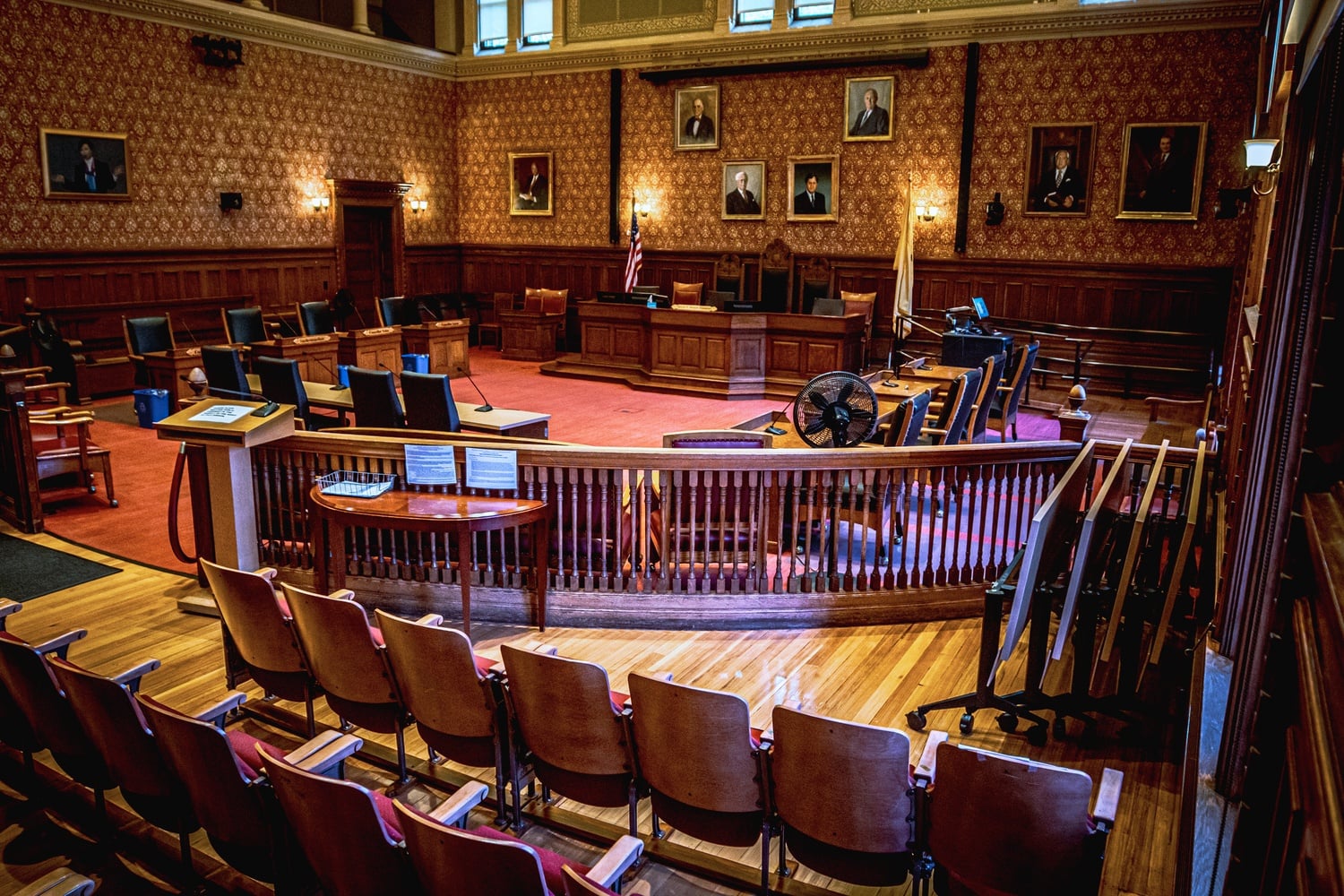
In March 2025, the petitioners filed the religious-use amendment, seeking to regulate religious buildings largely like residential ones.
Zarchi described the timing as strategic in an interview. He said filing the religious-use amendment earlier could have allowed opponents of the multifamily ordinance to “use it to harm the zoning change” before the council’s deadline.
The proposal changed before its passage in August 2025. The version filed in March would have removed floor-area limits for religious buildings and exempted them from some open-space and neighbor-notification requirements that applied to taller residential projects.
The final ordinance still removed floor-area limits and applied residential height and setback rules to religious uses, but retained the open-space and neighbor-meeting requirements.
The city and Chabad reached an agreement in principle through mediation in June 2025, without going to trial. The agreement cleared the way for the five-story plan with more than 40,000 square feet — more than twice the size of the original three-story proposal submitted in 2024 — and included a $540,000 city payment to Chabad. City spokesperson Jeremy H. Warnick wrote that the formal settlement was signed in March of this year and that the city issued the payment on May 15 after it was appropriated.
The council’s only formal role in the settlement, Huang said, was approving the payment after an executive-session briefing.
The zoning petition passed in August 2025, after the project had won approval and the city and Chabad had announced their settlement.
Azeem said the episode showed that Cambridge’s institutional zoning rules were outdated and that the city would have had to change them regardless. He rejected the suggestion that the council had acted improperly in the Chabad case, calling it “a very serious legal allegation.”
Buchweitz, a New York lawyer who represented Chabad in the dispute, wrote that it “contained many of the same challenges we have seen elsewhere” — where, he said, a municipality “unfortunately” does not fulfill its legal obligations amid objections from residents. He credited city leadership with reaching a “constructive settlement” that “saved substantial time and resources.”
“We advocated for the zoning amendment for the benefit of Chabad and all other religious institutions or prospective religious institutions in Cambridge,” he wrote.
The Kerry Corner neighbors who opposed the project, many of whom are Jewish, said the fight was not about faith.
“This is not a matter of aesthetics, bulk, or anti-Semitism,” the neighborhood association wrote in a formal rebuttal submitted to the BZA in June. “But one of unlimited ‘intensity of use’ by religious and educational institutions within residential neighborhoods.”
Multiple neighbors said no city councilor reached out to them. Azeem said he did not meet with KCNA specifically, but had received an email from the group. He also said he met with other neighbors who were upset and attended community meetings in an effort to “bring some people together.”
“It’s a big city, so you can’t literally talk to everyone,” he said.
For years, Hartman said, Zarchi and his neighbors were on good terms. In Chabad’s early days, her husband would walk over to join the rabbi in communal prayer. In return, when the Hartmans received letters from family in Israel, Zarchi translated them from Hebrew.
What unsettled Hartman most was the final BZA hearing in June 2025, when the board approved the project without asking a single question.
“We just thought that meeting was a little odd and indicated that there probably were forces beyond our knowledge somehow driving this decision,” she said.
The board’s vote came after the executive session that day on the Chabad litigation. Huang said the unanimous approval reflected the city’s view of its legal obligations, not backroom pressure. He said the first denial had exposed the city to liability and that the law department’s subsequent conversations with the BZA and the Historical Commission were intended “to ensure that we were not going to do the same thing again.”
When the demolition notice arrived this summer, Hartman said, it felt like the end.
“This was the final decision,” she said.
Zarchi is looking ahead.
“Our city will soon finally have a beautiful and safe center that will be a home for the Jewish community for generations to come, and a source of pride for the city of Cambridge,” he wrote in a statement.
—Staff writer Theresa F. Bartelme can be reached at [email protected] and on Signal at theresabartelme.15. Follow her on X @theresabartelme.
Want to keep up with breaking news? Subscribe to our email newsletter
Have a tip for The Crimson? Share it confidentially