‘Yokai: Shigeru Mizuki’s Supernatural Parade’ Review: A Delightful Guidebook to Japanese Phantoms
5 Stars
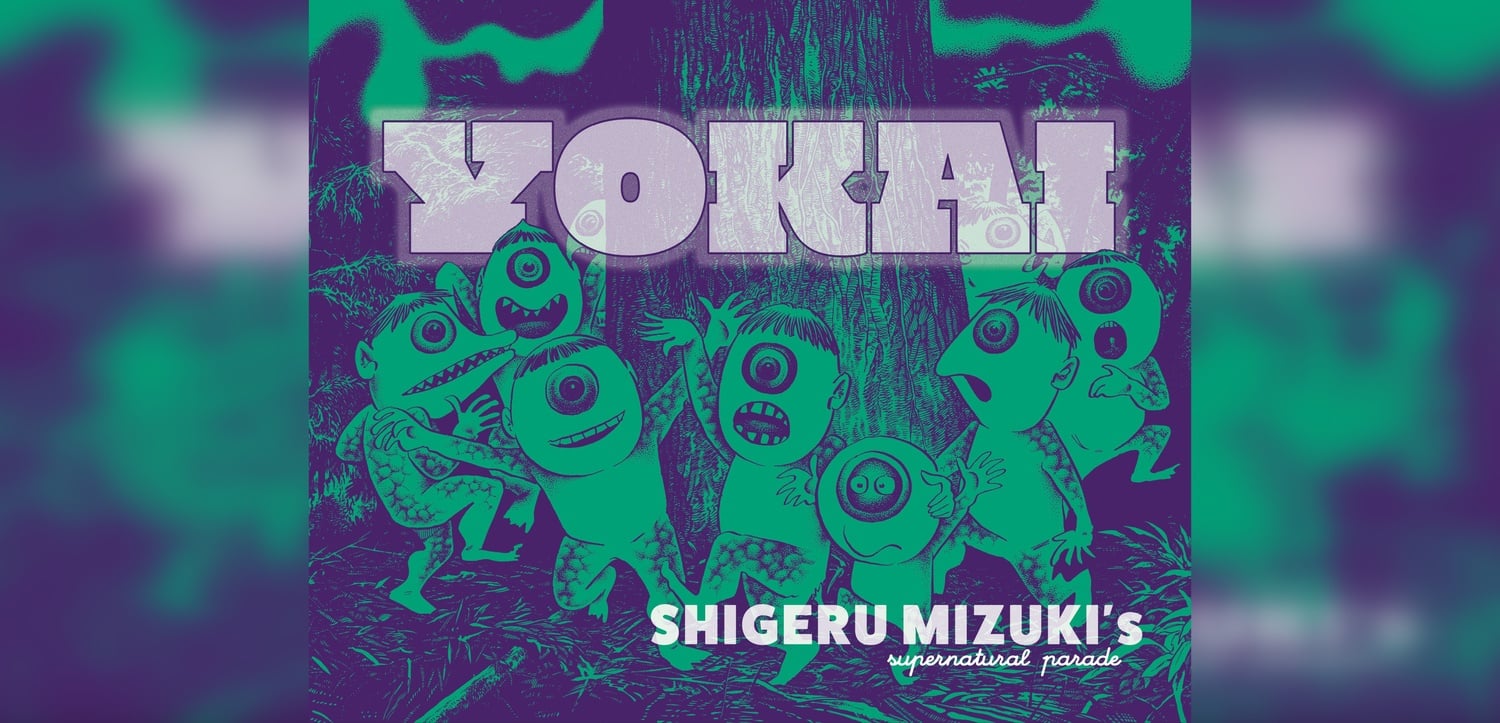
Manga artist and folklorist Shigeru Mizuki’s “Yokai: Shigeru Mizuki’s Supernatural Parade” is a survival guide of the creepier corners of Japan, now made accessible to English-speaking audiences through Zack Davisson’s translation. One of the several yokai anthologies by Mizuki now being translated into English, “Supernatural Parade” pairs detailed research with masterful illustrations. Mizuki’s legendary anthology of yokai from across Japan is a timeless classic that transports readers into a world where the ordinary holds supernatural significance.
Yokai are entities from Japanese folklore — not quite ghosts, goblins, or ghouls. Much like other cryptids such as the North American bigfoot and the Scottish Loch Ness Monster, yokai are supernatural, often unnerving figures originating from strange occurrences and further reimagined in the public consciousness. They can be anything from the sound of a wailing baby in the woods to a haunted doll. While some yokai have specific stories, others are simply widely-recognized beings or experiences.
A testament to Mizuki’s commitment to cultural authenticity and extensive research, the yokai in Mizuki’s anthology came directly from Japanese culture. His retellings — which ranged from fairytale-esque short stories to more grounded ethnographic writing — seek to ground the yokai in their cultural context. Each one is accompanied by an illustration by Mizuki himself. The product offers intimate access to the heritage of specific Japanese regions, which would be otherwise unknown to a wider audience.
One of the yokai in the anthology, Osan Kitsune, is native to Japan’s Chugoku region and demonstrates how Mizuki’s storytelling is rooted in local oral traditions. The story of Osan Kitsune follows a servant of an old Japanese family known as the Okada clan, who sees a strange woman and follows her, thinking she might be a yokai. This intuition proves to be the correct assumption when he cuts her down with his sword, and her corpse transforms into a dead fox. Mizuki claims that this sword survives as a family heirloom in the Chugoku region of his time. By including this detail, Mizuki shows just how important yokai are to Japanese history at a local level.
Other yokai also represent various landmarks, family traditions, and natural phenomena, thus serving as integral parts of Japanese consciousness. Mizuki’s descriptions of the local conditions and beliefs that yokai originate from make for rich cultural commentary and demonstrate the thoroughness of his research.
Bordering on folkloric research, Mizuki’s travels throughout Japan in the 1960s through the early 1980s yielded a plethora of interviews and yokai literature from which he constructed his anthology. Mizuki’s ever-present curiosity began as he first sought to learn about yokai from an old woman in his neighborhood of Kageyama Fusa, an interaction which fed his hunger for cultural knowledge. Mizuki would continue contemplating the folklore after he moved from Japan to Papua New Guinea, where he was stationed during World War II. These experiences formed Mizuki’s creative approach, piquing his interest in the folklore of other countries and placing him at the forefront of a changing global climate.
Mizuki’s varied influences allow the yokai anthology to gain resonance for a global audience. Mizuki describes one of the yokai, Takuchi, as haunted houses, noting that sinister phantoms producing rumbling sounds are “well known today” in Germany as poltergeists. This knowledge demonstrates Mizuki’s commitment to putting Japanese stories in conversation with other supernatural canons at a time of mass globalization.
Similarly, another Yokai story titled “Shudan Borei” refers to a tragic event that occurred in Japan in 1955 as Mizuki was writing his anthology: 36 junior high school students drowned on a beach in the capital city of Mie Prefecture, in a tragic accident that left only one survivor. The survivor said that in the wave that nearly drowned him, he saw the faces of the dozens of women who died when the area was bombed during World War II, 10 years earlier. The survivor’s story prompted the locals to view the tragedy as an act committed by vengeful yokai. In his version of the story, Mizuki employs the supernatural to reveal the devastating consequences of warfare for small communities throughout Japan.
By bridging the politics of modern Japan with folkloric tradition, Mizuki challenges his readers to reconcile the ancient origins of many yokai stories with the strikingly modern conceptions of horror in post-war Japan. This tension is exemplified in the illustration of the Omokage yokai — spirits who die far from home and appear to their relatives before passing on, often before those same relatives are made aware of their death. In the illustration, an old man in traditional dress sits by a fire and stares in surprise at the ghostly figure across from him: a young man in a Japanese World War II uniform.
Alongside his impressive skills as a researcher and his significant contribution to the re-emergence of yokai in modern media, Mizuki’s expertise as a cartoonist was at the forefront of his career. His unique style was initially popularized through his famous manga series, “GeGeGe no Kitarō,” in the late 1960s, and later became an iconic staple of Japanese pop culture, garnering international renown. In his yokai anthology, a contrast between more cartoonish figures and hyper-detailed backgrounds allows the reader to fully immerse themselves in the supernatural elements of the stories. In many ways, “Supernatural Parade” is Mizuki’s love letter to the Japan of his childhood in Kageyama Fusa — filled with a deep appreciation for the environment, people, and history that inspired the fantastical world of the yokai.
“Yokai: Shigeru Mizuki’s Supernatural Parade” is the result of a lifelong passion for regional folklore and the people that keep it alive. Above all, it is an excellent anthology that demonstrates Mizuki’s belief in yokai and the cultural power they hold — not only for the Japanese, but for his readers around the world.
—Staff writer Micaela S. Arenas can be reached at [email protected].
Want to keep up with breaking news? Subscribe to our email newsletter
Have a tip for The Crimson? Share it confidentially