Christopher Nolan’s ‘The Odyssey’ Recognizes the Epic’s Universal Resonance
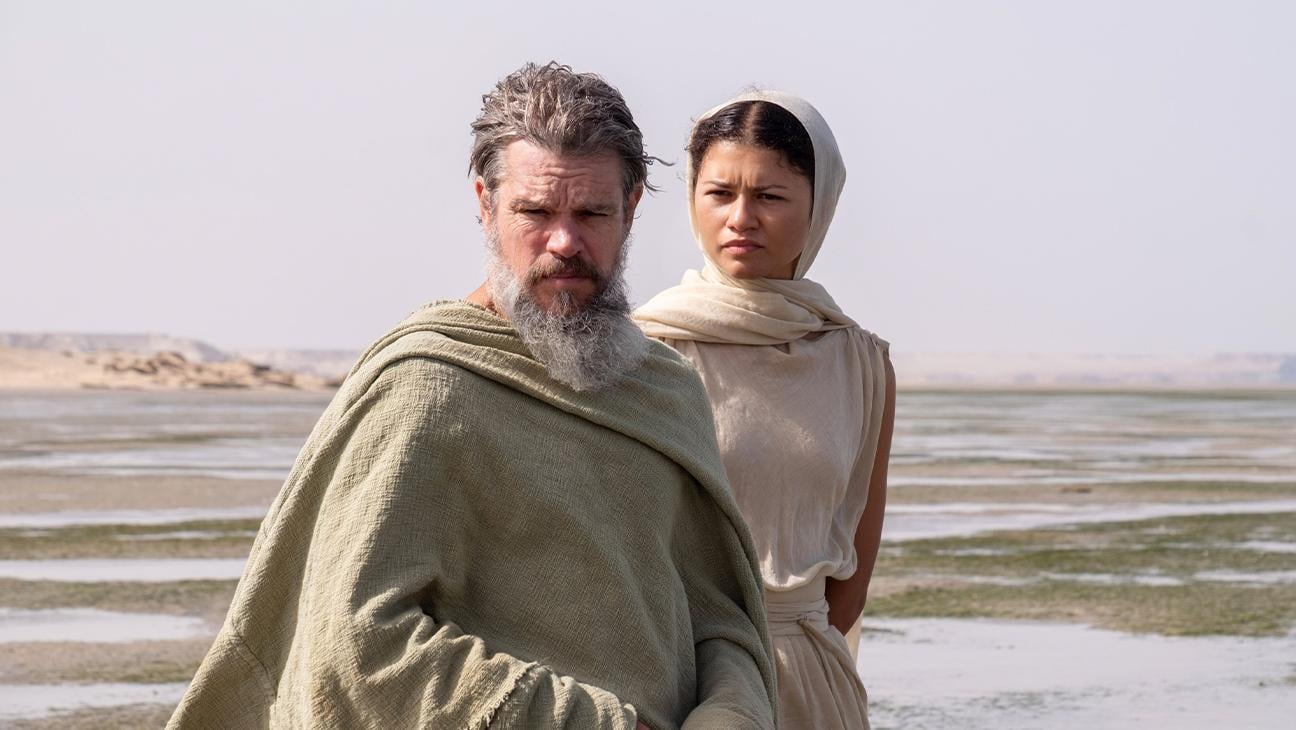
This article contains spoilers for “The Odyssey.”
It is nothing short of an epic task to adapt “The Odyssey” to the screen — something Christopher Nolan surely realized while producing and releasing his adaptation of the famous epic this July. Indeed, the deluge of criticism Nolan received both before and after the film’s release underscores the extraordinary difficulty of producing a satisfactory retelling of the ancient epic. A story with cosmic ambitions and implications, the text has endured for nearly three millennia, addressing themes as lofty as homecoming, the ravages of war, self-realization, and loyalty to oneself, one’s family, and one’s cause. It is certainly a daunting task to compress a story which seems infinitely expansive into a three-hour screenplay.
But it is a challenge that Nolan — for all the backlash — accomplished successfully. Even if his film departed from the original story at times and rid it of some of its complexity, Nolan upheld the most important of his duties as an adaptor of “The Odyssey”: to retain the story’s universal resonance. For that, his literary oversights can be forgiven.
To start, his casting, in spite of the controversy, was an integral part of his adaptation’s commitment to universality. Before the film’s release, figures as high profile as Elon Musk took issue with the casting of Lupita Nyong’o as Helen of Troy, the beautiful wife of the Greek hero Menelaus whose capture prompts the Trojan War. Musk commented under a Twitter post that argued the casting of Nyong’o, who is Black, strayed from the text’s portrayal of Helen as “fair skinned” and “blonde,” and as such was an “insult to the author.” Musk vowed later in July to make his own, “historically accurate” adaptation of the movie using Grok, an AI chatbot which he owns.
Nyong’o responded to Musk and other critics of her casting, arguing that a faithful adaption of Homer’s epic did not demand actors of particular skin colors be cast, as “The Odyssey” is “a mythological story,” not a historical account. Prominent Greek scholar Vrasidas Karalis further dismissed the backlash against Nyong’o as “parochial” and “social panic.”
The Greek government, for its part, subsidized the film, and Prime Minister Kyriakos Mitsotakis thanked Nolan for “stimulating global interest in ancient Greek culture.” Other politicians, like Afroditi Latinopoulou, the leader of a far-right Greek party, expressed disapproval of the subsidies, given the film’s multiracial casting. Still, the controversy did not deter Greeks from flocking to theaters to watch the film in its opening weeks.
Nolan’s diverse casting makes “The Odyssey” a story in which more people can see themselves represented. By untethering it from a particular historical context, the film expands the value of the text, allowing the story to gain meaning for people who exist far beyond the time and place in which the story was originally set. His adaptation makes the story the inheritance of humanity as a whole, rather than exclusively that of Greece.
Many of the other parts of the film that drew criticism are also examples of Nolan tapping into the universal appeal of the story — sometimes at the expense of textual loyalty, and sometimes at the expense of complexity, but these are sacrifices well-worth making.
One such example was Nolan’s reduction of the ancient Greek law of “xenia” — a custom which demanded that guests be welcomed and treated hospitably, especially given that they might be gods — to the “Golden Rule.” It may seem trite, uninspired, and ahistorical to reduce the ancient custom to our modern Golden Rule, “treat others the way you want to be treated.” But this is once again an instance in which Nolan translates the wisdom of the ancient text into something that appeals to the modern day viewer. Xenia’s similarity to the Golden Rule — its modern successor — is after all a testament to the endurance of the ancient text’s values.
The speech Odysseus delivers recounting the sirens’ call to him while he was chained to the mast of his ship is another moment which might displease a scholar evaluating the film. There is no such speech in the original text and nothing particularly brilliant or literary about it. Odysseus drones on, saying, as if it were extremely profound, that the sirens told him he didn’t actually want to go home.
However, even this uninspired speech is Nolan once again making the intricate, complex ancient story accessible to the modern viewer. In this dialogue, it becomes clear that the fantastical obstacles Odysseus encounters on his journey home are symbolic — physical manifestations of his own psychological demons that he must conquer before he can return home as the truly-realized version of himself, conscious of his relationship to his cause, his people, and his family. This monologue, however lacking in sophistication, allows the viewer to penetrate Odysseus’s psyche and recognize a struggle more universally accessible.
Renowned Homeric scholar Emily Wilson certainly did not appreciate Nolan’s sacrifice of profundity in favor of accessibility. She derided Nolan’s Odysseus, likening him to a “traumatized Jason Bourne.” But even her unimpressed characterization of Nolan’s Odysseus seems to accept that Nolan succeeded in making Odysseus a character which the modern viewer — even if they are not a literary scholar — can recognize.
Wilson also took issue with another one of the film’s strayings from the original text: the limited presence of divine figures in Nolan’s plot. In the original text, gods like Athena, Zeus, and Poseidon have tremendous influence over Odysseus’ turns of fortune, with Athena advising him and his son Telemachus at every turn, and Poseidon’s wrath responsible for much of Odysseus’s naval vicissitudes.
But once again, Nolan’s departure from the original text is entirely justified, because the absence of divinities make his film more human-centered, more palatable to a modern audience, and thus more universally resonant.
On the other hand, Nolan’s handling of Penelope is indeed problematic, as Wilson writes, but can still be excused. Wilson writes that in Nolan’s adaption, Penelope is reduced to a character “with nothing to do except yearn for Odysseus, for reasons unknown.” Nolan’s Penelope is indeed largely defined by her reliance upon her husband. But, at one point in the film, Penelope asserts her authority, declaring that she has successfully ruled Ithaca in Odysseus’s absence, and scoffs at her supposed need of male protection. Thus, her character is at times subservient, and at others, something approaching a feminist heroine.
Nolan cannot decide which one Penelope ought to be, and perhaps that is fair — neither can the generations of readers who encounter her, a deeply ambivalent figure. But perhaps Nolan’s Penelope is recognizable to the modern day woman, still struggling to negotiate her independence with her place in the family. Nolan has made of Penelope, as he did of Odysseus, a character whom we feel belongs in our time as well.
Nolan has succeeded in making the ancient epic resonant in our time, even if he did occasionally stray from the original text, and even if his film is admittedly no literary masterpiece itself.
Perhaps the backlash to the film, in addition to underscoring the difficulty of Nolan’s task, illuminated the universality this story was always intended to have. It demonstrated that people of wildly different political persuasions, in parts of the world far removed from the original Greek setting, felt something was at stake in how this story was told. People of diverse backgrounds, nationalities, and well over two thousand years removed from the epic’s original context, feel a profound sense of ownership over the play: that it belongs to us too — something which Nolan, as his adaptation demonstrates, is well aware.
—Staff writer Alexandra M. Kluzak can be reached at [email protected].
Want to keep up with breaking news? Subscribe to our email newsletter
Have a tip for The Crimson? Share it confidentially